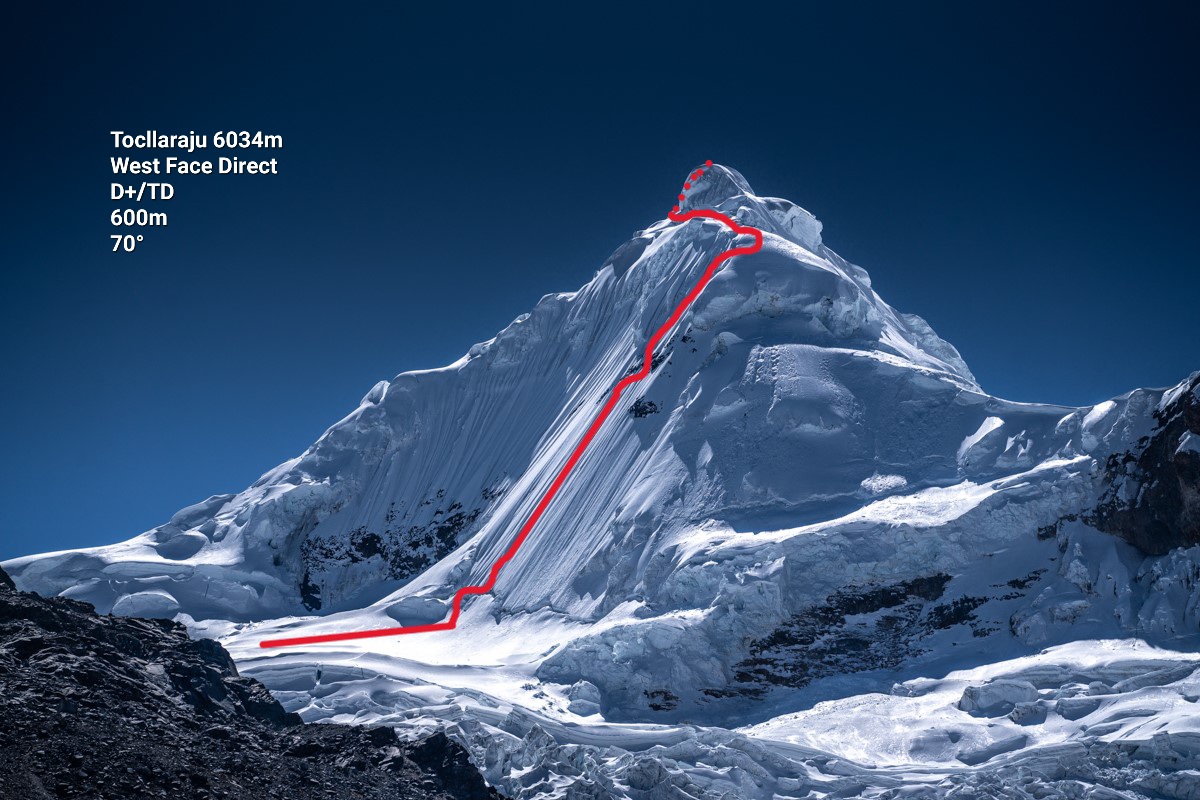
 After we had spent almost two weeks acclimatizing, we set off on the first big tour of the expedition in the Cordillera Blanca. Luca and I had planned to climb Tocllaraju via the West Face. We were joined by another Luca from Germany and Beni from Switzerland, who also aimed to climb Tocllaraju, but via the normal route.
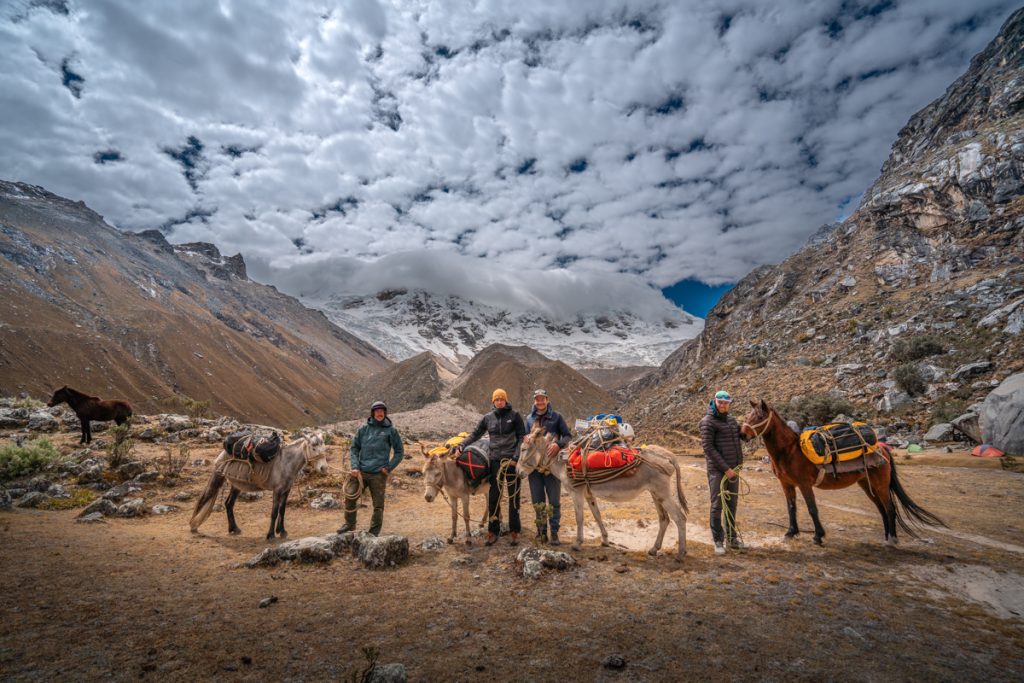
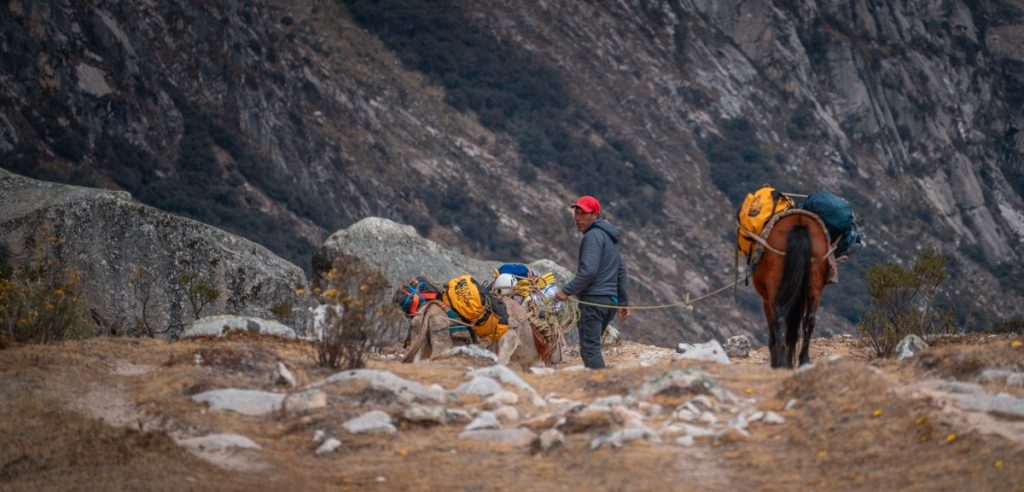
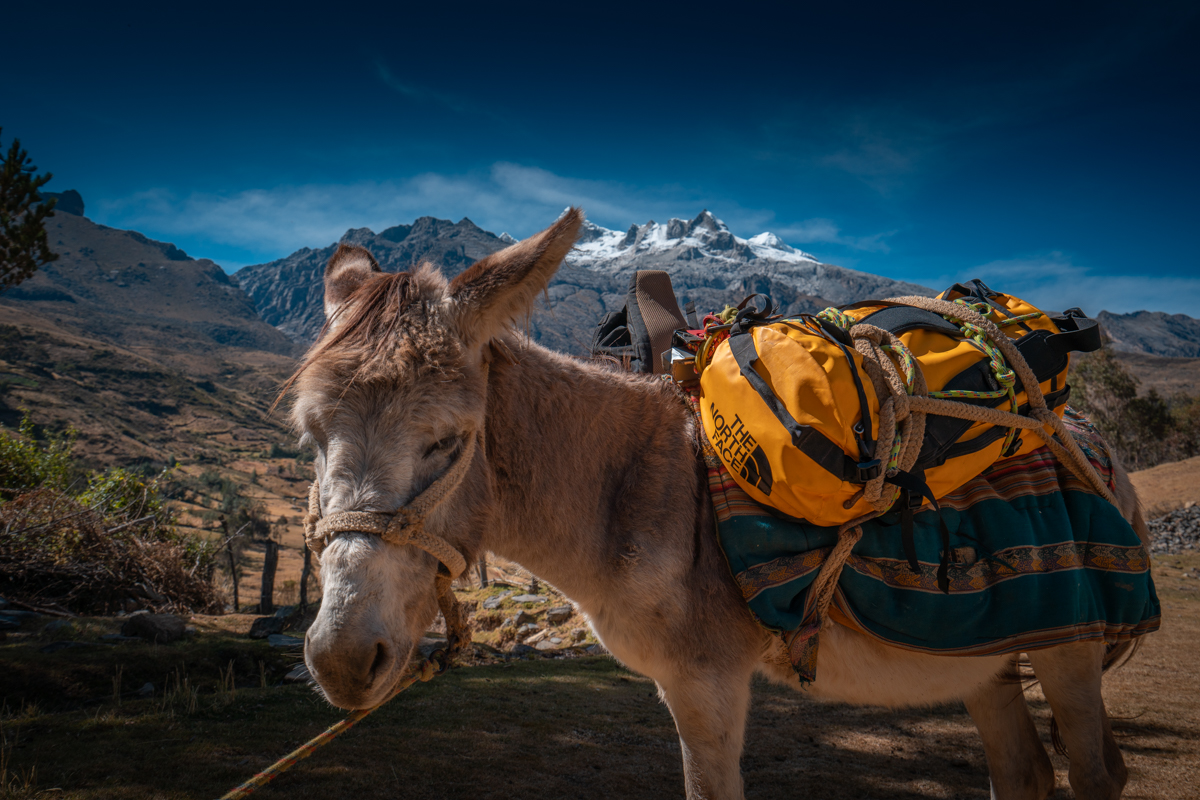
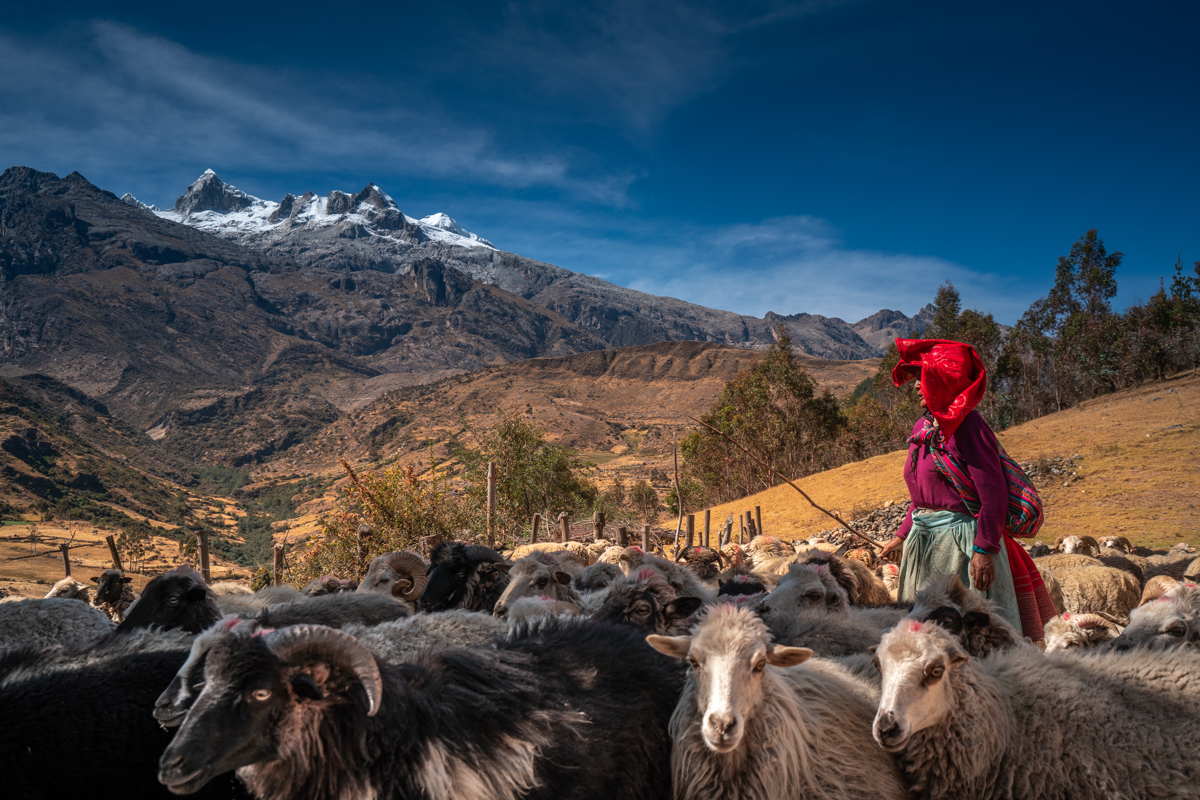
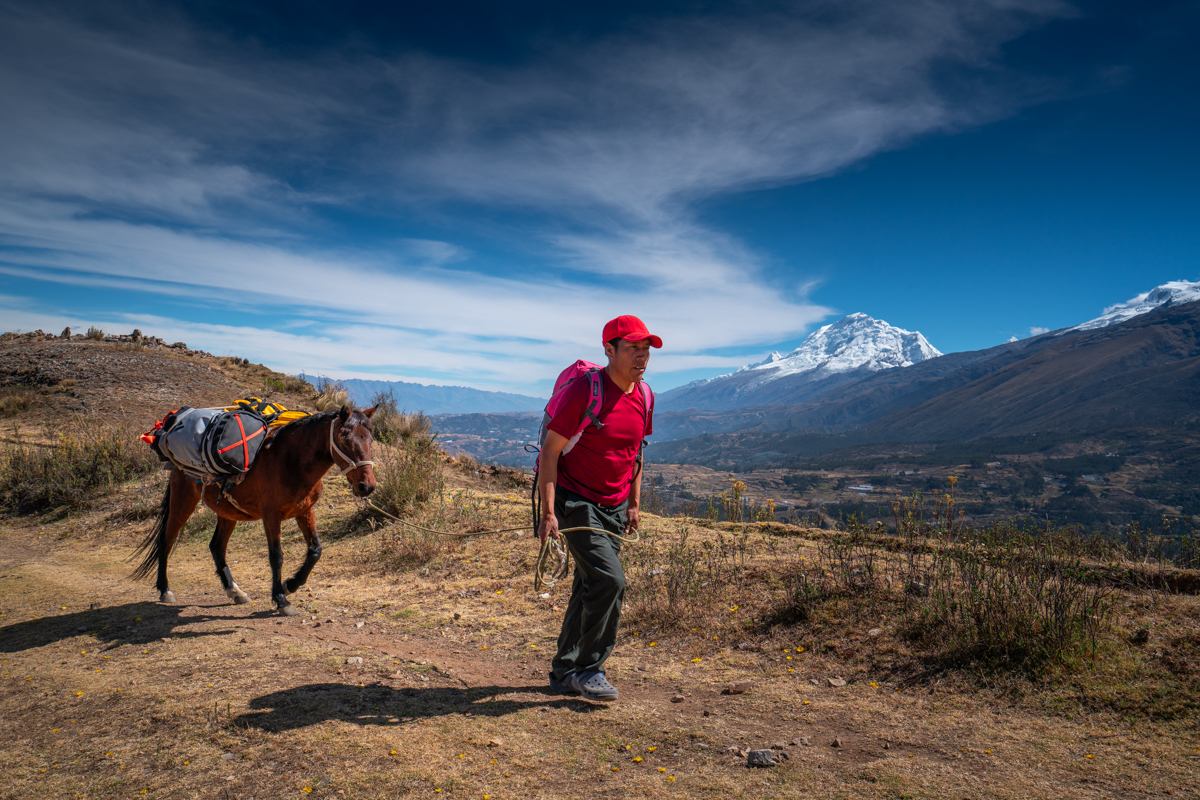
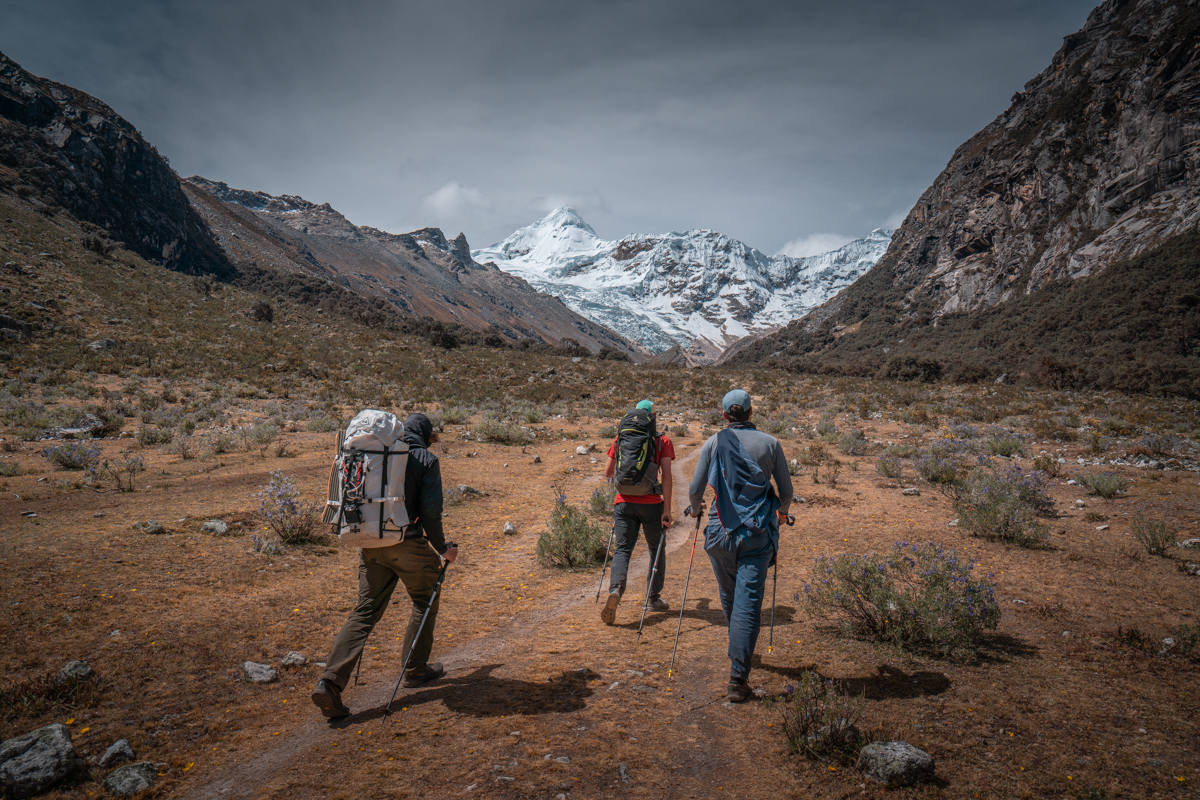
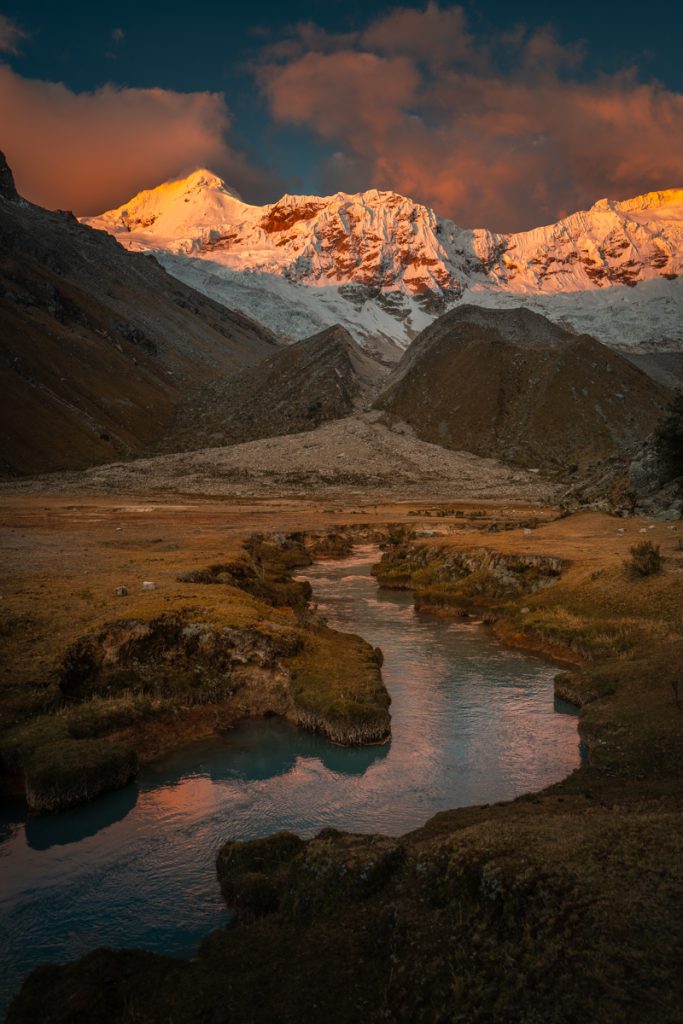
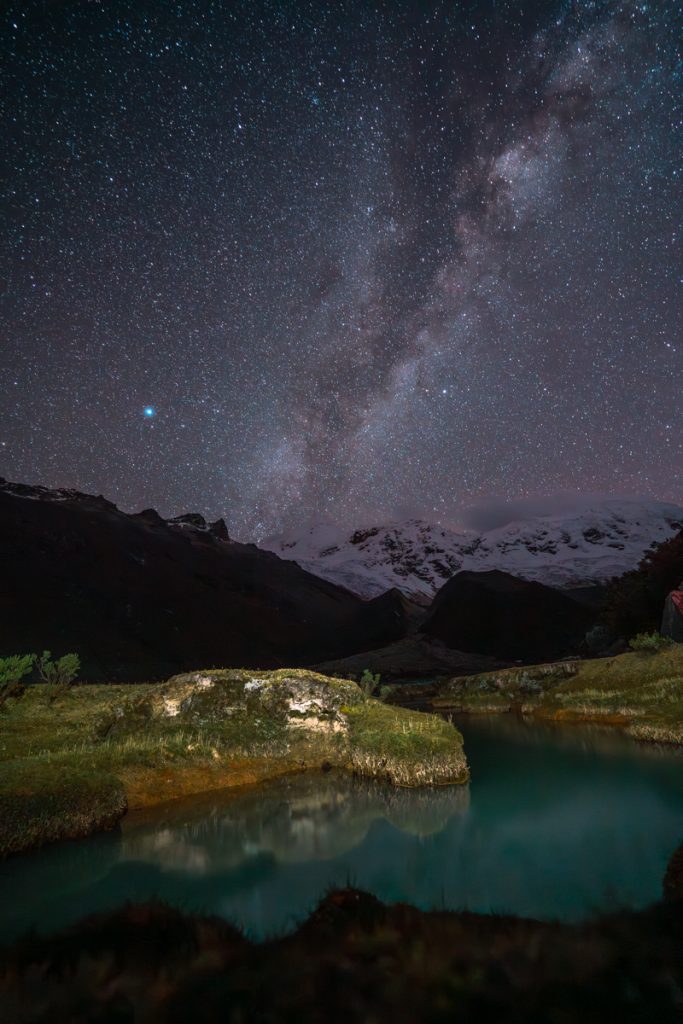
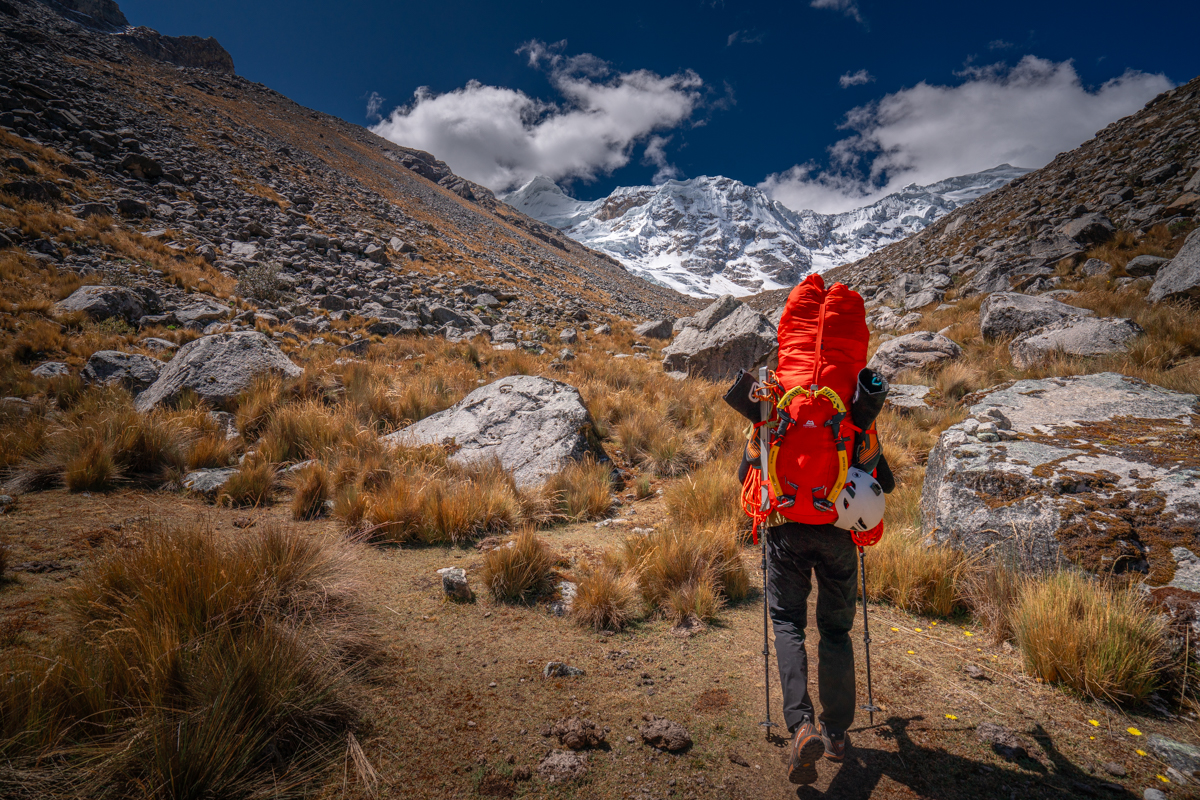
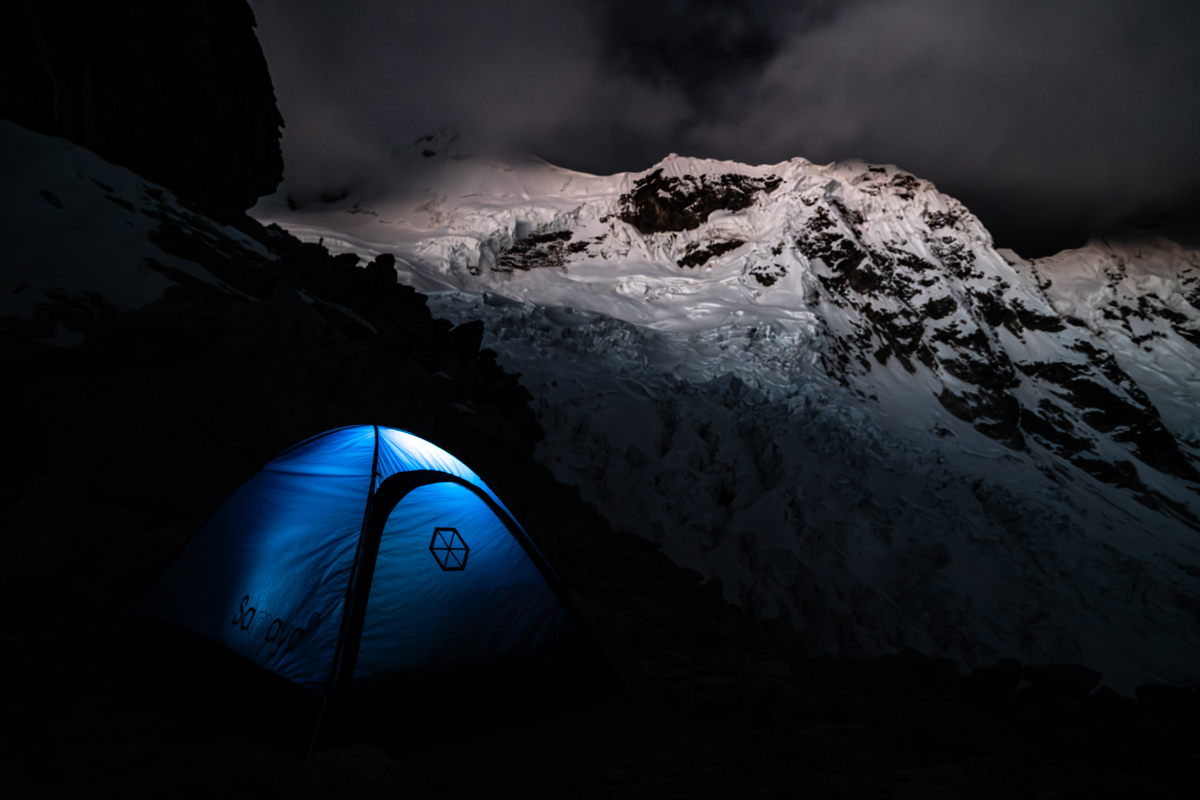
On July 22, 2025, we left Huaraz for the Quebrada Ishinca (Ishinca Valley). Cirilo, a local from the mountain village Pashpa, picked us up in Huaraz and drove us a bit above Pashpa. There he had some of his donkeys and horses, which we loaded with part of our gear. As a small caravan of five people, two donkeys, and two horses, we set off into the Ishinca Valley. Our goal for the day was the Ishinca Basecamp. That meant about 11 km of distance and roughly 850 m of ascent. The trail was beautiful, first with incredible views of the glaciers of Huascarán and Copa, and later through a shady forested gorge. Hiking in this landscape with pack animals gave this journey a for me new vibe. It felt like the expedition was finally truly beginning.
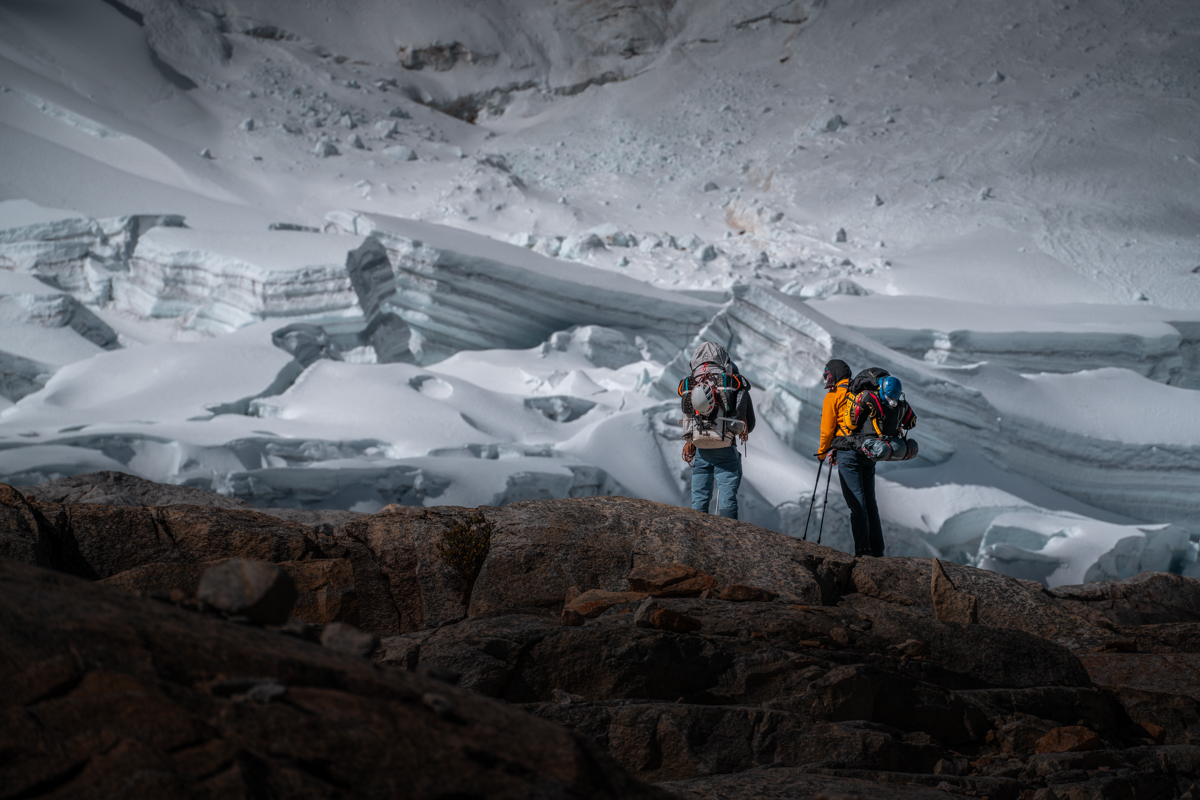
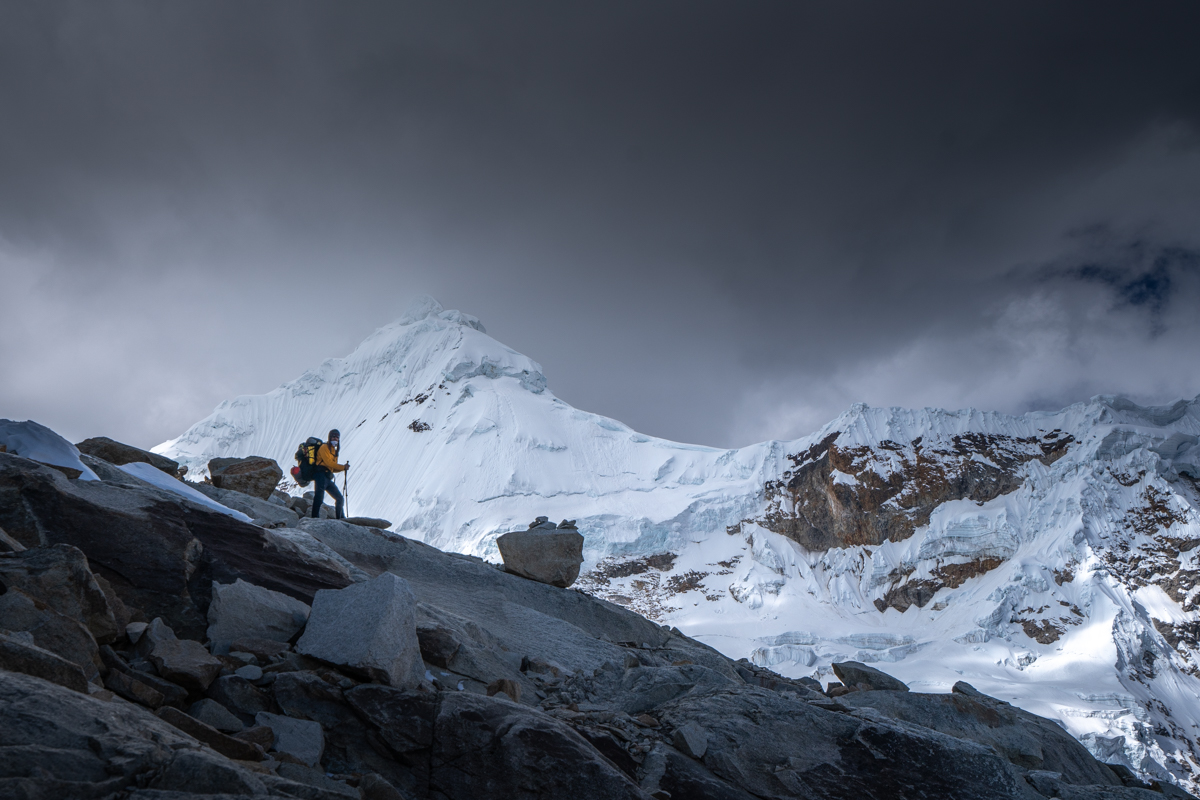
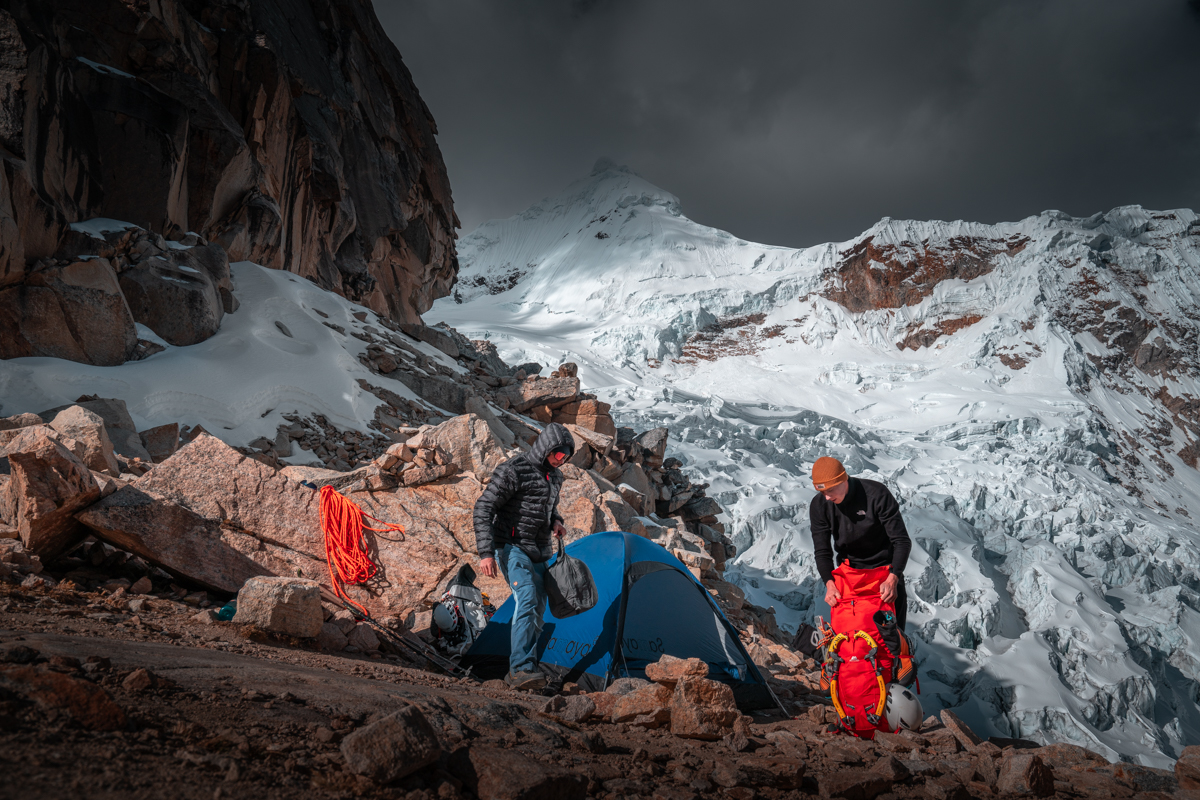
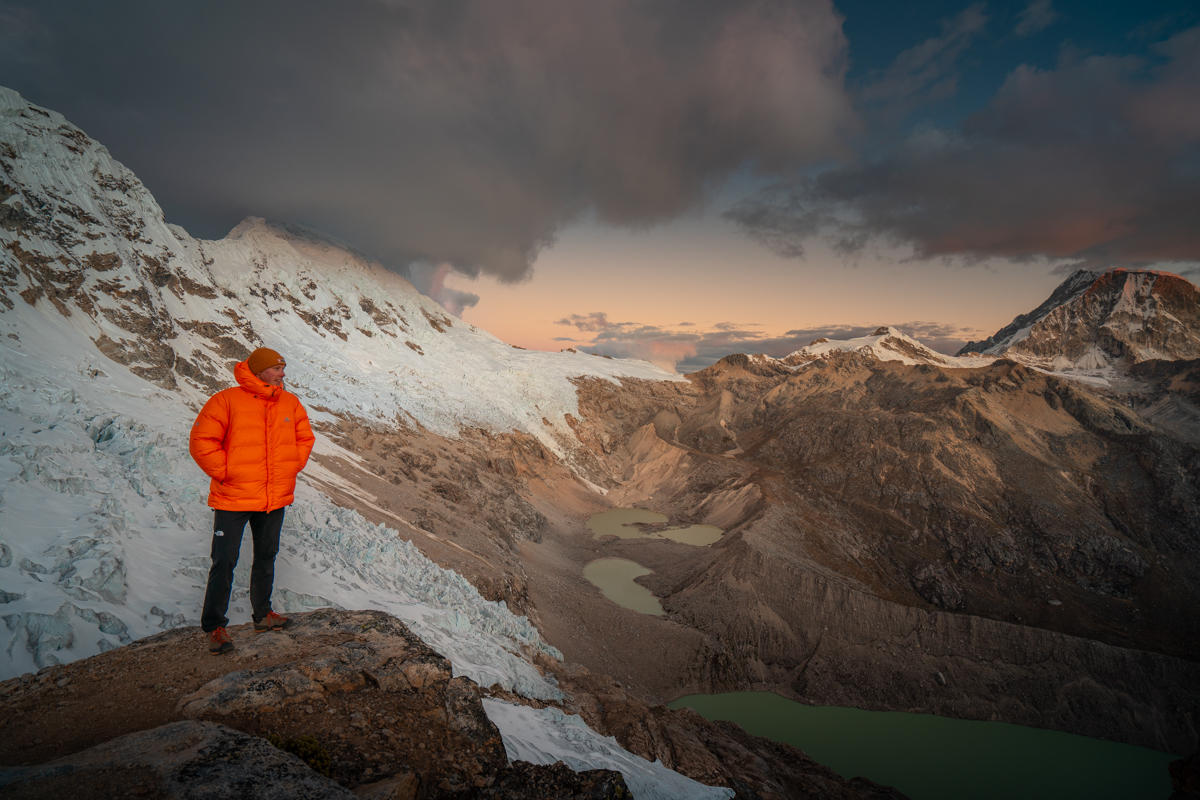
 After a bit of sleep, we began the final preparations for the summit push: eat a few peanuts, pack the backpack, melt snow, put on the harness. Around 12:30 a.m., we started the approach to the West Face. At first, we followed the normal route, gradually ascending through a crevassed area. It was a very cold, stormy night, and I hoped the wind would calm by sunrise. After a few steeper sections, we left the normal route toward the West Face. Just below the bergschrund we took a short break to gear up and tie into both ropes. Because of the temperatures, I pulled on my thick down pants. Then I started climbing up toward the bergschrund. But only a few meters later, I was stopped: a several-meter-wide, very deep crevasse yawned in front of me, with a vertical ice wall rising directly above it. Everywhere I looked, it was the same. I climbed back down to discuss options with Luca. He tried further to the right and managed to find a small snow bridge over the crevasse, where it was not that wide, which allowed us to enter the face. The wall consisted of parallel gullies and little ridges. This was great for climbing—hard ice in the gullies was good for solid ice-screw protection, while the ridges were firm snow, comfortable to climb. From there, we climbed the entire face in pitches. After Luca led the entry pitch, it was my turn to lead the first full pitch in the face. I felt good and moved well. On the first 60 m I placed three solid ice screws before belaying Luca up.
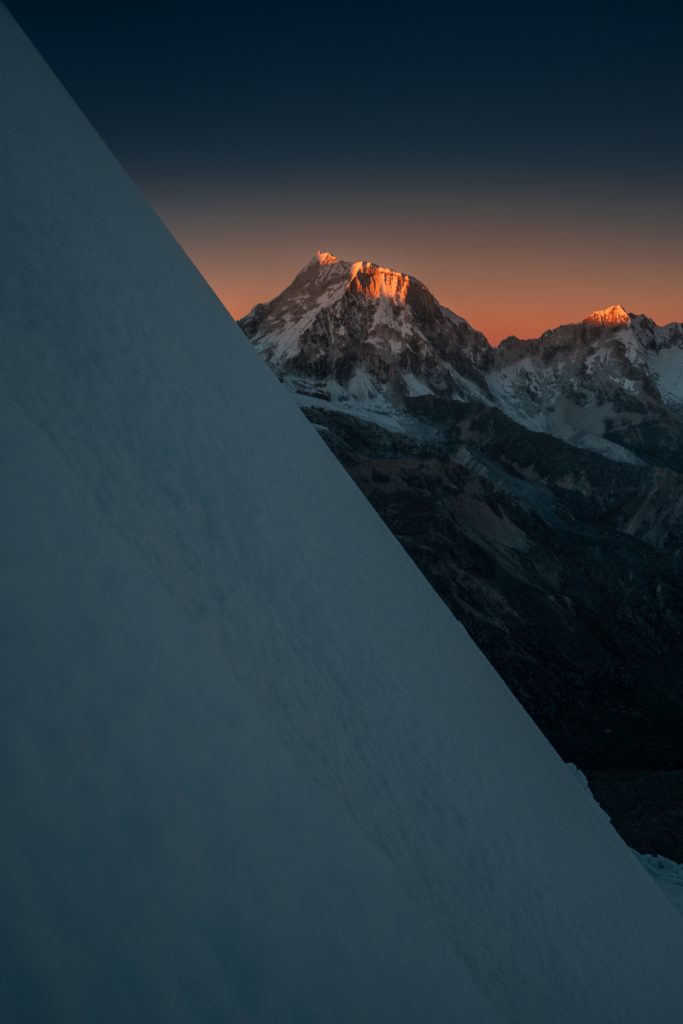
Here we lost a lot of time for the first time that day. Luca hit an energy low and moved slowly. His lead of the second pitch took 1.5 hours, so I ended up standing at my belay for over two hours. My feet were numb from the cold. At least I had the chance to enjoy a beautiful sunrise on the wall, especially the view toward Ranrapalca, another 6000m peak. But I was relieved to finally climb again. When I reached Luca’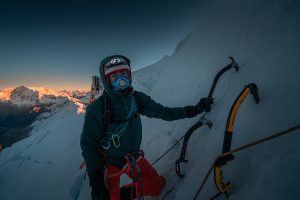 s belay, he told me he had eaten something and felt better—which showed in the next pitches, as he climbed at a good pace again. Higher up, I was then the one struggling with an energy low. I blamed it on the fact that since those few peanuts before midnight, I hadn’t eaten or drunk anything. At that point I still couldn’t, because we were climbing below small seracs and we wanted to spend as little time as possible in this section. So I pushed on an fought my way upward. After a short, easy mixed section (one ice tool placement in rock was enough, haha), I built the final belay, and Luca led the last pitch on the West Face.
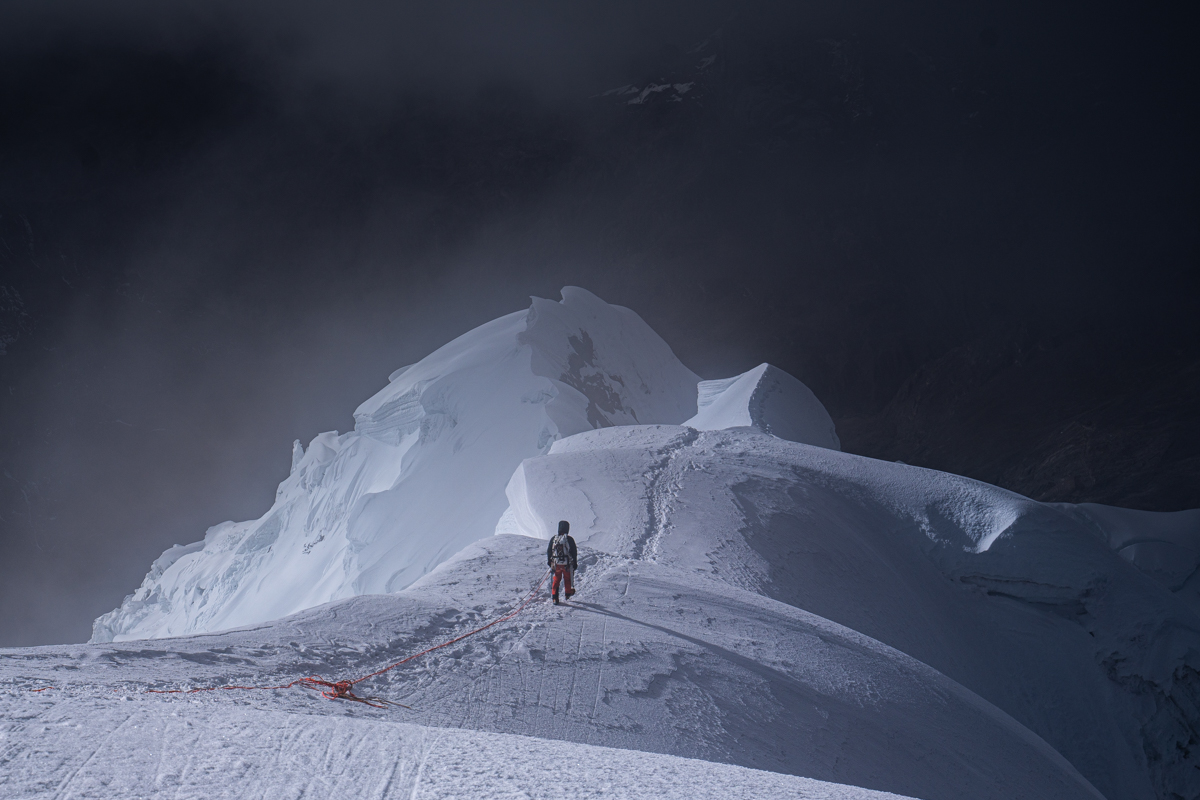
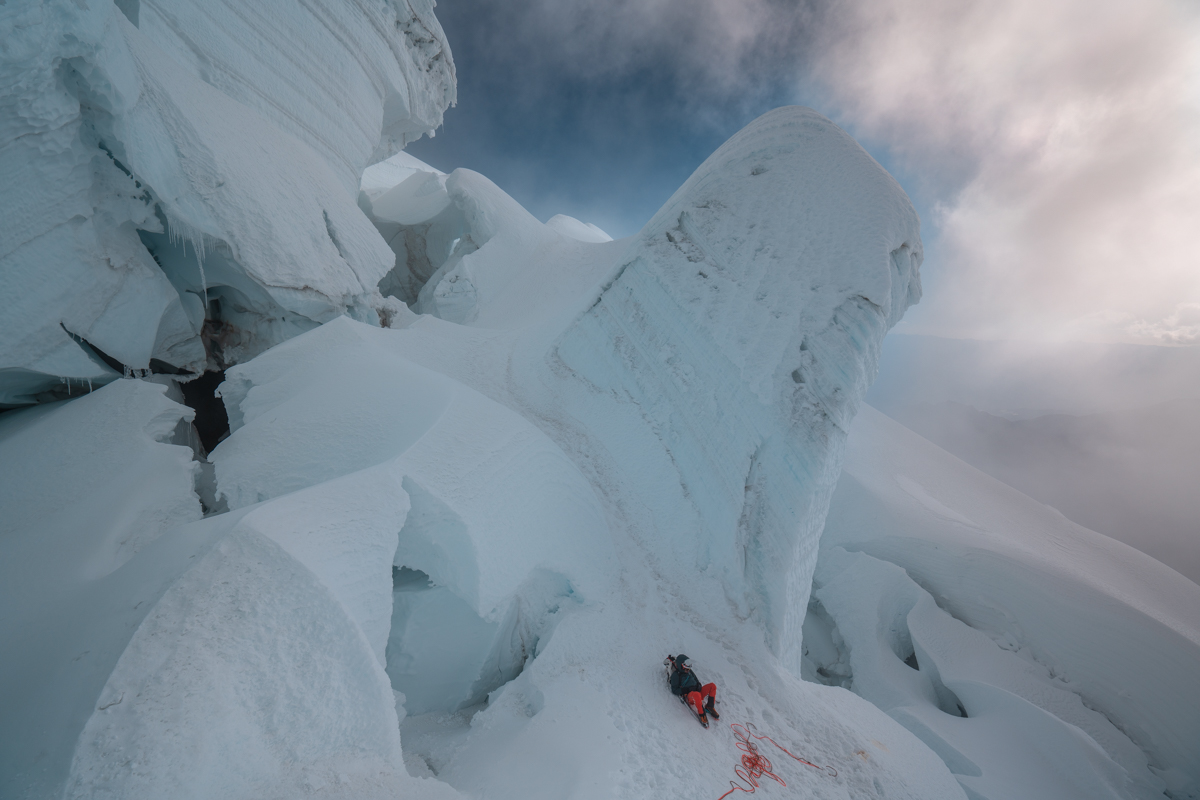
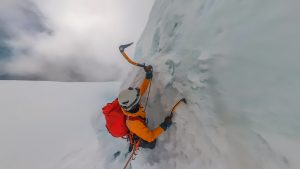 Once we were both at the top, we finally took a break to eat and drink—restoring some energy. Then I continued onto the southwest shoulder, breaking trail through thigh-deep snow toward the summit. This was exhausting and time-consuming, as I kept sliding back on the steep slope. By now the weather was deteriorating—blue skies alternated with whiteouts. Several times I thought I saw the summit serac, only for the clouds to clear and reveal false summits. At almost 6,000 m, I reached a large crevasse with only one possible snow bridge, leading into a steep ice wall of 70–80°. After I searched a bit for another way, I decided this was our only option and climbed the pitch, bringing us beneath the true summit serac.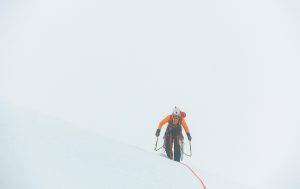
But here we found that the information we had received from guides and other climbers—“go to the south side of the serac and climb the last meters from there”—was outdated. That route was now cut off by another massive crevasse. So we decided to traverse around to the north side, hoping to find the normal route. This required a short descent, a tricky traverse, and another crevasse crossing, all secured with belays. After a final 70° slope, fortunately with good snow conditions, we reached the normal route and could climb the last 15–20 vertical meters to the summit.
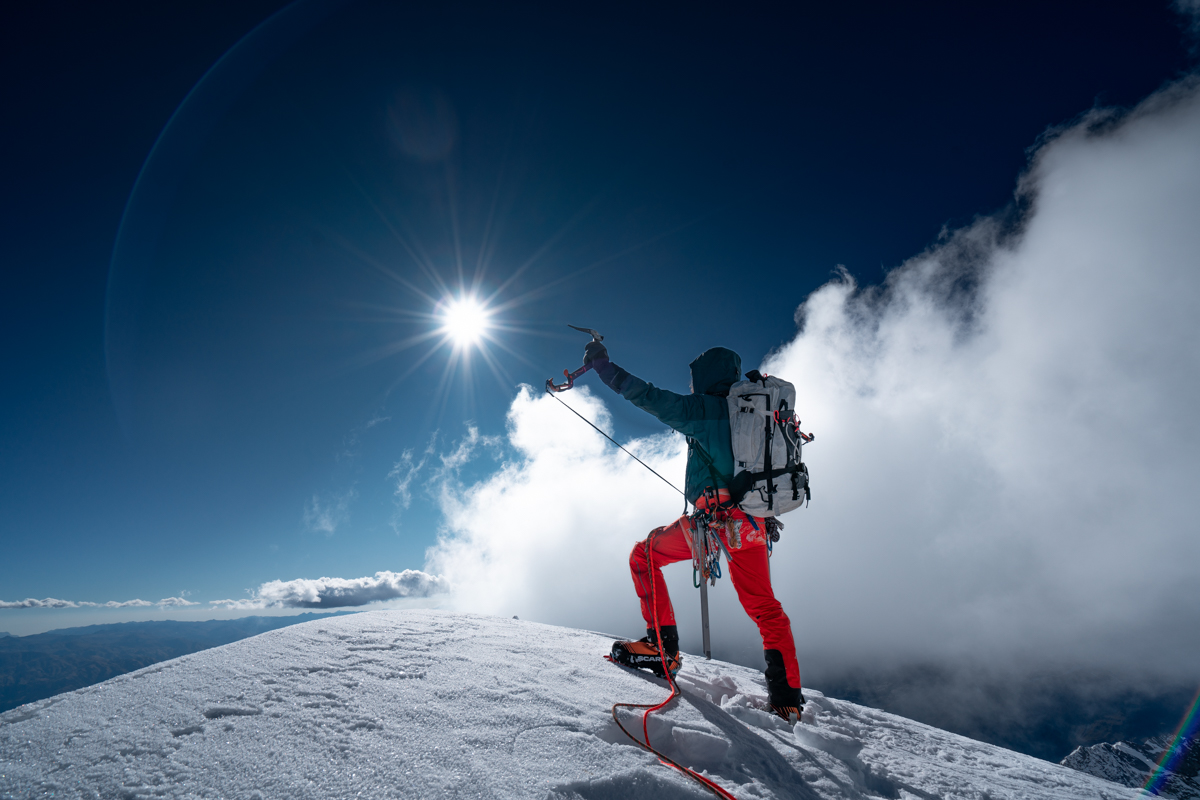
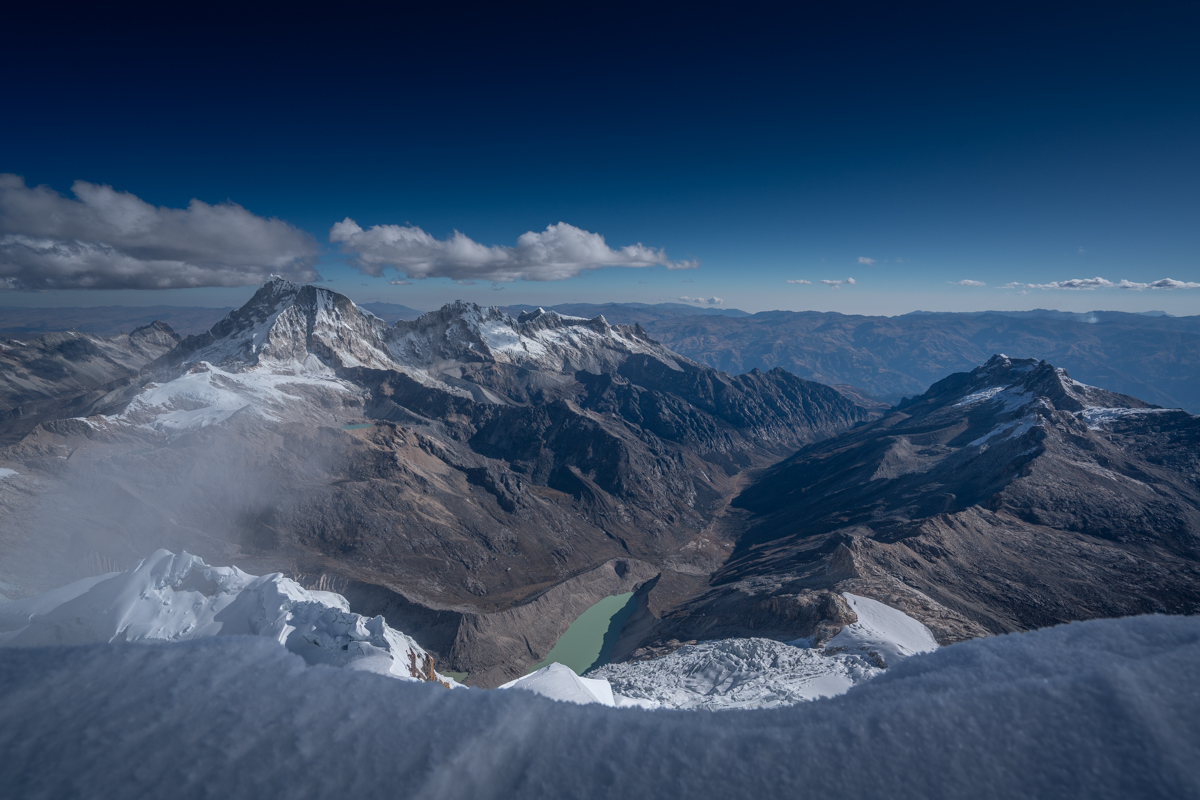
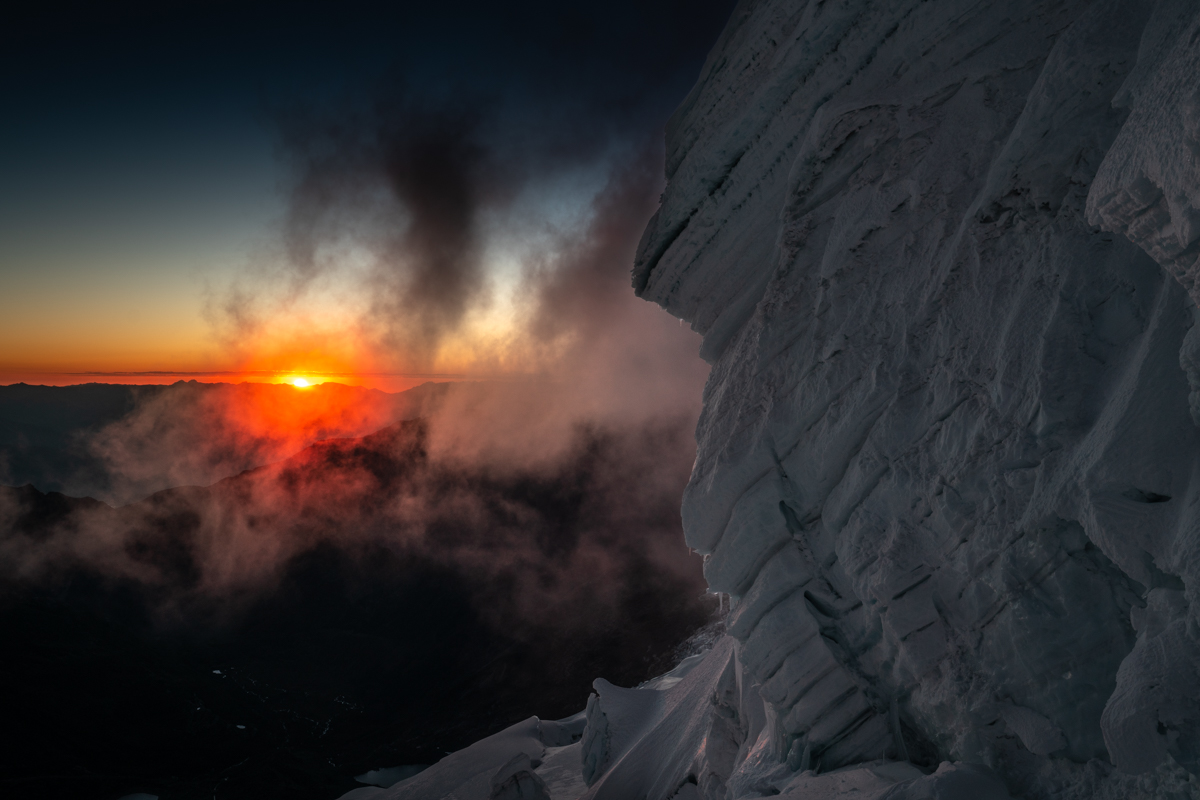
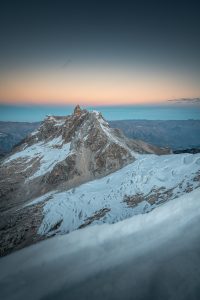 On our last day in the Ishinca Valley, I got up early. I felt recovered and wanted to do something before leaving this beautiful place. Since no one else was motivated to join, I decided to solo Nevado Urus Este, which seemed the easiest and safest option for a solo climb. I started at 3:45 a.m. and quickly gained height on the steep valley slopes. Higher up, I scrambled through rocky terrain before crossing a small glacier to reach the summit ridge. There I left my crampons and scrambled the final meters to the summit at 5,420m, arriving just before sunrise— in less than 2.5 hours from basecamp.
Waiting for the sun at the summit was bitterly cold, but the views were spectacular. It was also a great feeling to stand alone on such a peak. After a few minutes, I descended again, wanting to be back in basecamp by 8 a.m. to have enough time to pack (we wanted to leave basecamp at 9). The descent in daylight was quick, and at exactly 8 a.m. I arrived back in basecamp, just as the others were groggily emerging from their tents, haha. Cirilo showed up with the donkeys around 10:30 a.m., so we had plenty of time for a relaxed breakfast (Beni cooked an amazing porridge) and packing.