 For some time, I wanted to go on a mountain tour with my friend Luca from Switzerland, and in mid-May, we spoke on the phone to set a date. On that exact day, I spontaneously had an idea: Why not go to Chamonix and climb Mont Blanc on skis?
Two weeks later, after only two hours of sleep, I walked to the Innsbruck train station with a large backpack and my skis. Although skiing is the most normal thing here, you see it a bit less often at this time of year. It felt a bit strange, as it had been summer for a few weeks already.
The first stop on my journey was Zurich, where Luca picked me up, and we continued by car to Chamonix. It was a very cool feeling to be back there. It had been 13 years since I last visited Chamonix with my family for hiking. In the evening, we checked the conditions of Mont Blanc at the Office de Haute Montagne. Luckily, they were not bad, and the weather looked promising as well.
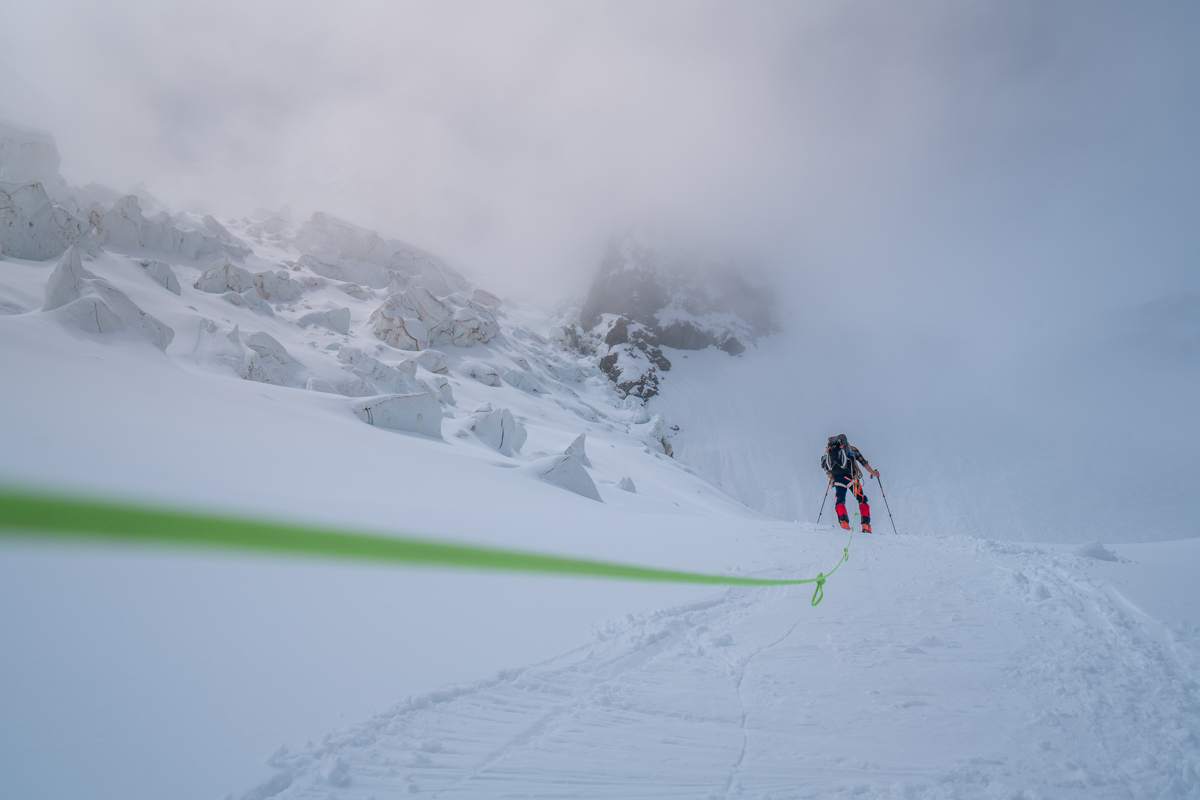
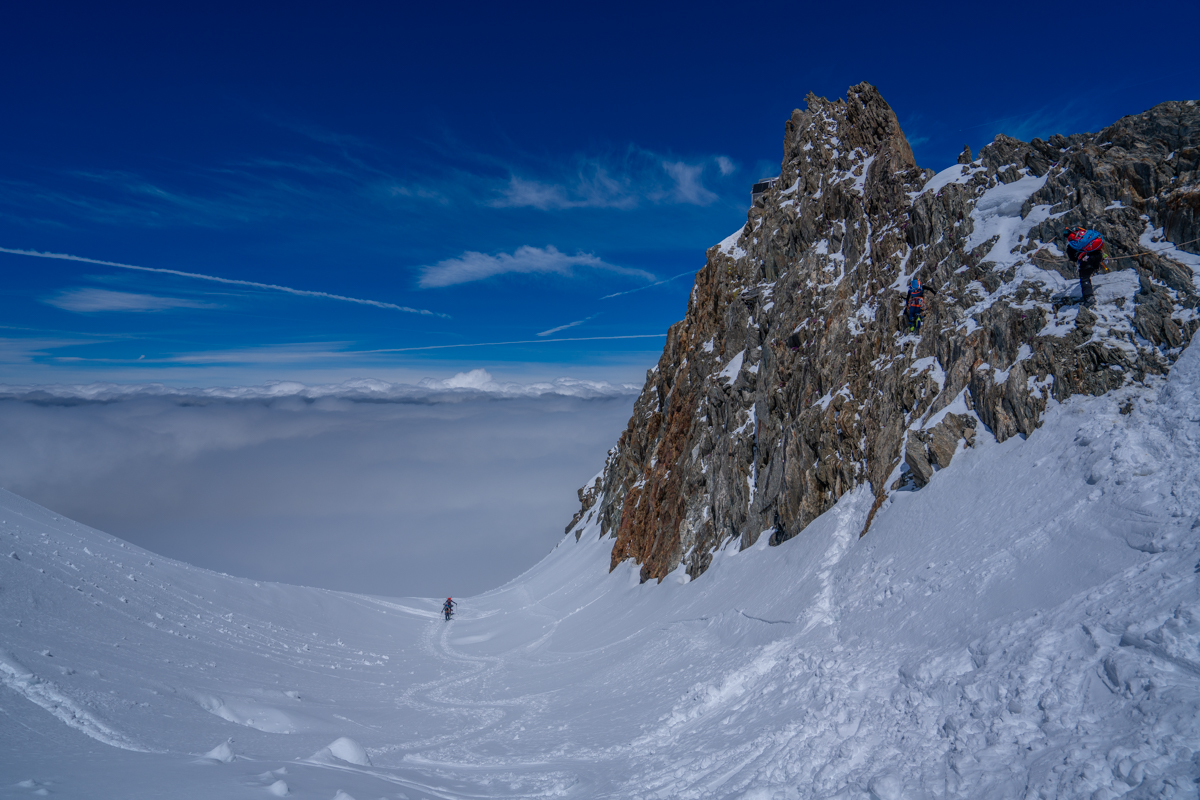
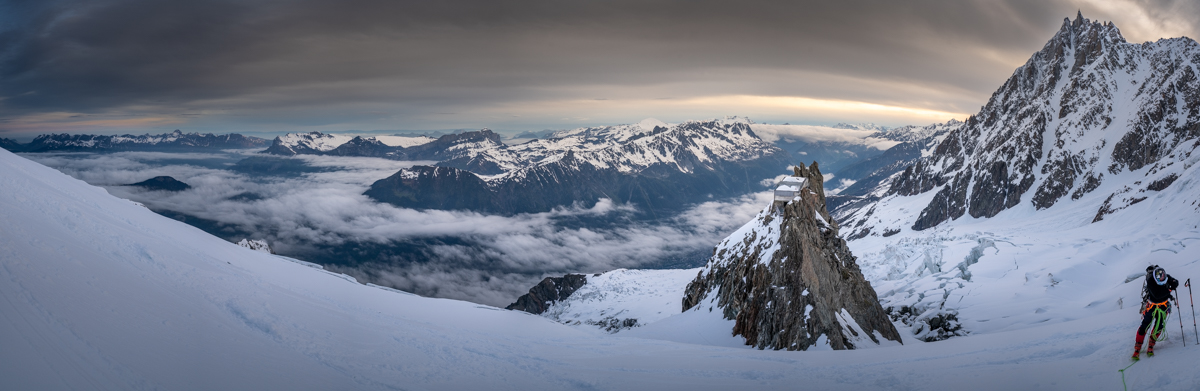
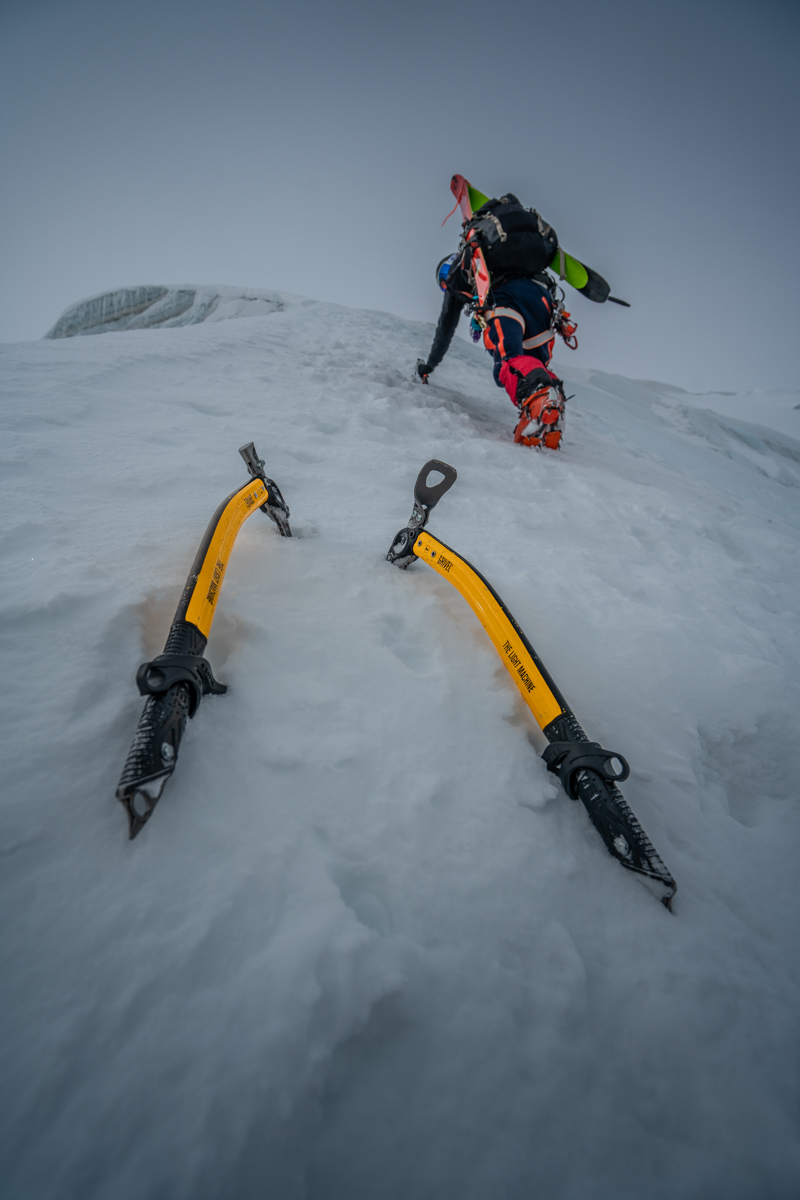
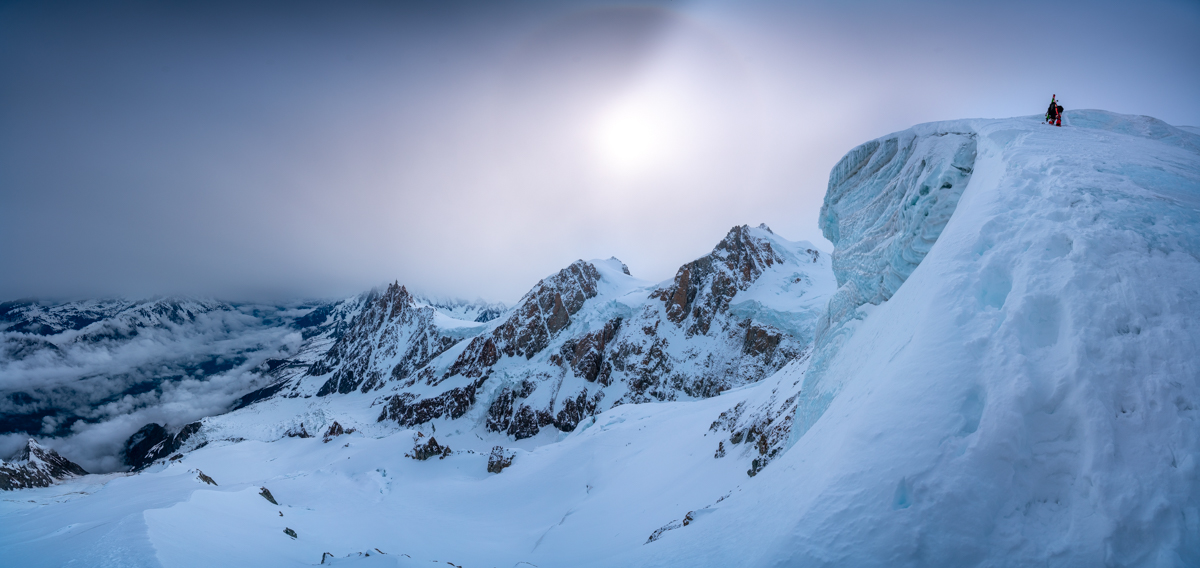
When the terrain flattened out again, we were enveloped in fog and a strong storm arose. After a few more minutes, we reached the summit of the Dôme du Goûter at an altitude of 4,304 meters. But as the weather was now quite uncomfortable, we didn’t spend a lot of time on this flat summit. We removed the skins from our skis and began the descent via the classic ski route for Mont Blanc (Petit and Grand Plateau). This route is spectacularly flanked by huge seracs on both sides and is therefore highly endangered to icefall. This is one reason why we took an alternative route up. However, during the descent, the risk of icefall is much lower as one travels much faster skiing down than during the ascent.
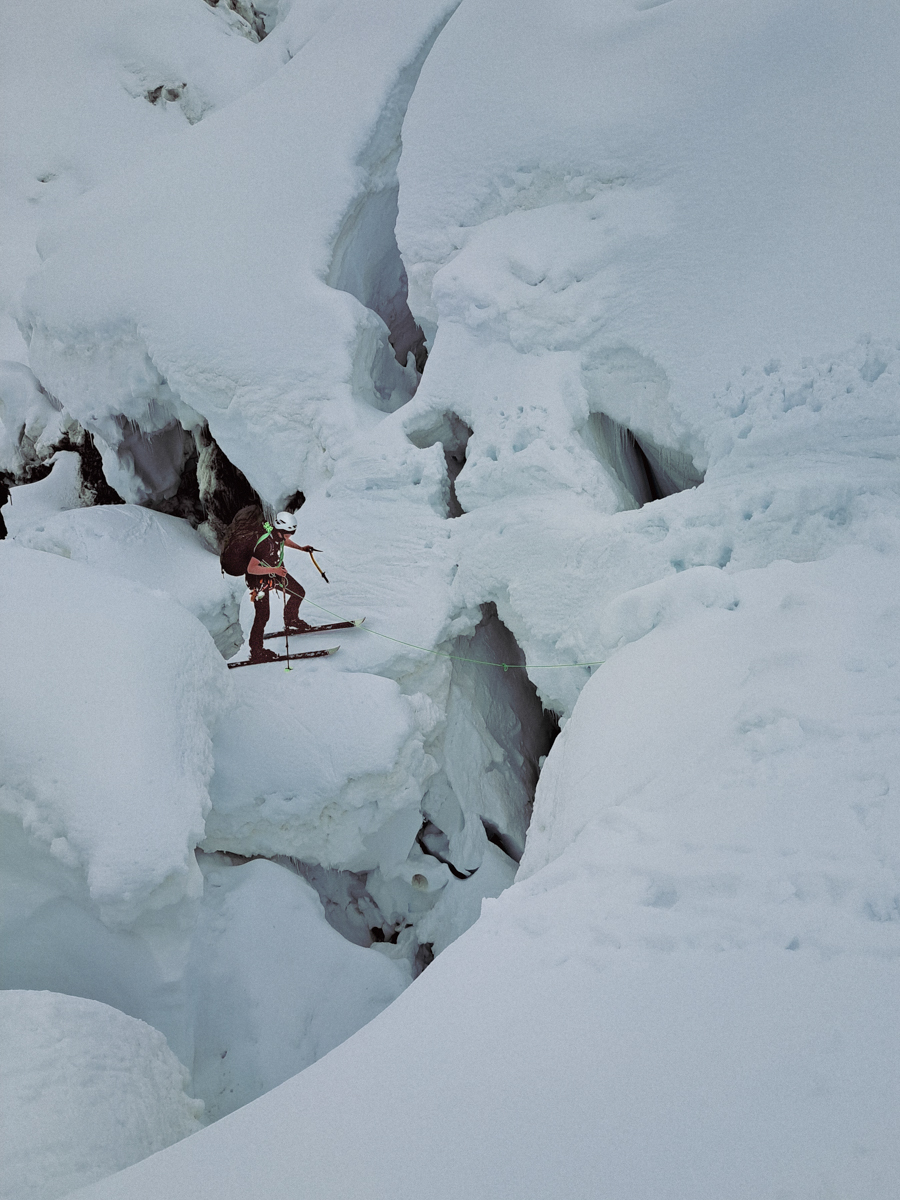
Since the sun had not yet shone all morning and it had snowed again during the night, we were able to enjoy the finest powder snow above 4,000 meters. Besides the joy of skiing and enjoying the landscape, we always maintained high concentration on navigation, as a labyrinth of crevasses lay before us, and we always tried to stay as far away from the seracs as possible. Exactly at noon, we arrived back at the hut and rested a bit for the summit day.
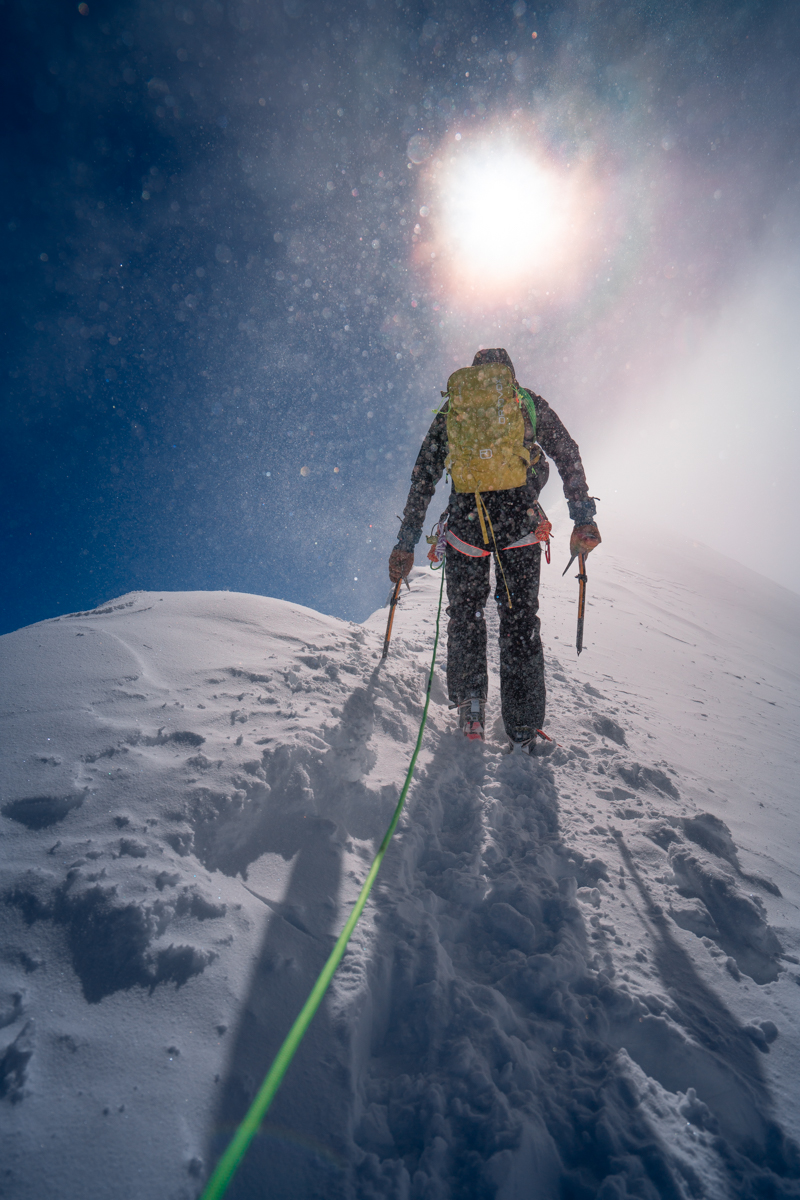
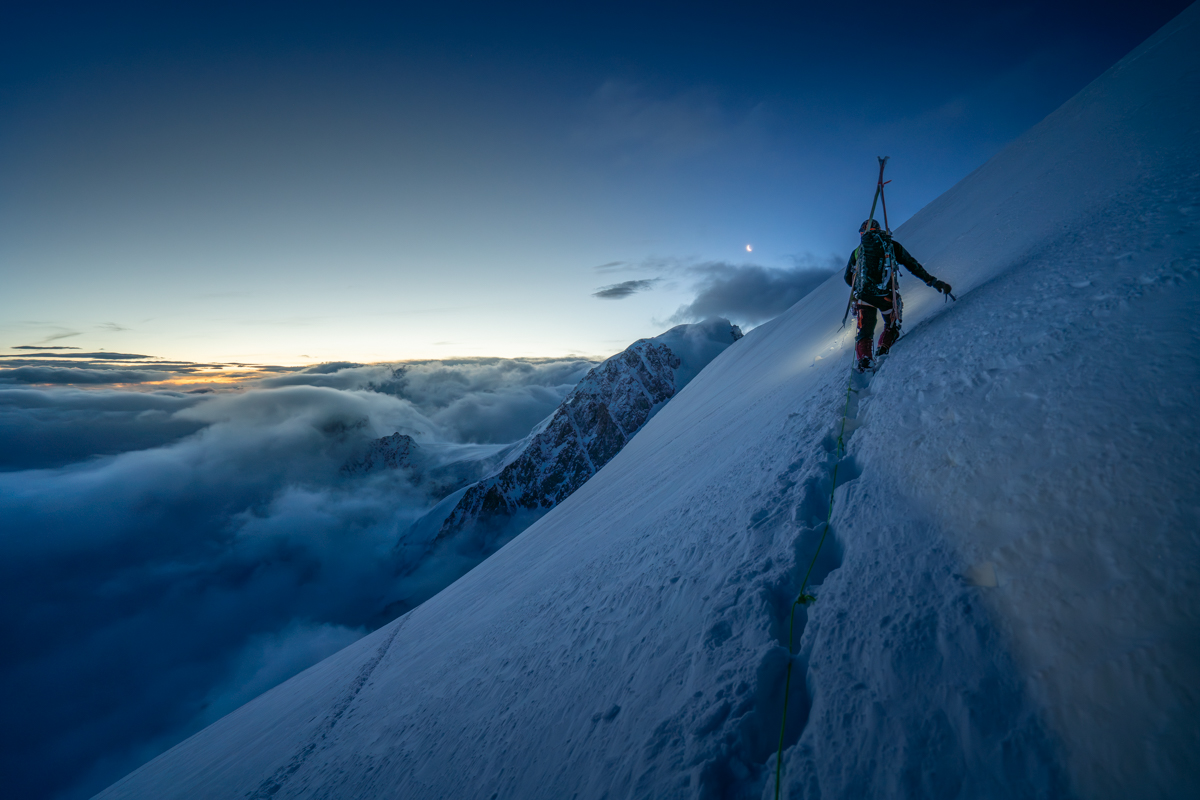 The summit day started early in the night. At 1:30 am, after a quick breakfast, we were on our skis and were the first to leave the hut. Above us was a clear starry sky, which, however, wouldn’t last long. In the darkness, it was a huge advantage that we could follow our tracks from the previous day and be sure we were on the right path. This made it much easier, especially since a strong snowstorm soon arose. In the light of our headlamps, we had about 3 to 4 meters of visibility, and in this snowstorm, we climbed the ridge, which seemed much longer to us than the previous day. Eventually, we left the bare ice passage behind and continued up a very steep, snow-covered slope. Around this time (shortly before 5 am), the first daylight appeared on the horizon, and suddenly we were above the clouds again. An amazing sight. We had already completed about 1,000 meters of ascent when we left the steep terrain behind and continued gently upward past the Dôme du Goûter towards Mont Blanc, which shone in the first sunlight before us.
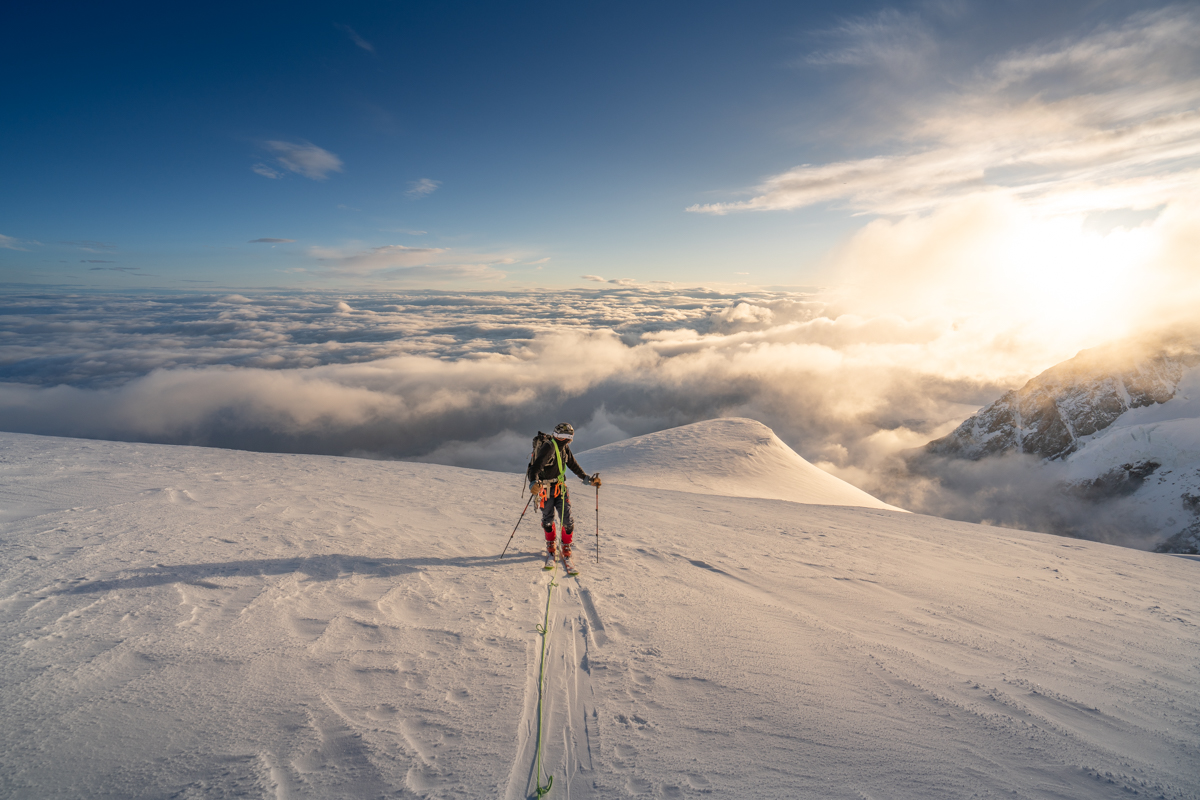
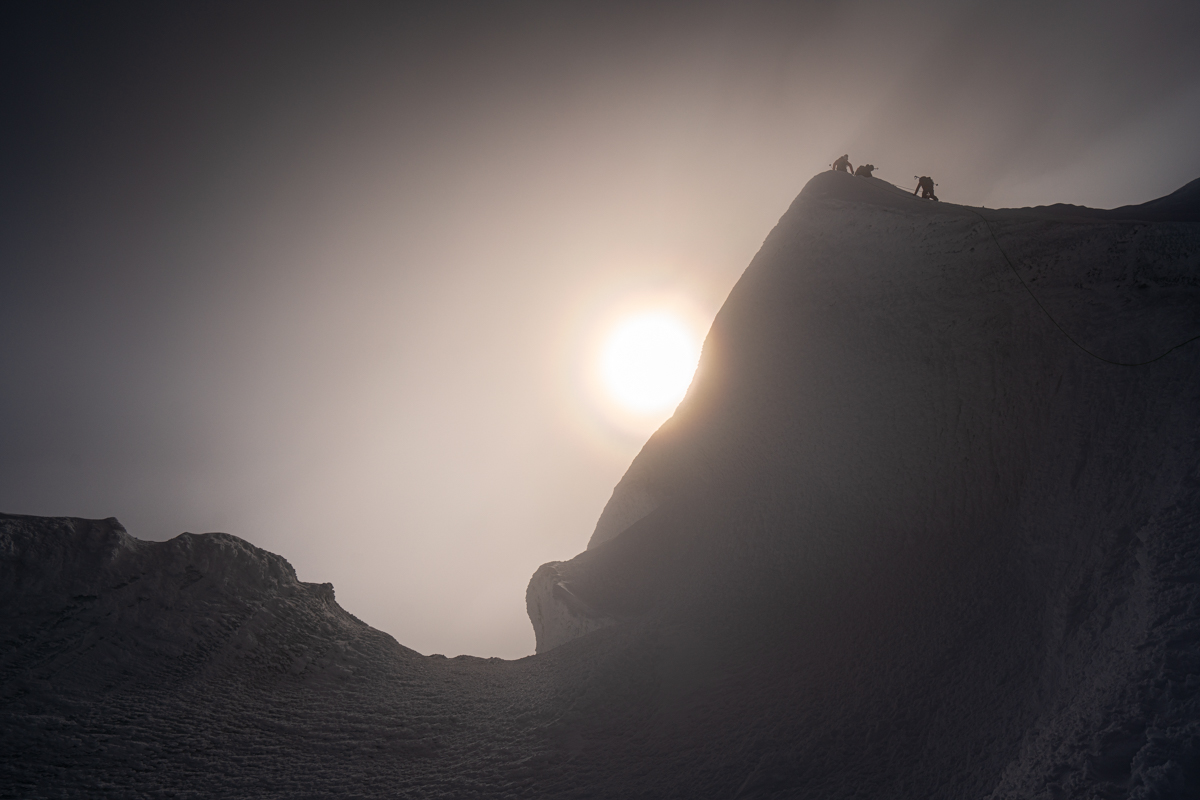
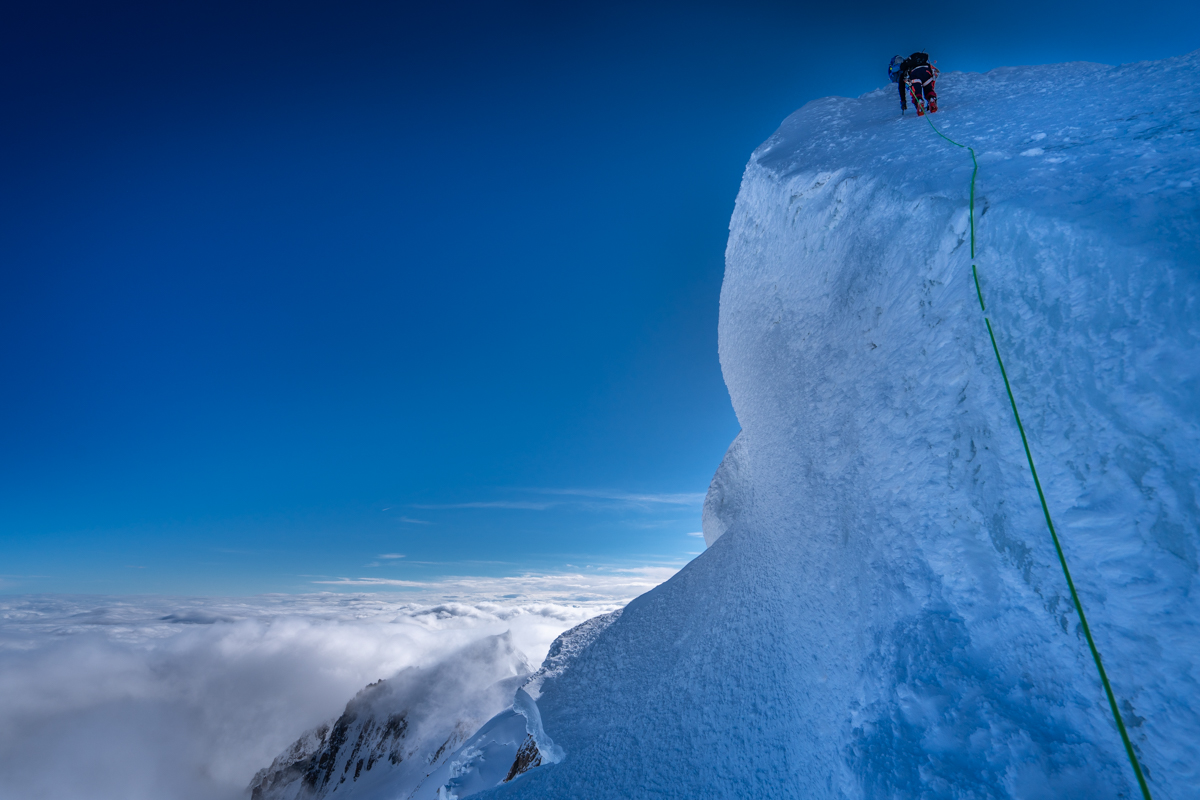
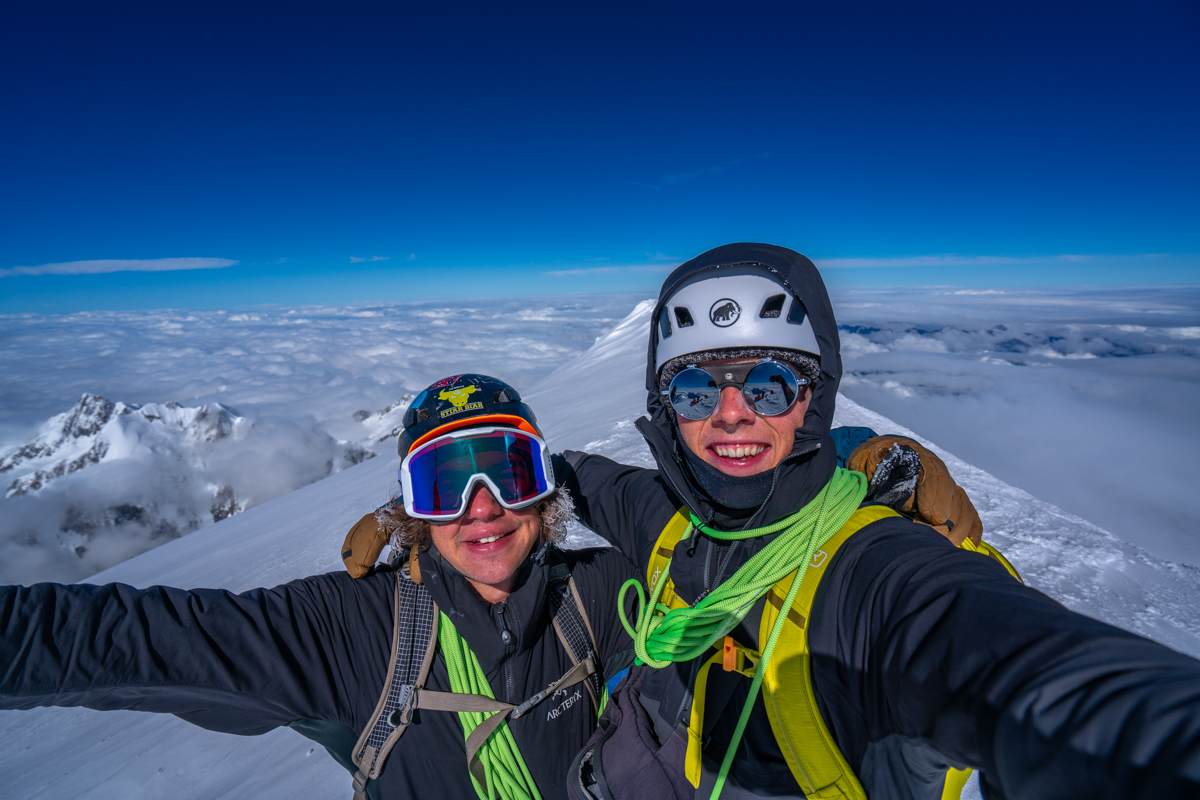
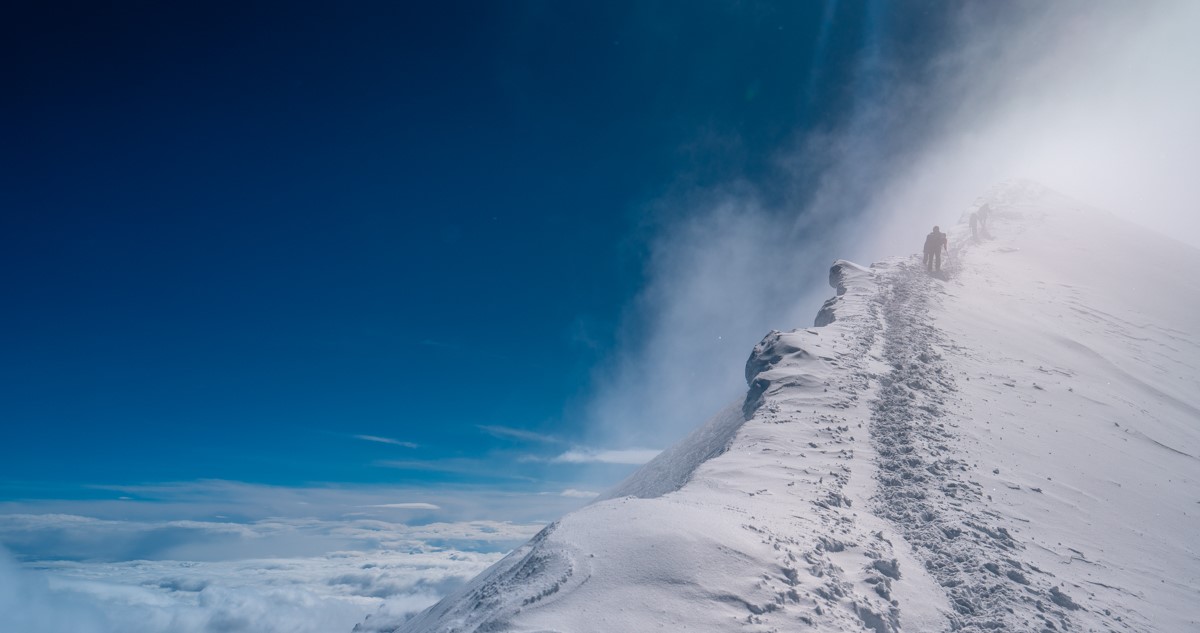
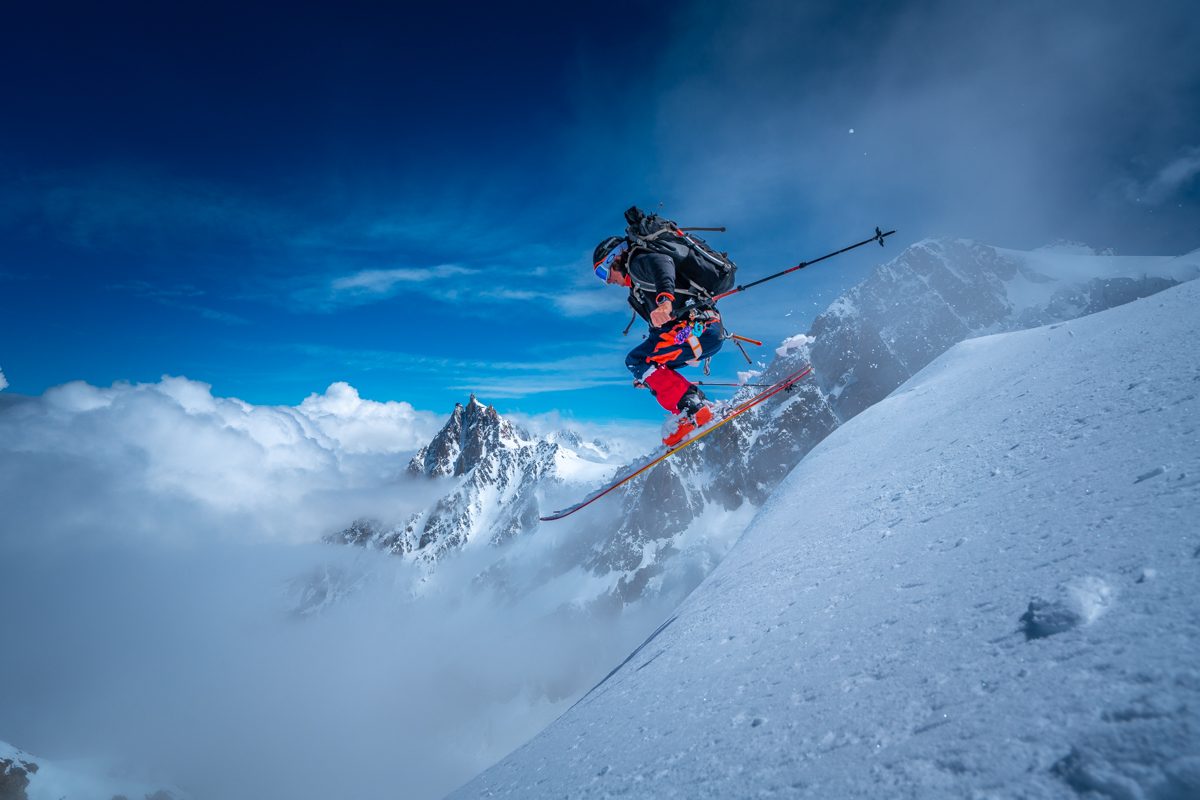 We stayed on the summit for about 20 minutes, looking down at the snowy peaks emerging from the clouds everywhere, before starting the long descent. First back over the Bosses Ridge (where numerous other people were now coming up who had taken the normal route) to the Refuge Vallot, where we retrieved our skis and, as on the previous day, skied back to the hut over the plateaus. This time in bright sunshine. Although the snow quality was not as good as the day before, we had a great time skiing between the ice blocks and crevasses and looking down at the clouds still hanging in the valley below us. Back at the hut, we took a short break, packed our things, and continued the descent in now very poor snow conditions. The warm temperatures and direct sunlight made the snow soft and wet down to deep layers, making skiing very exhausting for us. When we reached the large crevasses, we found that the snow bridges we had crossed two days earlier no longer existed, but we found another way to get across. The next few hours were sheer drudgery. In the two days we had spent on the glacier, the snow on the lower part of the route had melted significantly, so we had to carry our skis for long stretches instead of skiing down comfortably. The numerous moraine crossings also demanded a lot from us at the end. However, we reached the mid-station of the Aiguille du Midi railway again after 16 hours of mountaineering. Our successful adventure came to an end.