Day 1
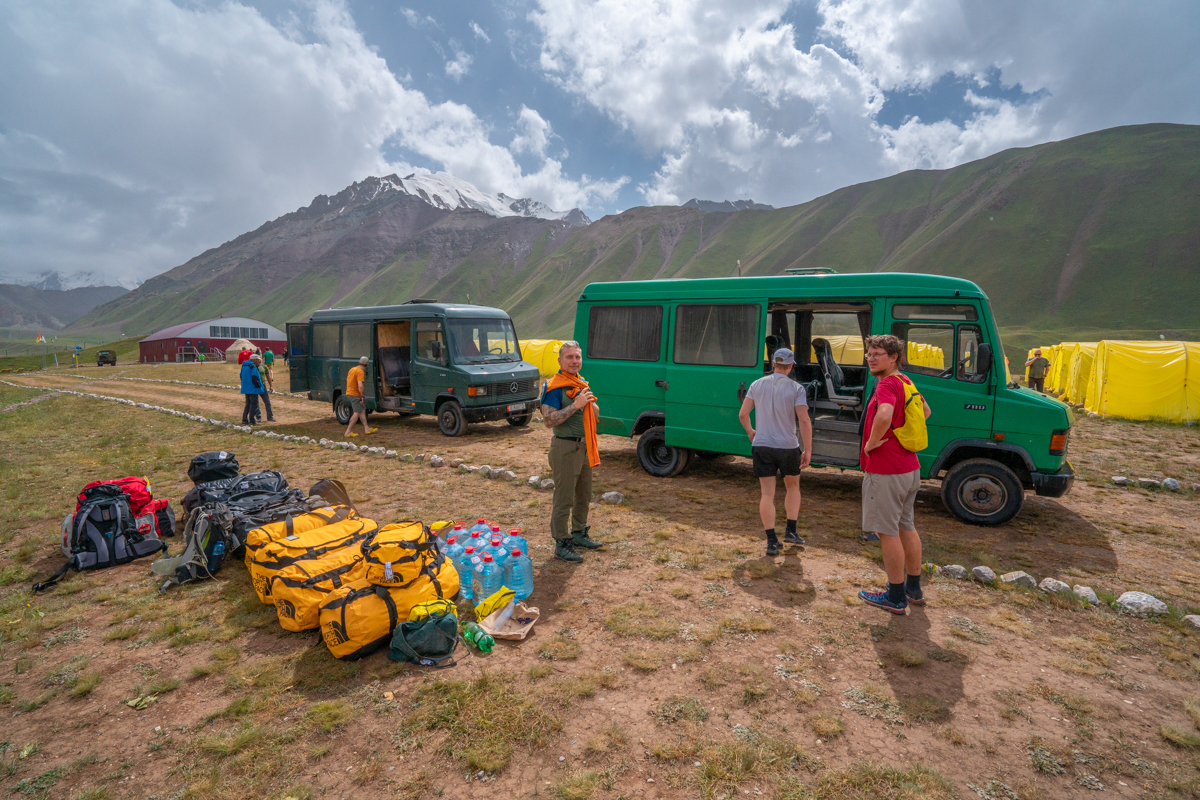
The starting point of the expedition was Osh in the southwest of Kyrgyzstan. In the morning, I first met the other expedition members Marc, Patrick, Roland, Igor, and Klemens. After a quick breakfast, all the equipment was loaded into an old Mercedes bus, and we finally set off towards the south. We drove on the Pamir Highway through incredibly beautiful mountain landscapes and reached the Taldyk Pass at an altitude of about 3600 meters after several hours. From there, it descended steeply into the vast Alai Valley. For the first time, the glaciated Trans-Alai Range, a mountain range of the Pamirs that forms the border between Kyrgyzstan and Tajikistan, revealed itself to us. The partially cloud-covered peaks over six thousand meters high appeared intimidating and beautiful from a distance. On a dusty gravel road, we crossed the approximately 40 km wide Alai Valley and drove the last few kilometres through a beautiful hilly landscape to the Lenin Peak Basecamp at an altitude of 3600 meters. The Lenin Peak was still shrouded in clouds; only the lower part of the mighty mountain was visible. Towards evening, small holes appeared in the wall of clouds, and high above, where I would have expected the sky, glaciers were still visible through the clouds. When the summit also appeared at sunset, and music played in the base camp, the goosebumps moment was perfect. It was the first time I saw a seven-thousander, and it was an incredible sight. In the base camp, we also met Dawa Sherpa, who would accompany us throughout the expedition, and Felix Berg, our expedition leader, who had been on the mountain with another team for a week.
Days 2 – 5
The first two days after arrival were spent on light acclimatization hikes. Igor and Klemens had already set off towards Advanced Base Camp on the first day, while the rest of us climbed two small mountains near the base camp. We reached an altitude of 4200 meters on the first day and 4400 meters on the second day. Fortunately, we had good weather and enjoyed wonderful views of our expedition goal, Lenin Peak, and on the other side, a hilly landscape dotted with lakes that extended into the Alai Valley.
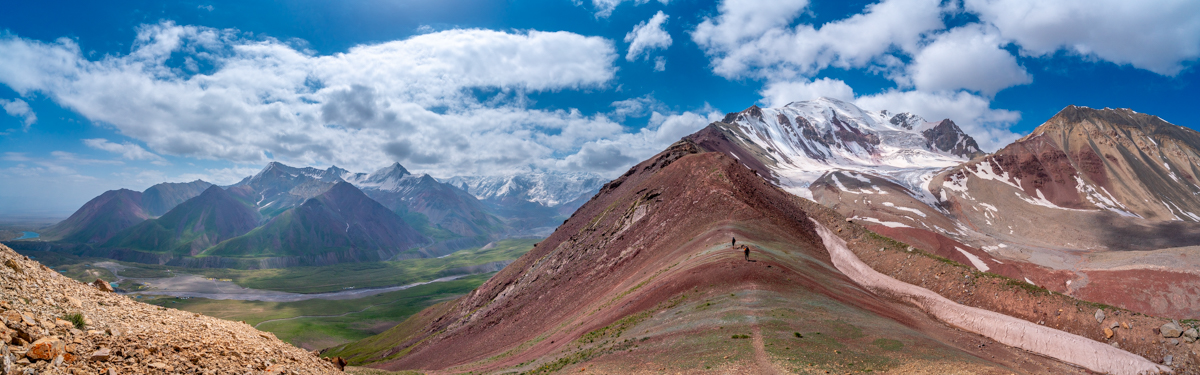
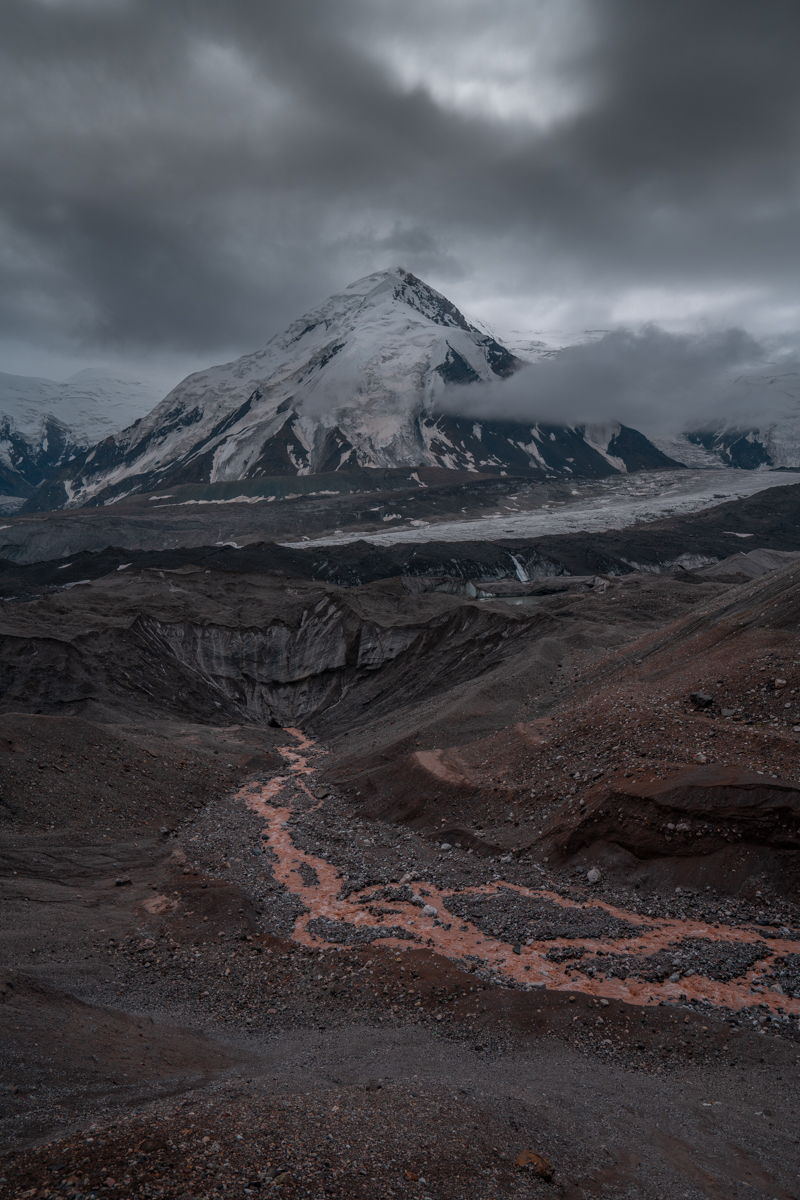 The weather changed on the next day, and we left the base camp in pouring rain. Laden with heavy backpacks, we headed to the higher camp. After crossing the Traveller’s Pass at over 4100 meters, the spectacular landscape of the Lenin Glacier unfolded before us. Our path led us over a rain-soaked scree slope, and even in „bad“ weather, it was a stunning atmosphere to walk through this barren, cloud-covered landscape of rock and ice and occasionally glance at a peak over 6,000 meters high peeking out of the clouds.
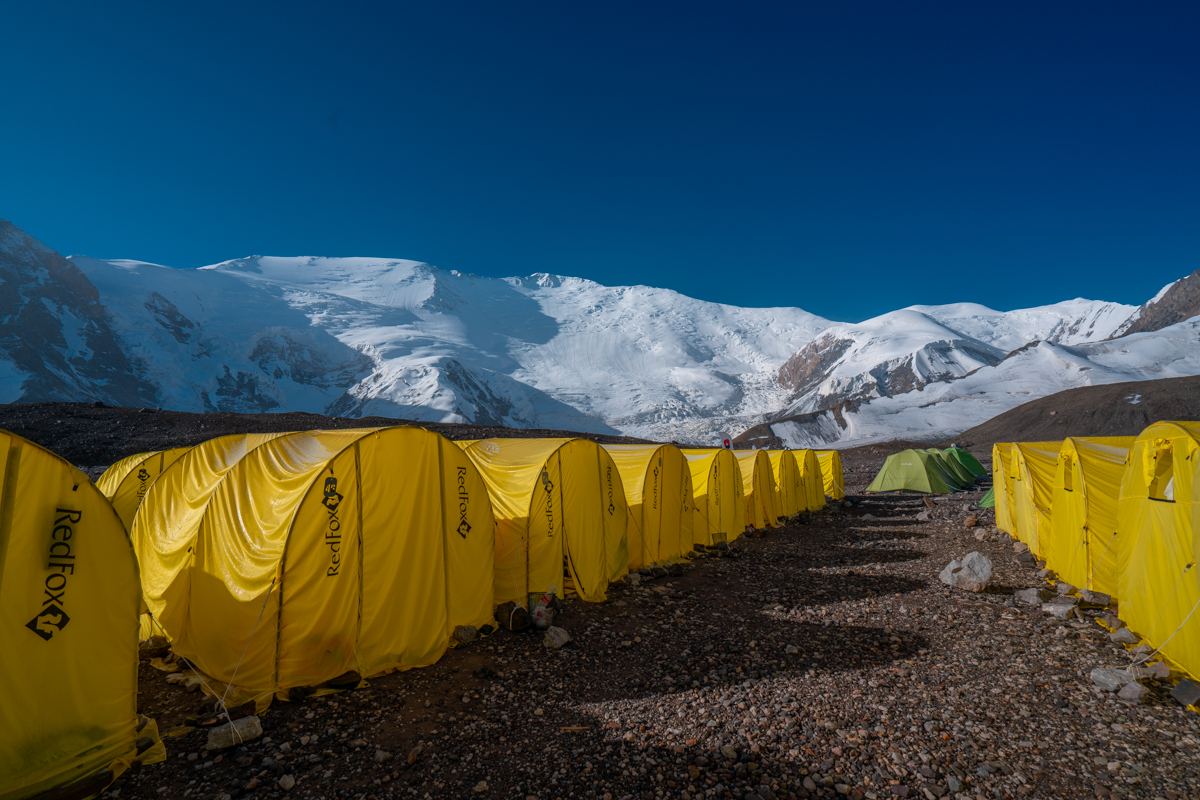
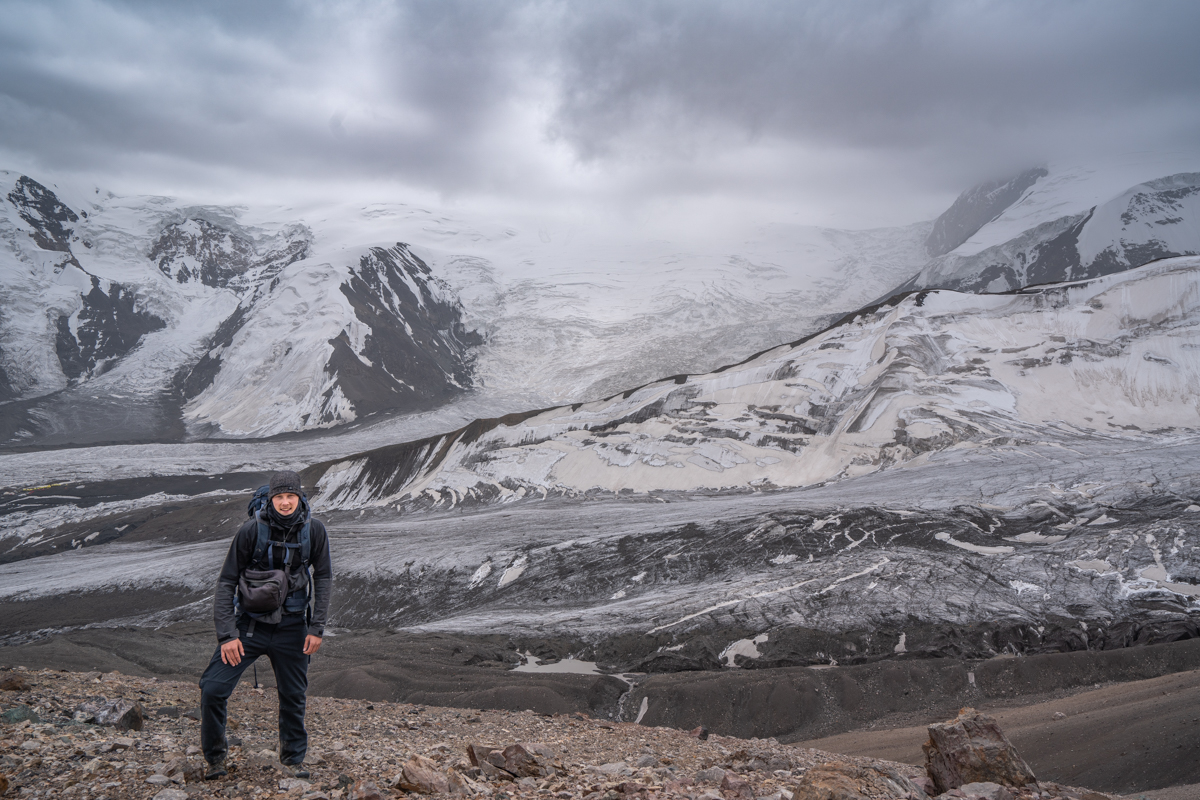 After about 4 hours of walking, we reached the camp at an altitude of 4400 meters. Technically, this camp is not a real high camp but rather an advanced base camp (ABC), as it was still too comfortable for a high camp. Nevertheless, for simplicity, I will refer to it as Camp 1 in this report. On Day 5, we embarked on another acclimatization tour to reach an altitude of five thousand meters. Our destination was Yukhin Peak, located near Camp 1. In fog, rain, and later snow, I felt the thin air for the first time, and breathing became a bit more challenging. However, we reached the summit at 5130 meters, and despite the lack of views, it was a great feeling to stand on a snowy peak again. After a long stay at the summit, we quickly descended the long scree slope back to the camp.
Days 6 – 8
After two acclimatization tours from the base camp, the ascent to Camp 1, and the successful achievement of 5000 meters during another acclimatization tour there, we had the first rest day on Day 6. The weather was perfect again, and under the cloudless, blue sky, we saw the almost 3000-meter-high mountain face in front of us for the first time, separating us from the summit. An impressive sight. Since there was no significant ascent on Day 6, and we had nothing else planned, we spent our time walking on the Lenin glacier for the first time, conducting final equipment checks, and enjoying the beautiful weather. Back in the camp, we met Igor and Klemens again, who had already reached Camp 2. Unfortunately, Klemens had developed altitude sickness and had to descend.
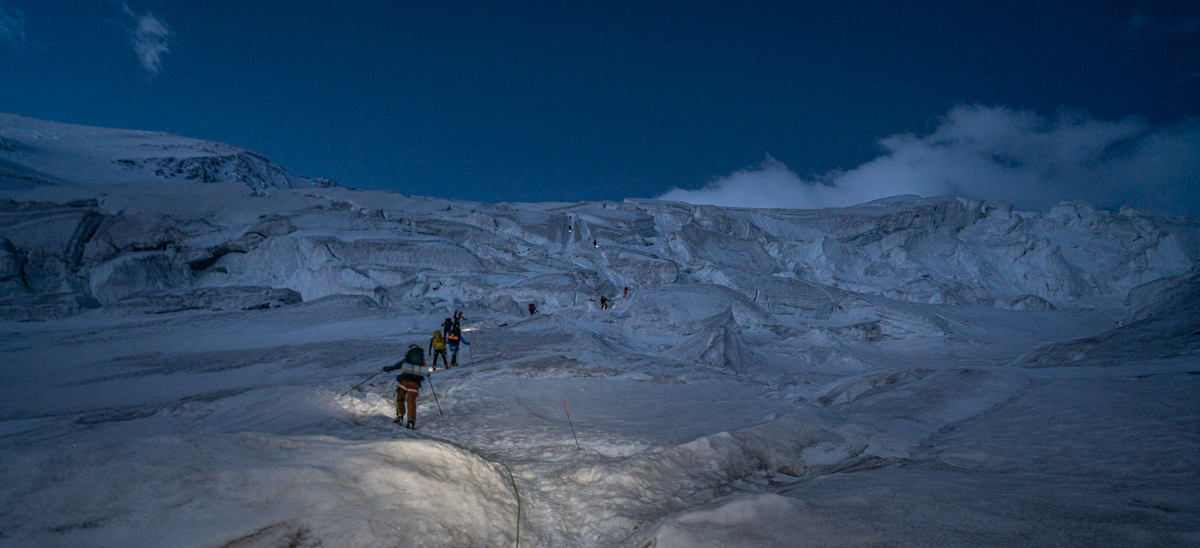
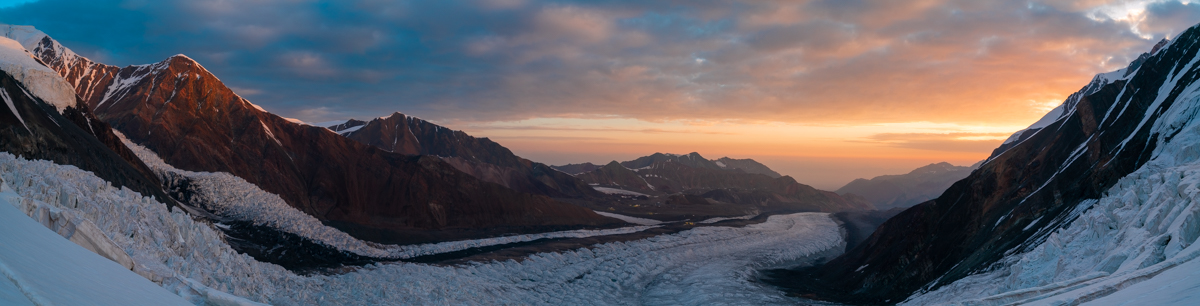
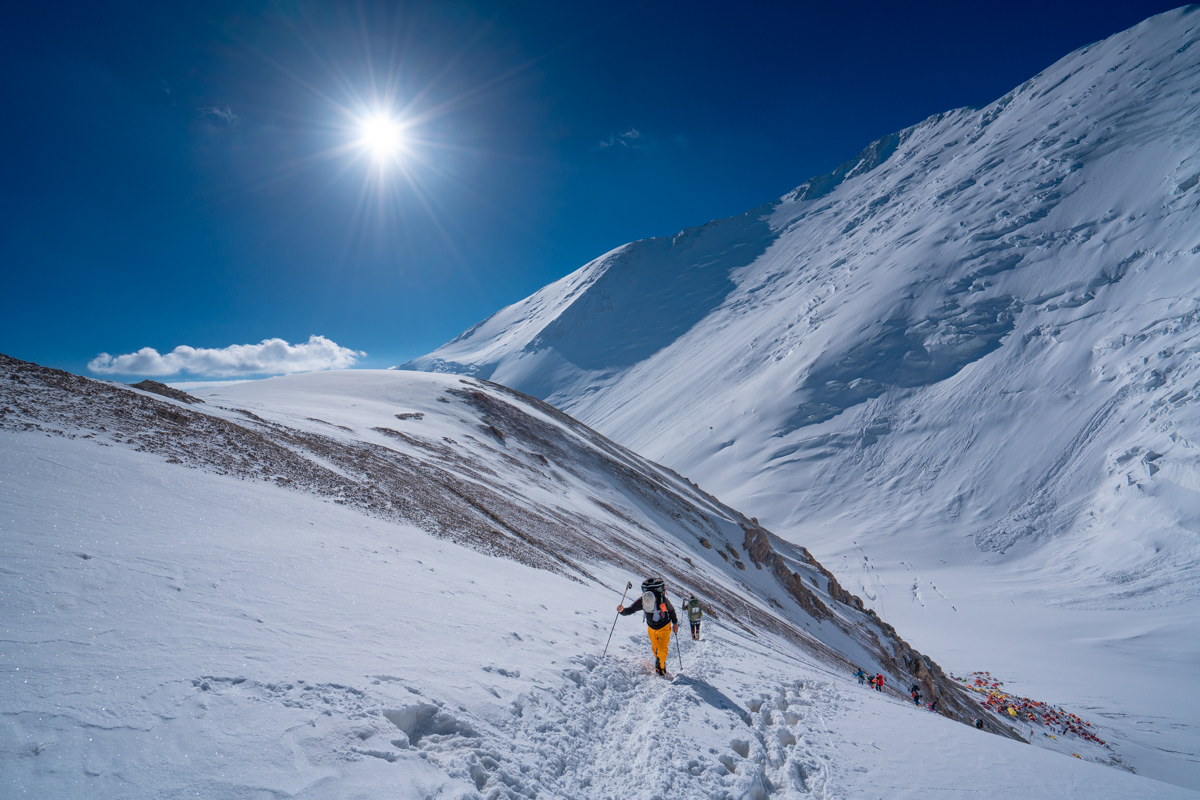
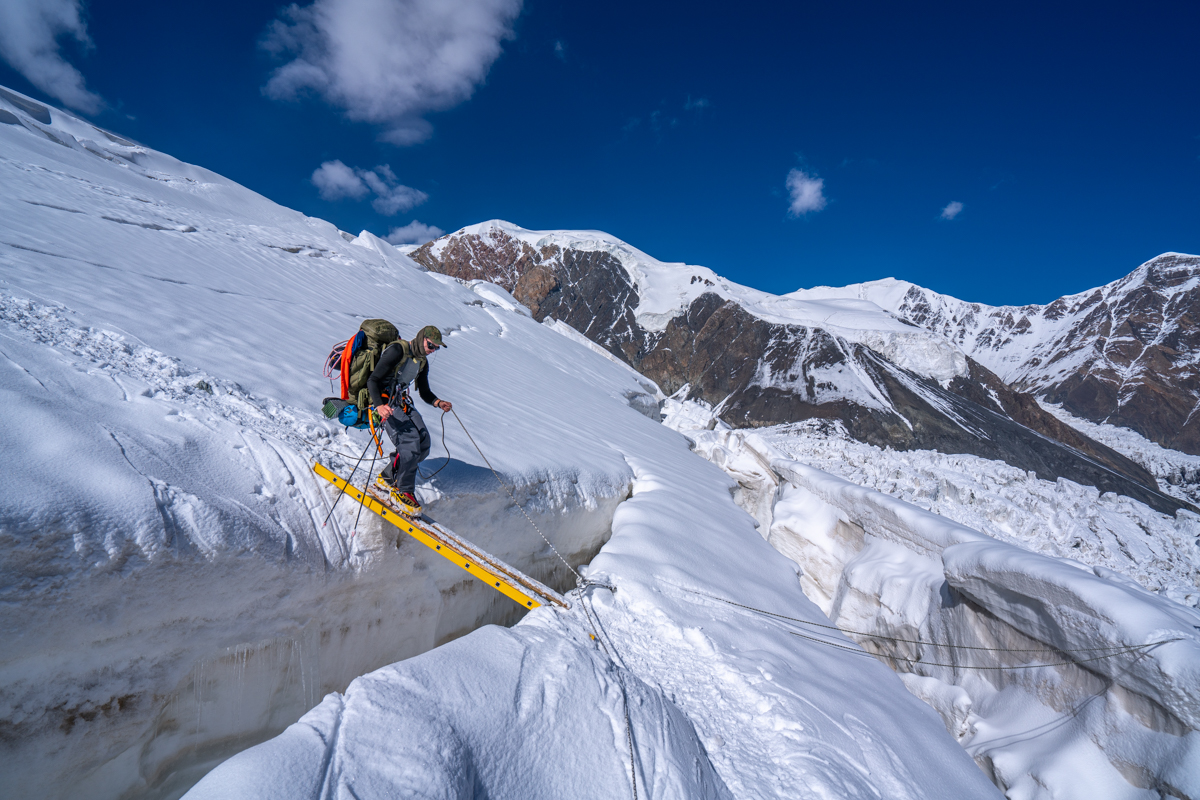
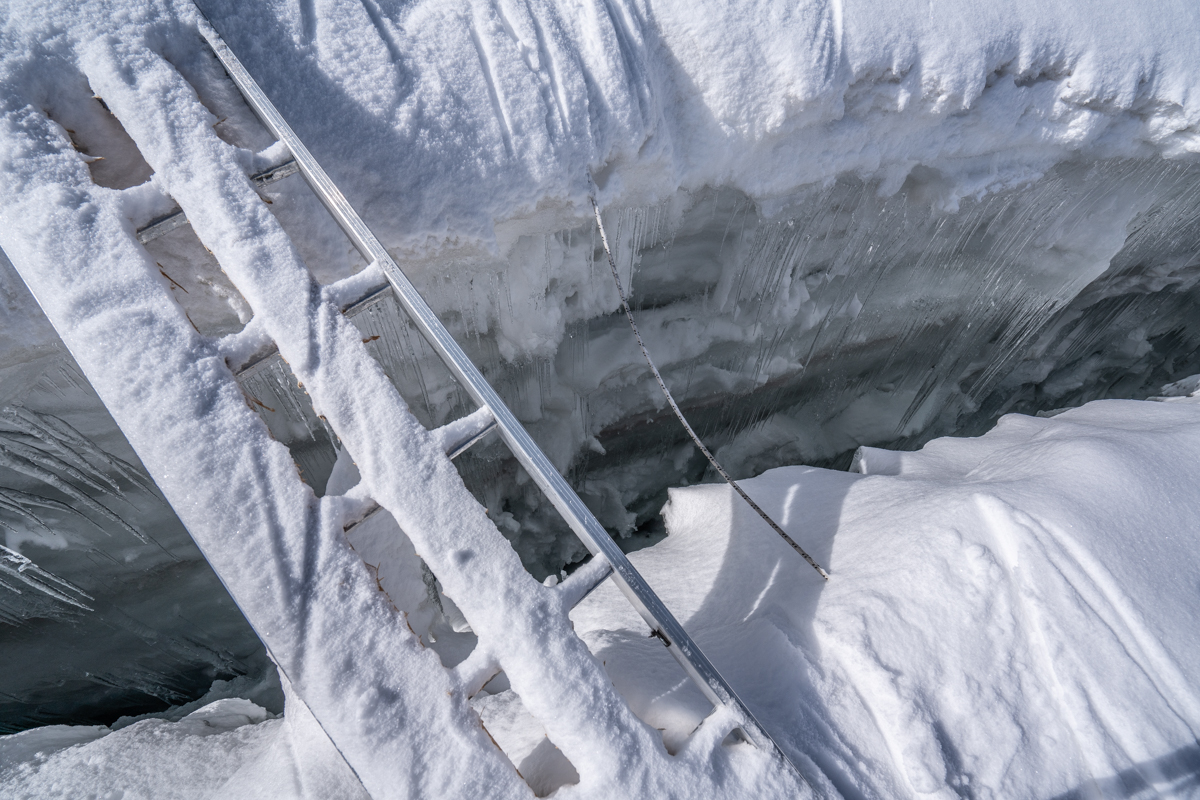
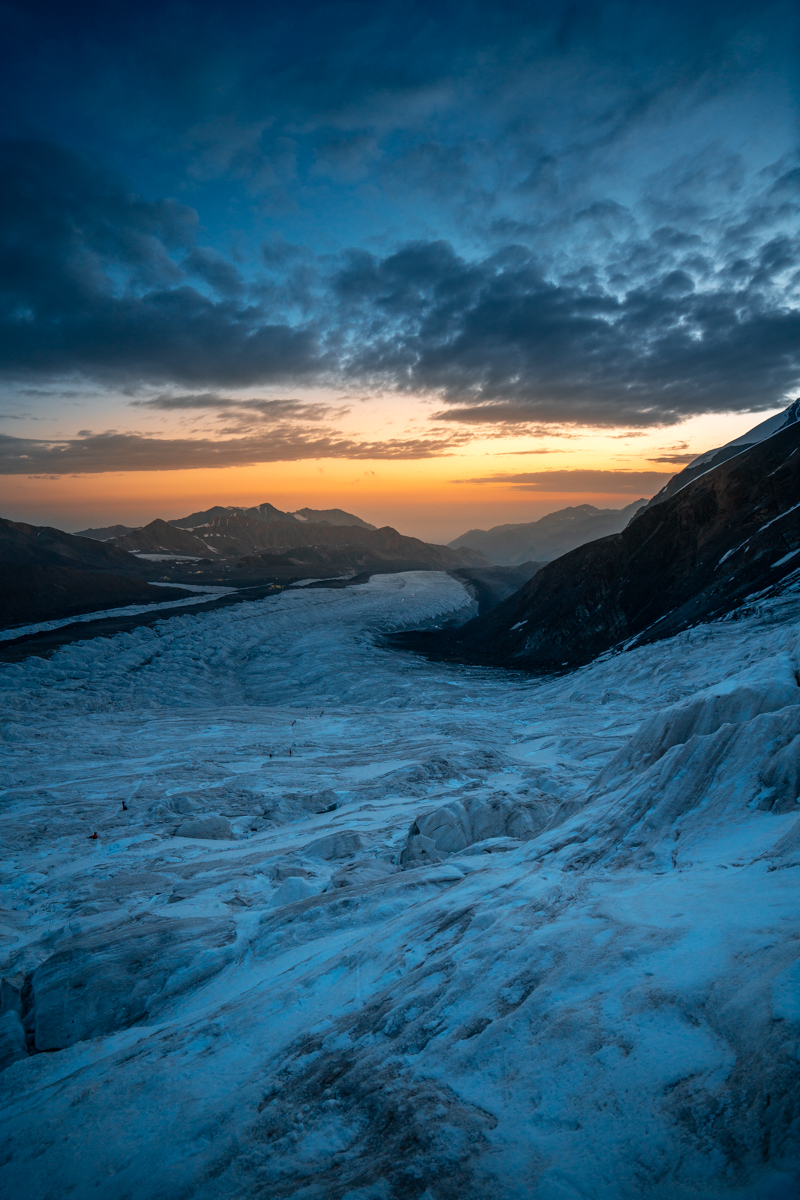 The next day was the first spent mainly on the glacier. The alarm went off at 2:30 am, and after a quick breakfast, we started our journey towards Camp 2 half an hour later. It was a cold and starry night, and a positive excitement had spread within me. I knew that in these moments, the most exciting but also the toughest part of the expedition would begin, which I had been looking forward to for so long. We covered the approach to the glacier at a very fast pace. On the glacier tongue, we took a short break to put on crampons and tie ourselves into the rope before continuing the moderate ascent. Soon, we crossed the first crevasses with large steps. Slowly, the first light of day spread, and we could see more and more of our surroundings. In this twilight, the glacier crevasse of the Lenin Glacier loomed in front of us, with lights from other climbing teams visible in the distance. This approximately 30-meter-high wall of rugged ice blocks was a breathtaking sight. Using fixed ropes, we then climbed the approximately 70° steep wall. Carrying heavy backpacks, it was the first real effort of the day. After the steepest section, we stood on small islands of ice amidst huge crevasses. One by one, we crossed them, either on natural snow and ice bridges or with the help of ladders. This part was the most exciting terrain so far. From above the icefall, we had a magnificent view of the endless glacier tongue curving towards the Alai Valley. This view was perfected by the warm light of the rising sun.
Days 9 – 10
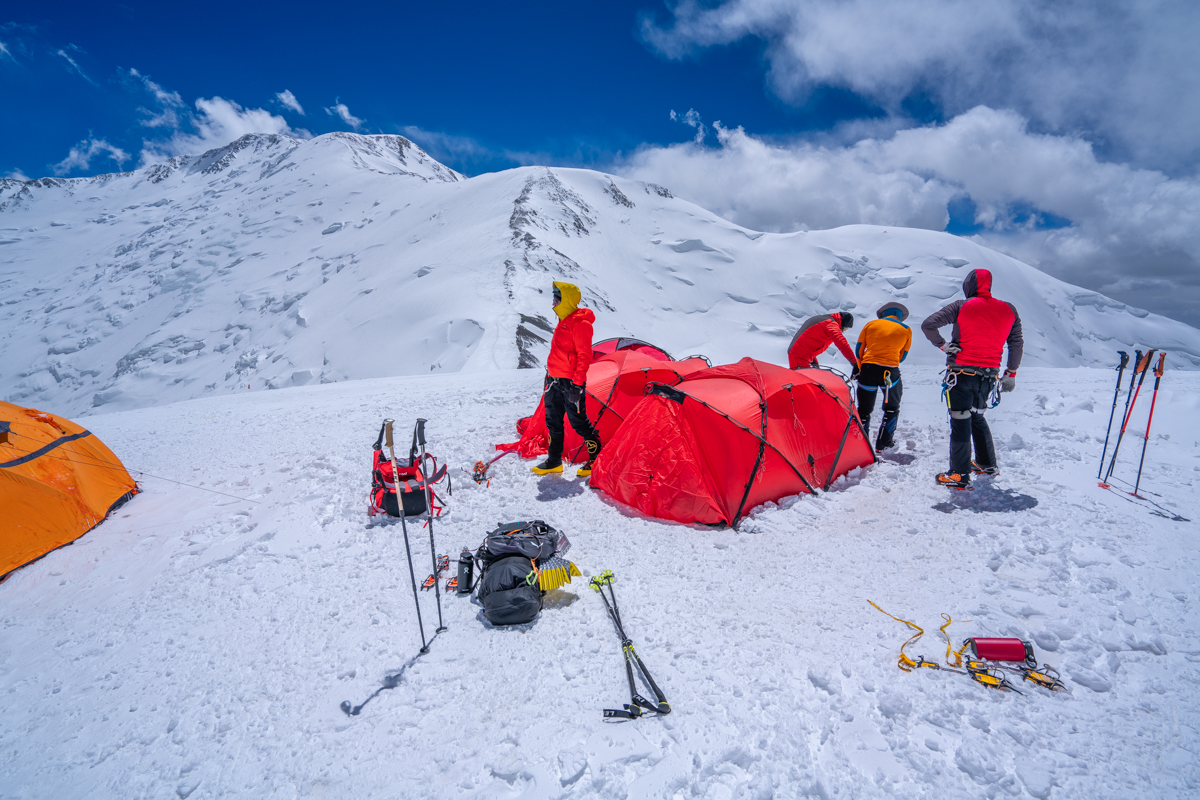
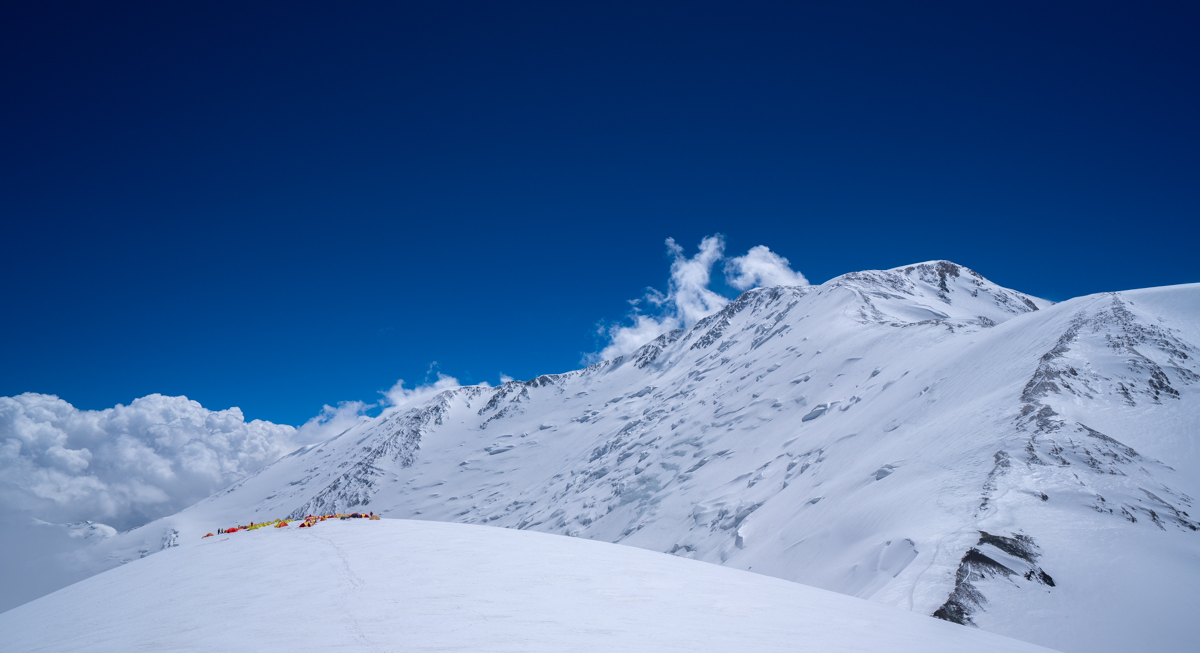
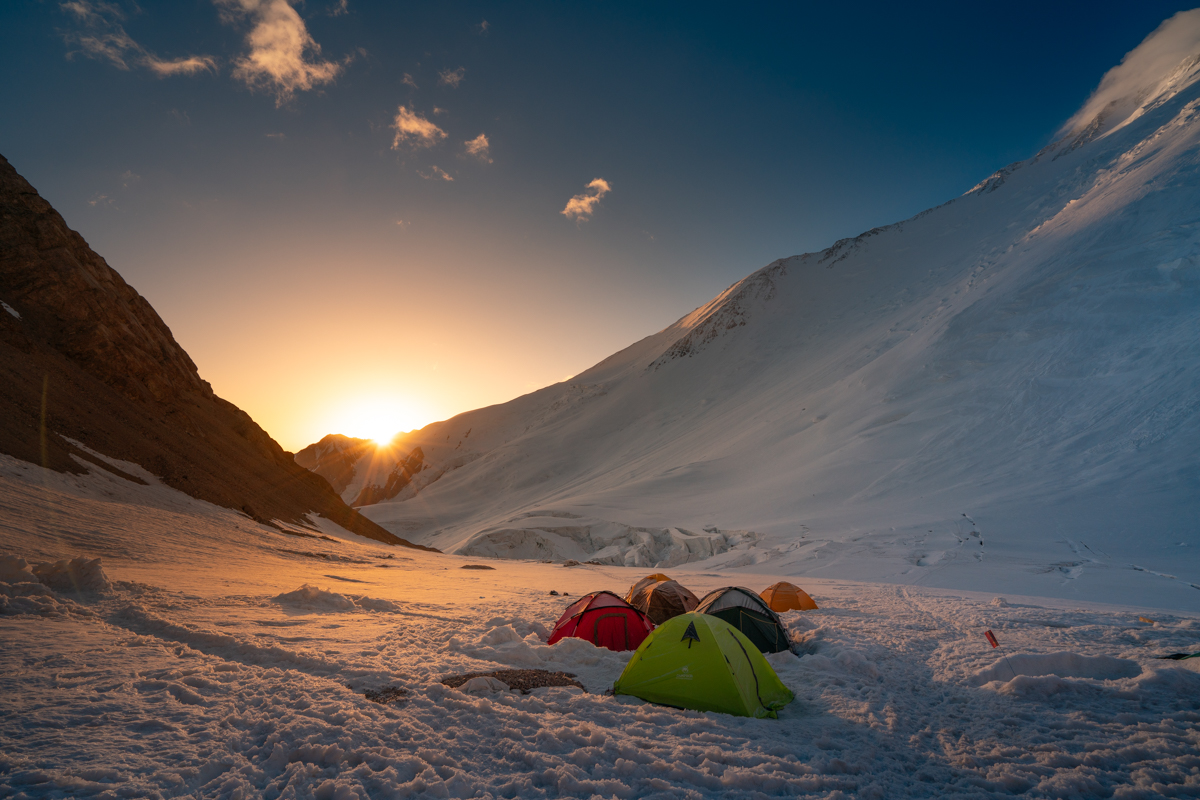 The original plan was to descend to Camp 1 (ABC) after reaching the 6000-meter mark, rest there for two days, and then ascend to the summit from there with two overnight stays in the high camps. However, the weather during our stay was very unstable, and it was uncertain whether we would have a good weather window for a possible summit day if we followed this plan. Therefore, we decided to change tactics and take a rest day in Camp 2 before attempting the ascent directly from there through Camp 3 to the summit.
On Day 9, we had a lot of time in Camp 2, which we spent mainly melting snow for drinking water and trying to sleep.
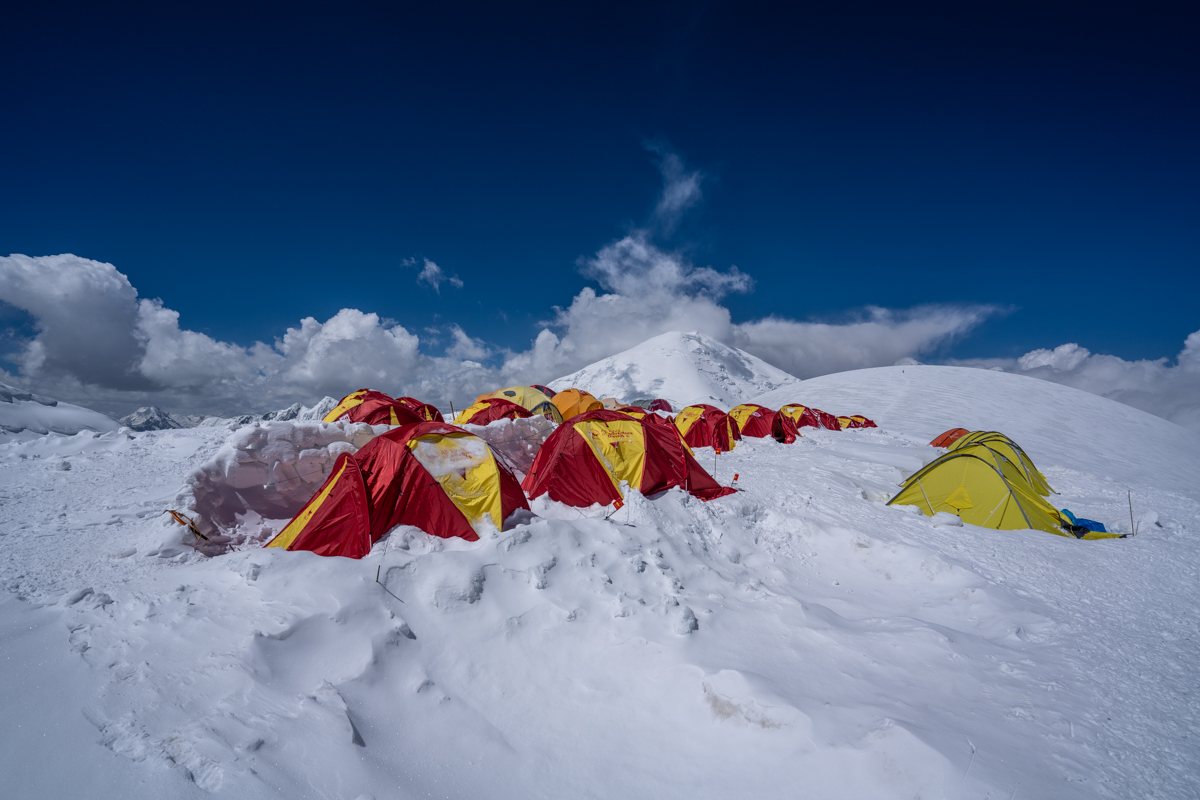
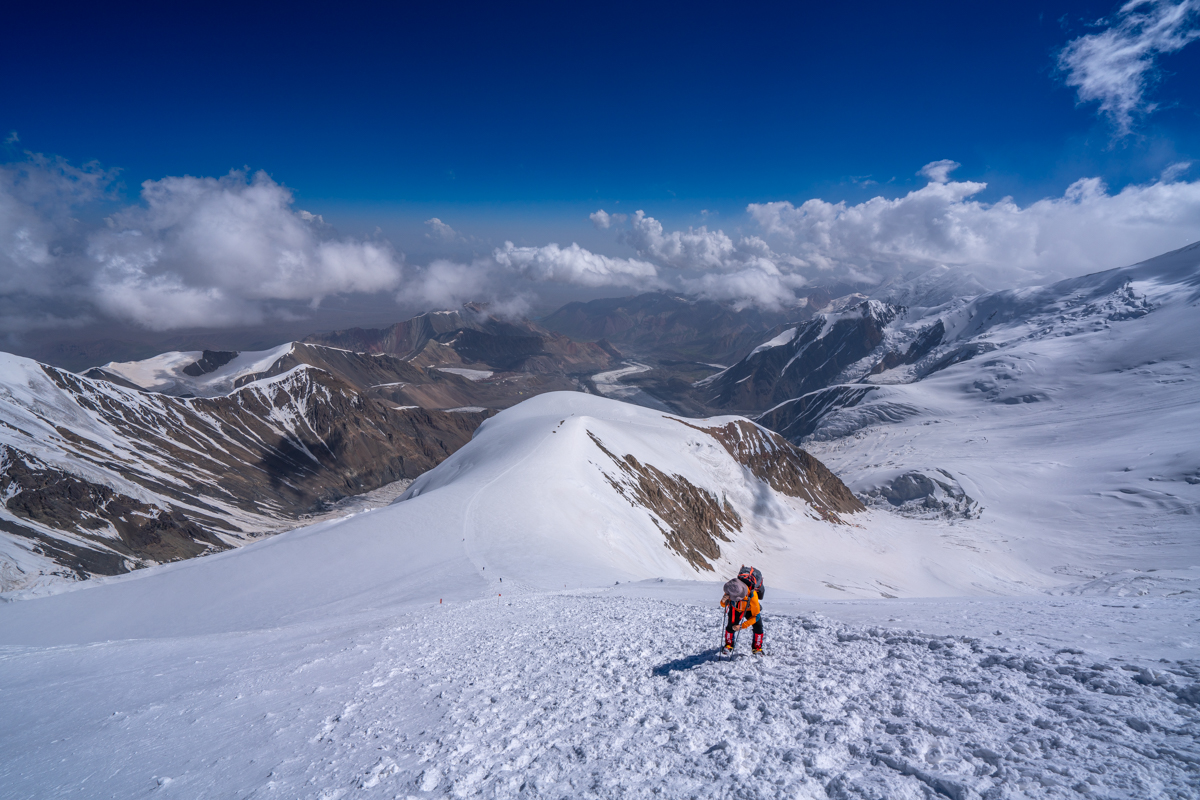 The next morning, we had to say goodbye to Marc. He had been sick for several days and unfortunately did not recover sufficiently at altitude, so he decided to descend. We set off early in the morning again, following the same route towards Camp 3 as two days before. In the first steep section, I narrowly avoided a small rockfall that had dislodged higher up on the rock. After that, we continued on familiar paths and again in perfect weather. The aforementioned last steep ascent to Camp 3 was, of course, very demanding again (especially since I was carrying heavy gear this time), but I felt a much better acclimatization, making it significantly easier for me despite the heavier backpack. After only about 3 hours, I had climbed the nearly 800 vertical meters and stood again at 6100 meters in Camp 3, what made me feel fit and confident for the summit push the next day. We also met Igor again, who joined us again. In the afternoon, I got a headache, likely a sign of the extended stay above 6000 meters, but fortunately, it had disappeared by the evening.
Day 11 – Summit Day
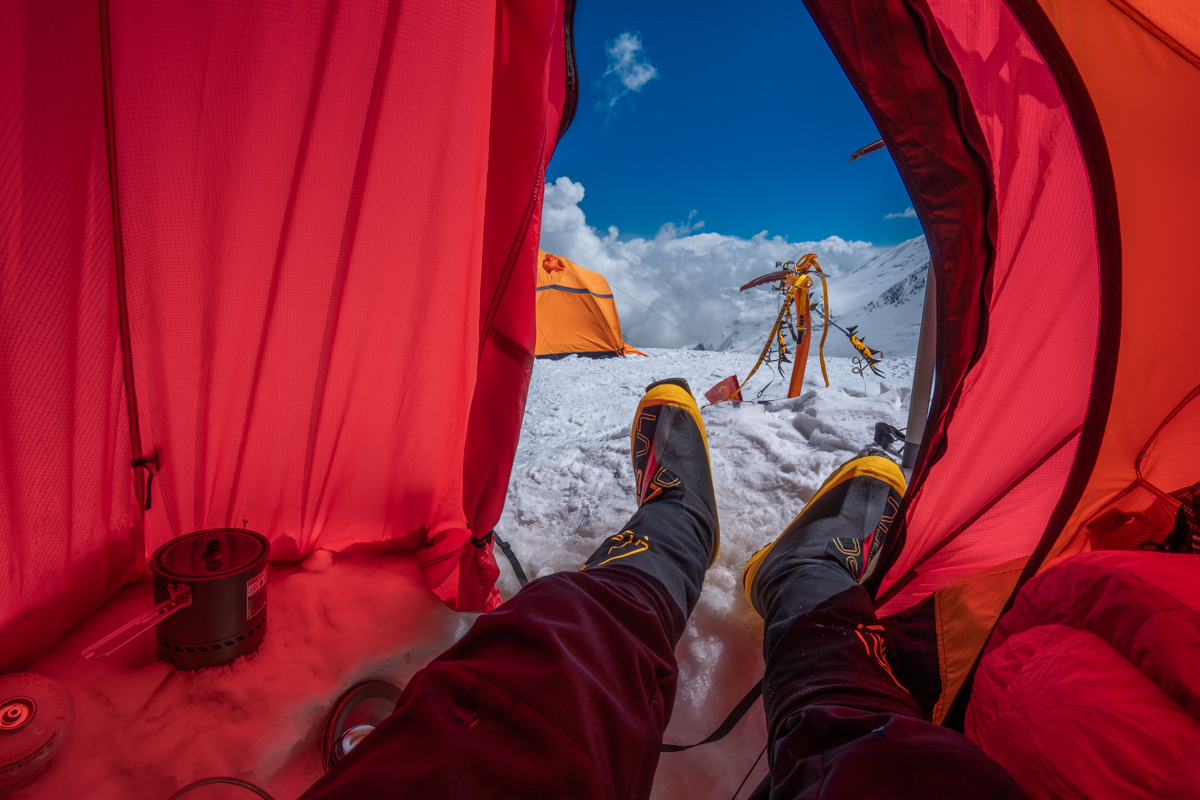
The alarm rang at midnight. The inside of the tent was covered with ice crystals and glittered in the light of headlamps. We cooked water for everyone one last time, and I ate some nuts before getting ready. Bundled up in thick down jacket and pants, we started the summit push around 1 am. From Camp 3, we first had to descend 100 vertical meters before the actual ascent began. The temperature was well below -20°C, and a fierce wind blew over the ridge, which I could feel even through all my layers on my shoulder. I used a mask that created a small air cushion in front of my face, allowing me to breathe warmer and moister air through my own exhaled breath. While it made breathing a bit more challenging, I believe my lungs were grateful to be spared the extremely cold and dry air to a large extent. Since I couldn’t keep my eyes open in the strong, cold wind, I had to put on my ski goggles, which, combined with my mask, protected my entire face. However, wearing tinted glasses in absolute darkness did not improve visibility…
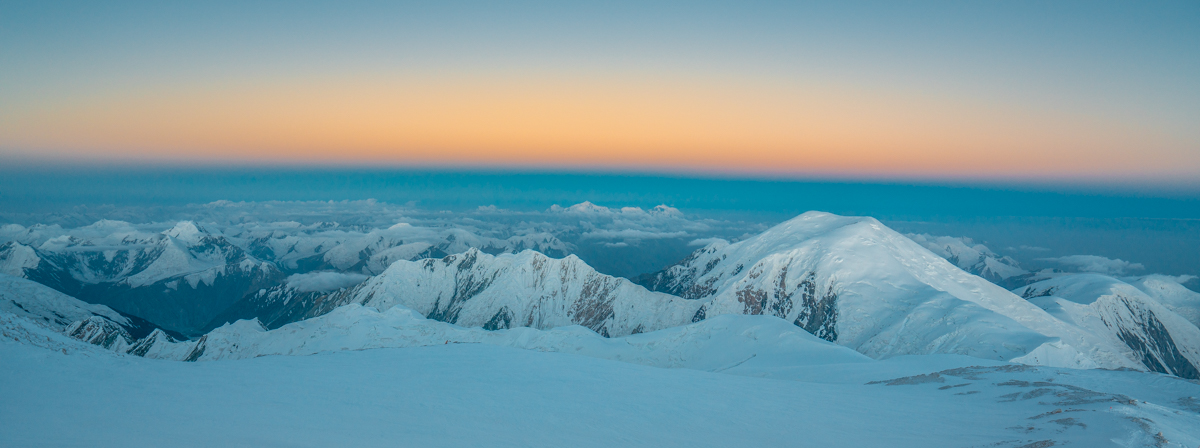
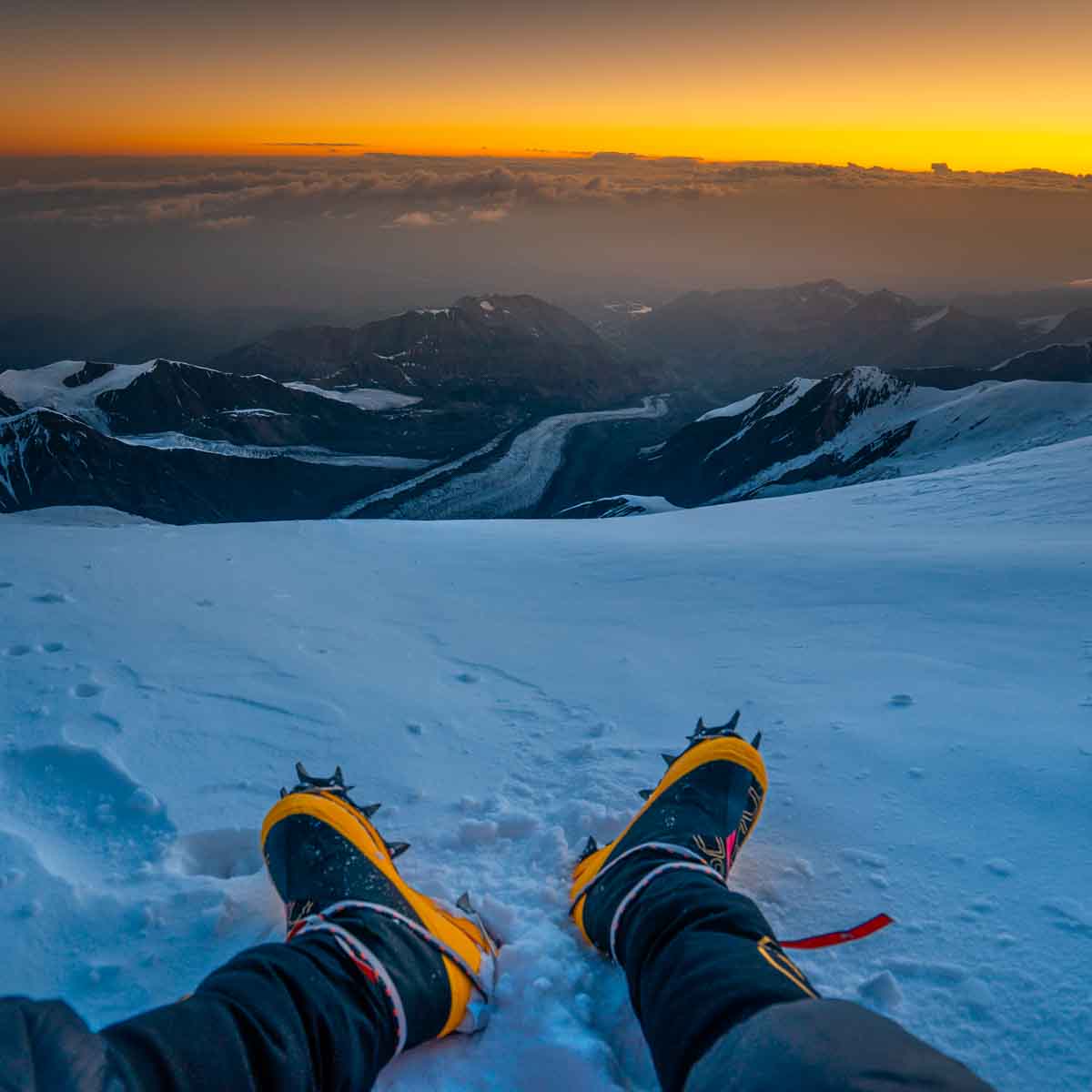 After overcoming the first steep part of the route, we were at an altitude of about 6400 meters, and from there, the route became a bit flatter. Although this made walking easier, I already noticed that the air was getting thinner, making progress more difficult. A bit further, we reached the steepest section of this stage. The passage called „The knife,“ with a slope of about 40°. Once at the top, the first daylight was finally visible. I had been looking forward to this moment for a long time, as I hoped for warmer temperatures and beautiful views. Shortly afterward, the sun rose, and I experienced one of the most beautiful moments I have ever had in the mountains. On the Kyrgyz side, I could now see the Lenin Glacier far below us, where we had walked along about a week ago. Behind us, on the Tajik side, a sea of snow-covered mountains stretched under the orange stripe of morning light. A few minutes later, the peaks of two 7000ers in Tajikistan (Ismoil Somoni Peak and Korschenewskaja) were illuminated by the sun. This view forced me to pause for a moment and enjoy the scenery. From then on, the path continued, sometimes steep, sometimes flat.
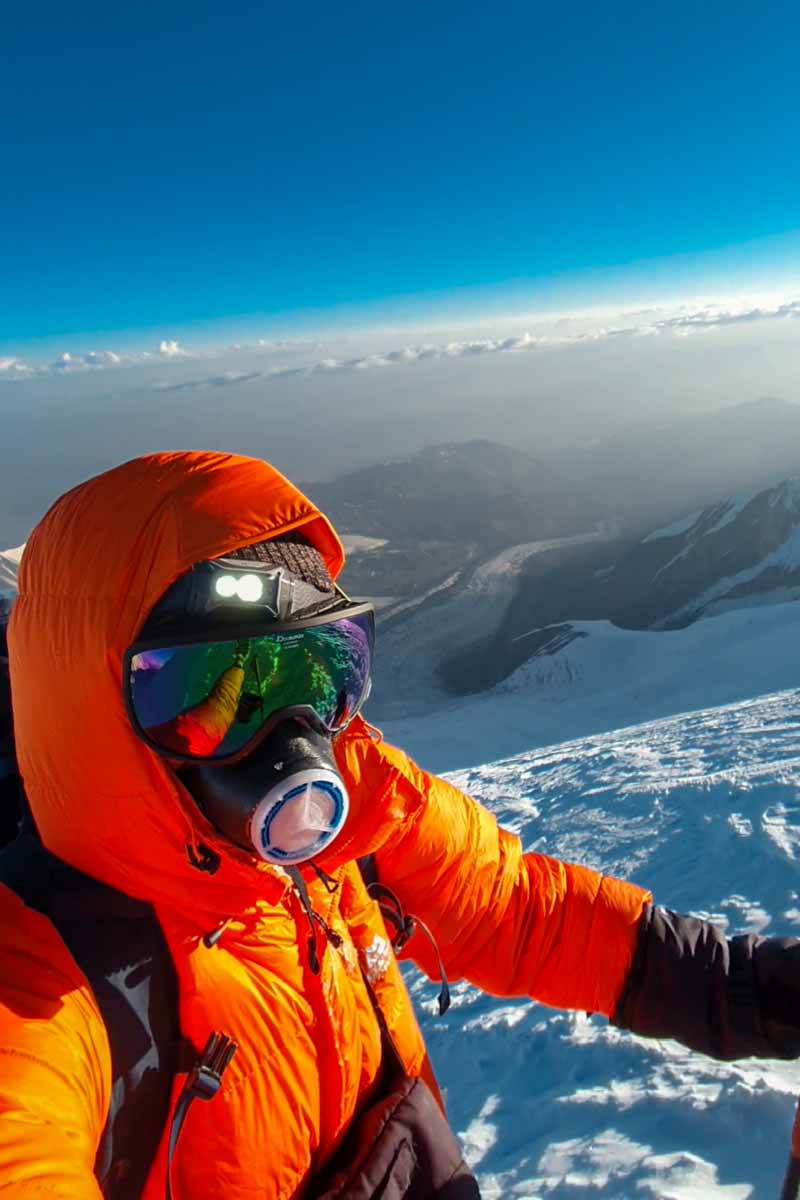 I felt extremely slow as I often had to take small breaks to catch my breath. Even when the route was almost flat at around 7000 meters, it was still very challenging for me. But at that point, I thought the summit was very close (I thought I could already see it), but when I arrived at what I thought was the highest point, I had to realize that it wasn’t, and it continued to rise behind it. This happened a few more times, which was slightly frustrating, but eventually, I climbed another terrain edge and could finally see the small, colorful flags on the summit, not too far away. Some members of our group were already there, and a few minutes later, around 9 am, I had made it and stood on the summit of Lenin Peak at an altitude of 7134 meters. I could hardly believe it. It took me about 8 hours for the approximately 6 km distance and 1100 meters of elevation gain, and I was super happy to sit briefly under the summit cross and look at the mountains around us. Everything seemed very peaceful up there. The wind had died down, the sun was shining, I wasn’t as cold anymore and relieved that I had really made it.
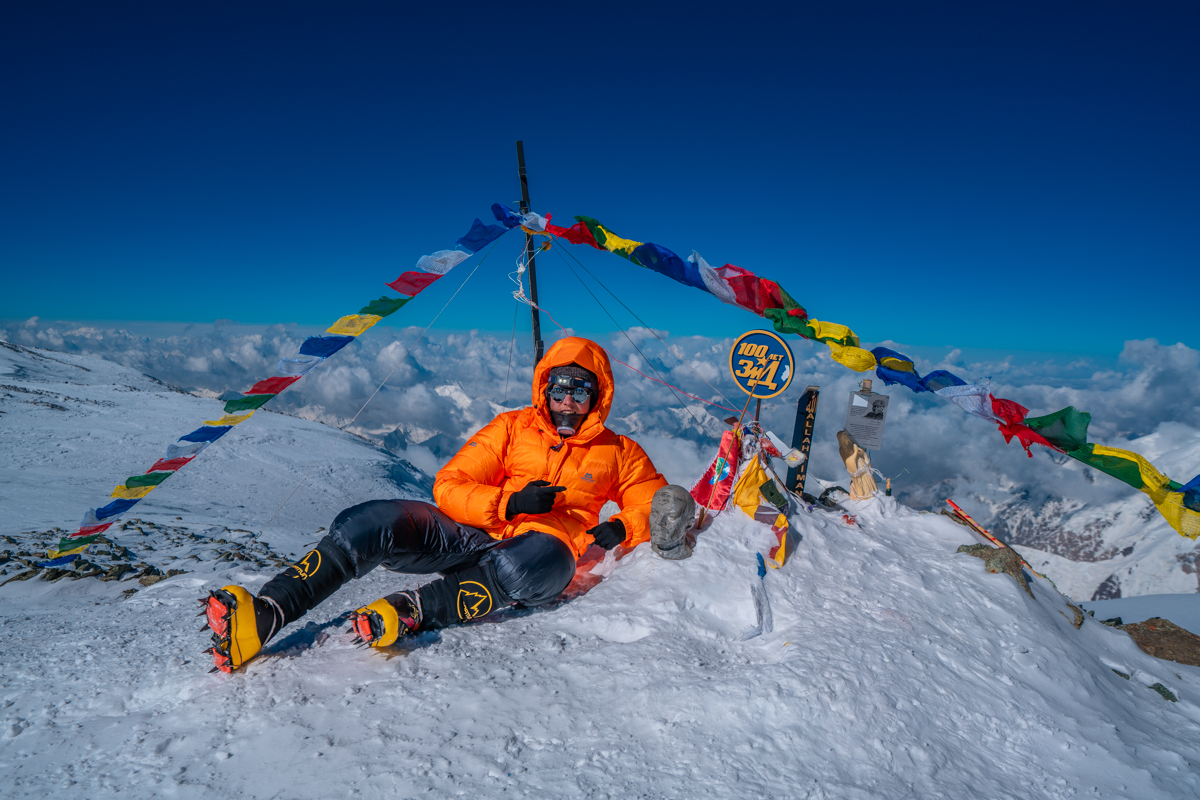
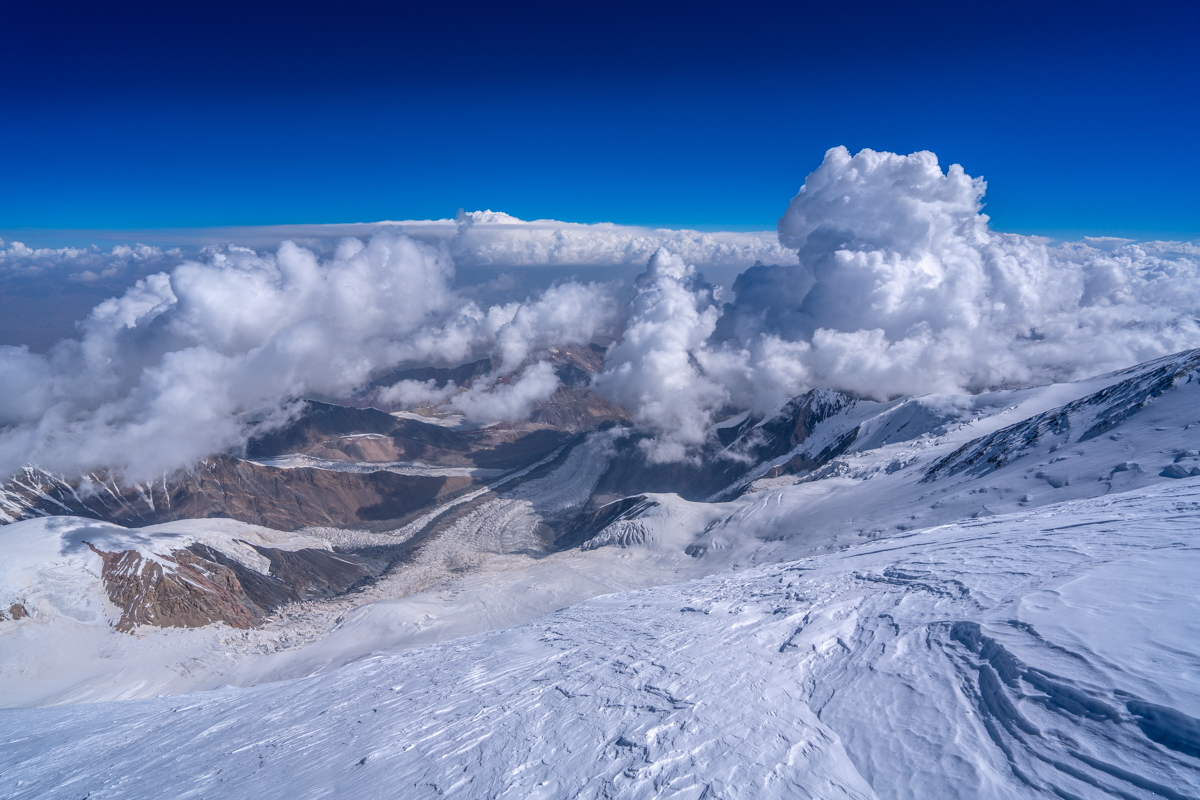 However, even though it was so beautiful up there, we had to remember that we were still in a hostile environment where the weather can change rapidly. Therefore, we started the way back to the camp. Along the way, I sat on a rock a few times for a short break to enjoy the moment. Then the weather changed, and thick storm clouds moved toward us, so I walked the last section back to the camp.
After about 12 hours in total, our entire group that had attempted the summit push was back in Camp 3. However, the day was far from over. After a quick lunch, we packed everything and set off again to descend to Camp 2. With dense fog now, leading to a complete whiteout, we descended for another 2 hours until we reached Camp 2. There, I realized that a crevasse had opened under my tent. Since Camp 2 was a bit inconveniently located and intersected by many crevasses, I couldn’t find a better place and was tired enough to just lie in the tent with my feet hanging a bit over the edge and go to sleep.
Days 12 – 14
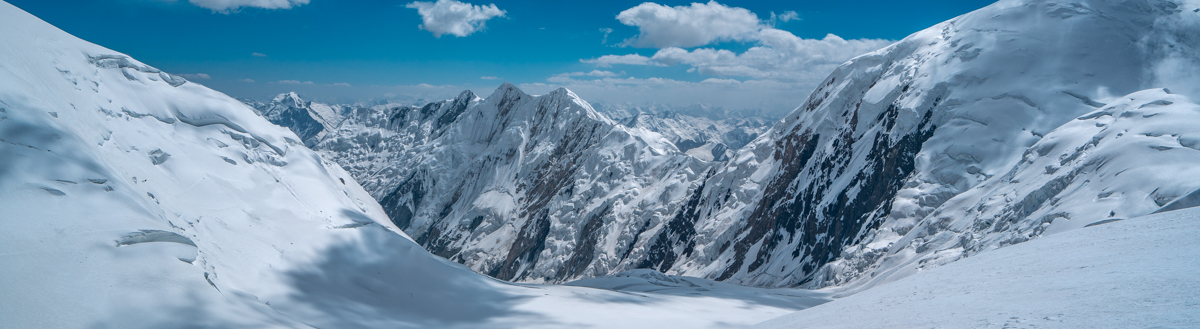
I didn’t sleep much during the night. I was once awakened by the loud rumble of an avalanche, and somehow, around 4 am, I noticed that my feet were now much higher in the air than at the beginning of the night. The crevasse seemed to have changed, which was quite scary. Accordingly, I was glad when morning came. We wanted to leave early to pass through the more difficult zones of the glacier before it softened in the sun. After a short breakfast, we again tied ourselves into rope teams and began the descent to Camp 1 (ABC). I was in a two-person rope team with Igor, and right from the first meters, we passed by huge and incredibly beautiful crevasses. The descent on this route included fantastic views in front of us and we headed back towards the glacier break.
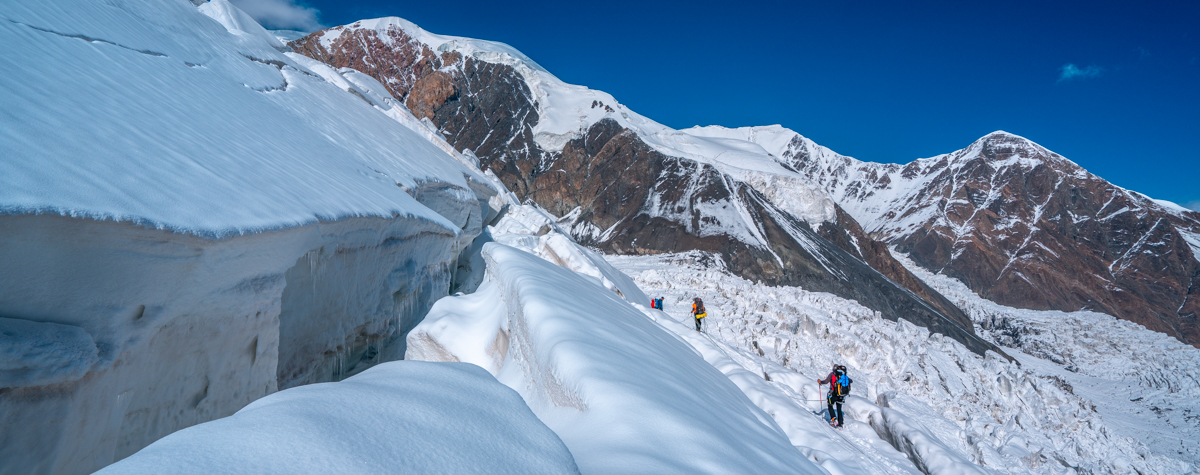
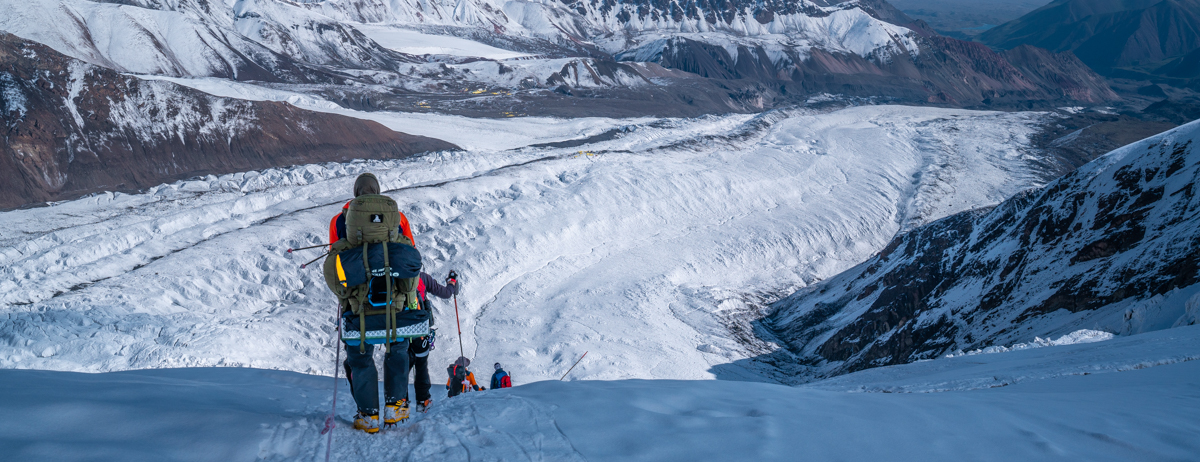
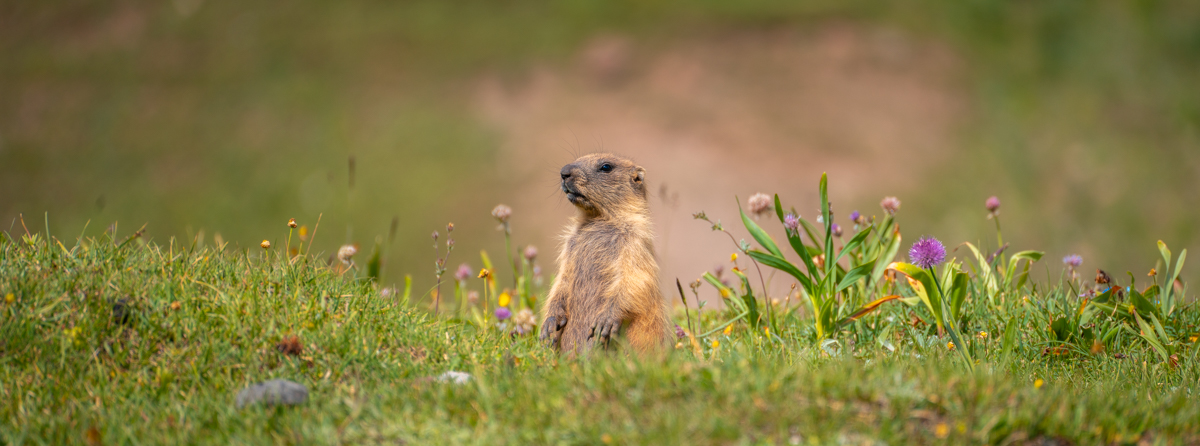
The descent to Basecamp on Day 13 was a pleasure hike to conclude the expedition. On the path we ascended in the rain, it was now pure sunshine, and the view of the mountains and glaciers was fantastic. Even the steep scree fields we had to cross were now dry and felt much safer. After crossing the Travellers Pass again, we entered a small river valley where everything was suddenly green again. Countless marmots with their offspring were on the meadows, accompanying our way down with their whistles. I took my time there to take some photos, and enjoyed the warm air while the others had already moved on. So, I walked the last two or three kilometers alone, passed a herd of yaks, and was simply happy that everything had worked out so perfectly.
In the evening, there was another large buffet in Basecamp, and we sat together for a long time.
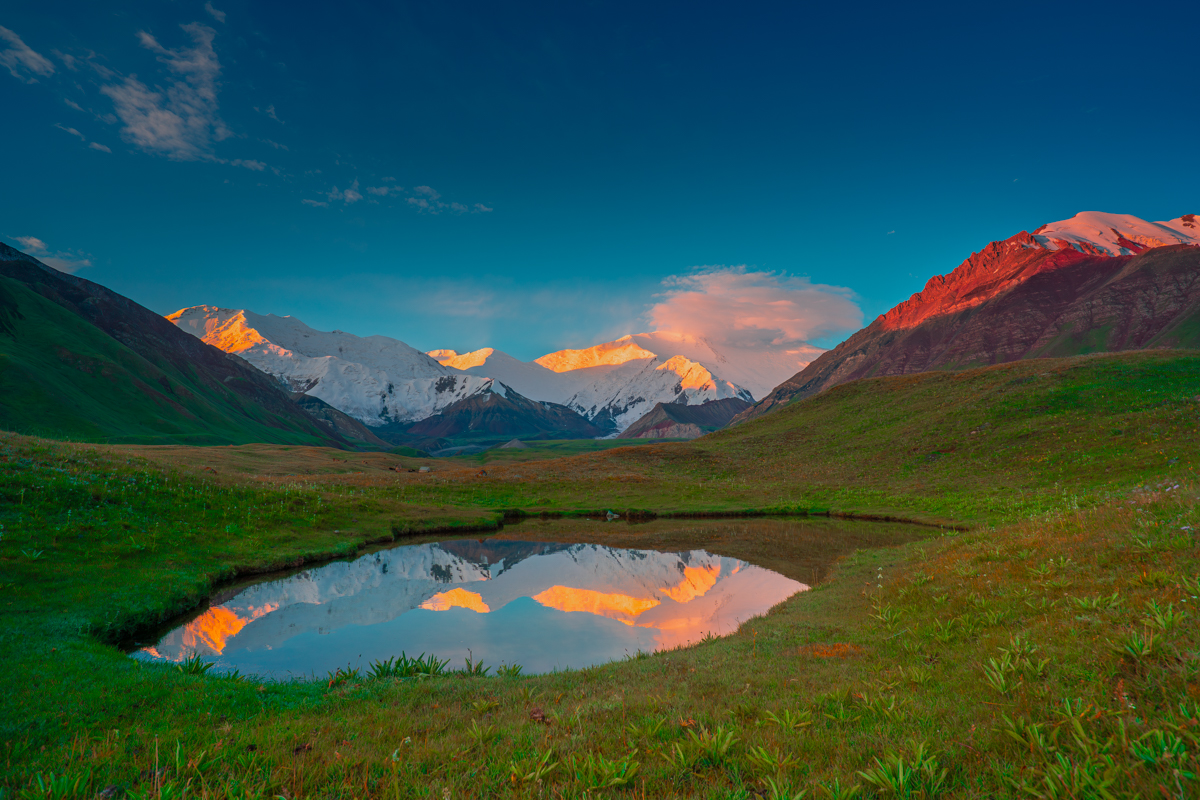
On the departure day, I was already outside before sunrise. About two weeks ago, during our first acclimatization tour, I had discovered a small lake where Lenin Peak perfectly reflected. I went there with my camera, and just as I arrived, Lenin Peak and the mountains around him began to glow orange. I sat in the grass, took photos, and enjoyed this perfect moment.