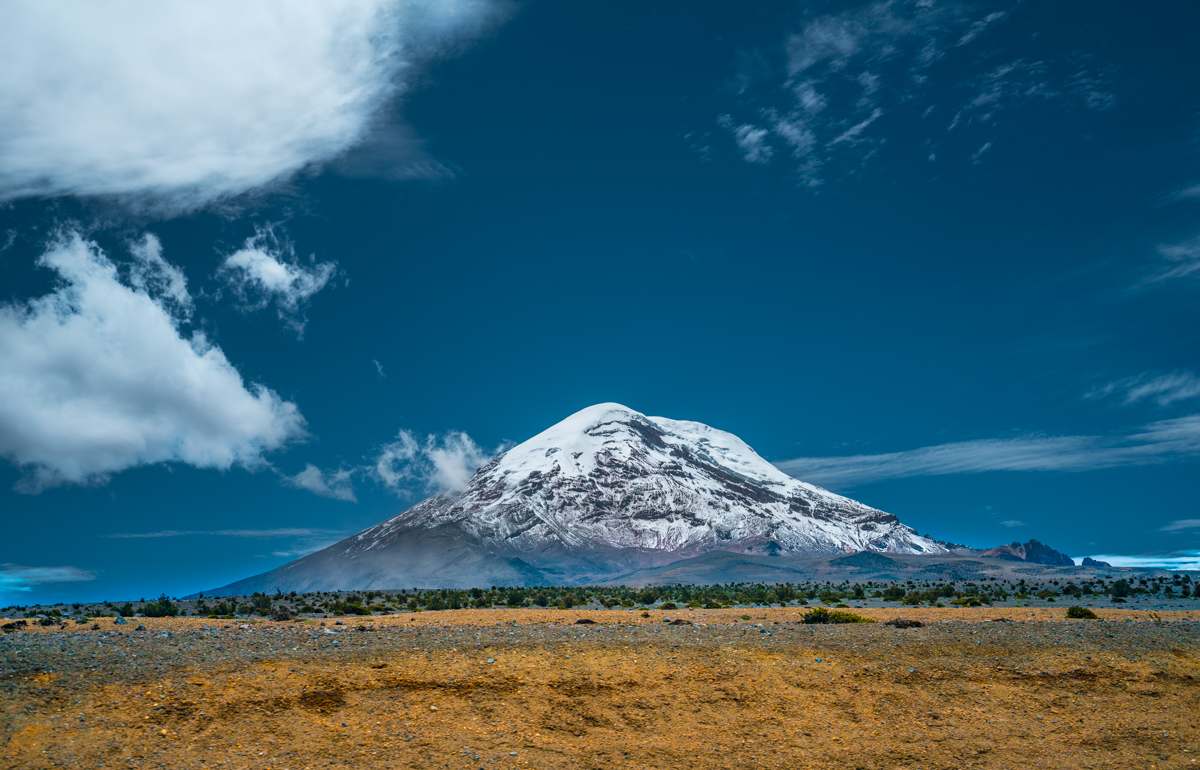
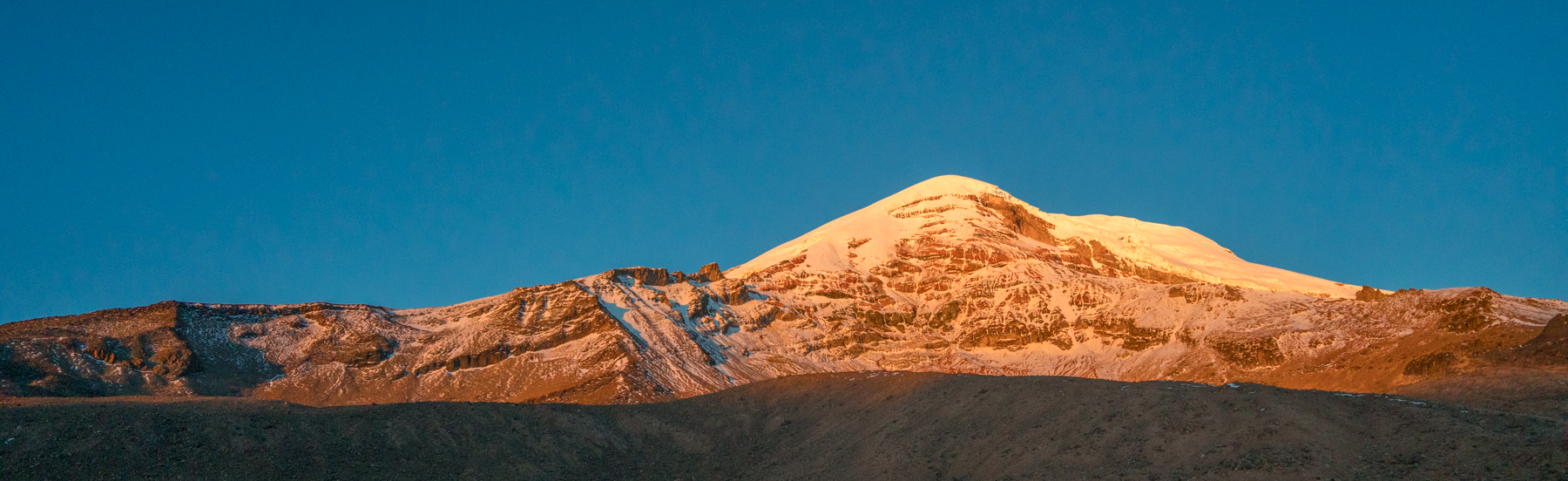
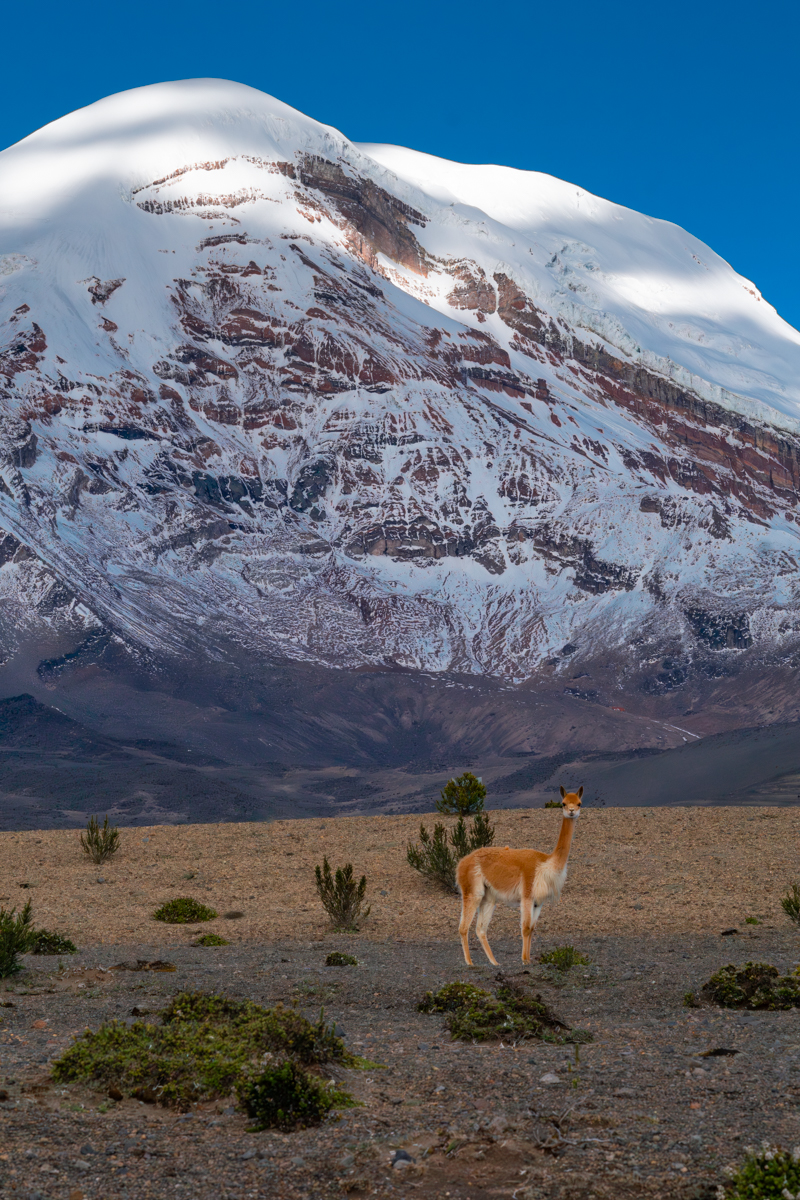
 After the summit success on Ecuador’s second-highest mountain, Cotopaxi, I moved on to the Chimborazo volcano (which is extincted) a few days later. The journey to the base of the only six-thousand meter peak in Ecuador was quite easy, as we could drive with an off-road vehicle up to Refugio Carrell at an altitude of more than 4800m. On the way there, we passed through the El Arenal Desert, from where we already had breathtaking views of the nearby Chimborazo volcano. The view was crowned by numerous vicuñas walking around in this high-altitude plateau. When we reached the hut, a sea of clouds stretched out before us, while the sun set spectacularly. This weather made us confident for a cloud-free summit day.
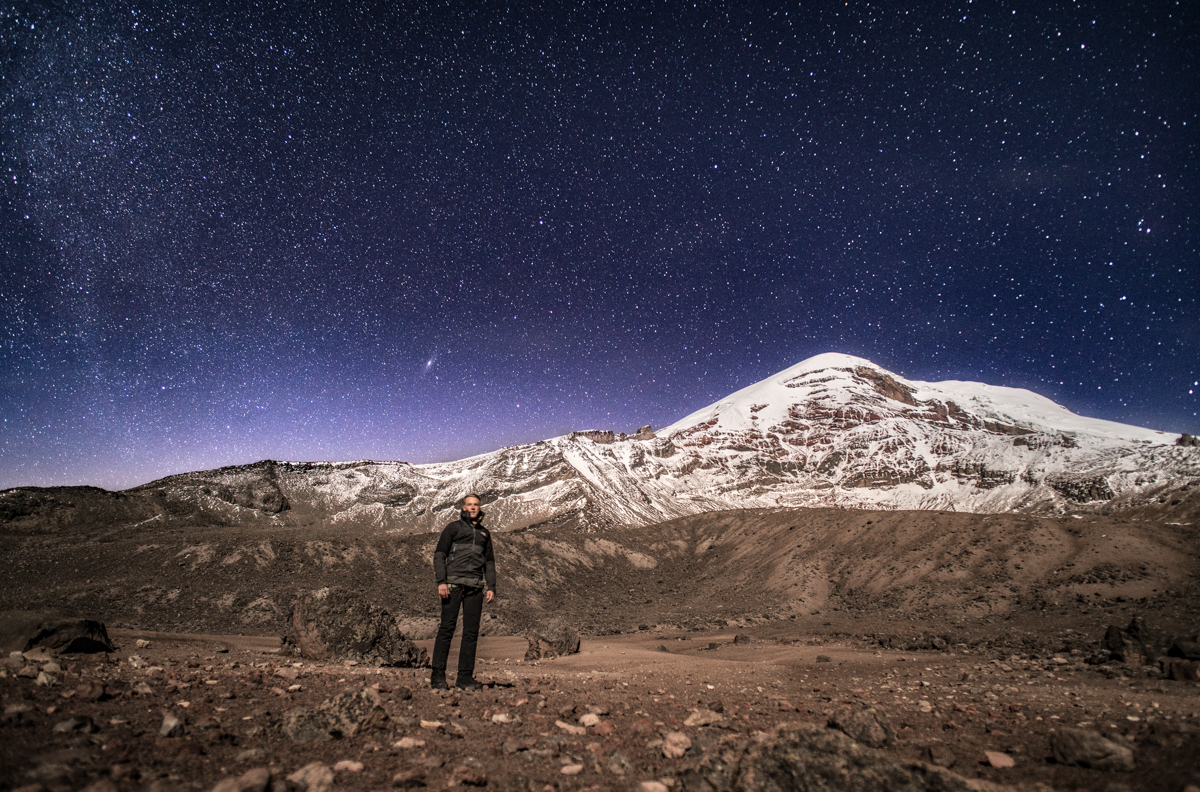 Similar to Cotopaxi, I was accompanied by a local mountain guide. Firstly, because I was traveling alone in South America, and such climbs should never be done alone. Secondly, it is mandatory in Ecuador to climb glaciated mountains with a guide. Since the hut was closed, we simply camped in front of it. The night was very short for us anyway. After two hours of half-sleep, the alarm rang at 9 pm, and we prepared for the 1400 meters ascent. The weather was perfect: not a single cloud in sight, and an indescribable starry sky above us. Before starting, we had a small „breakfast“ two and a half hours before midnight, then walked flat for a few hundred meters to the actual start of the ascent. Following the normal route, we climbed towards El Castillo (a small rock summit at 5400m). As we gained altitude, there wasmore and more snow and ice on our route, and around 2:30 am, we finally reached the glacier edge. By then, a strong wind had picked up, making progress a bit more challenging, but fortunately, the weather held, and the sky remained clear.
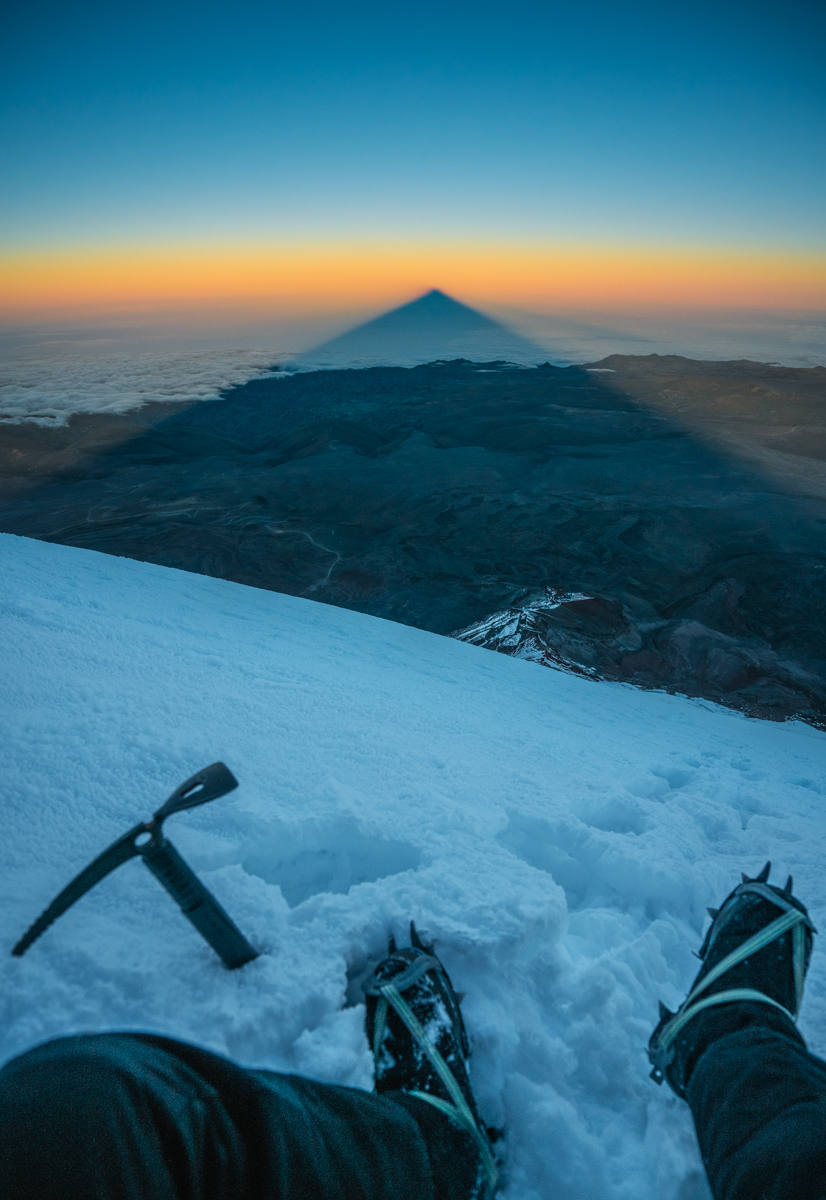
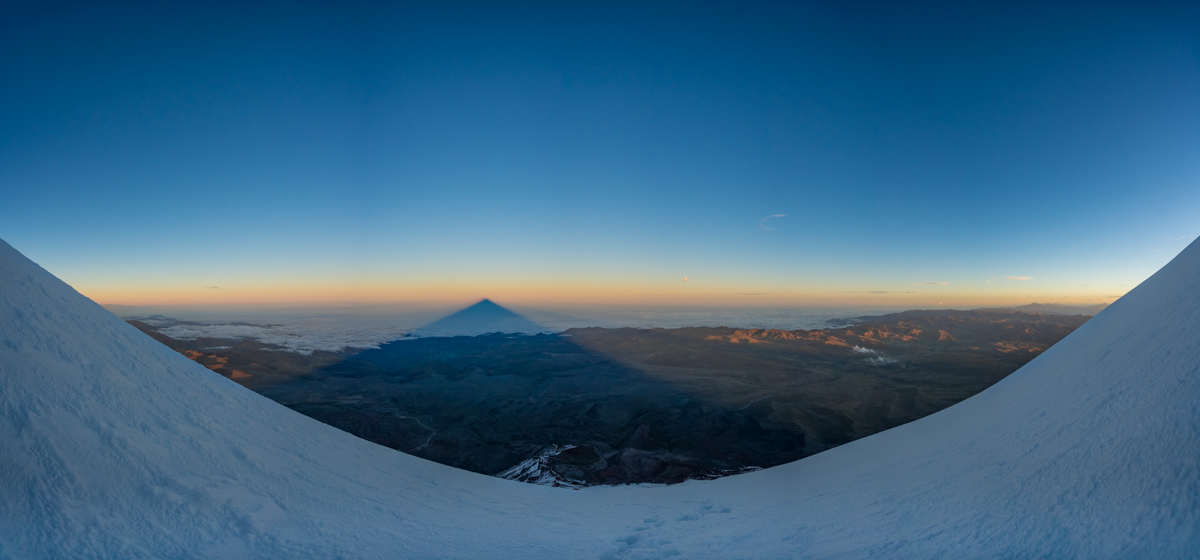
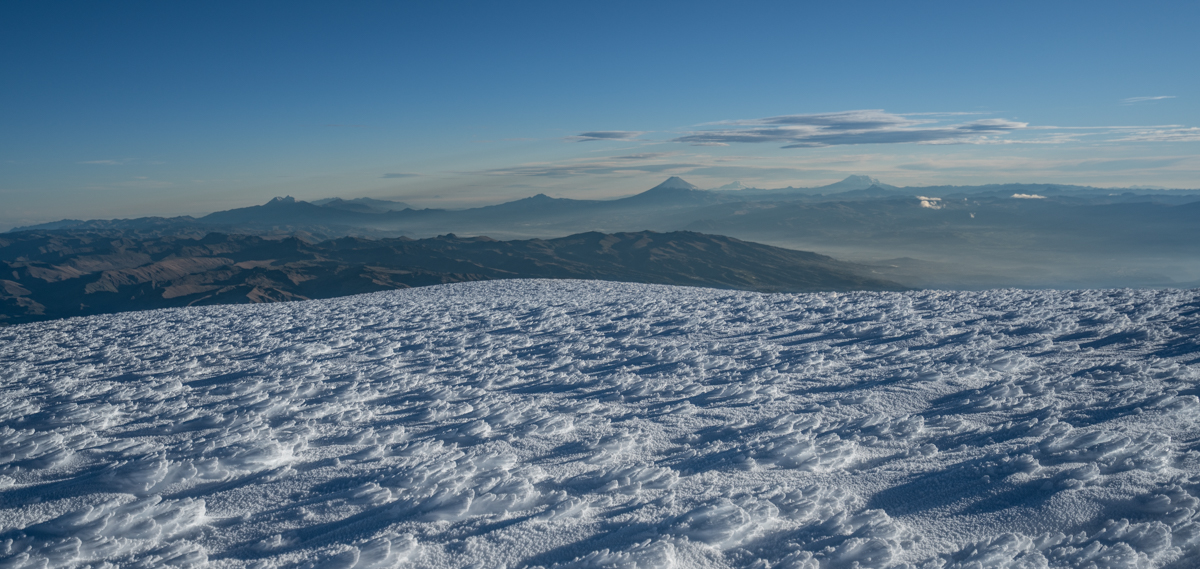
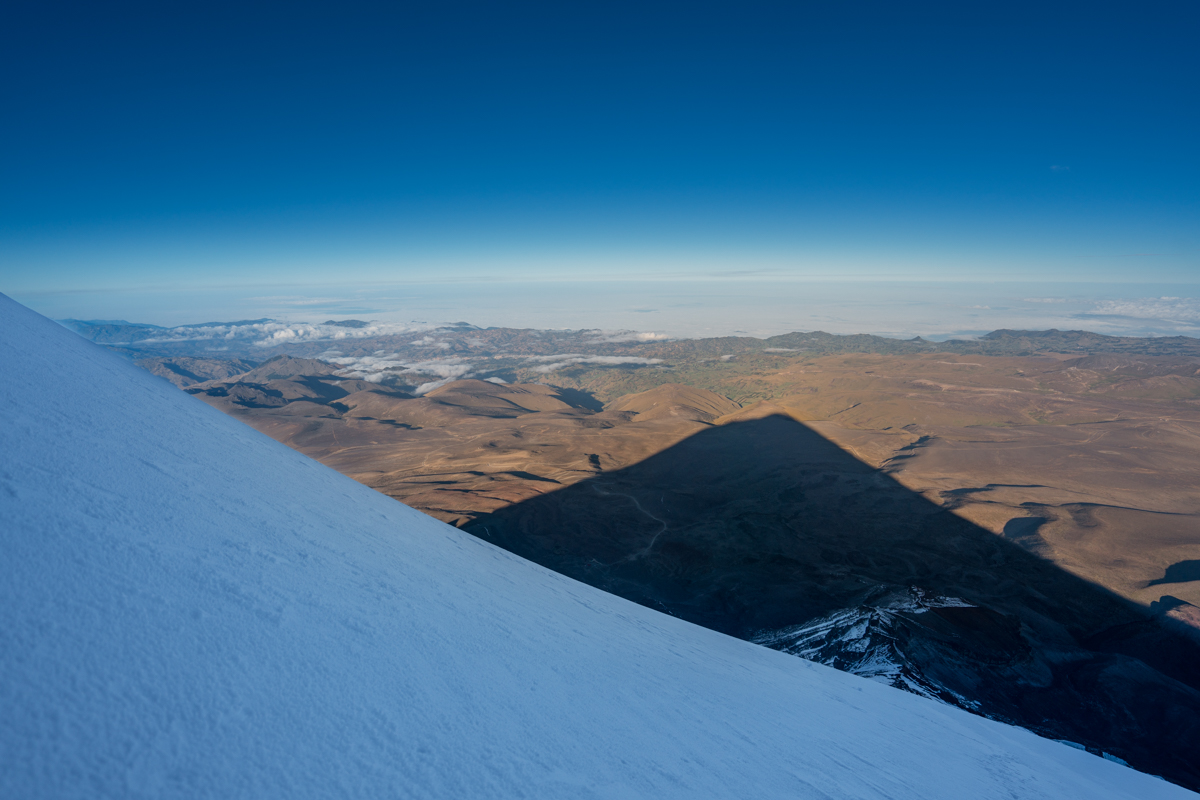
The character of the route changed abruptly upon reaching the glacier. It became much steeper, and any reference points for orientation were now gone. After a bit of time of climbing in the complete darkness, the for me toughest phase of the ascent began. At that time, we were at about 5700m altitude, and breathing was already noticeably harder due to the thin mountain air. Especially with such physical demands, which were also complicated by the conditions on the glacier: Often we sank knee-deep into the snow, and even with the crampons, we slid back half a step with almost every step. It was hard work with little progress. In addition to the physical struggle, it was also mentally demanding as for the first three hours on the glacier, our surroundings seemed to stay the same. Previously, when we were still below the glacier, we always could see rocks and stones through the snow, indicating our progress, but now all we saw, in the light of our headlamps was the same steep white slope. To continue step by step in those moments was one of my main achievements on Chimborazo.The persistence paid off promptly at sunrise. With the first daylight, the vast landscape of Ecuador unfolded beneath us, and we finally saw how far we had come. When I turned around just below the summit, I saw that the mountain we stood on cast a perfect triangular shadow in this now brightly illuminated landscape. And above all this, there was an orange band from the morning light on the horizon. A moment I will never forget.