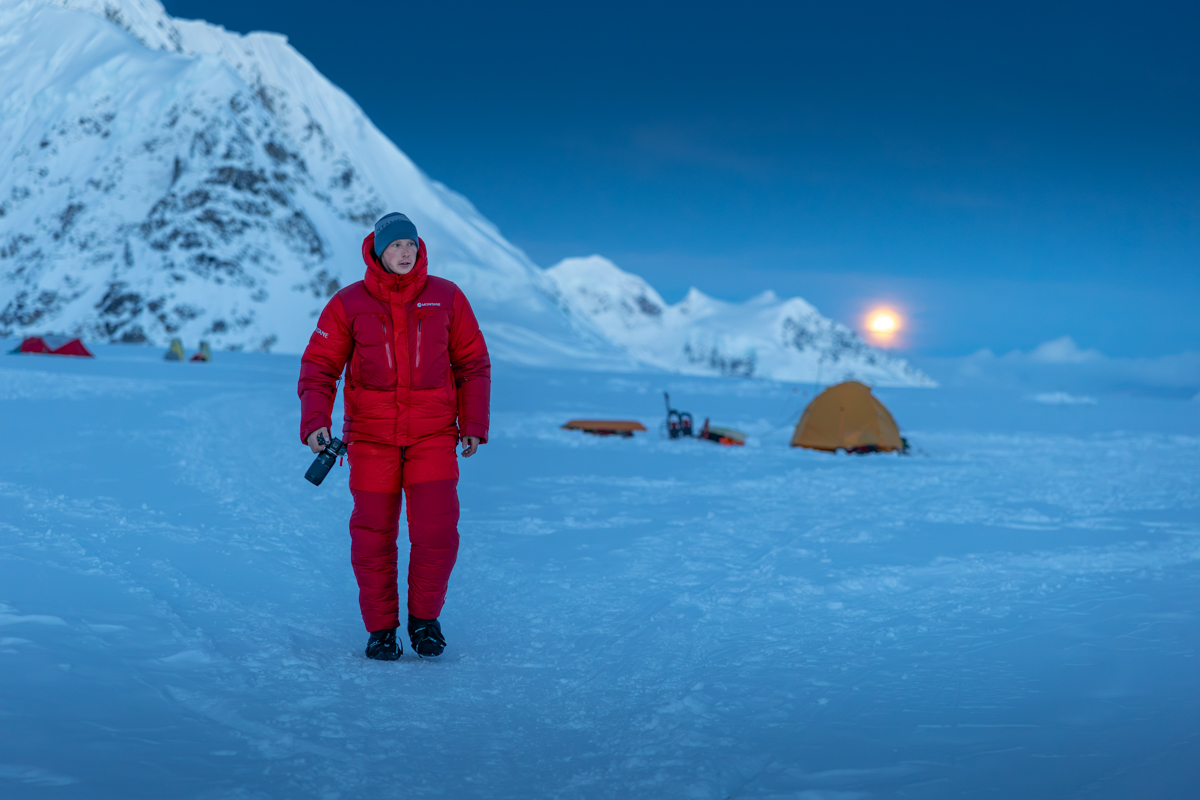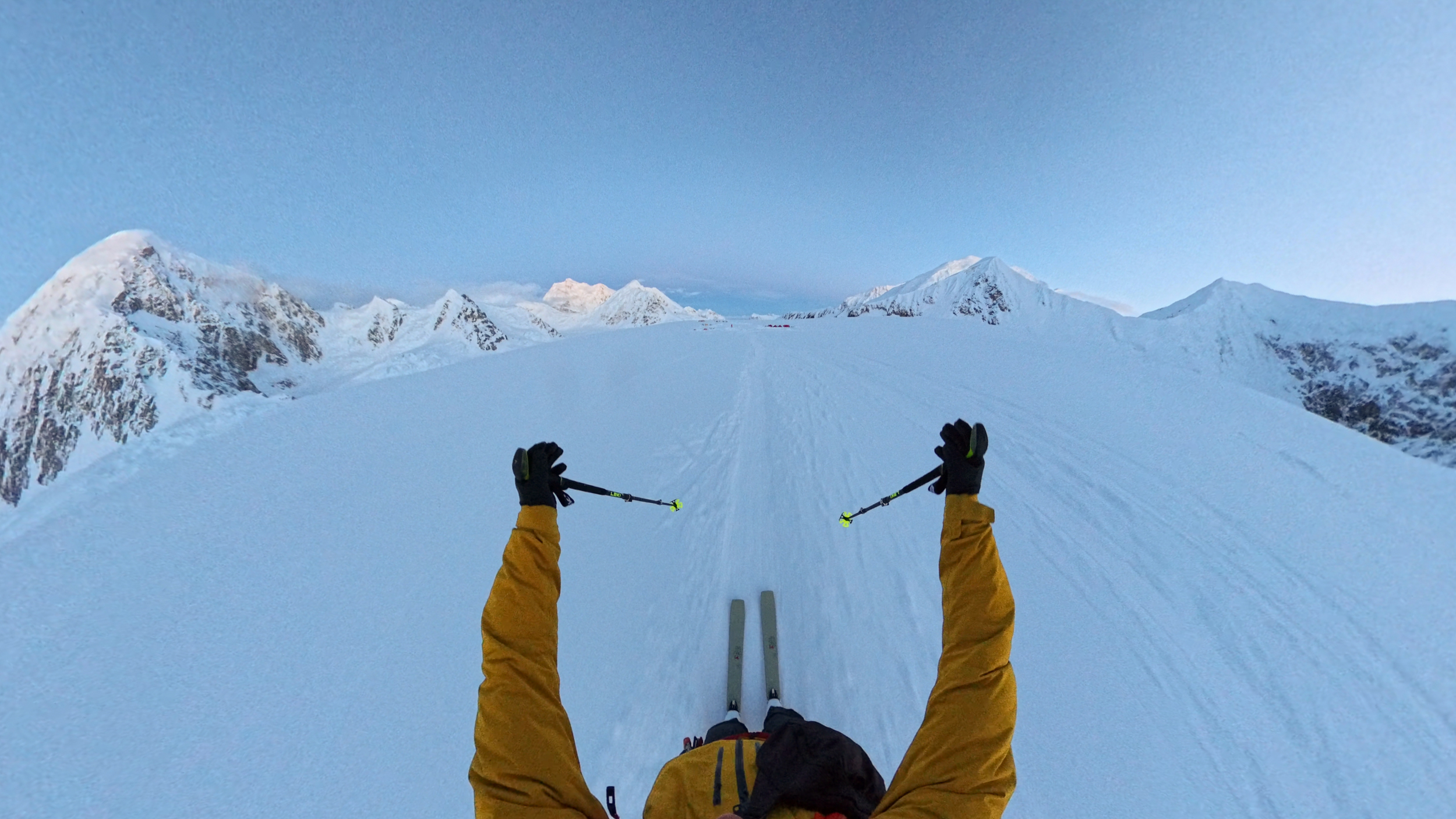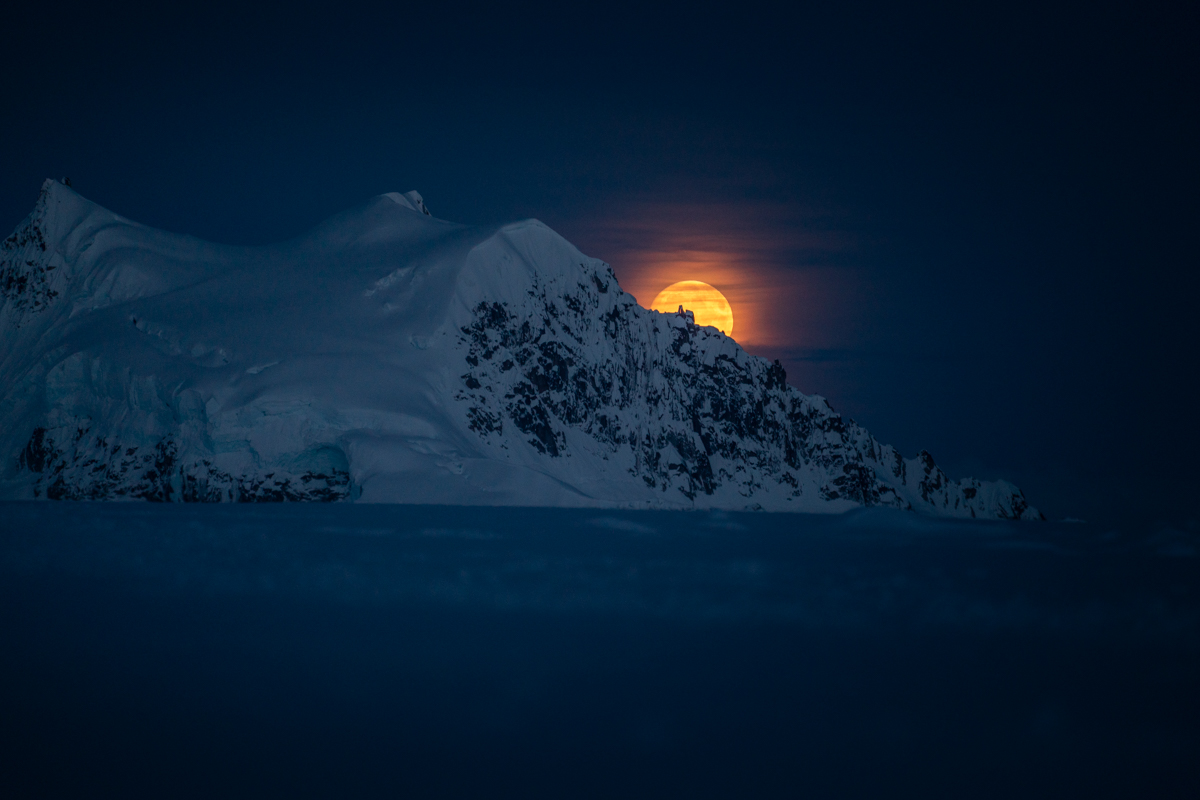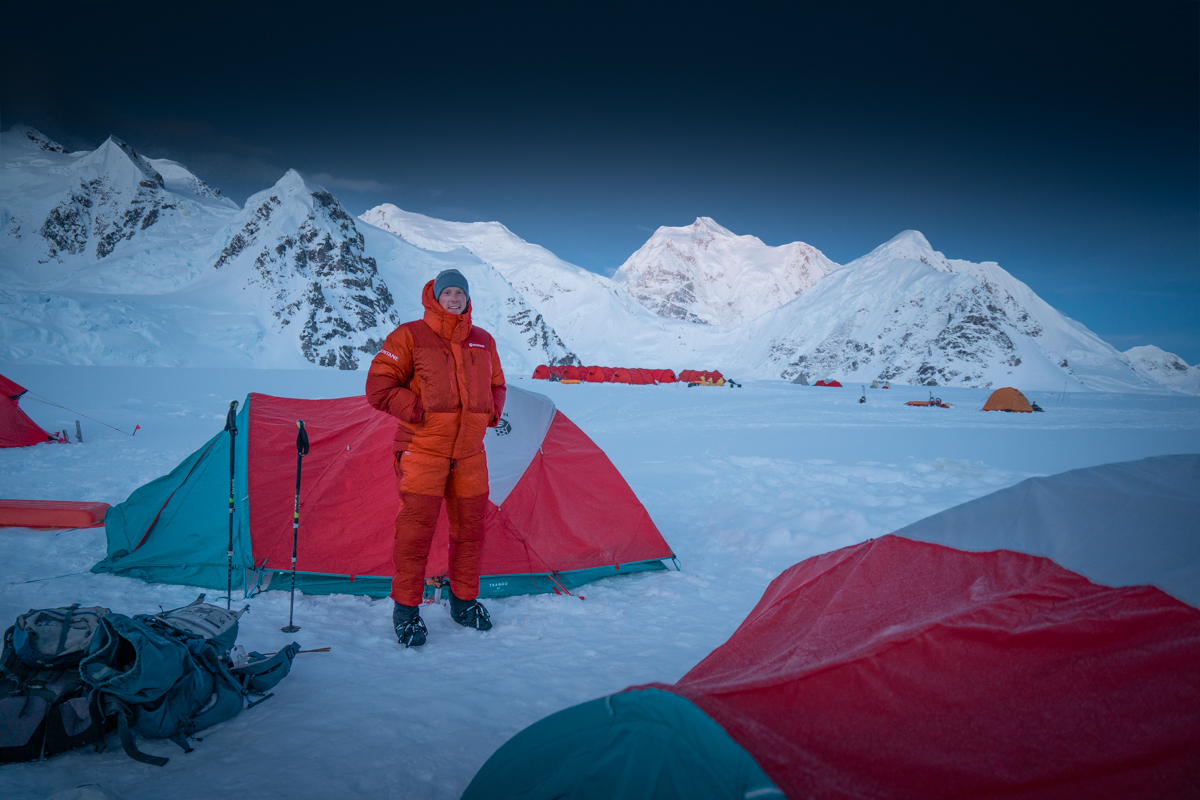

Expedition Denali, 6190m
Alaska, 2026
The story of the Denali expedition started for me a long way away from Alaska. In March, I spent a few days in Chamonix. On March 5, we climbed a long mixed route on the Aiguille Carrée. It turned into a very long day we reached the valley again at night. On the way back to the accommodation, I looked at my phone for the first time that day and saw that I had received a message from Sabrina. In short, it said: “We are currently planning an expedition to Denali in a few weeks. At the moment, we are five people and would like to make it six. Would you spontaneously like to join us?”
At that time, I actually barely knew Sabrina (we had only met once by chance in a bar in Innsbruck), which made this offer even more surprising. Tired and exhausted from the day on the Aiguille Carrée, I didn’t think about it too much at first, but the idea of possibly going to Alaska immediately sparked a lot of excitement in me. Over the following weeks, however, I started thinking more seriously about whether joining the expedition would actually work for me. At the end of April, I was finally able to give my confirmation, and just one month later we were on our way to Alaska. It was certainly the most spontaneous expedition I had ever been on up to that point.
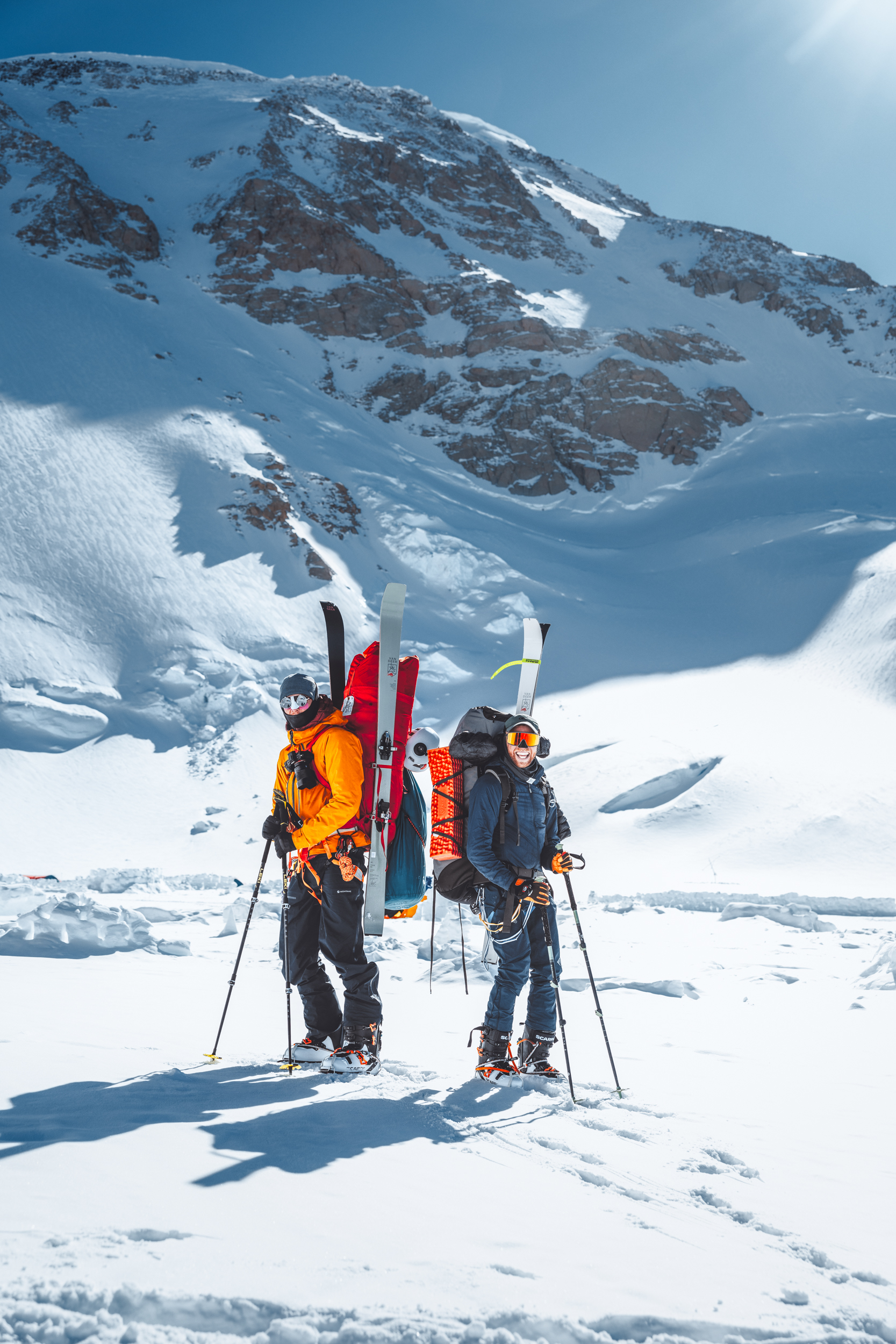
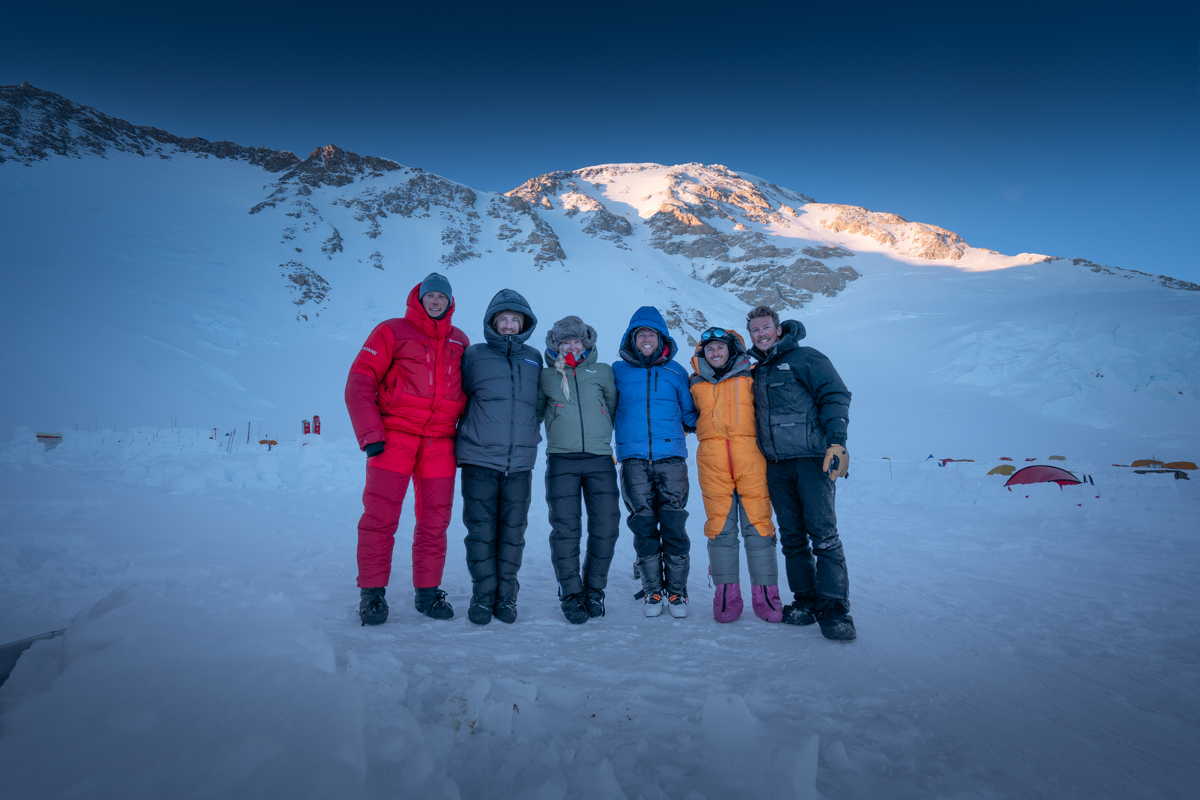
The team consisted of David Schuchter and Sebastian Scheichl from Austria, Sabrina Krammer and Thomas Herdieckerhoff from Germany, Schuyler Jorgensen from the USA, and myself. On this expedition, I was supported by Montane and Coros. The entire team also received support from Scarpa, Van Deer Red Bull Sports, Katadyn, and Big Sky Mountain Products. Many thanks to all of them for their support.
At the end of May, I finally landed in Anchorage. During the flight I realized how far away Alaska really is from Europe. Sabrina and Schuyler picked me up from the airport with our rental car, and driving through Anchorage for the first time felt completely surreal. I still couldn’t believe that I was actually in Alaska. The rest of the team landed a few hours later, which meant we could start with the final preparations on the next day. Even though we were well supplied with freeze-dried meals, we wanted to bring some fresh food with us, so we bought a lot of food as well as the last small pieces of equipment we needed.
Day 1
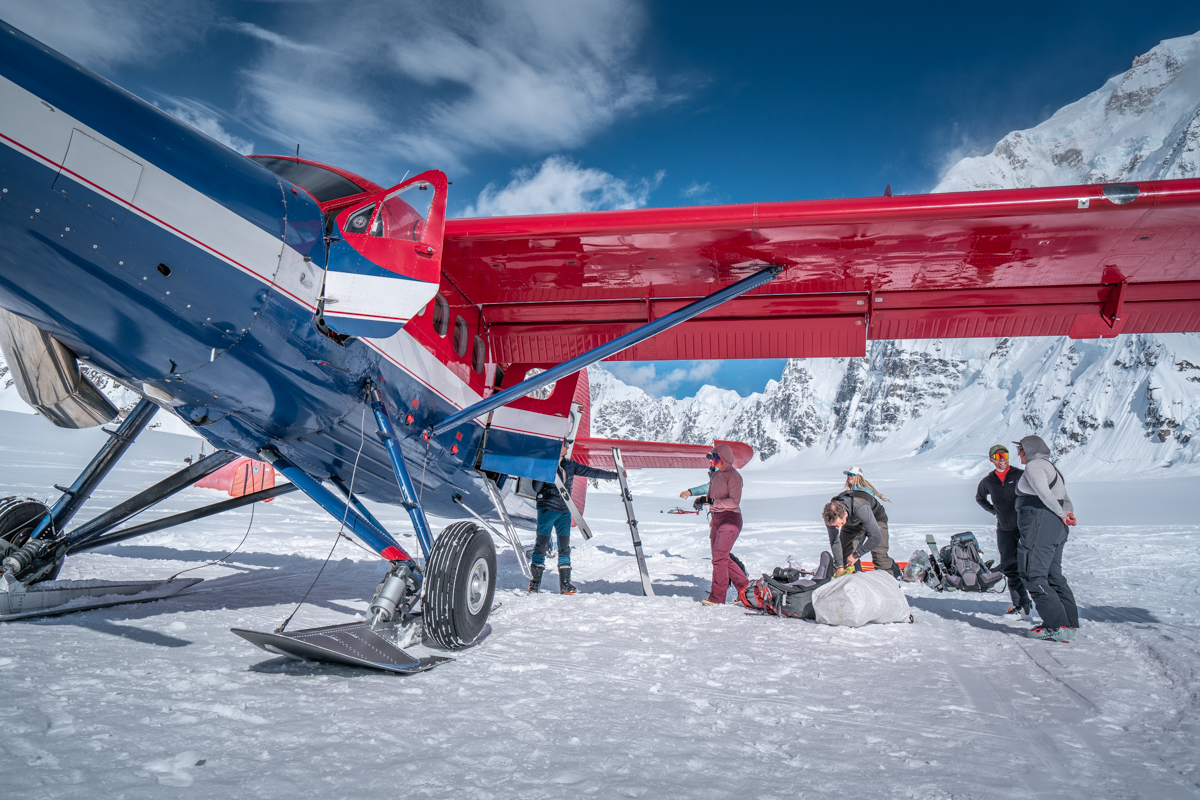
The next day, it finally really began. Early in the morning, we started the drive to Talkeetna, which took a little over two hours. Talkeetna is a small village from where you can fly to Denali Base Camp. Before we could fly, we still had to reorganize some of our equipment and weigh everything for the flight. In total, we ended up with around 350 kg of equipment and food for six people.
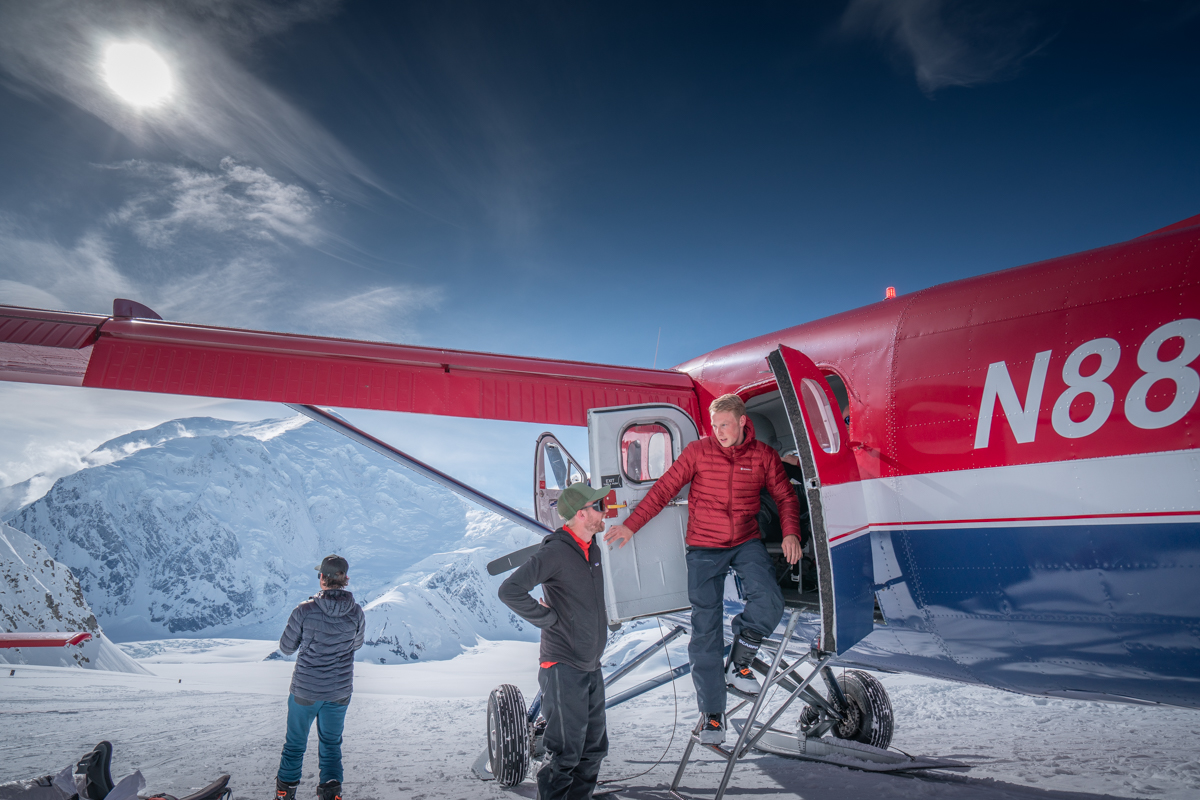
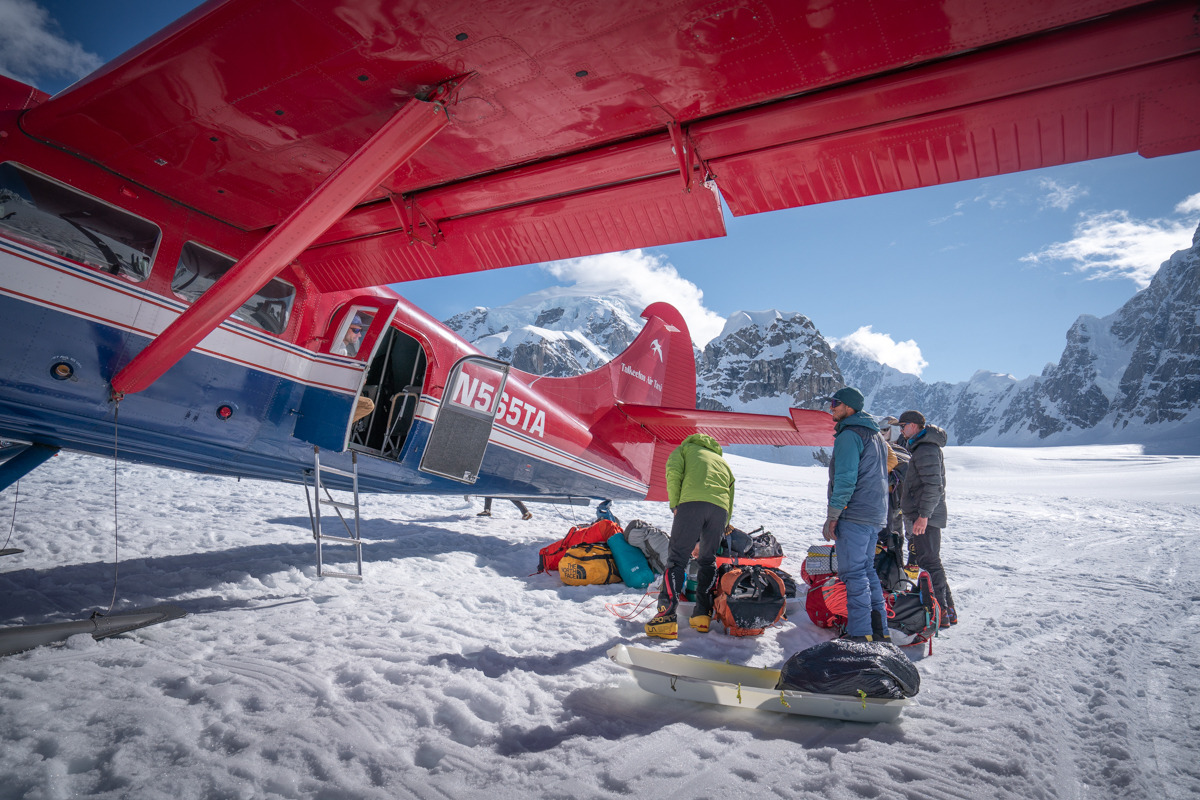
At some point in the afternoon, we were told that we might even be able to fly that same day, something we hadn’t known for certain until then. Shortly after 5 pm, the time had finally come, and we loaded the small propeller plane that would take us to base camp. It was certainly the smallest aircraft I had ever flown in.


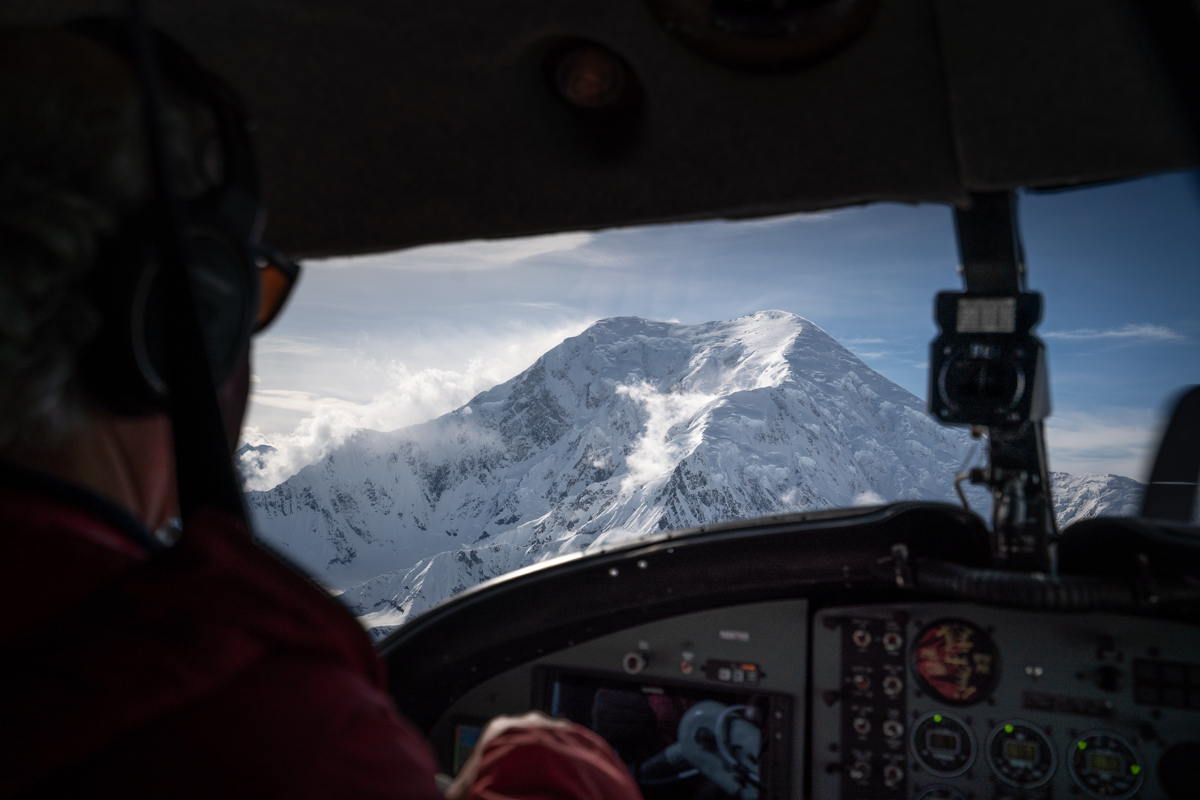
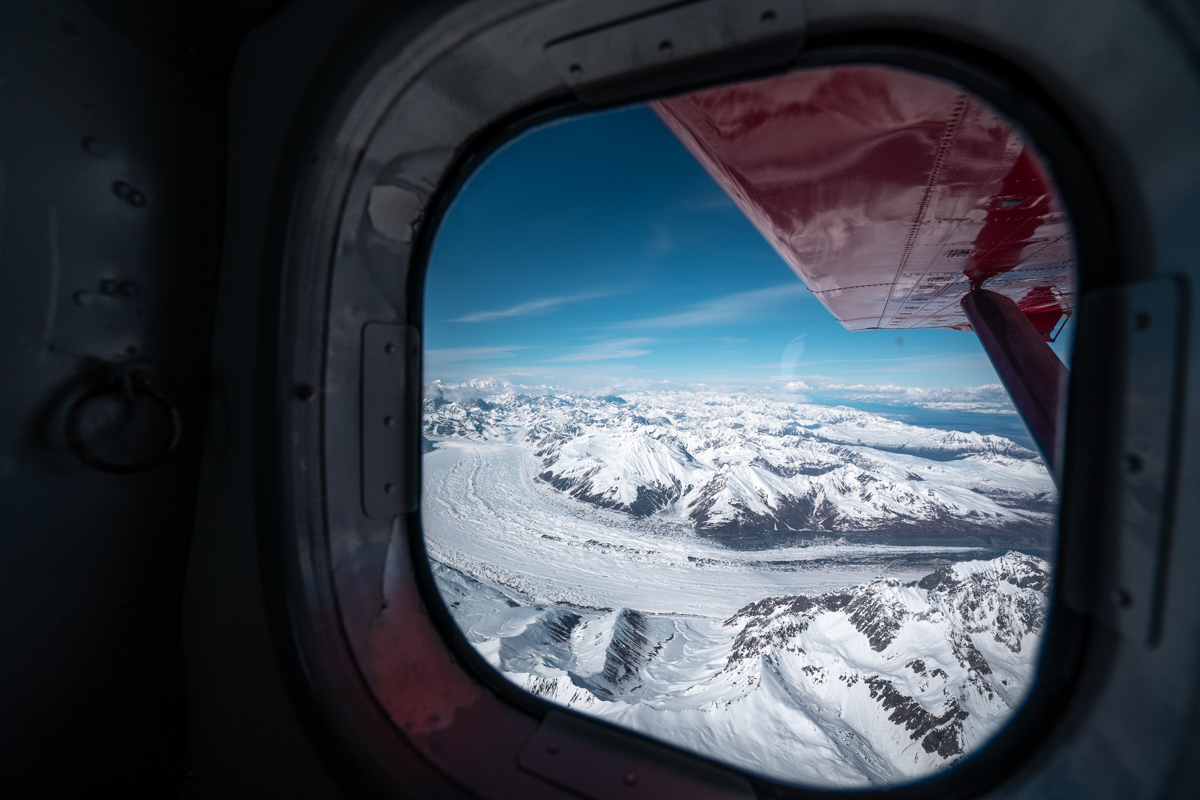
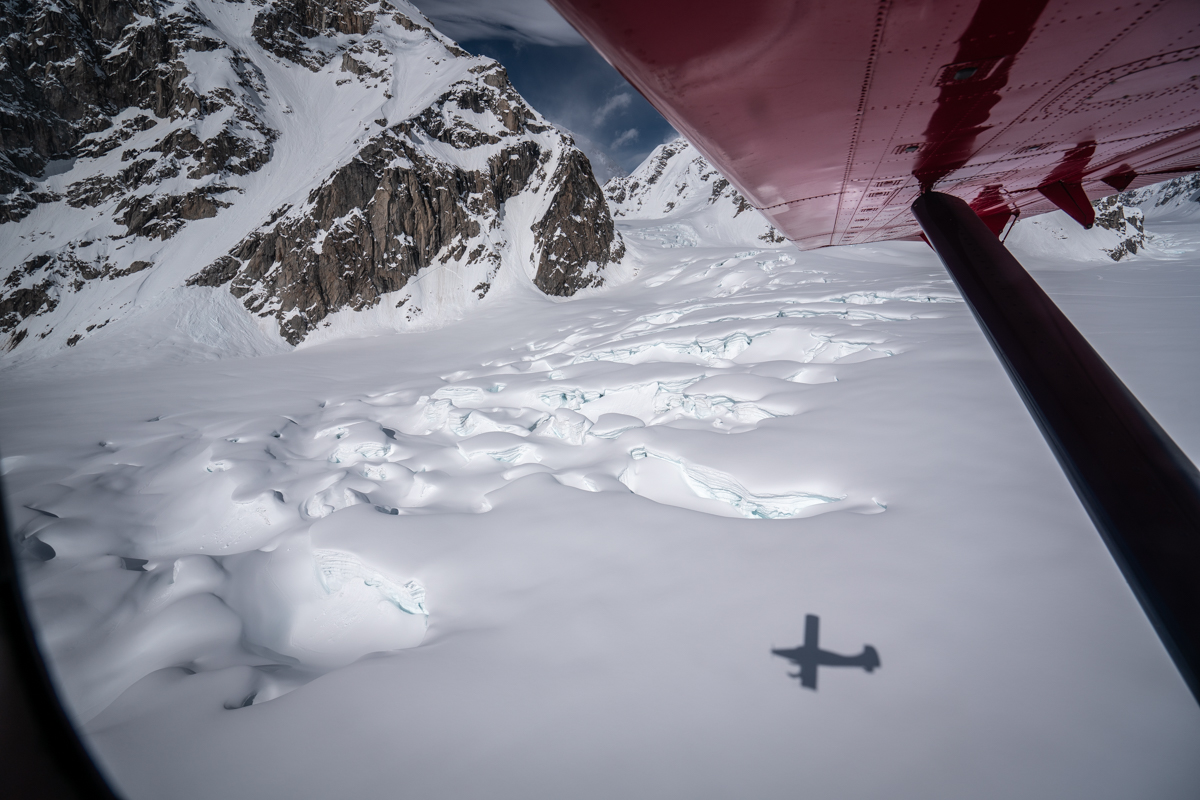
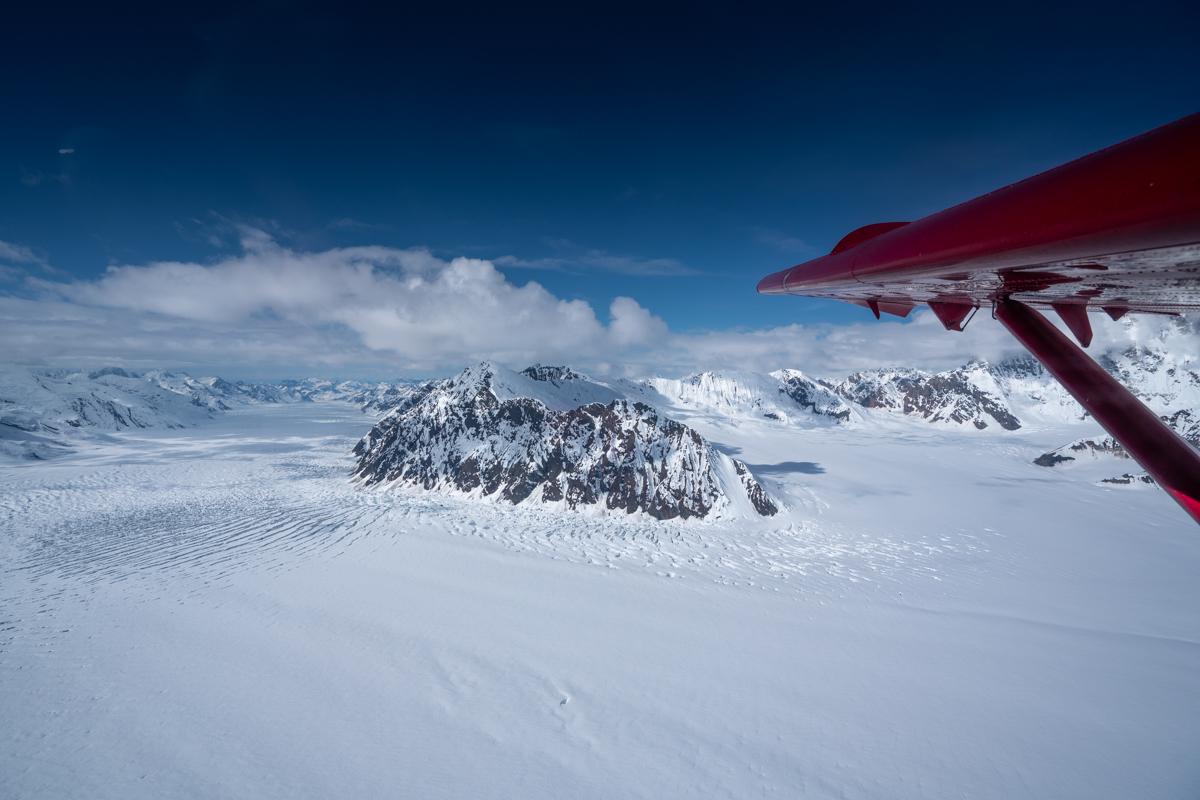
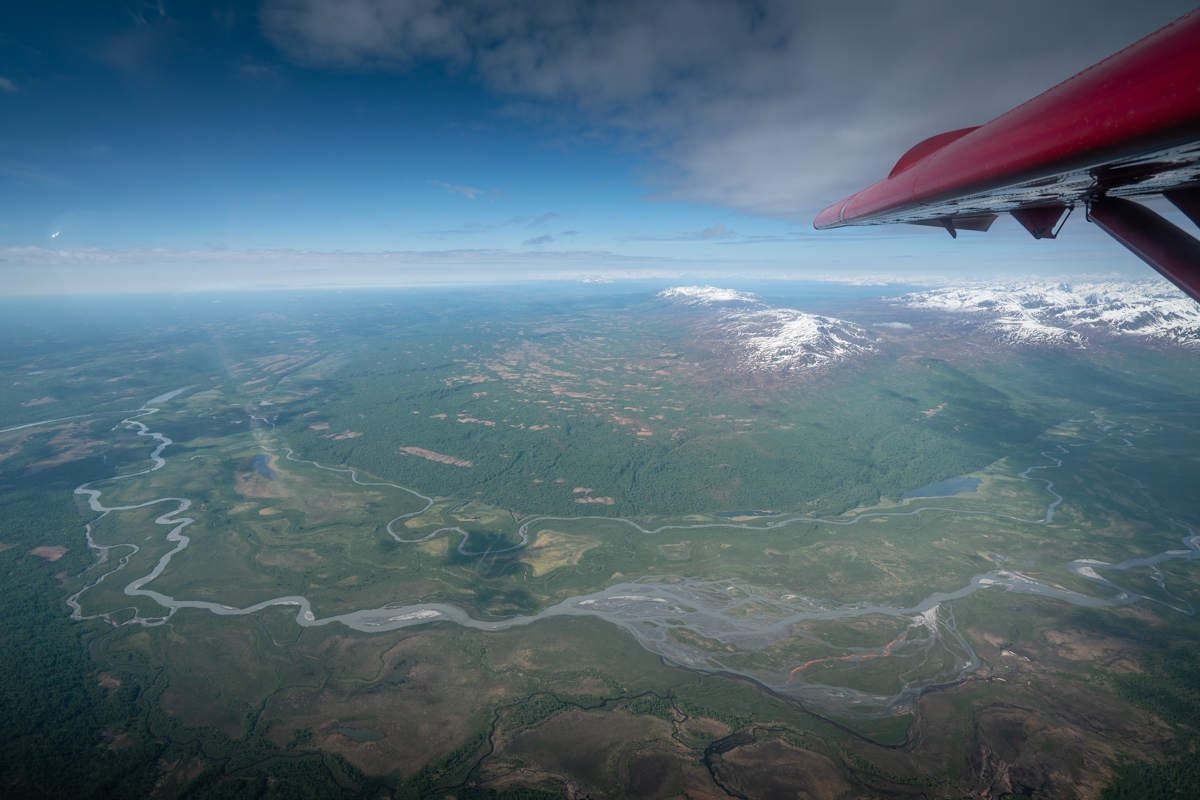
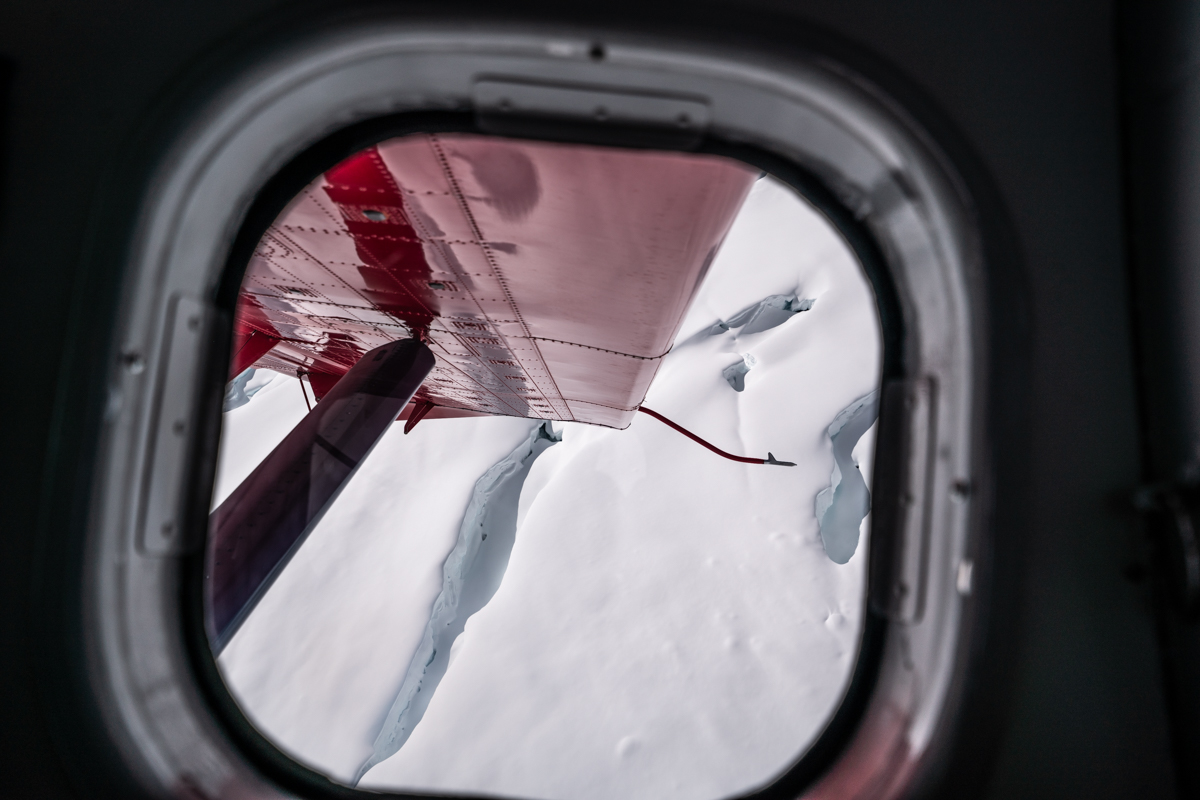
The flight was spectacular right from the beginning. At first, we flew over Alaska’s green and flat landscape. Rivers and lakes passed beneath us while the mountains and glaciers of the Alaska Range slowly moved closer. Then suddenly we were above the glaciers, and the flight became increasingly wild. We flew just above snow-covered ridges or passed closely by enormous walls of ice and rock. The views from my small window were truly breathtaking.
From the air, I also realized just how far away from any civilization we now were and what an incredible landscape we would be spending the next few weeks in. The landing was certainly one of the most adventurous I have ever experienced in an airplane. After a few wild maneuvers, during which I slightly lost my sense of direction, the plane touched down on the snow-covered glacier, and after a flight time of around 25 minutes we arrived at Denali Base Camp.


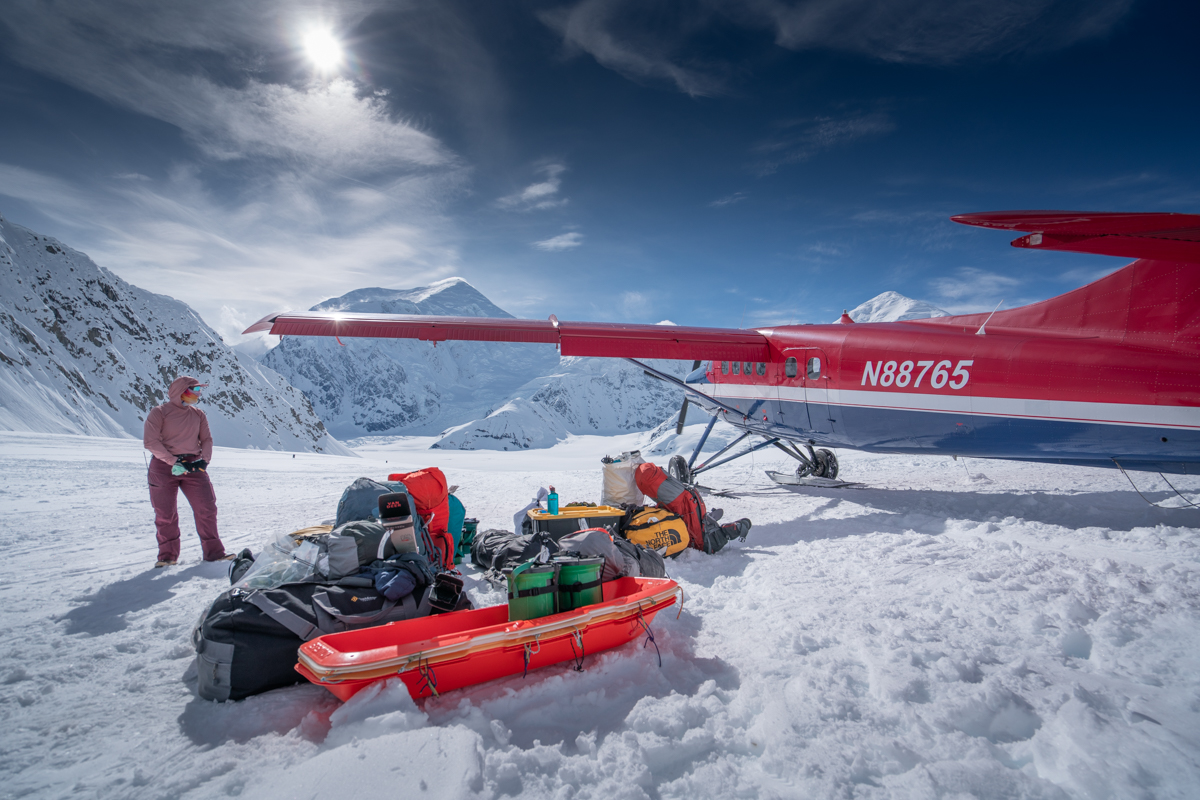
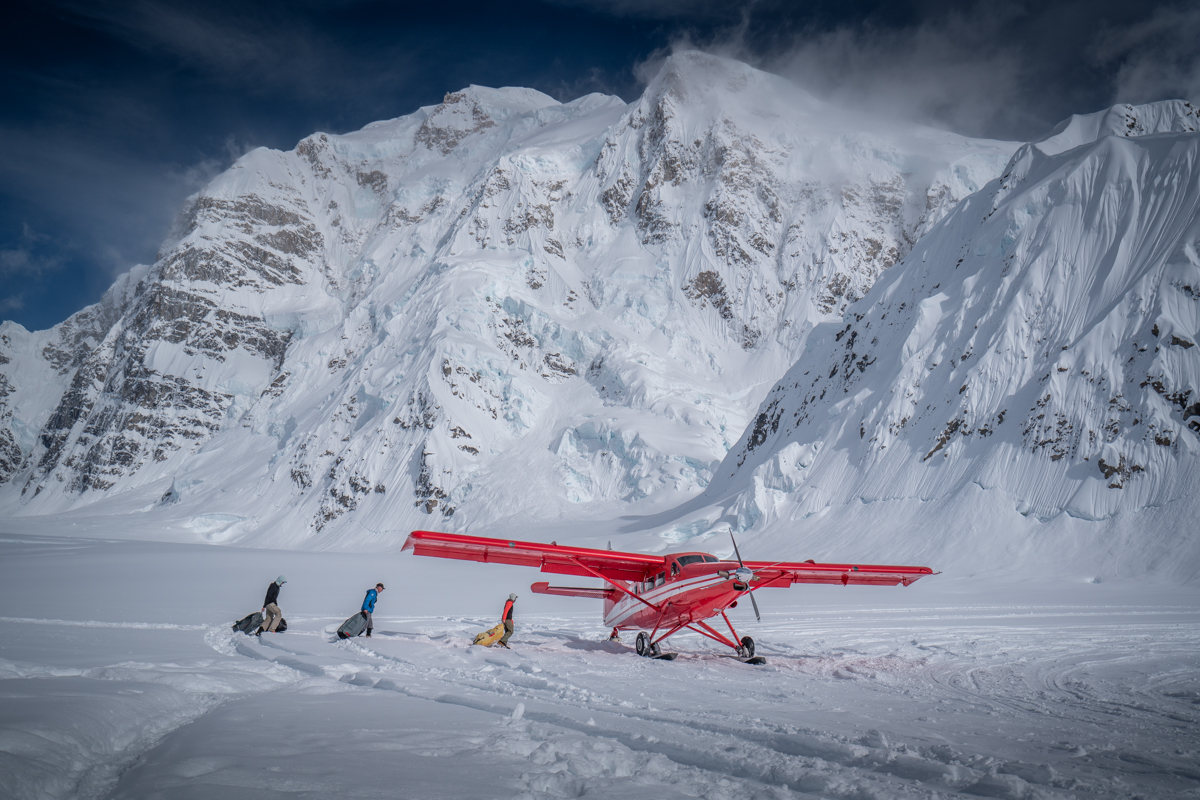
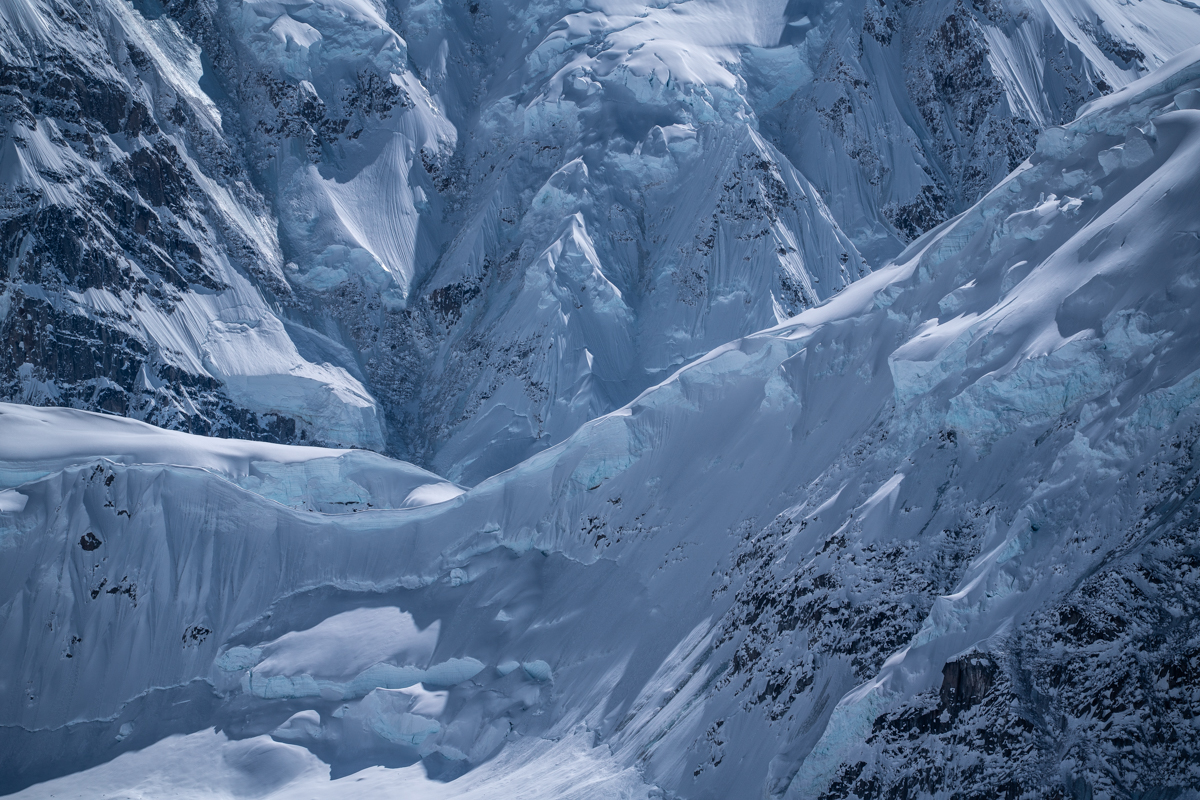
When I stepped out of the aircraft and looked at my surroundings for the first time, I was once again completely fascinated by what I saw. Around us there was nothing but enormous glaciers and steep walls rising into glaciated peaks. We were standing at base camp at an altitude of around 2,150 meters. After unloading the plane, it took off again and left us behind with our enormous amount of gear and food.
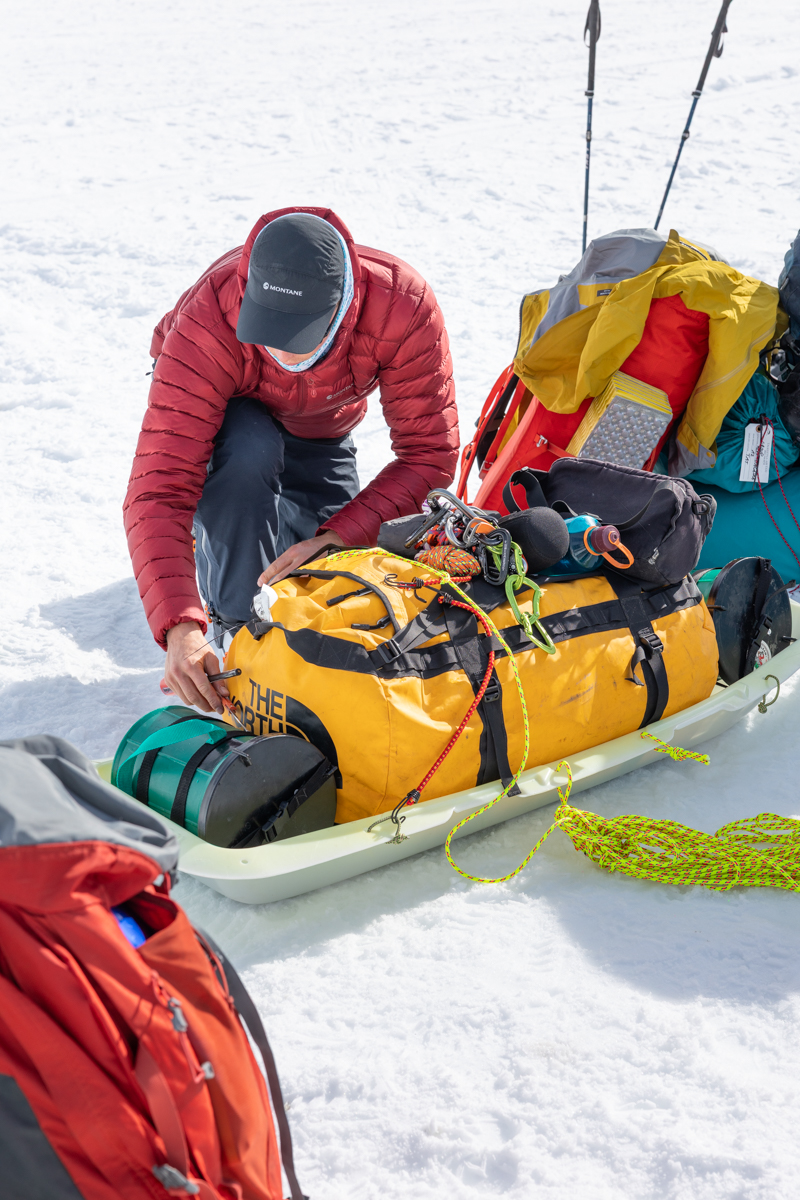
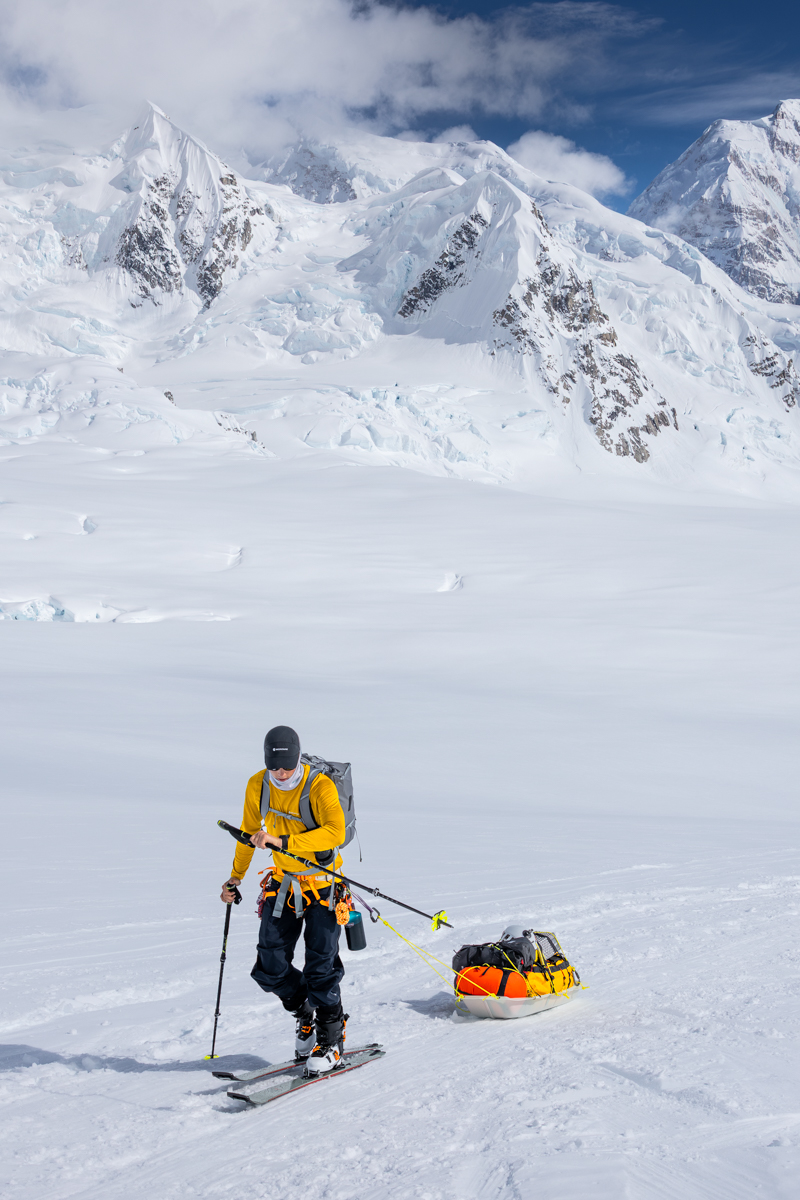
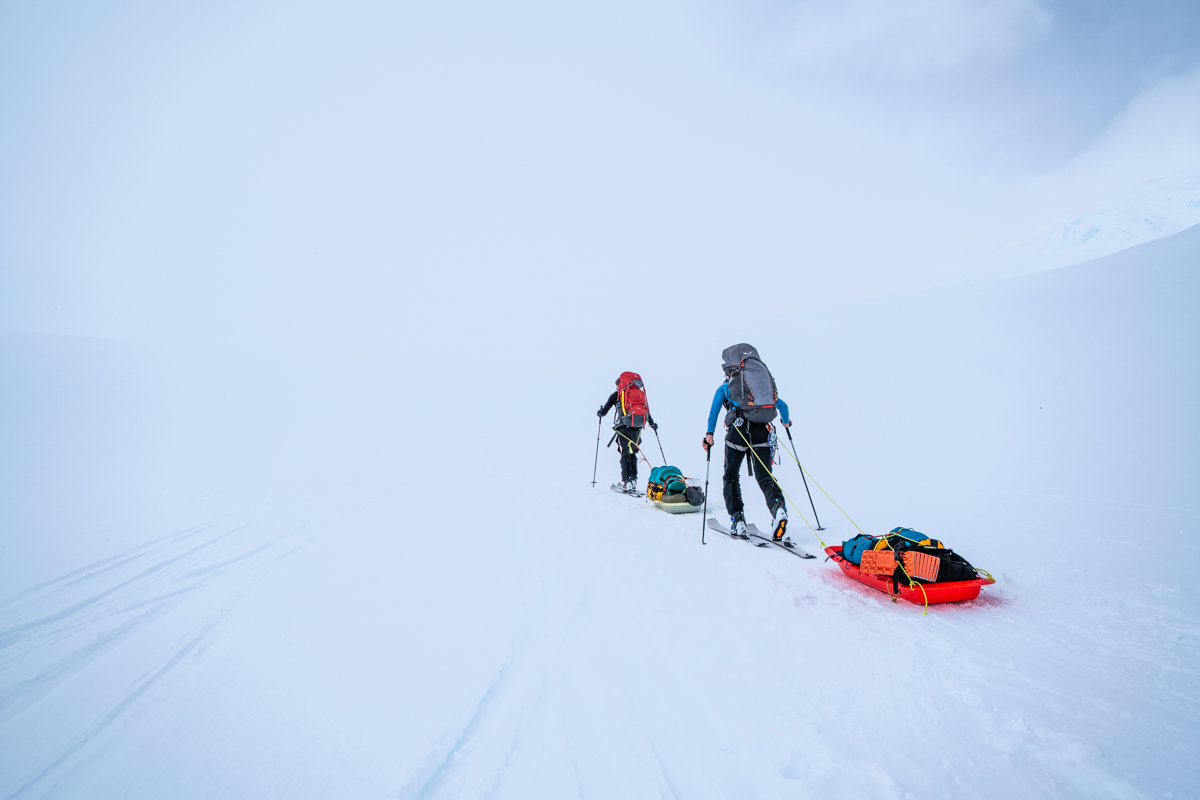
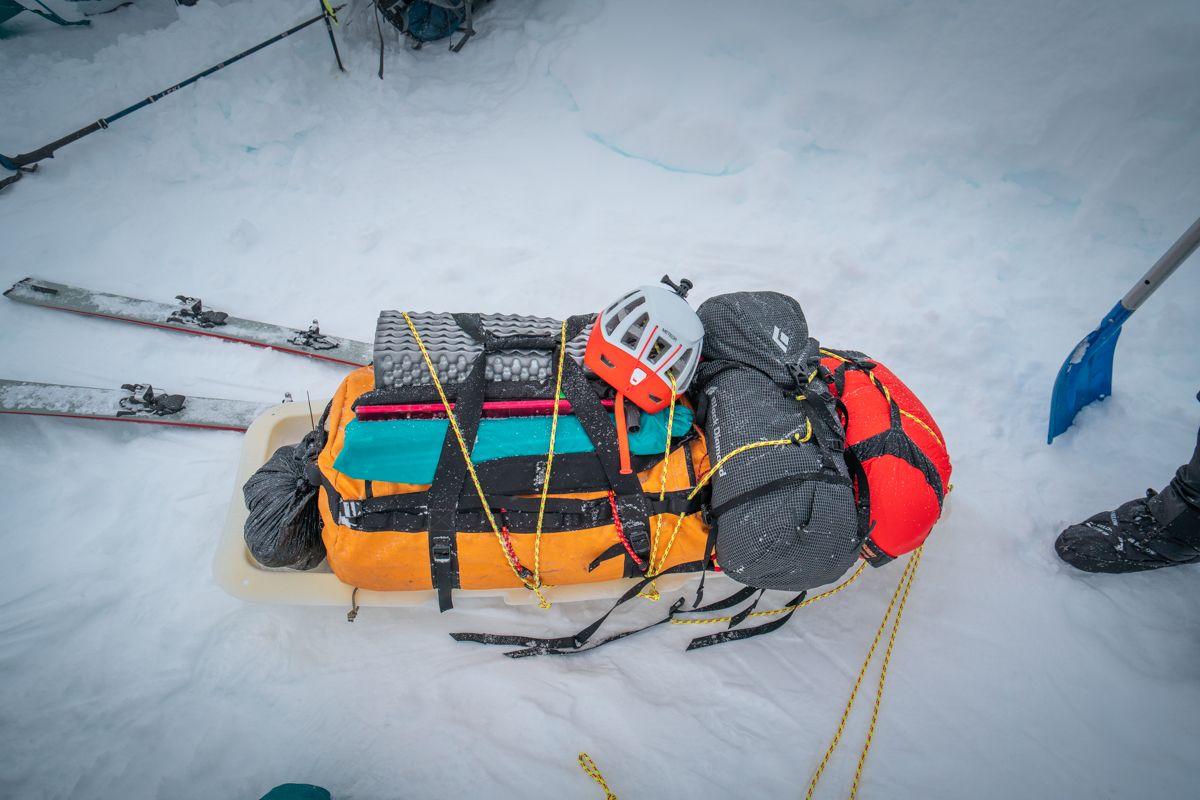
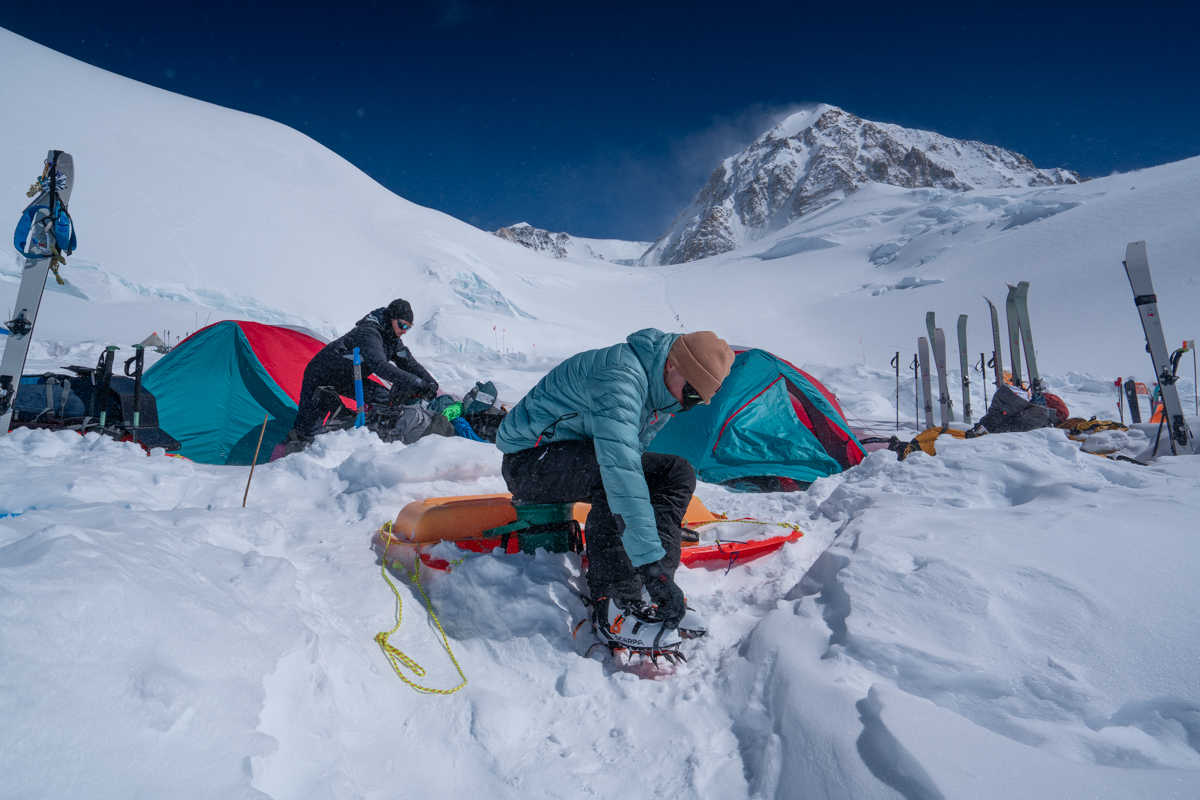
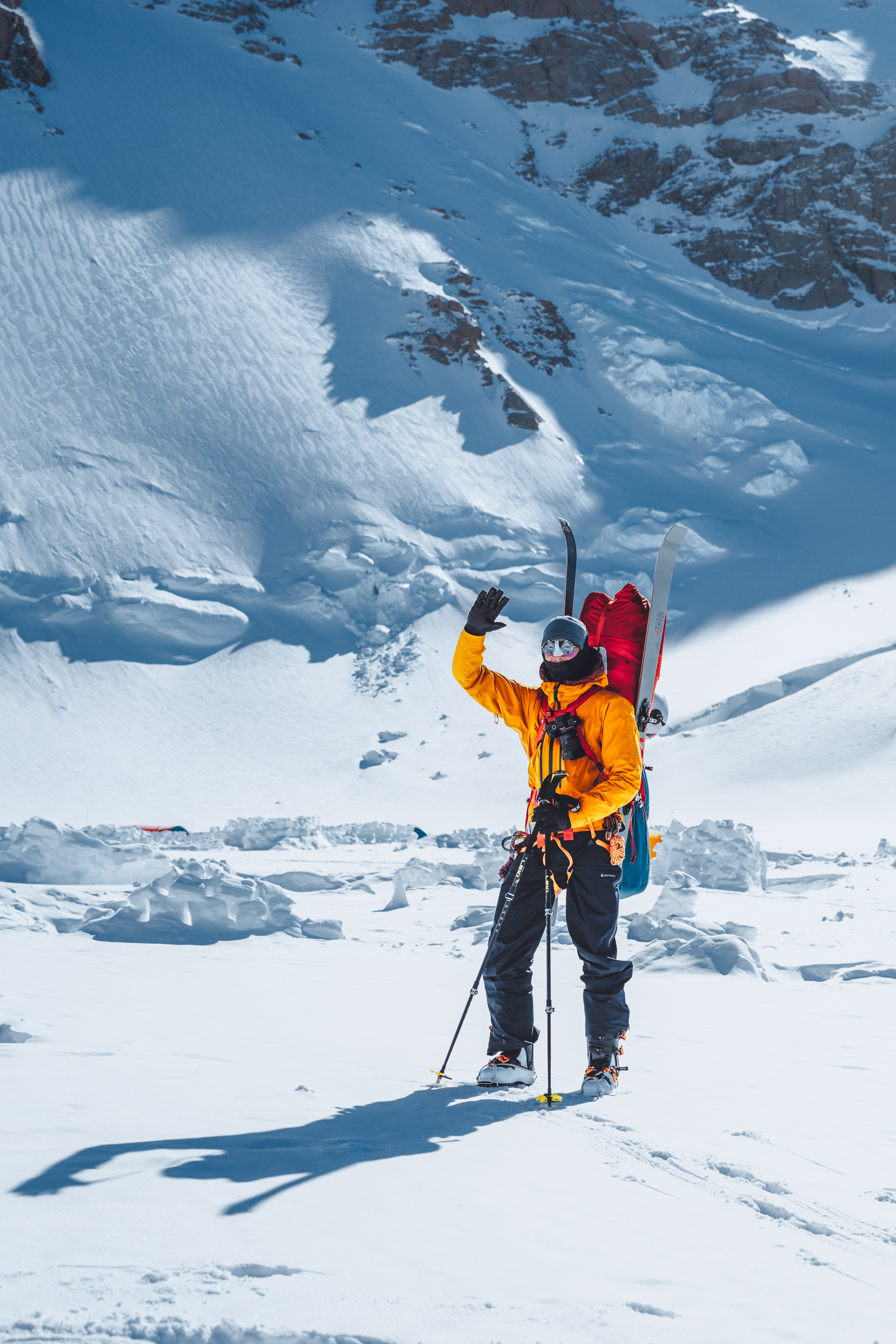
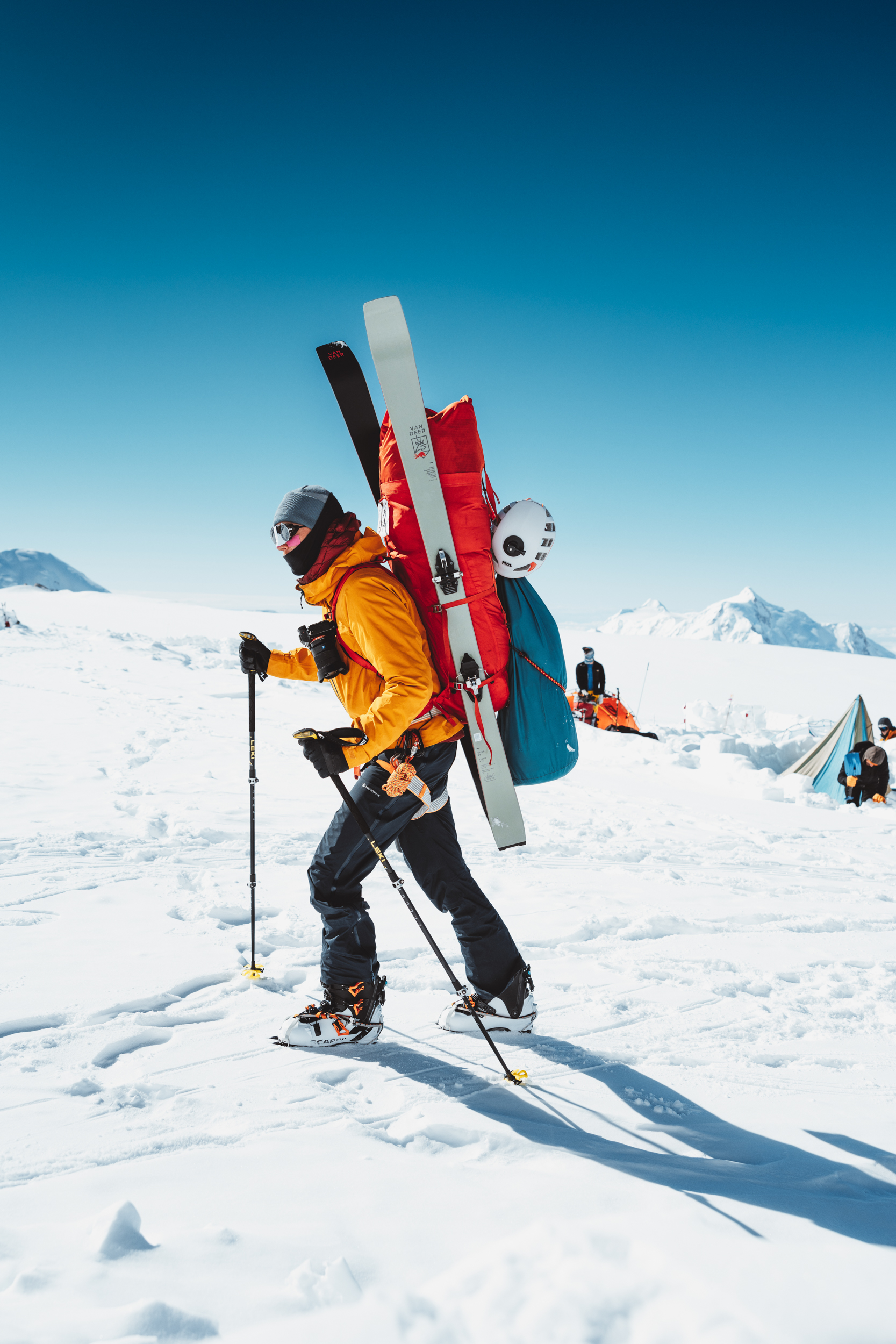
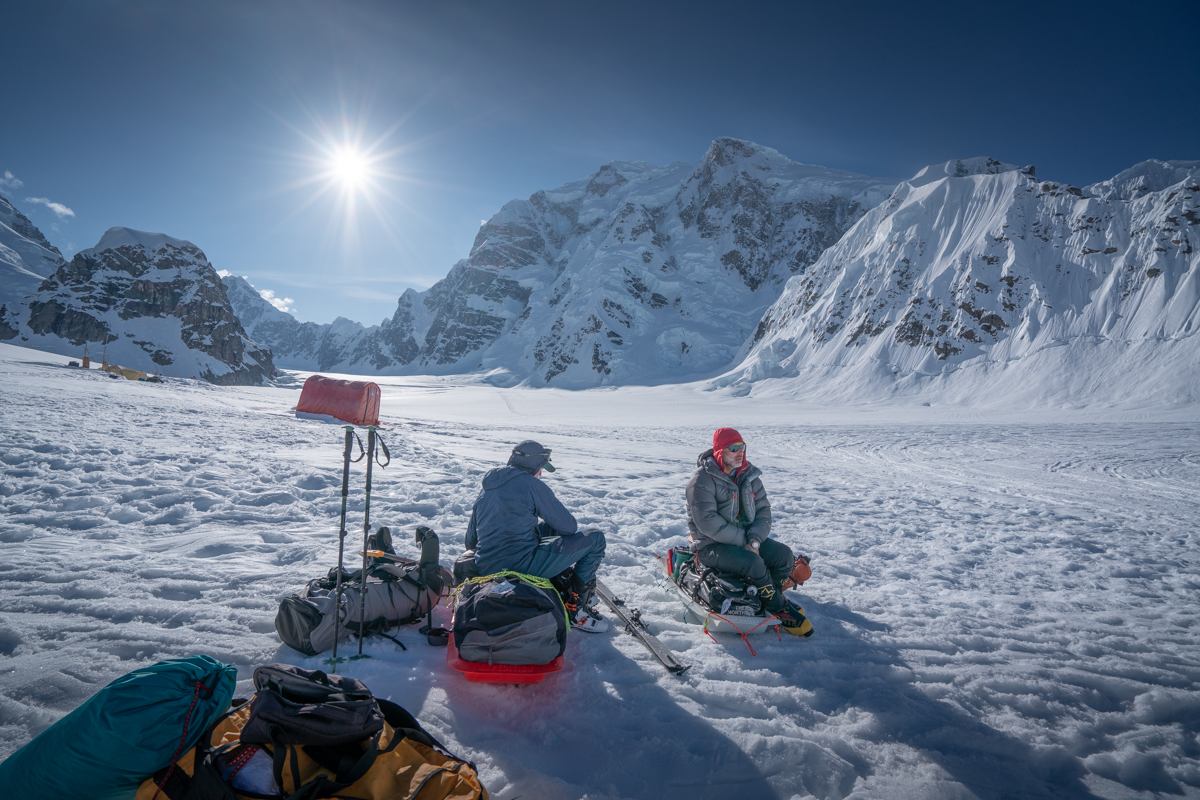
Our plan was to set off toward Camp 1 later that same evening. Before that, we still had quite a bit of preparation to do. We buried a few things and some food in the snow at base camp, in case bad weather prevented us from flying out when we returned to base camp. Everything else had to be repacked so that we could transport it. Anything that no longer fit into our backpacks was stored in duffel bags and loaded onto sleds. This would allow us to transport a lot of weight relatively comfortably, especially on flatter terrain. This was very important, as each of us had to carry 50–55 kg of equipment.
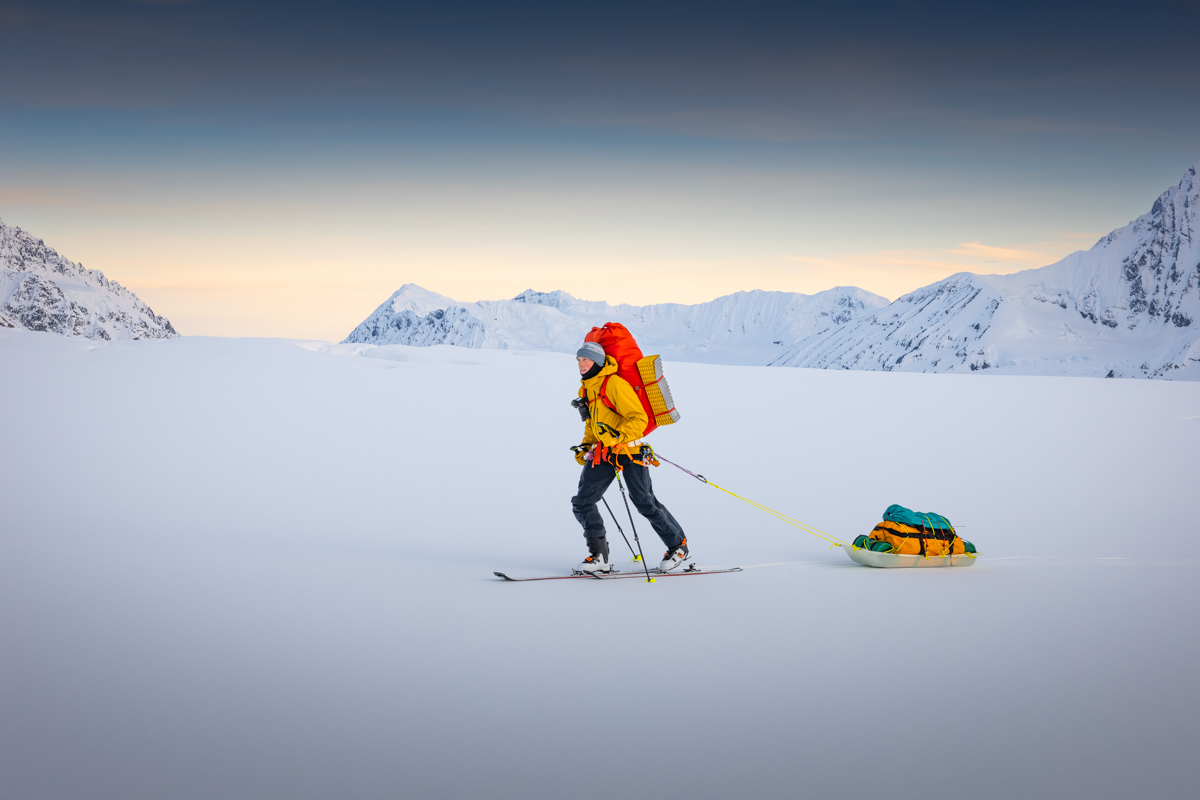
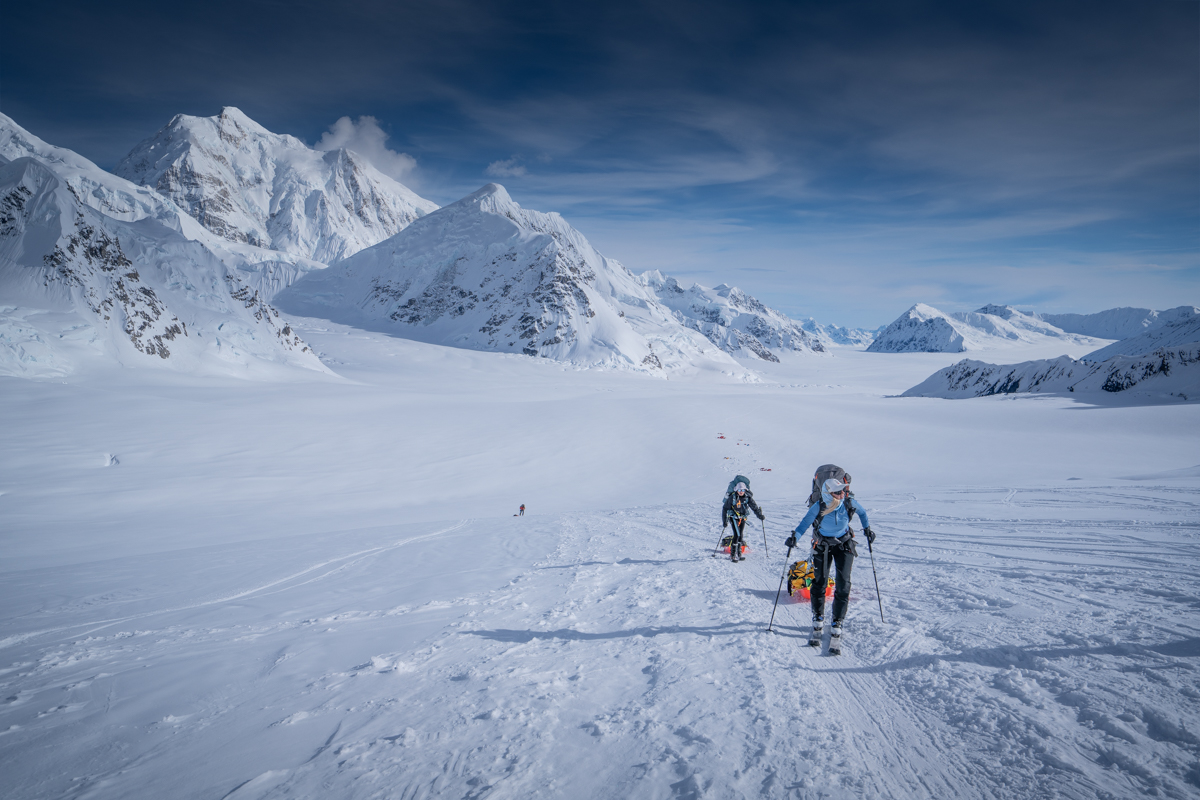
At 8:30 pm, we were finally ready and could set off toward Camp 1. We started late in the evening intentionally. On the lower sections of the route, the glacier becomes unbearably hot during the day when the sun is shining. We wanted to avoid this by moving during the night. Although the sun disappears behind the mountains and eventually briefly sets around midnight, it remains light throughout the entire night. Therefore, traveling at night was not a problem.
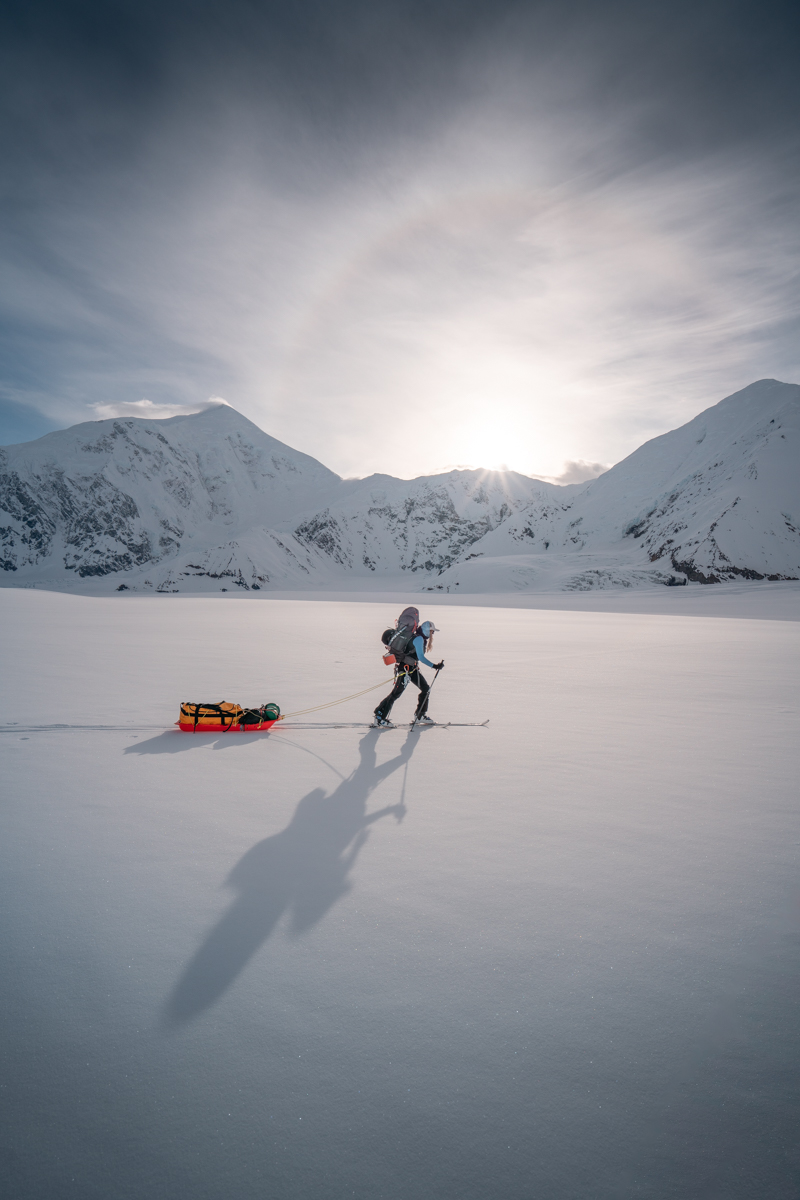
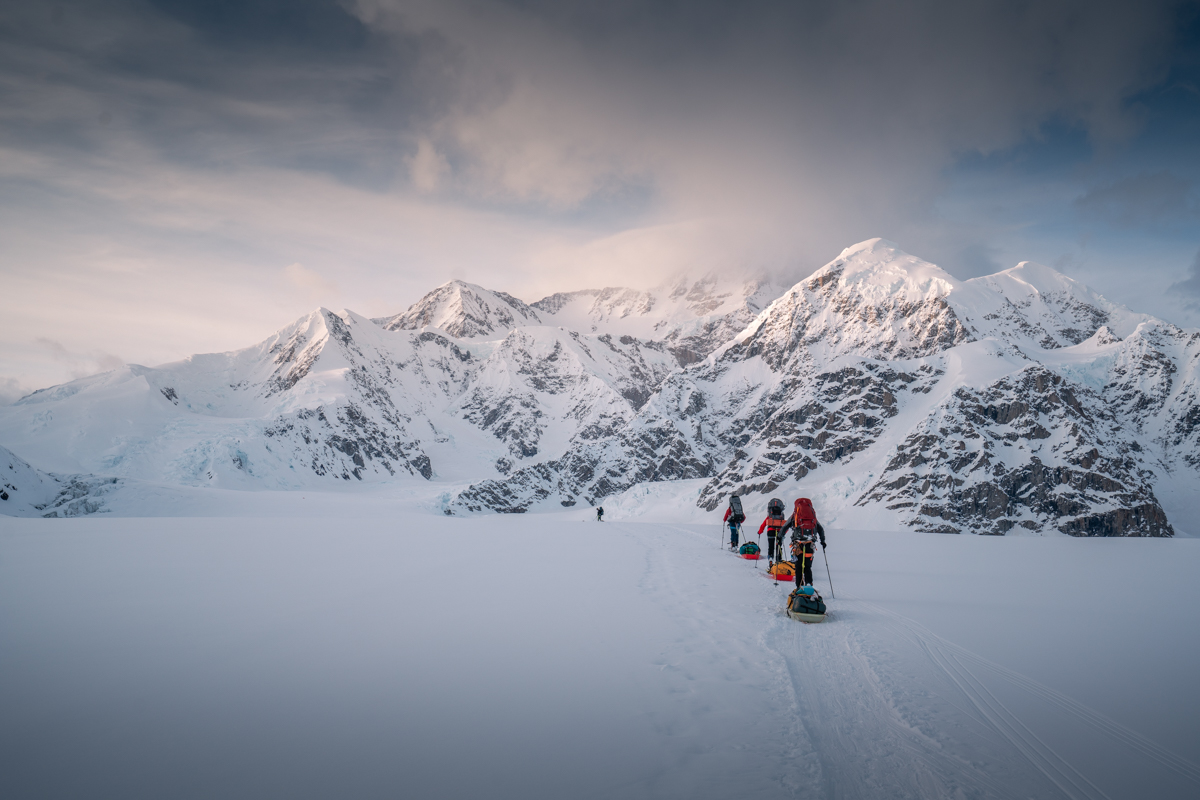
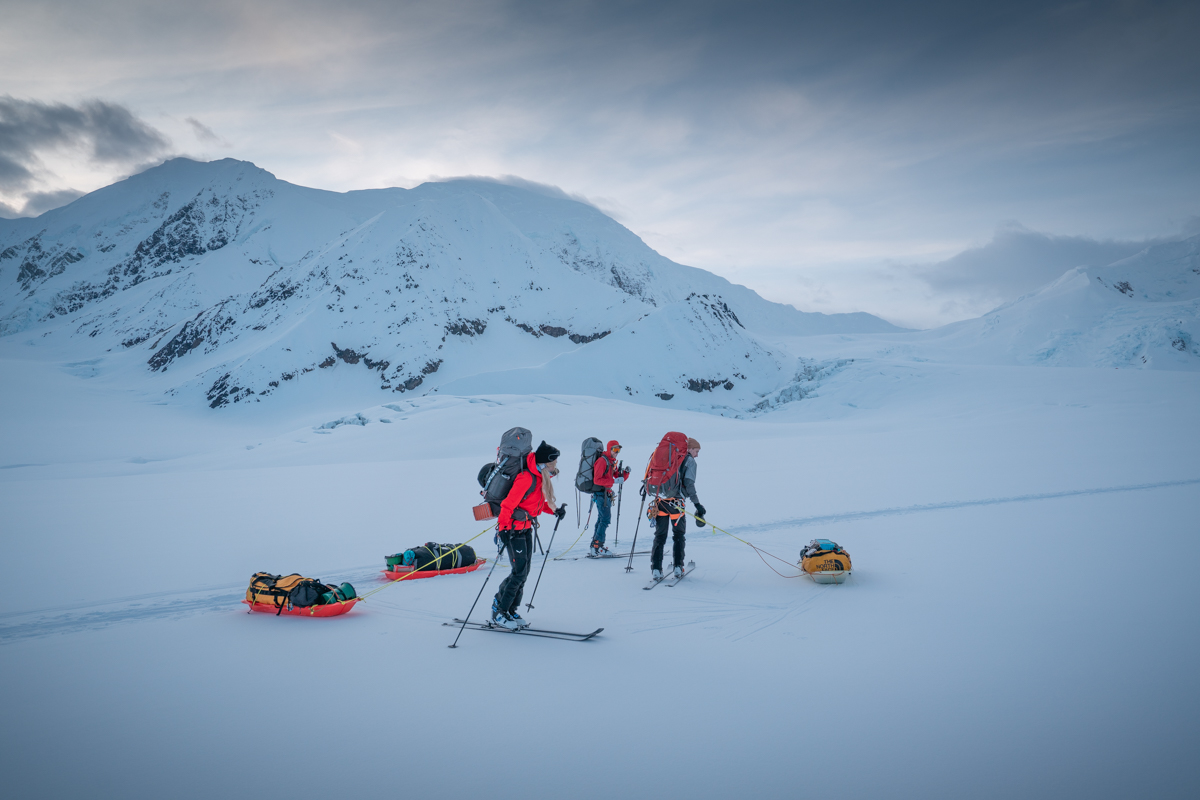
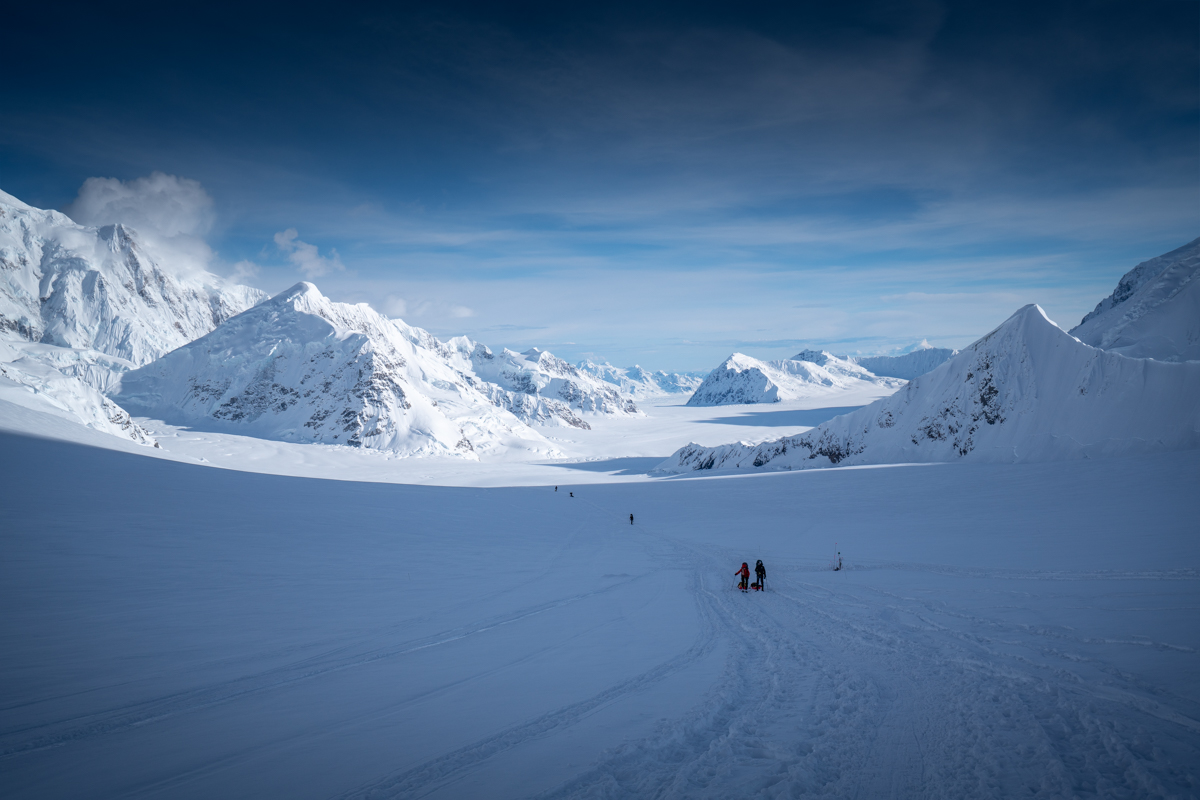
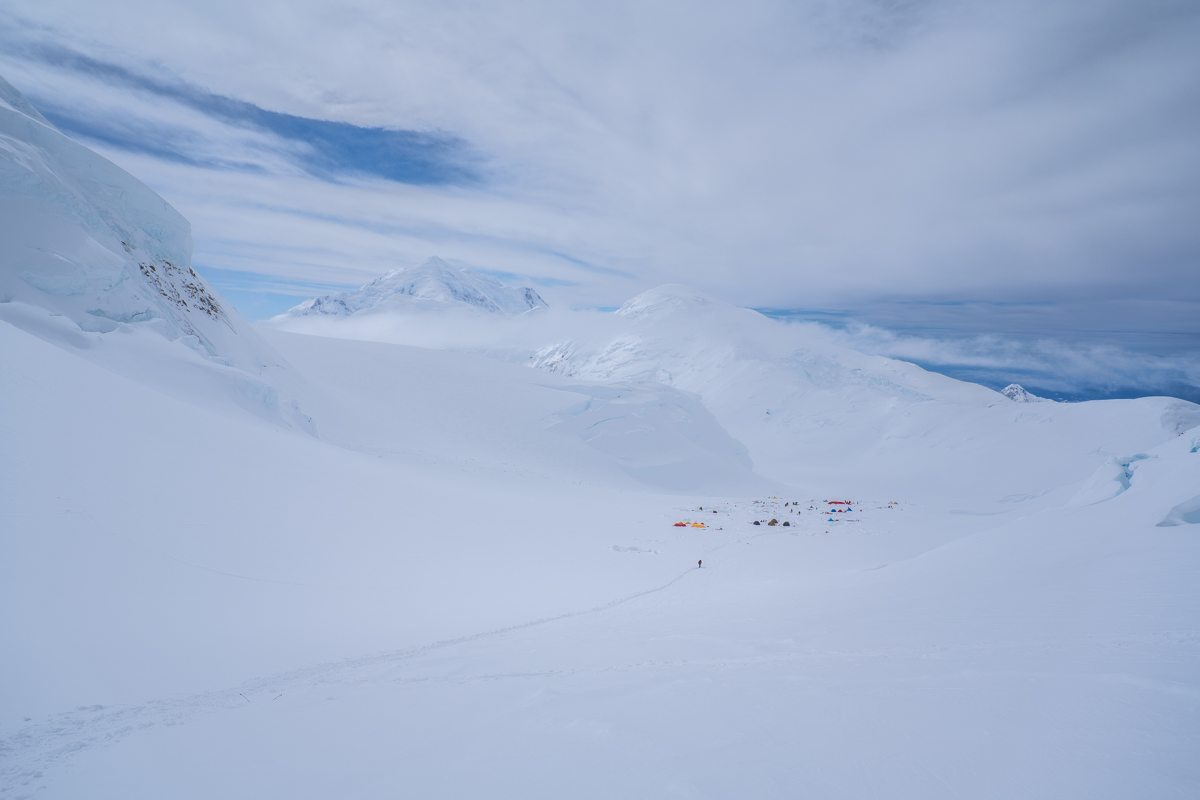
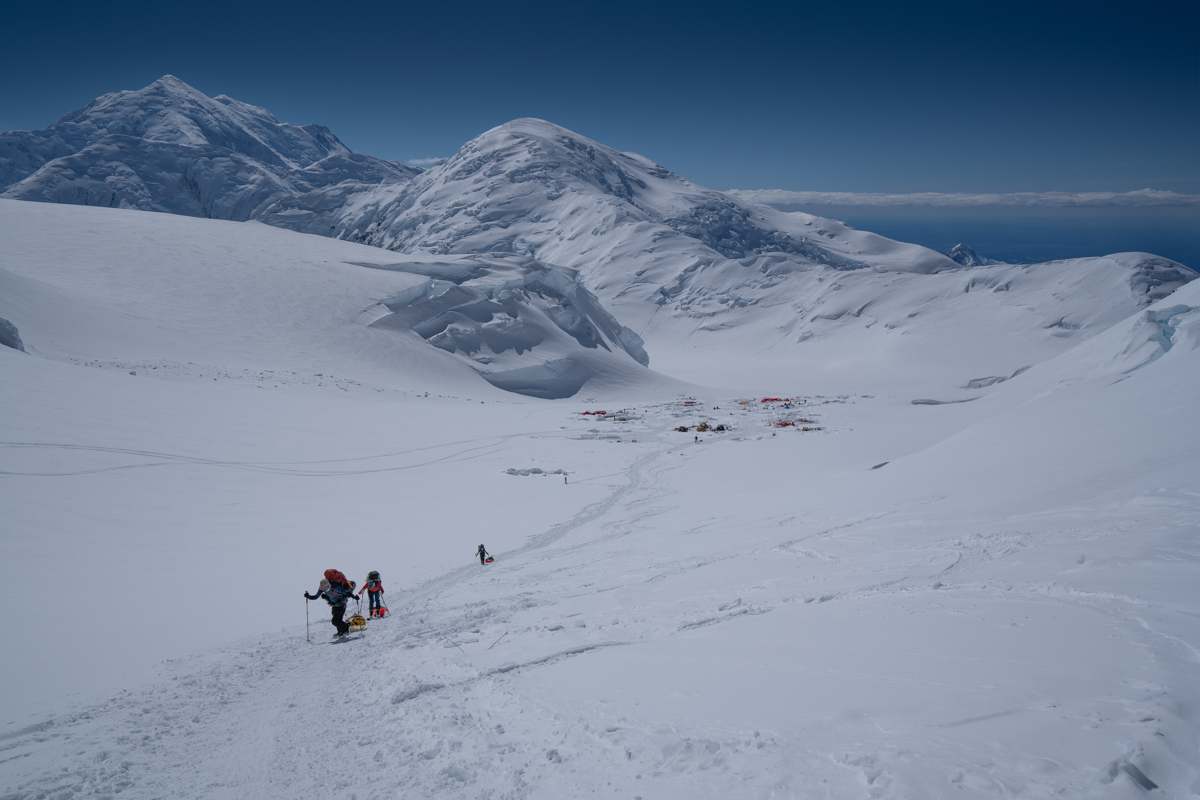
The route began by going downhill. We had to descend 150 meters from base camp onto the Kahiltna Glacier, which is a gigantic glacier with a length of 71 kilometers. After the short descent, we were almost exactly at 2,000 meters elevation. To reach Camp 1, we now had to gain around 350 vertical meters over a distance of 8km so luckily the terrain was not steep at all and pulling the heavy sleds was not to hard. The route led through a breathtaking landscape. It was a beautiful evening: clear skies, pleasant temperatures, no wind, and the low sun bathing everything in warm light.


The feeling of walking through this remote environment somewhere in Alaska as a group, while pulling a fully loaded sled behind us across the glacier, was indescribable.
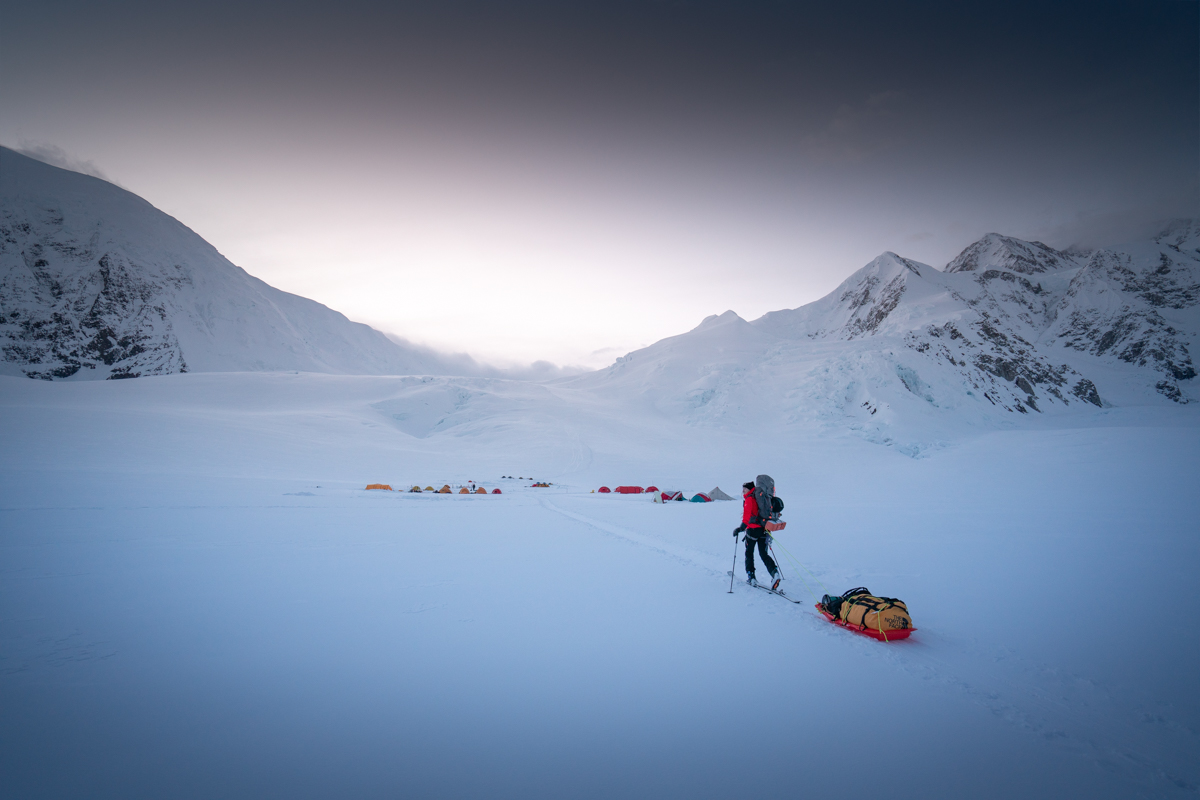
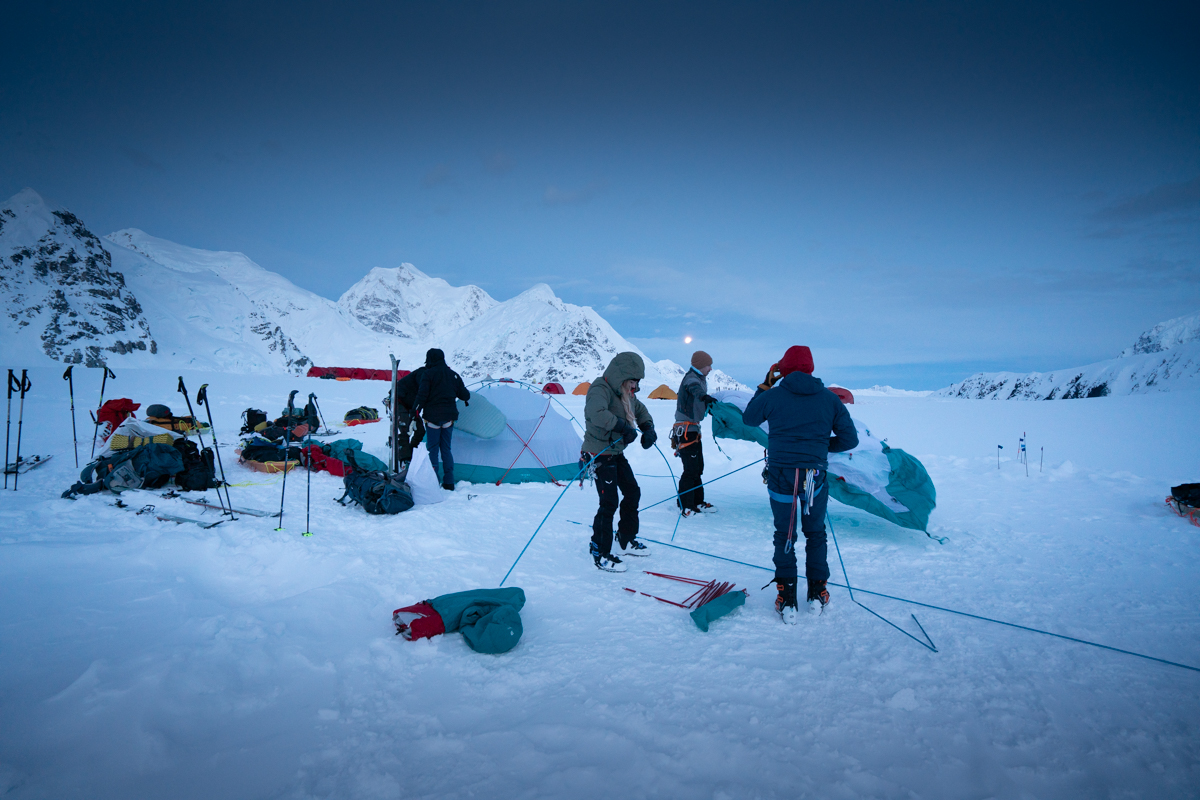
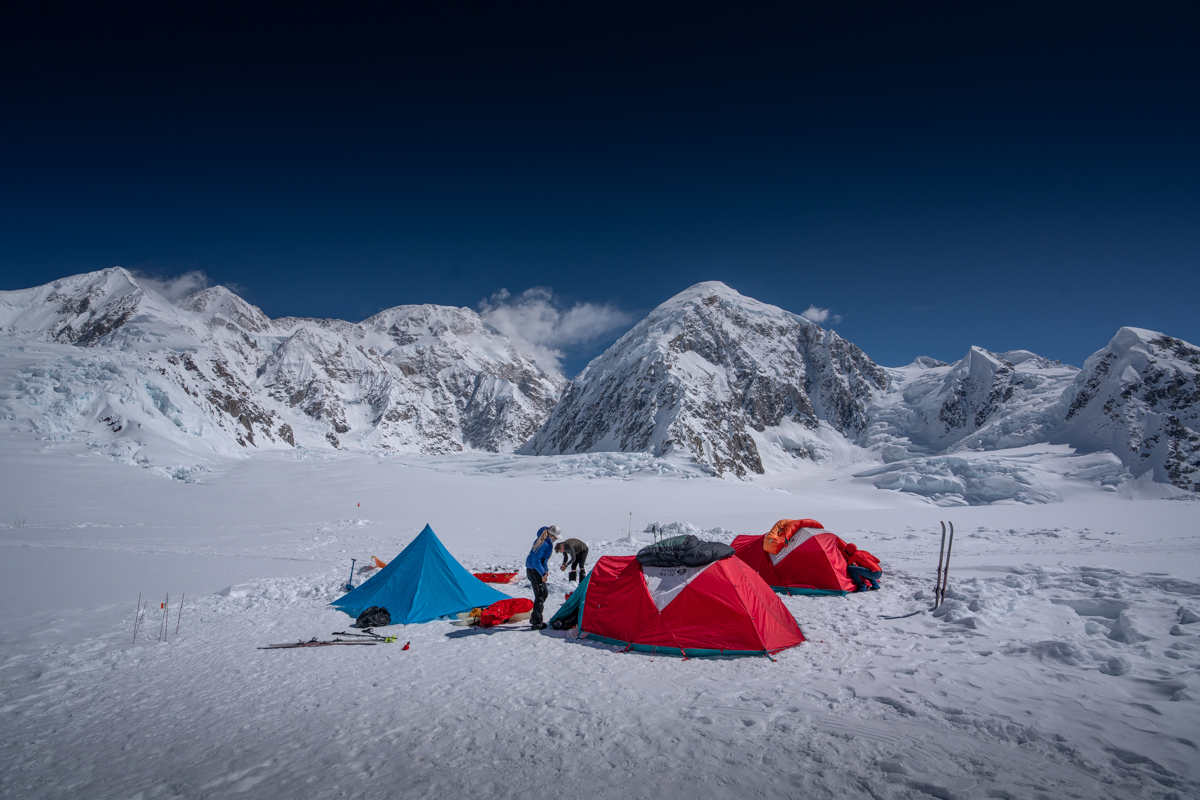
Almost exactly at midnight, we finally saw Camp 1 ahead of us, and a few minutes later we reached it. By then, it had become very cold. Even though it was still light outside, the warmth and energy of the sun were gone, and the temperature dropped rapidly. We quickly set up the tents and tried to melt snow, but at first we had problems with the stove. It took quite some time until we finally had enough water, and we were able to eat dinner around 2:30 am.
It had been a long day from Anchorage to Camp 1, and I was happy to finally close my eyes inside my sleeping bag at 3 am.


Day 2
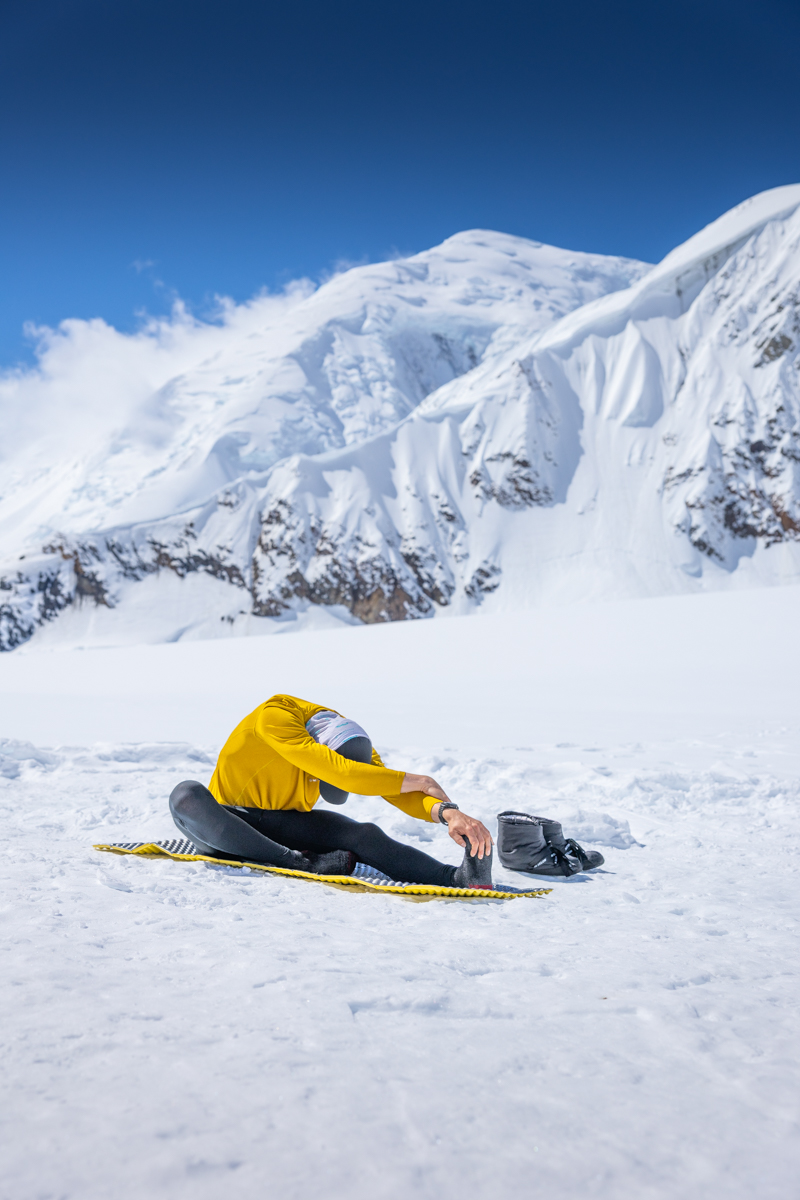
Unfortunately, my first night was less restful than I had hoped. My nose was slightly blocked, and the brightness did not really help either, so after a little more than an hour my attempt at sleeping was already over. After a few more hours, the sun had heated up the tent so much that I had to get out, and I waited outside until the others got up as well.
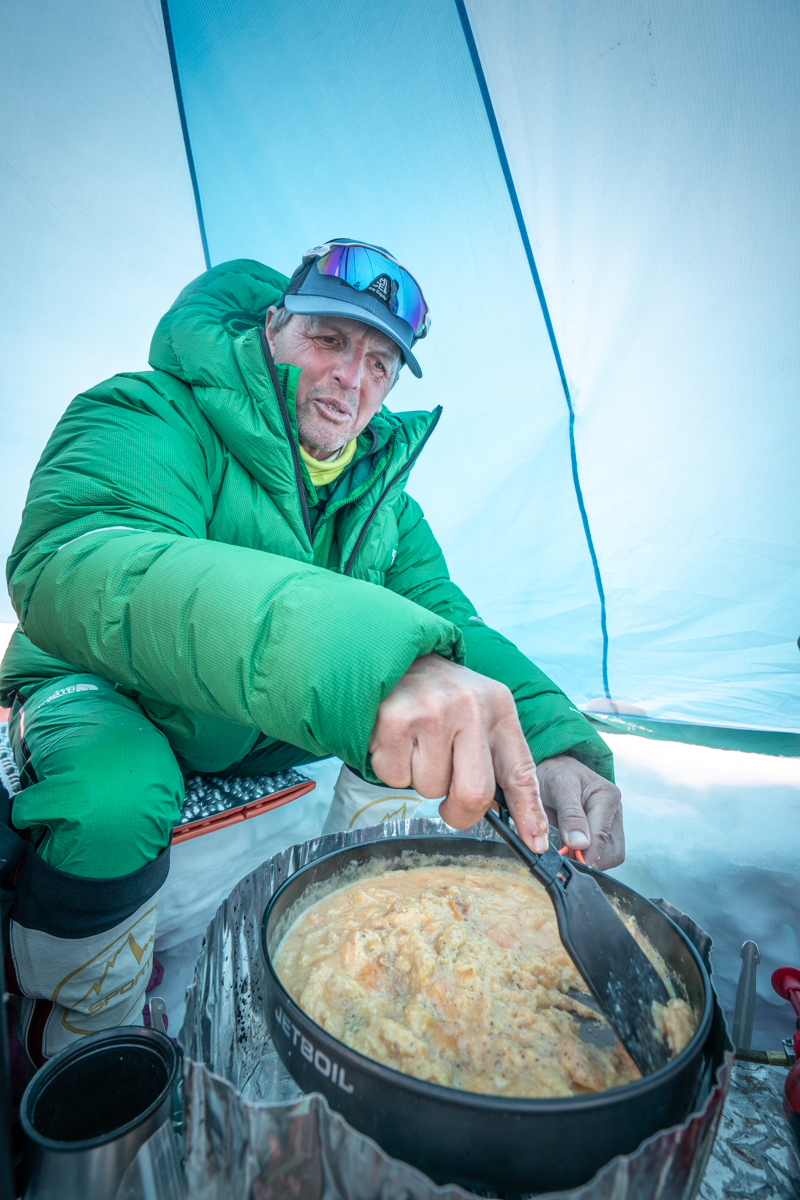
We started the day very relaxed. Around 1 pm, David and Thomas made scrambled eggs for breakfast, and afterwards we lay down again for a while and continued resting. In the evening, it was time to pack again. Our plan was to bring most of the food and some equipment up to Camp 3. We would not use Camp 2 at all during the expedition, as the section from Camp 1 to Camp 3 can easily be done in a single day.
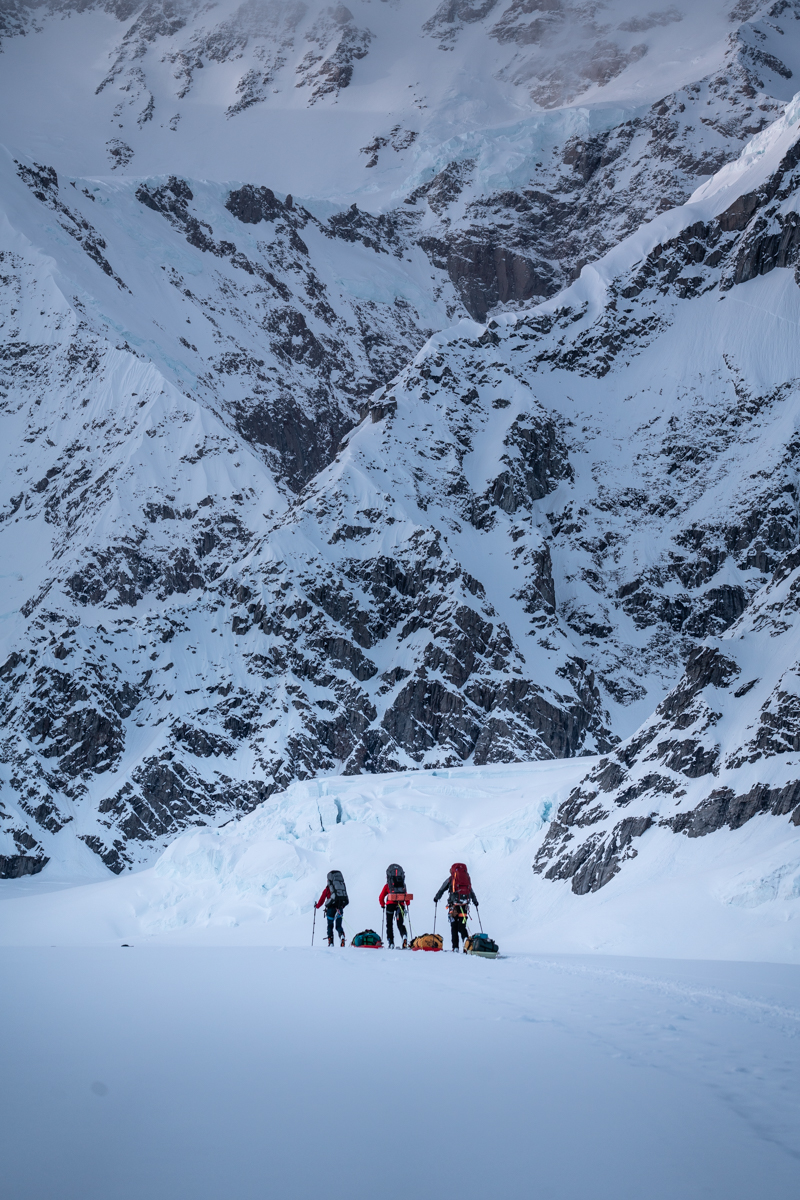
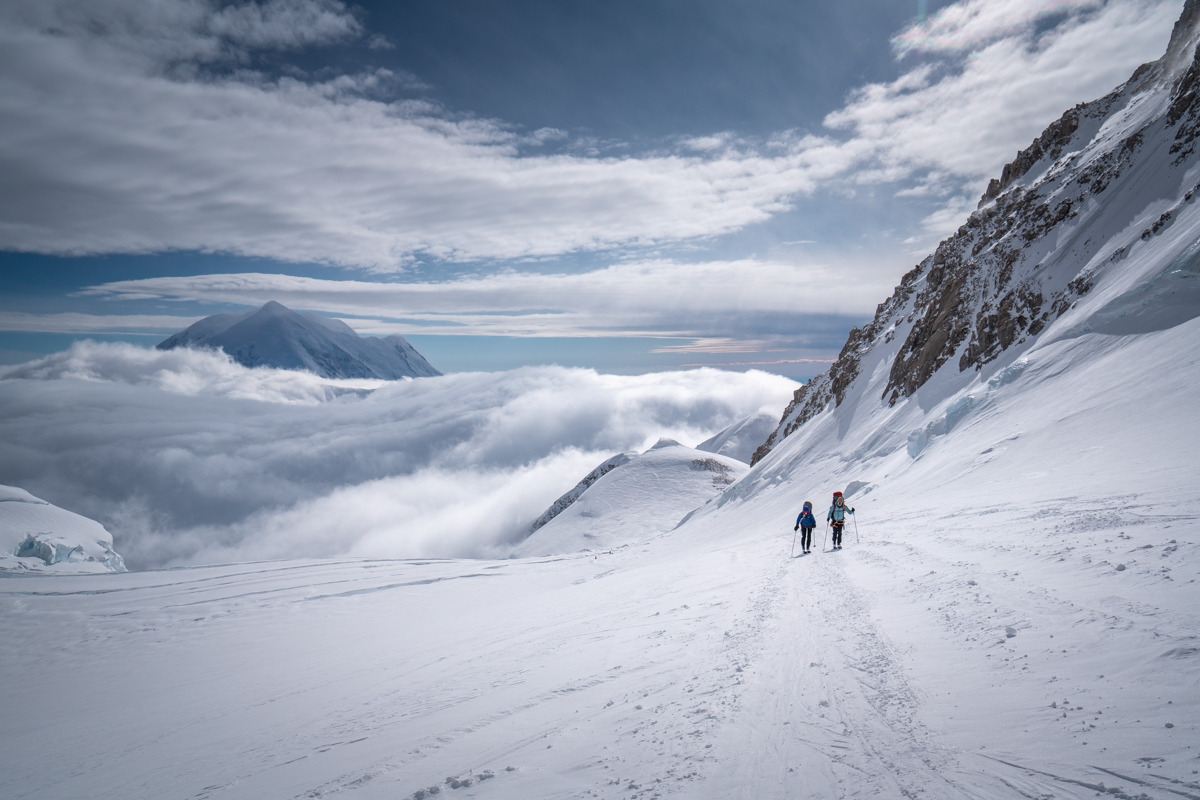
At around 6:30 pm, we set off. Ahead of us were a little over 7 km and 1,000 meters of elevation gain. Shortly after Camp 1, the route became slightly steeper for the first time (although still flat enough that we could continue moving on skis without kick turns), and suddenly we had spectacular views of the Kahiltna Glacier and the section of the route we had covered the day before.
After that, the terrain flattened out again until, after around 800 meters of elevation gain, we left the Kahiltna Glacier shortly before its end at Kahiltna Pass. The final meters to Camp 3 followed a slightly steeper side branch of the glacier. Once we were above Kahiltna Pass, another spectacular view opened up. Behind the pass there are only a few smaller mountains, and we had an incredibly wide view across the flat Alaskan landscape where countless lakes and rivers reflected the already low sun.
Around 10:30 pm, we reached Camp 3, where Thomas and I started burying our equipment in the snow. David, who arrived shortly after us, and Thomas immediately skied back down to Camp 1 to prepare dinner. I waited in Camp 3 until everyone arrived.


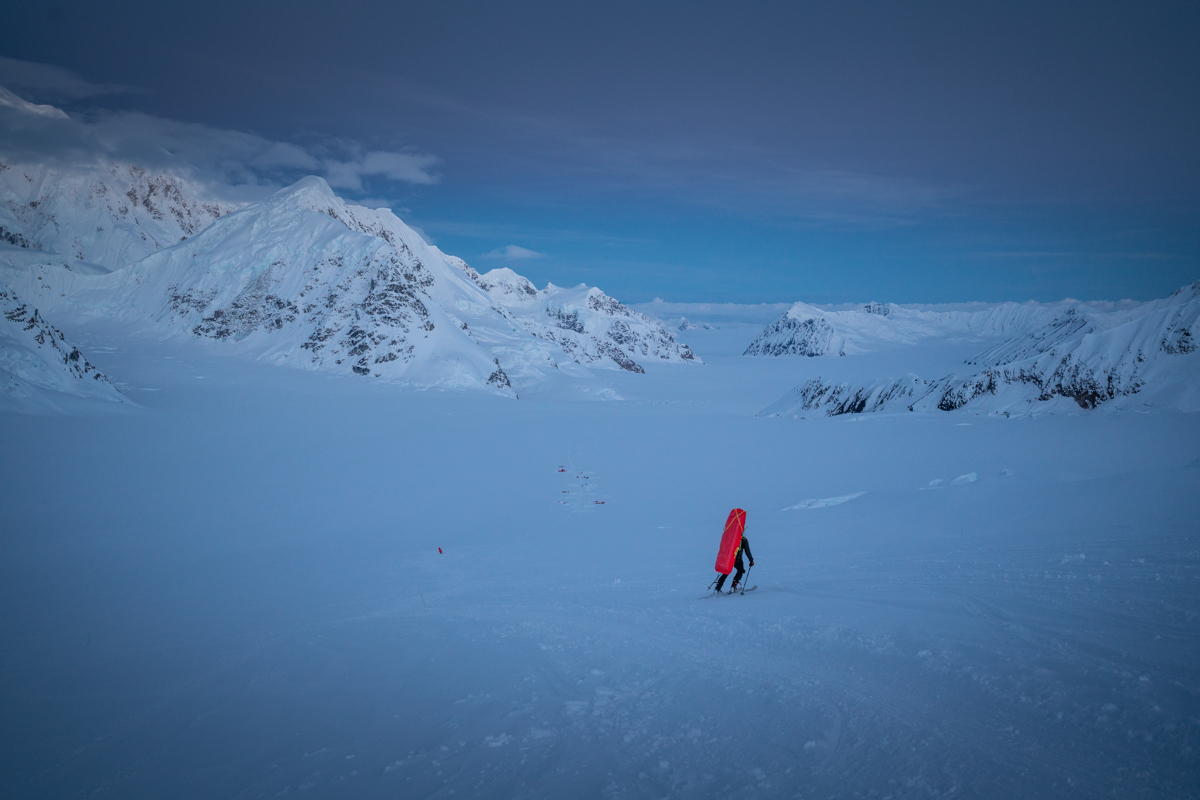
The sun had disappeared behind the mountains until the rest of the team arrived and while waiting it quickly became very cold but the mountains around me turned a deep orange colour, creating a beautiful sight, so waiting was more than okay. Once all of our food and equipment we wanted to leave in Camp 3 was buried in the snow, we could start to ski back down to Camp 1 shortly before midnight. For the way down we strapped the now empty sleds onto our backpacks what felt really strange at first.
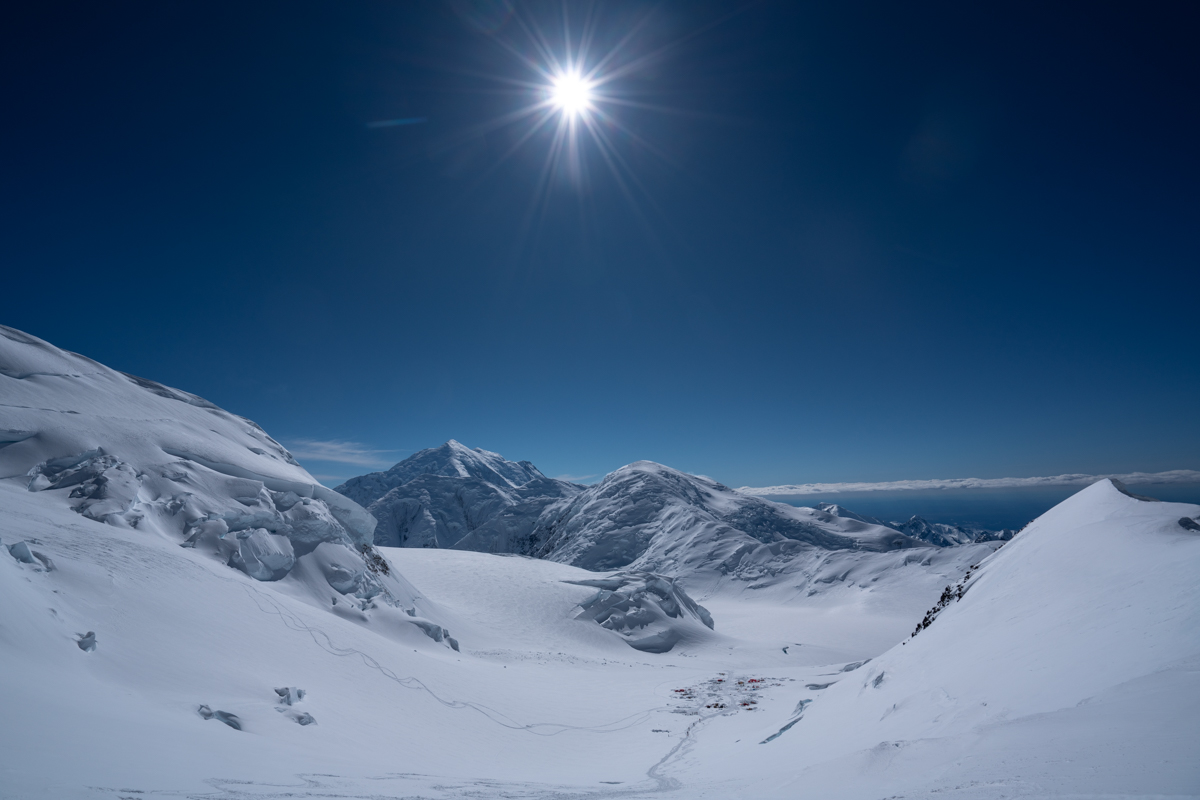
The snow was terrible for skiing at the beginning, but the closer we got to Camp 1, the better it became. The final slope was an absolute dream: hard but perfect snow for skiing. While enjoying the fast descent, the tents of Camp 1 appearing as tiny dots on the glacier below us, and the spectacular landscape all around us was in perfect light at half past midnight.
Just as we arrived back at Camp 1, a spectacular full moon rose behind the mountains. An incredible sight. Then we could finally eat and shortly afterwards, around 2 am, go to sleep.
Day 3
That night, I actually managed to get around seven hours of sleep, which felt incredibly good. Due to the problems with the stove on the first night and because we had cooked twice during the coldest part of the day, we had used quite a lot of gas at this time already. We started worrying whether our supply would last for the entire expedition. David therefore volunteered to go back down to base camp and bring back another gallon.
After breakfast, we took the day very slowly again. In the afternoon, we prepared for going up to Camp 3 again. This time we wanted to move our entire camp there and not ski back down to Camp 1 in the evening. We started a little earlier than the previous day and followed the same route than the day before. At first it was still quite hot, so I set off wearing only a long-sleeve shirt. After a little more than an hour, clouds moved in and it started snowing lightly. As soon as the sun disappeared behind the clouds, it immediately became much colder, and suddenly I had to put on three additional layers at once.
On this day I miscalculated the weight distribution a little bit. I thought it would be more comfortable to carry a small and light backpack and pull the rest behind me on the sled. Since I also took some of David’s gear, as he had already gone back to base camp that morning, I ended up with well over 30 kg on my sled. I regretted that on the steeper sections of the route, because as the slope angle increased, more and more weight was hanging from my harness, making progress extremely exhausting.
Apart from that, everything was like the day before, just with less visibility (due to clouds and fog) and much more weight on the sled, which I had to drag up the final meters. But we reached Camp 3 at 3,350 meters and, after building a flat platform, were able to set up the tents.


Day 4
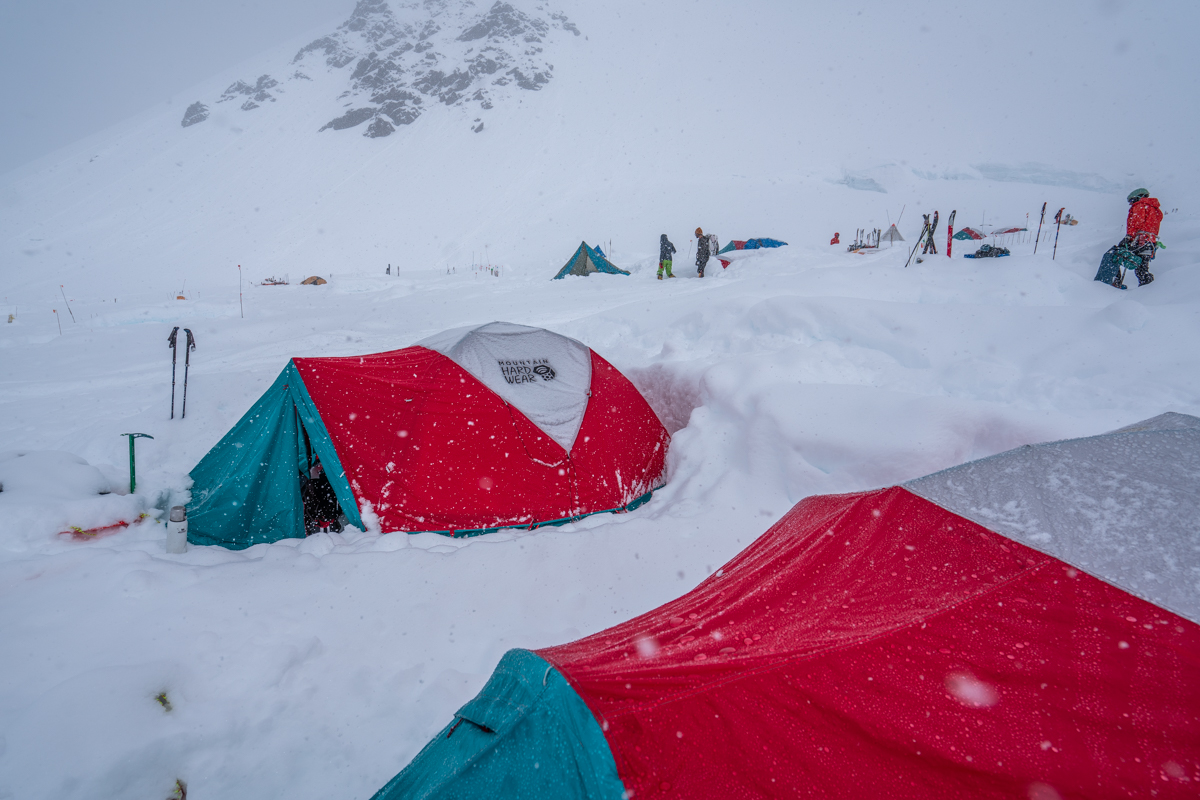
The next day, the weather had deteriorated further. It was a complete whiteout all day, with light snowfall. However, this actually suited us quite well, as we had planned a rest day anyway, so we spent most of the day inside the tents.
Day 5
From today onwards, we changed our daily rhythm again. We would now move during the day because we were entering higher terrain where it becomes too cold at night.
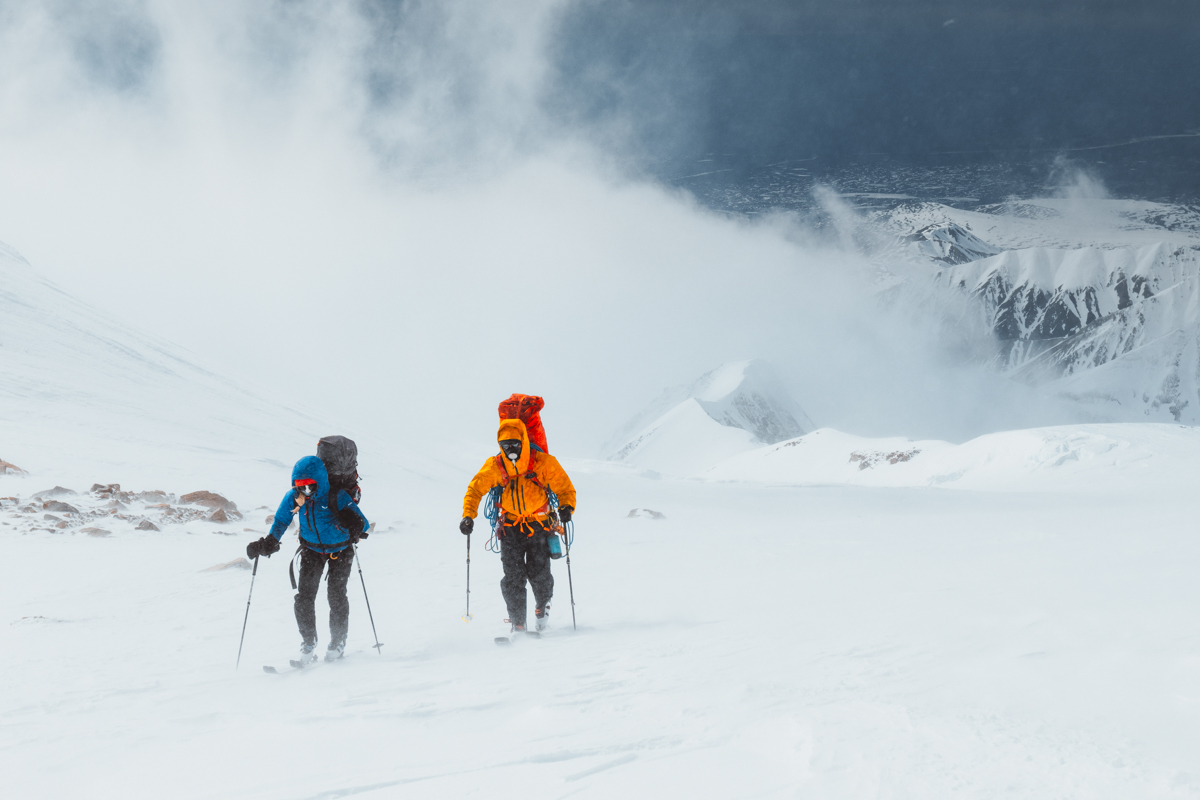
The plan for today was to climb to Camp 4, deposit more food and equipment there, and then return to sleep in Camp 3. We originally wanted to start relatively early, but from camp we could already see extremely strong winds sweeping across the glacier higher up. Therefore, we decided to wait a little longer. One or two hours later, conditions looked better, and we were able to set off.
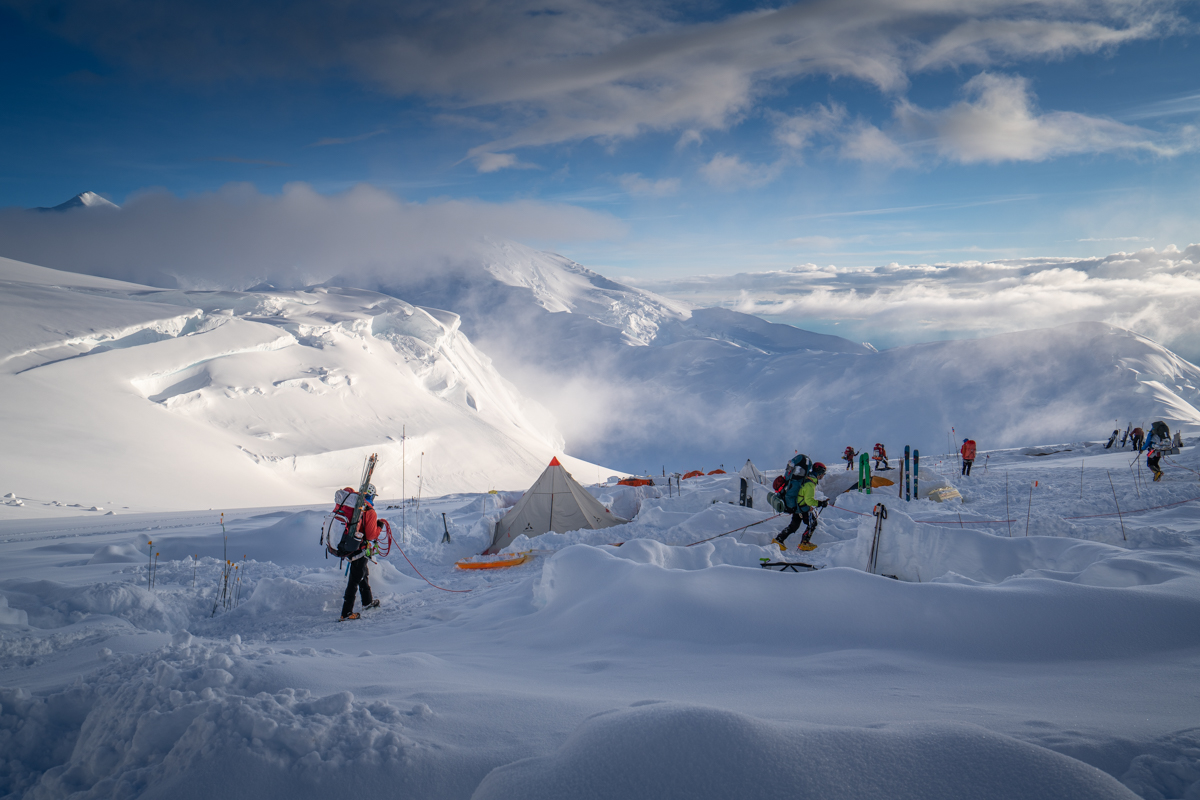
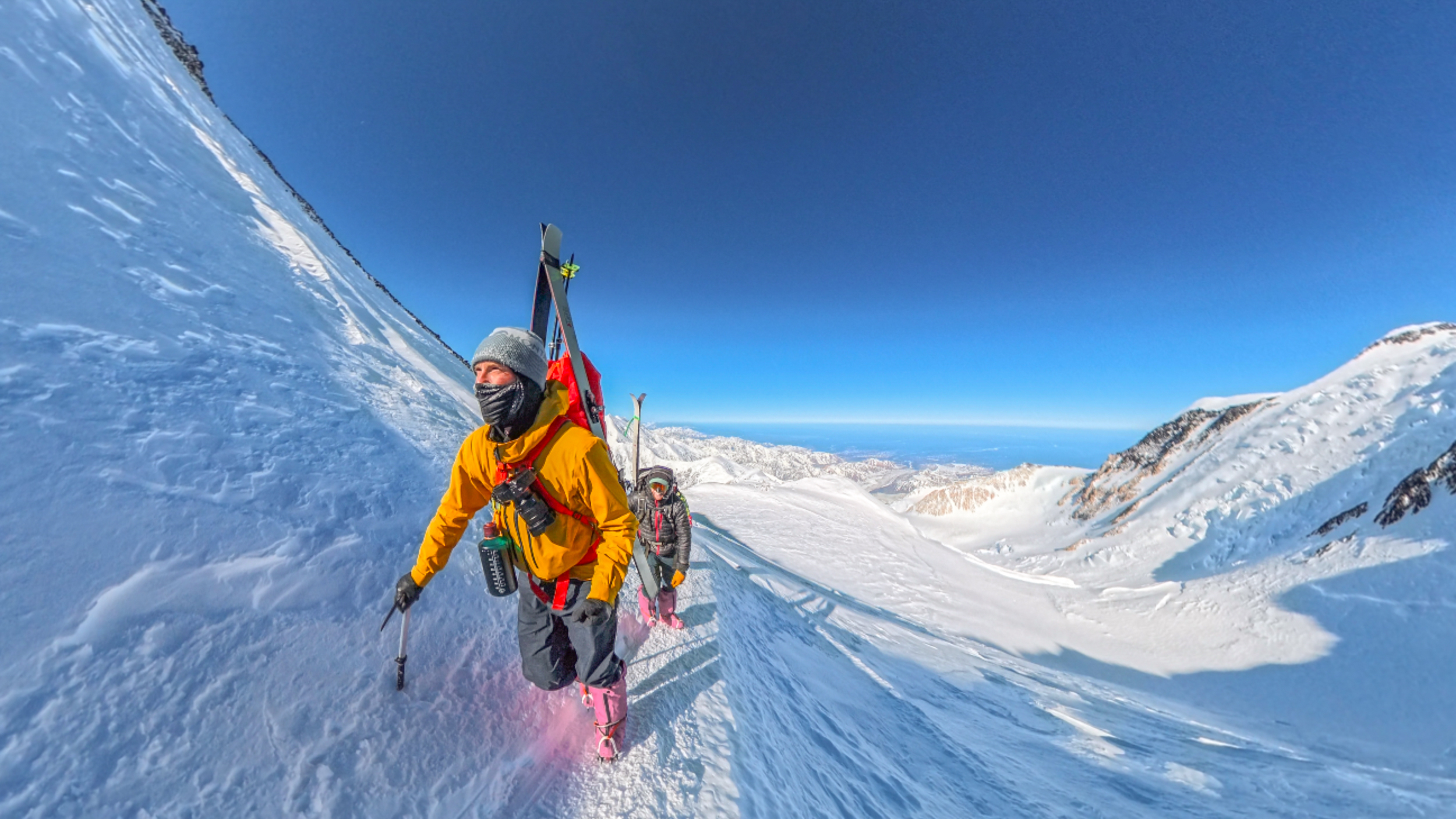
On this day, we travelled the first time without sleds. The first section of the route (“Motorcycle Hill”) was still relaxed. Protected from the wind, we climbed went up the relatively steep slope with kick turns. After this section, we reached a terrain break where the route turned right and crossed a ridge toward an icy traverse.


From that moment on, we were fully exposed to the strong winds. I tried to completely cover my face to protect myself from the wind, but as a result my goggles kept fogging up, and I spent most of the time nearly blind.
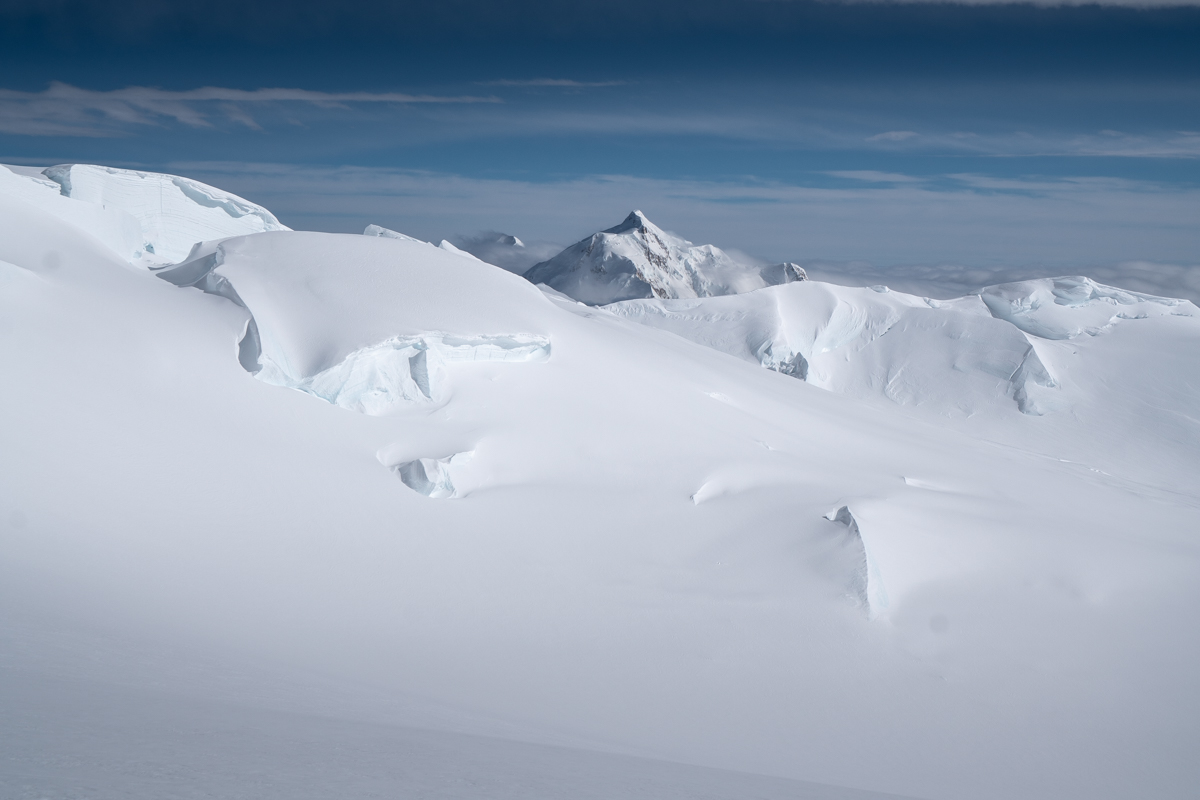
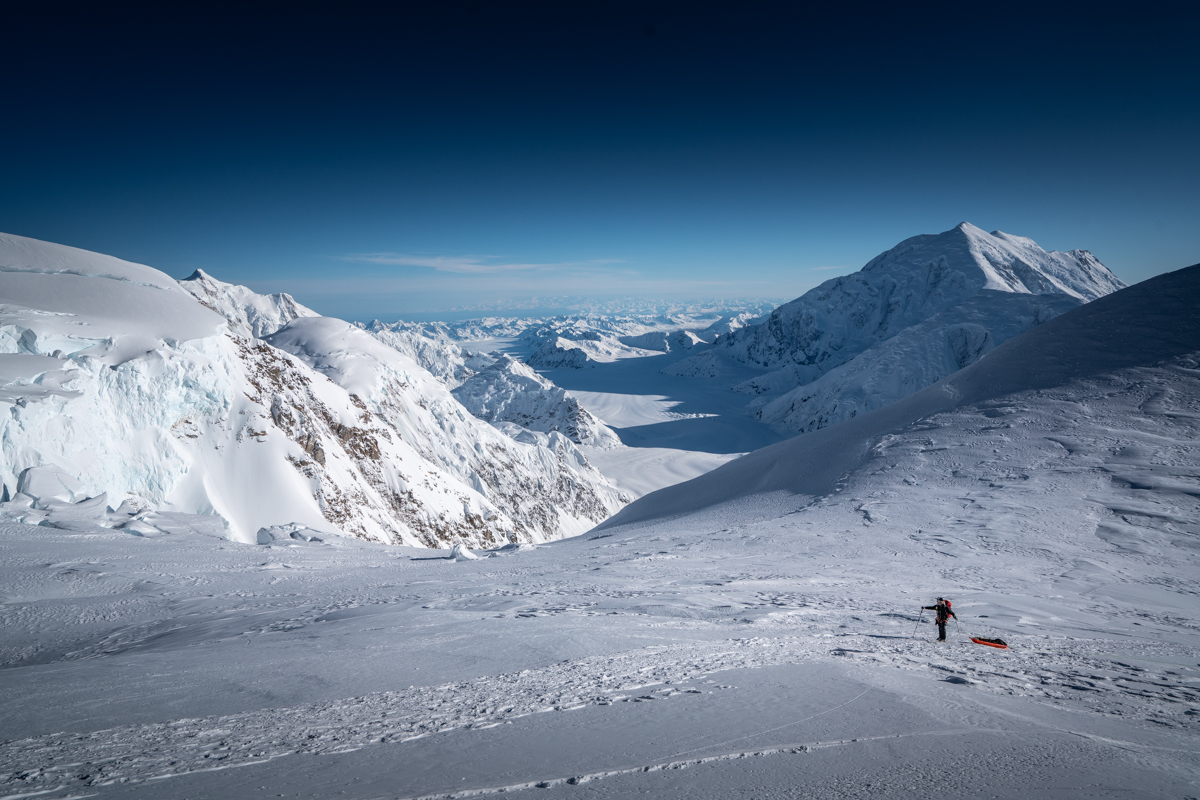
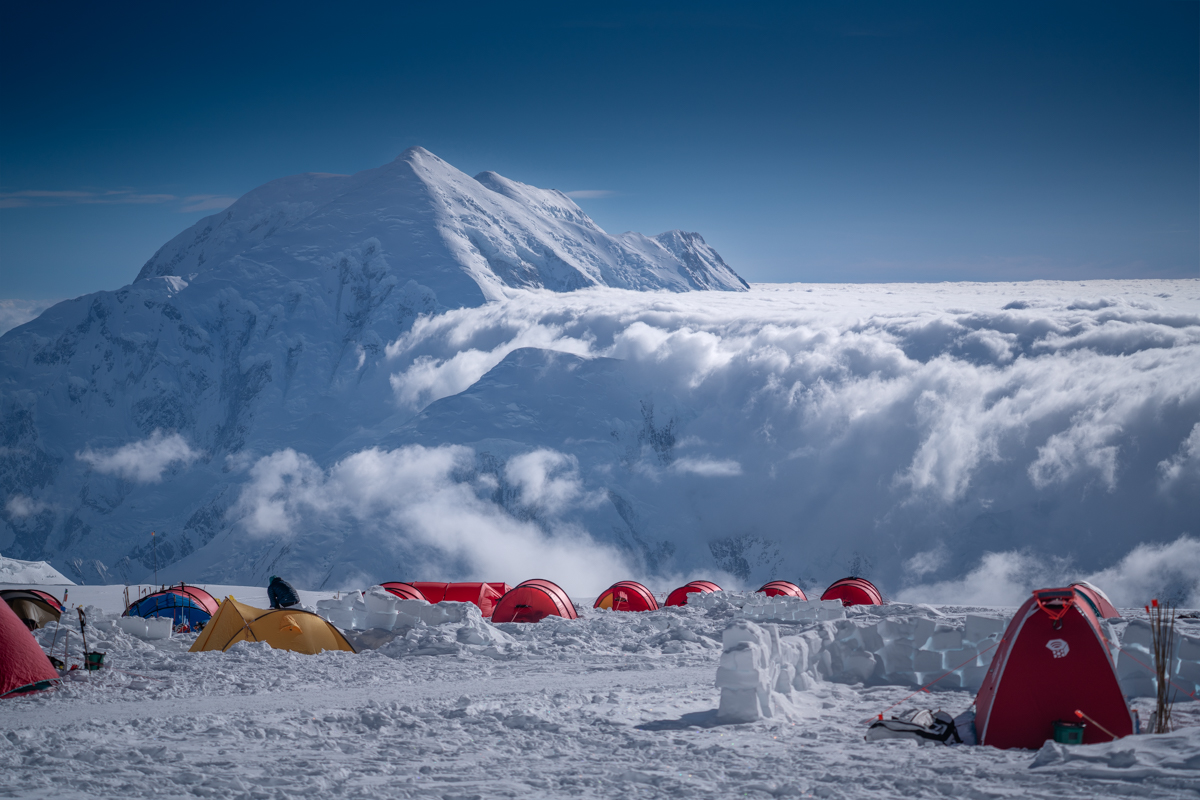
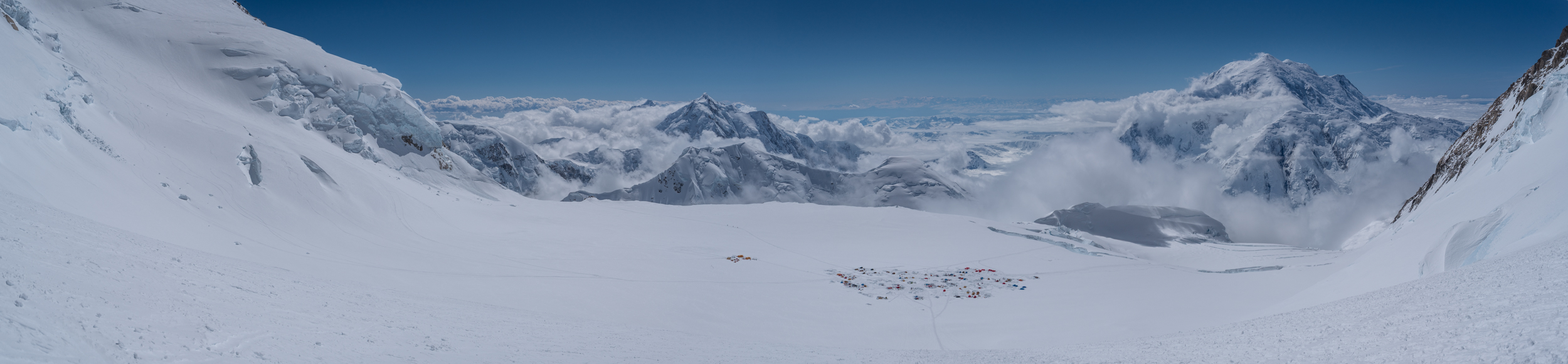
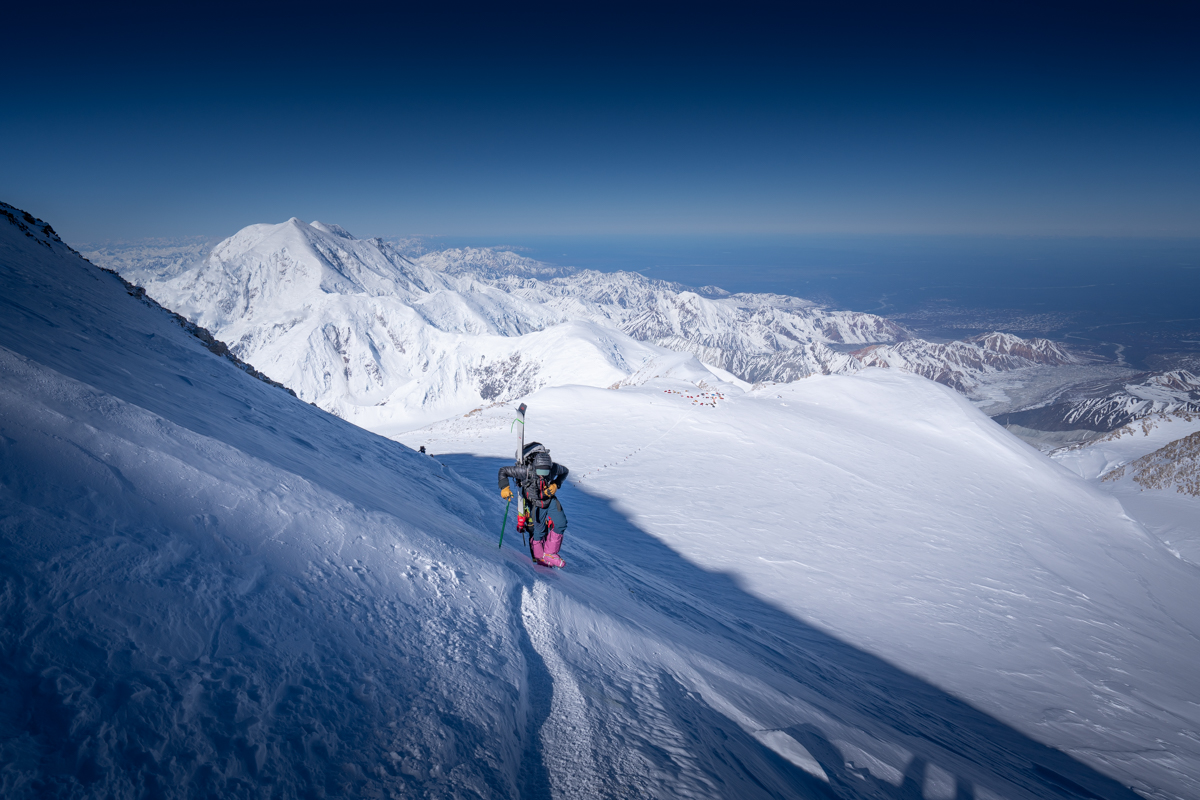
After finishing the icy traverse, we reached a large, flat glacier basin that gradually became steeper toward the back and led to “Windy Corner.” Reaching Windy Corner meant that we had where at above 4,000 meters elevation on Denali for the first time, and from there Camp 4 was not far away. The remaining section of the route stretched across a relatively flat glacier with some crevasses and offered incredible views of the Kahiltna Glacier far below us, as well as large parts of the Alaska Range.
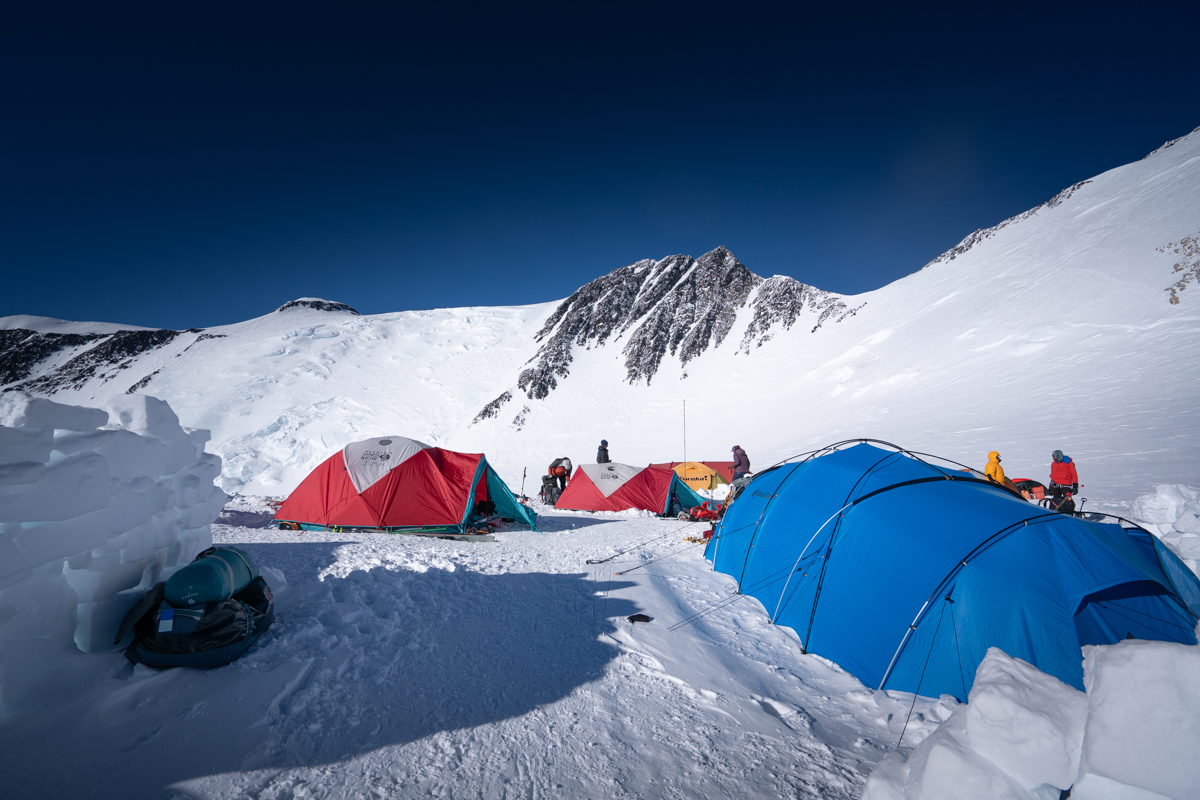
We did not spend much time in Camp 4. It quickly became very cold again, so we wanted to leave as soon as possible. The descent was fantastic. Especially the views during the first section down to Windy Corner in the evening light were incredible.
At Windy Corner, our edges scraped over some blue ice, and in the glacier basin afterward there was unpleasant wind-packed snow that was difficult to ski. Apart from that, the snow conditions were excellent. The final slope before Camp 3 was especially fun.
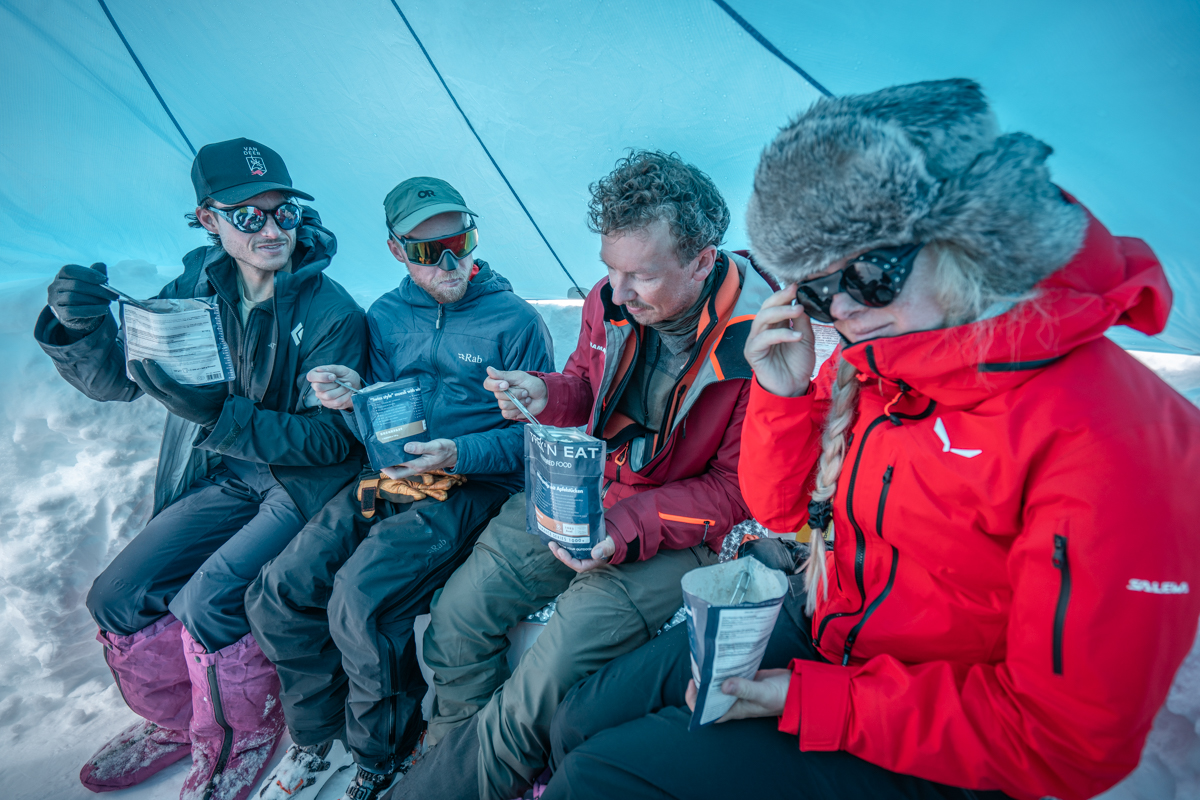
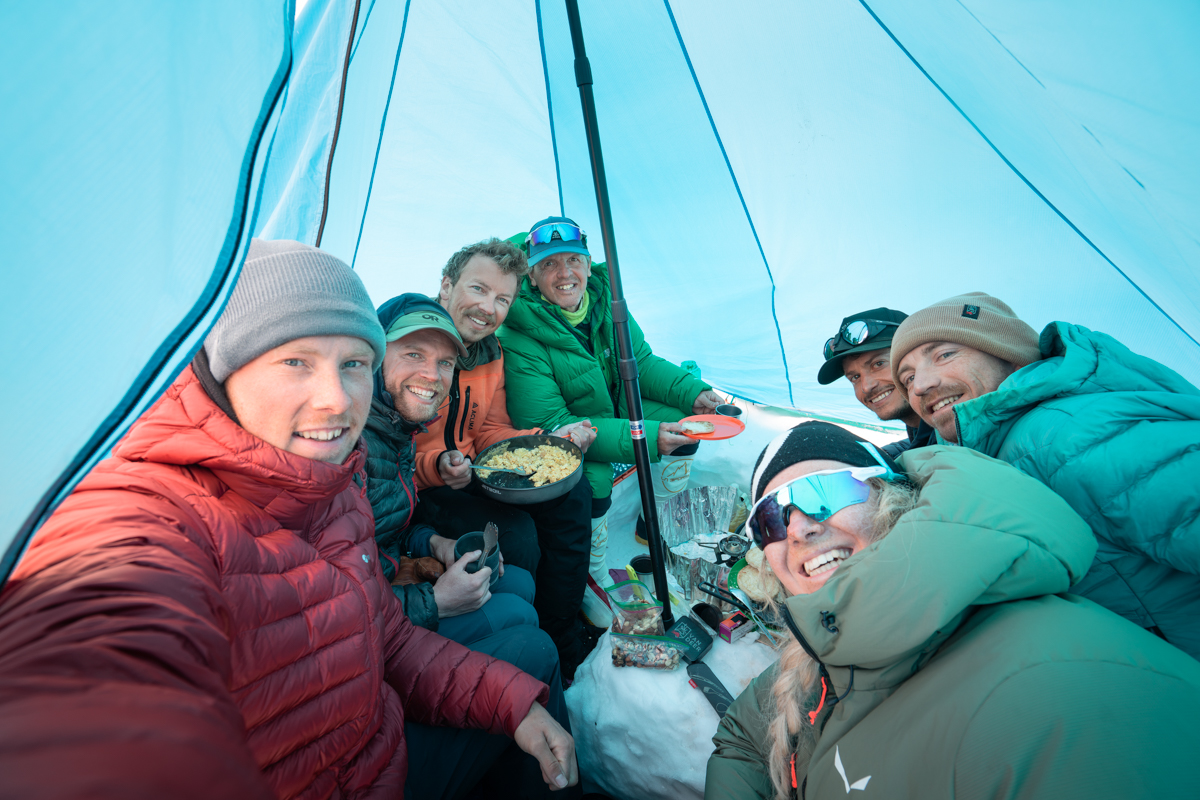
In the evening, we had pasta under very uncomfortable conditions in the cooking tent. The storm had picked up again, and a small snowstorm even developed inside the tent, as the wind repeatedly blew snow through the openings. The pasta still tasted great, and shortly afterward we could retreat to our tents, where our sleeping bags quickly made us warm and comfortable again.
Day 6
Today, the weather was once again perfect, and we packed everything together to move our camp up to Camp 4. I did not feel particularly well and somehow felt weak that morning, so I slowly made my way at my own pace behind the others as we climbed the same route to Camp 4 as the day before.
Today we were once again traveling with sleds, which, especially on the traverses, often did everything but staying in the track. I experienced a strange feeling that I had never felt before. I felt weak, I was moving slowly, I was at 4,000 meters altitude, and still I was able to keep moving constantly without really needing breaks. Normally, from my experience at altitude (especially at the beginning of an expedition), I knew that I often had to stop after just a few steps to catch your breath. But on this day, despite everything, I was moving surprisingly well (even if slowly). The weather also made today’s climb much more relaxed than the day before. At Windy Corner, there was no wind at all, the sun was shining all day, and the views were once again incredible.


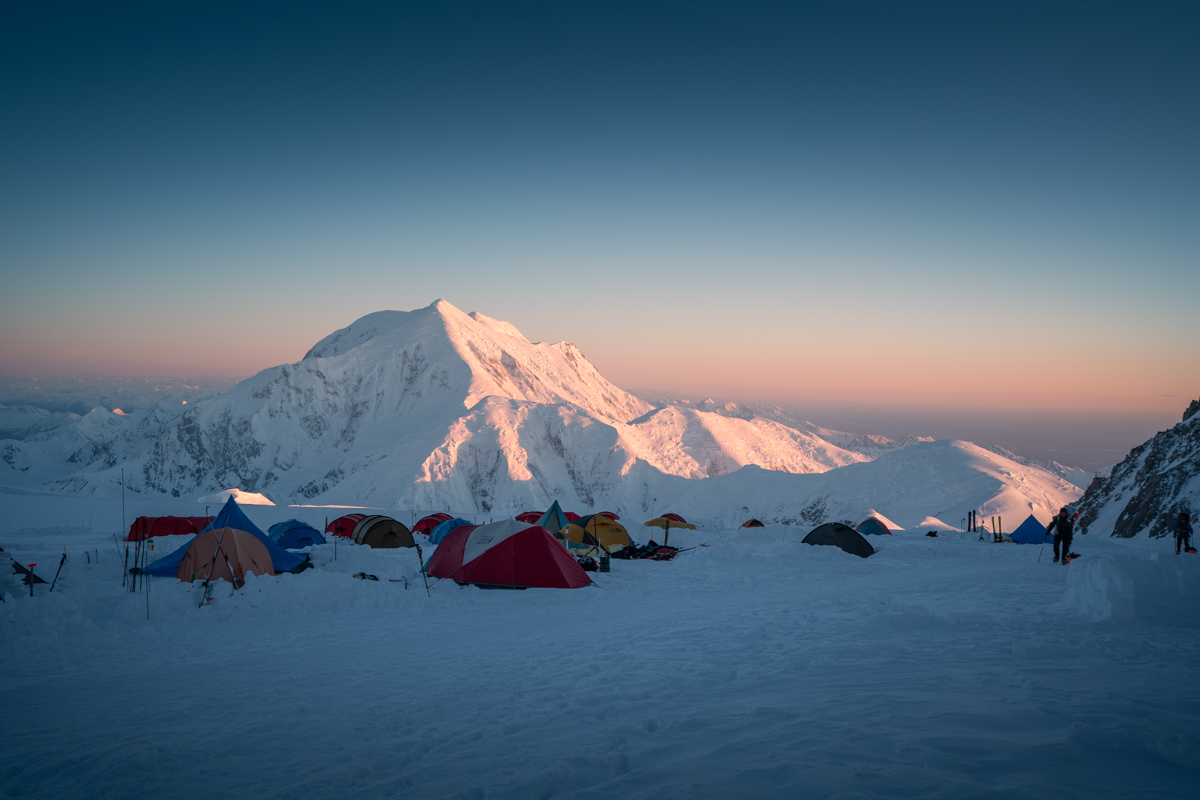
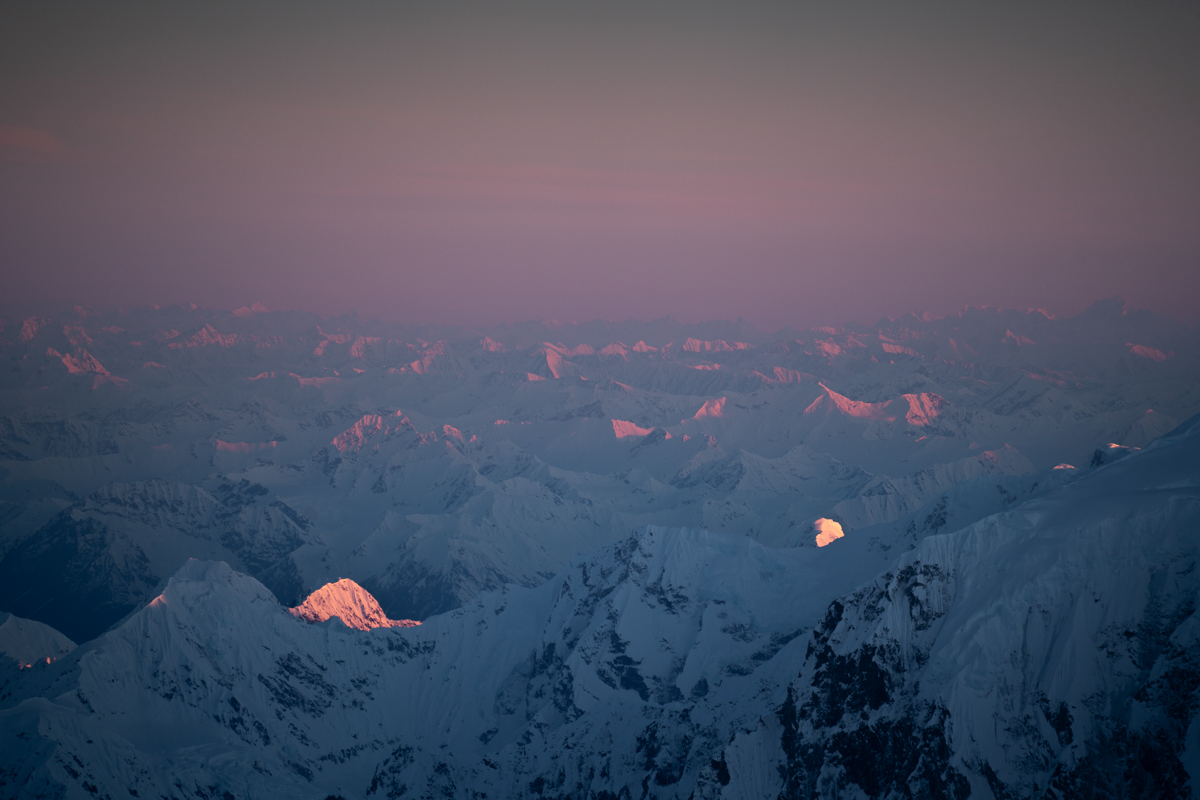
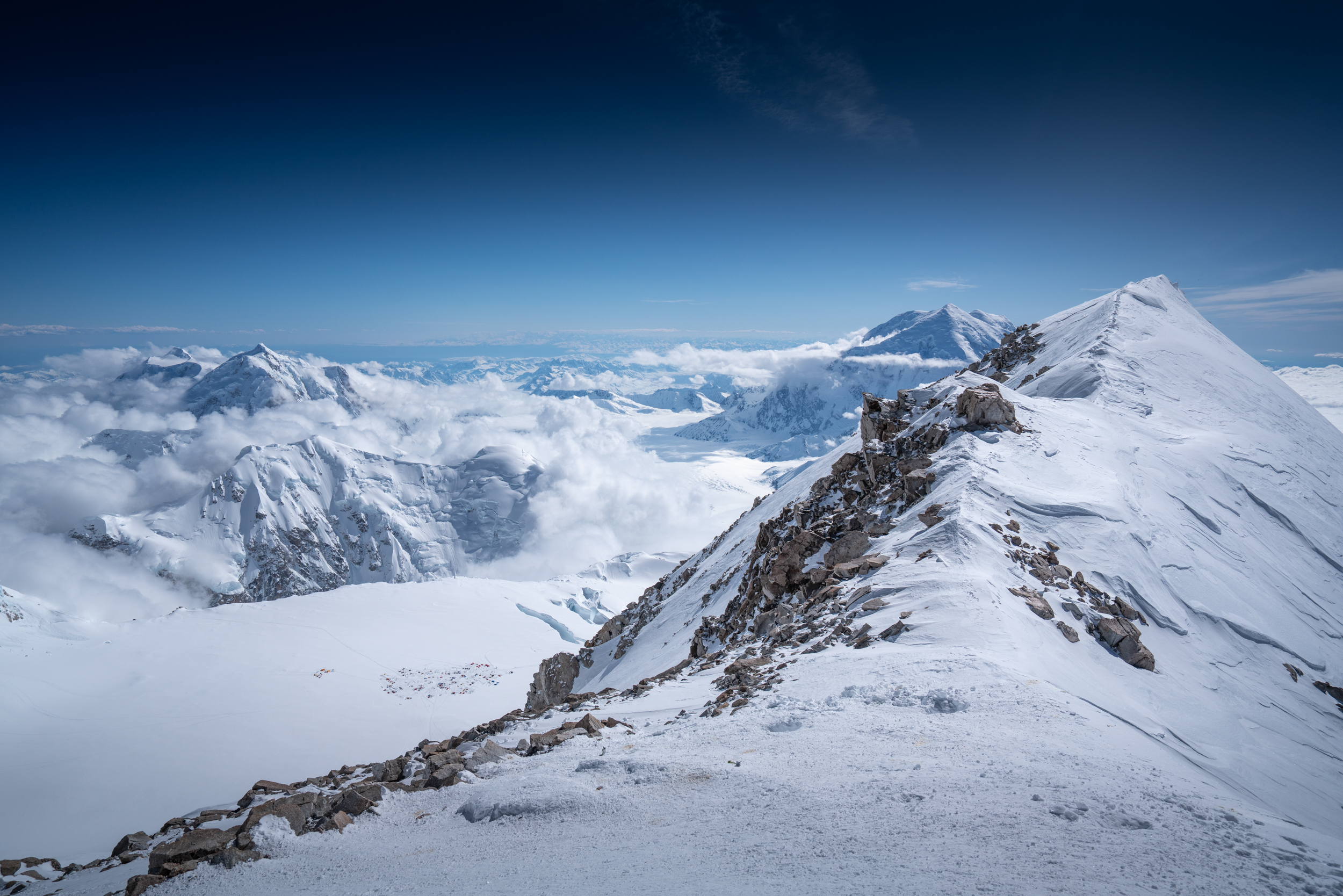
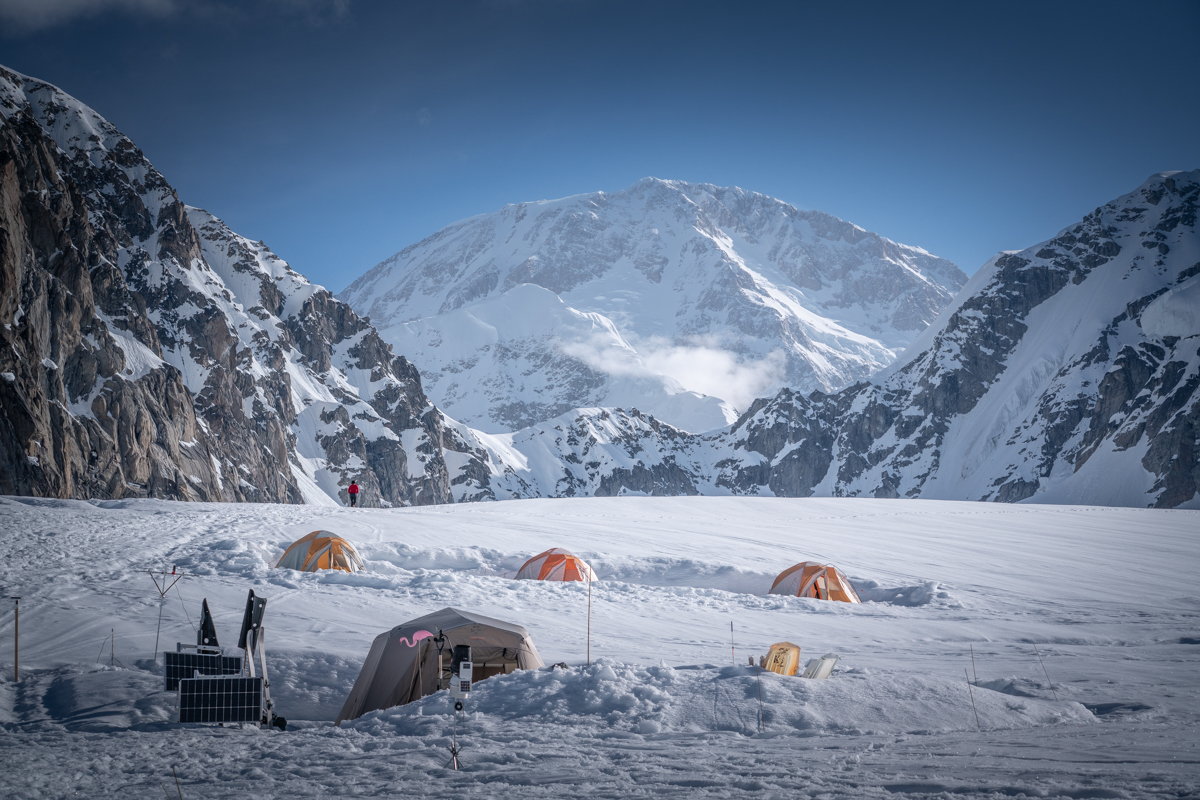
Shortly after Windy Corner, Sebi came down toward me and took some of my weight for the final 300 meters of elevation gain. Eventually, I also reached Camp 4 at 4,330 meters. In the evening, we witnessed a spectacular sunset. It was somehow incredible: in the Alps, you are used to the mountains glowing during sunset for only a few minutes before the light disappears again. Here in Alaska, the mountains remained illuminated in all kinds of orange shades for around two and a half hours. A truly beautiful sight.
Day 7
Today, what had already been hinted at the day before happened: I got sick. A climb was out of the question for me, so I stayed in the camp all day. The others continued working on their acclimatization. Sabrina, Sebi, and Schuyler went on a short ski tour a few hundred meters above Camp 4, while David and Thomas climbed all the way to Denali Pass at 5,500 meters.
While I waited in camp for the others to return, I talked with some other climbers and found out that the tent next to ours belonged to a Latvian expedition. Four out of seven members of that expedition had died in a fall. Especially when you are alone and sick in a tent, news like that makes you think again about the risks, the purpose, and the seriousness of these kinds of expeditions and climbs…
In the evening, we had a small strategy meeting about how to proceed, as we had an excellent weather window ahead of us. At this point in the expedition, our team would split up slightly. With their big acclimatization climb that day, David and Thomas had already laid a strong foundation for a summit push. They wanted to rest one day in Camp 4 and then start their summit attempt directly from there. Sabrina, Sebi, and Schuyler, on the other hand, planned to climb to Camp 5 the next day, sleep there for one night, and then start their summit attempt from there on the same day as David and Thomas. For me, that was not even a consideration at this point. I would stay in camp again the next day and try to recover.
Day 8
I did not feel good at all today. I think I have rarely felt so badly affected by a cold. A blocked nose, coughing, headaches, eye pain, ear pain, a completely swollen face, and more made the day far from pleasant.
Meanwhile, Sabrina, Sebi, and Schuyler set off toward Camp 5 carrying heavy packs, while David, Thomas, and I spent another rest day in Camp 4. After a short time, however, Schuyler suddenly appeared back in camp. He had changed his mind and decided he wanted to try the summit attempt from Camp 4 with David and Thomas the next day after all (even without really acclimatizing beforehand…). And so this day also passed with the typical camp routine: lying in the tent, melting snow, and drinking.
Day 9
Day 9 meant summit push for everyone except me. I started the day slowly and comfortably. I stayed in the tent a little longer, then made breakfast and melted a large amount of snow. I already felt significantly better than the day before, and so I decided to venture a little higher toward Camp 5. For the progression of my illness, this was probably not the best decision. However, for the rest of my expedition, it was certainly an important step, because an acclimatization climb like this kept alive my chance of potentially attempting a summit push later.
Shortly after 1 pm, I set off with a light pack and followed the normal route toward Camp 5. My original idea was to climb to Camp 5 via the Rescue Gully. To do that, I would have had to leave the normal route to the right after a few hundred meters of climbing. Just before I had to make that decision, I saw a skier standing in the upper part of the Rescue Gully. Because of the distance, I was initially unsure whether it was actually a skier or just a rock. Then he made one or two uncertain turns in the steep terrain, fell, and slid several hundred meters down. Eventually, he came to a stop motionless on the glacier. From my position and in my condition, it would certainly have taken me two hours to reach him, and I could not see anyone else up there so I thought he is by himself. However, further up on the normal route, I saw a group accompanied by a mountain guide. Therefore, I decided to stay on the normal route and go to that group to inform the guide, who would certainly have a radio, about the accident, which apparently nobody else had noticed. About 25 minutes after the fall, I reached the guide, who indeed had a radio. Shortly afterward, however, another person appeared in the Rescue Gully and moved toward the fallen skier, who still had not shown any sign of movement. Soon after, the two of them slowly started descending on foot toward Camp 4, and I could only hope that everyone was okay.
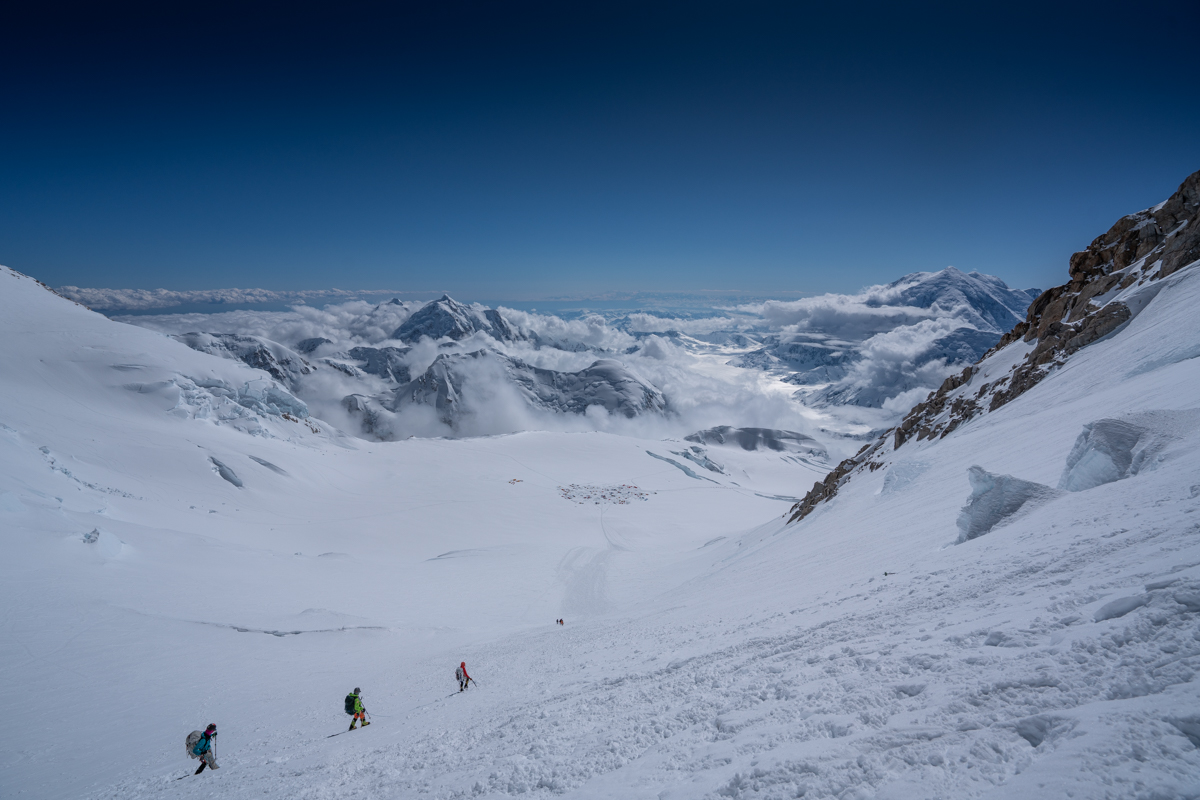
Meanwhile, I had started bleeding in my throat. All the coughing, blowing my nose, and the dry, cold air had made everything irritated and dried out. This made breathing somewhat difficult, as the blood was blocking my airways. Ahead of me was now probably the steepest section of the West Buttress route: a steep blank ice slope, which was secured with fixed ropes and therefore did not present a technical difficulty. This slope led up to 4,900 meters, where it met the ridge leading toward Camp 5 (5,250 meters). However, I felt that I did not need to push my body all the way up to Camp 5 that day, so I only climbed the ridge until my watch showed an altitude of 5,000 meters.
I decided that this had to be enough for today, took a short break there, and then started descending via the same route I had climbed.
Below the fixed ropes, I wanted to ski back to Camp 4, but unfortunately I had problems with my binding, which would not stay locked. During a traverse on steep terrain, the binding released (I had only moved about two meters after starting, and was barely traveling faster than walking speed, while traversing sideways) and I fell onto my shoulder, injuring it slightly. Even after several more attempts, the binding would not hold, so I had to descend back to Camp 4 on foot. When I arrived there, Schuyler was already back. He told me that he had turned around shortly before Denali Pass during his summit attempt. Some time later, David and Thomas also returned. They had made it to the summit and told us about one of the most exhausting and cold experiences of their lives. Congratulations to them for this achievement. During their descent, they had also met Sabrina and Sebi coming up, and they were confident that the two of them would reach the summit as well. However, we did not receive any confirmation over the radio that day.
Day 10
In the morning, we started to get a little worried about Sabrina and Sebi, as we still had not heard anything from them. Eventually, however, we finally received a radio call saying that they were doing well, that they had reached the summit, and that after a long summit push they had simply slept for a long time.
According to the weather forecast, today was supposed to be the last day of this good weather window. All teams in Camp 4 began preparing for the storm and reinforced the walls around their tents that had been built out of snow. Schuyler was particularly enthusiastic about this task and built what was basically a small fortress around us haha.
In the evening, Sabrina and Sebi also returned from Camp 5, and we were able to congratulate them on their successful summit.
Day 11
The forecasted storm mostly failed to arrive today. In the morning, it was a little cloudy and there was some light snowfall, but otherwise everything remained calm.
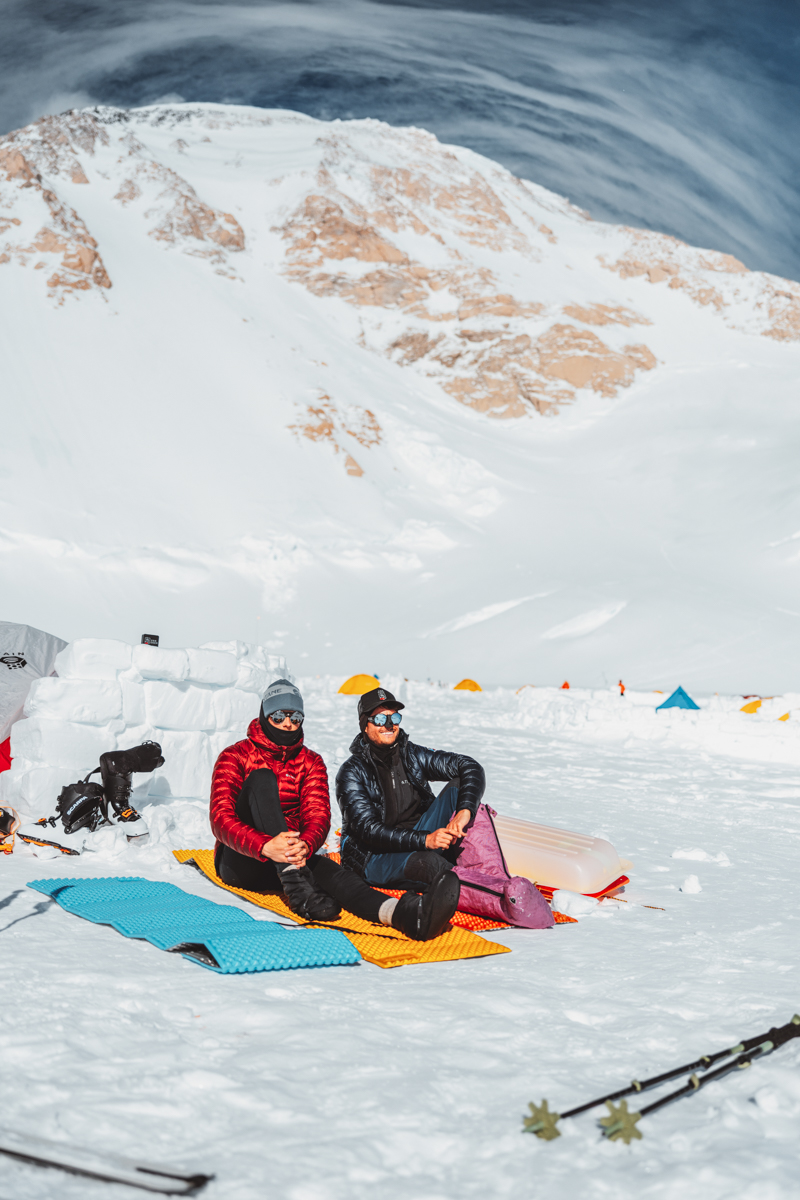
In the evening, David and I sat down in front of our camp and enjoyed the sun that had come back out in the afternoon. Simone Moro, a famous alpinist from Italy, joined us and had some incredible stories to tell. All in all, it was a very relaxed day in Camp 4.
Day 12
Today, a small snow “storm” actually arrived. The wind remained fairly moderate, but we received several centimeters of fresh snow.
I was already feeling much better in the morning compared to the previous days, and since another good weather window was forecast from tomorrow onward, I was relatively optimistic that I might be able to climb to Camp 5 the next day.
But until then, we had another day to spend in Camp 4. At some point, Simone appeared in our cooking tent and discovered our remaining eggs. This resulted in him preparing a large portion of scrambled eggs for us. Another one of those stories that you could never make up: sitting in Alaska at 4,330 meters in a tent and having Simone Moro cook scrambled eggs for you haha.
In the evening, we all sat together again and discussed how we wanted to proceed. Those who had already reached the summit wanted to return to base camp the next day and then fly back to Talkeetna from there.
Schuyler wanted to join me and attempt another summit push. However, that evening I was unsure whether I should even try or whether it would be better to return to base camp with the others. During the day, I had started feeling worse again, and by the evening I felt genuinely sick once more.
I decided to postpone the decision until the next morning.
Day 13
The alarm went off at 7 am. I stayed lying down for a little longer and looked around our tent, which was completely covered in ice on the inside.
I actually felt quite good, so I decided to pack up and prepare for the climb. In hindsight, 7 am was probably a little overly ambitious, because the sun had not yet risen above the mountains, meaning that it was still bitterly cold in camp. By the time everything was packed, the snow had melted, we had eaten breakfast, and the tent was finally taken down, my feet were completely frozen. Exactly as we were saying goodbye to the others and preparing to leave, the sun finally appeared and the temperature immediately became much warmer. Unfortunately, that did not help my feet anymore, and they would not warm up again until Camp 5.
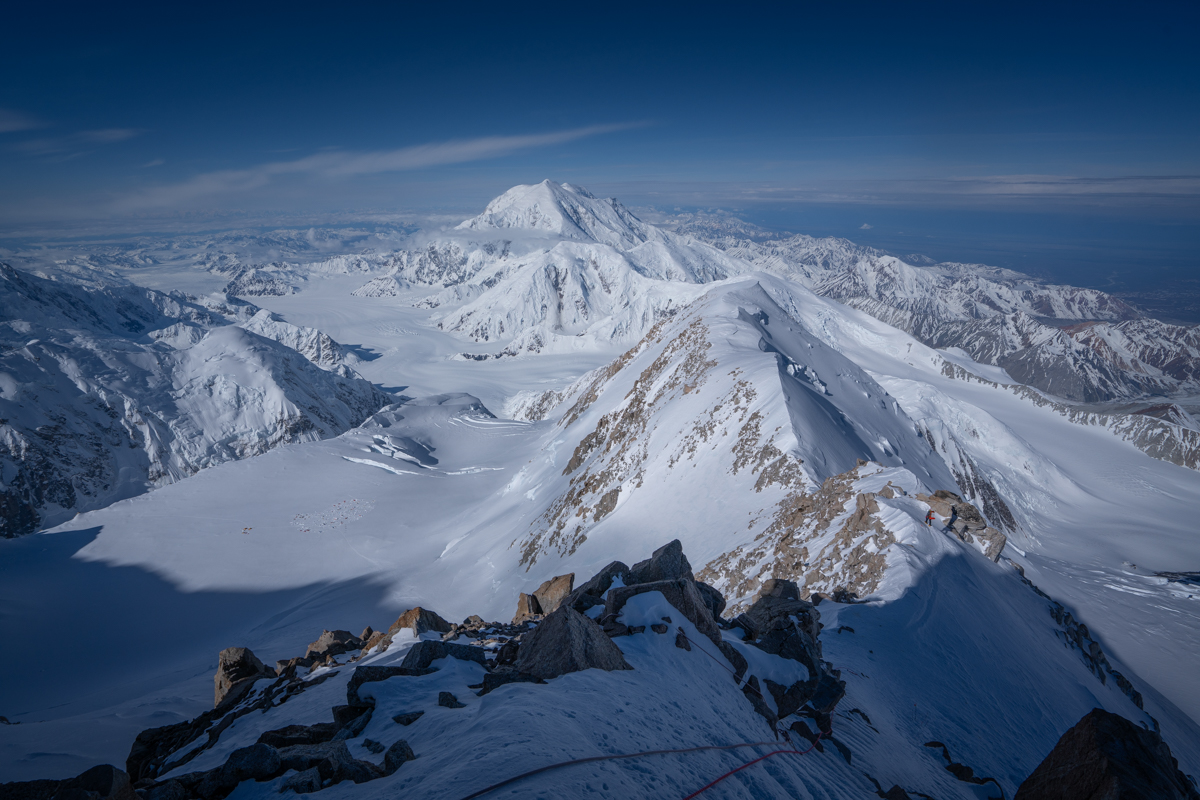
We followed the normal route up onto the ridge. We made good progress, and the approximately 2-kilometer-long ridge leading to camp was incredible: In both directions, we had fantastic views in perfect weather, and eventually we reached Camp 5 at 5,250 meters.
Apart from us, nobody else was in the camp yet, so we had free choice of where to place our tent. I wanted to set it up as quickly as possible so I could get into my sleeping bag and try to warm up my feet. By then, they no longer felt very good, and it took several hours before I managed to warm them up again to a reasonable level. Not much else happened afterward, as we had planned our summit push for the next day and focused on resting as much as possible.
Day 14 – Summit Push
I did not sleep a single minute that night, so I was relieved when the first sunlight reached the tent and we finally could start the day. We had learned a little from our small mistake the day before and only started our morning routine once the sun had reached our camp. After the usual preparations, we started our summit push at around 9:15 am. I was expecting a long, exhausting, and very cold day. I wore my overboots over my ski boots and decided to bring my larger backpack to have enough space for my down suit and other equipment.
Shortly after we started, we met the Iranian climber Arman, who joined us. The first section of the route follows a long traverse through the Denali Headwall up to Denali Pass. This part was still in the shade and was actually extremely cold.


The only team that had started before us that day was a guided group, which was traveling in two rope teams. They crossed the Headwall while being roped together and using protection points along the way. Since Schuyler and I had decided to travel without a rope, we moved faster, caught up with the rope team ahead of us and from that point on could only move very slowly, as overtaking them in this section would not have been very respectful. During this time, when we often had to wait and were moving very slowly, I cooled down extremely quickly. Especially my hands and feet started feeling bad very fast.
Luckily, it was not much further to the Pass, and reaching Denali Pass at almost 5,550 meters was a huge relief. The sun was shining there, and the terrain was no longer steep, so I could quickly put on my down pants and eat something. Meanwhile, Schuyler continued ahead, and after a short break I also started the next section of the route.
From here on, things became much easier for me. It was no longer as cold, the sun was shining, the terrain was only moderately steep, and I found a perfect rhythm for myself: slow and steady, but without needing to stop frequently. I was able to continuously gain altitude and distance. From Denali Pass onward, I was on my own for the rest of the route. Occasionally, I met Schuyler and Arman, who were moving at their own pace, or the guided group, but otherwise I enjoyed this beautiful day by myself.
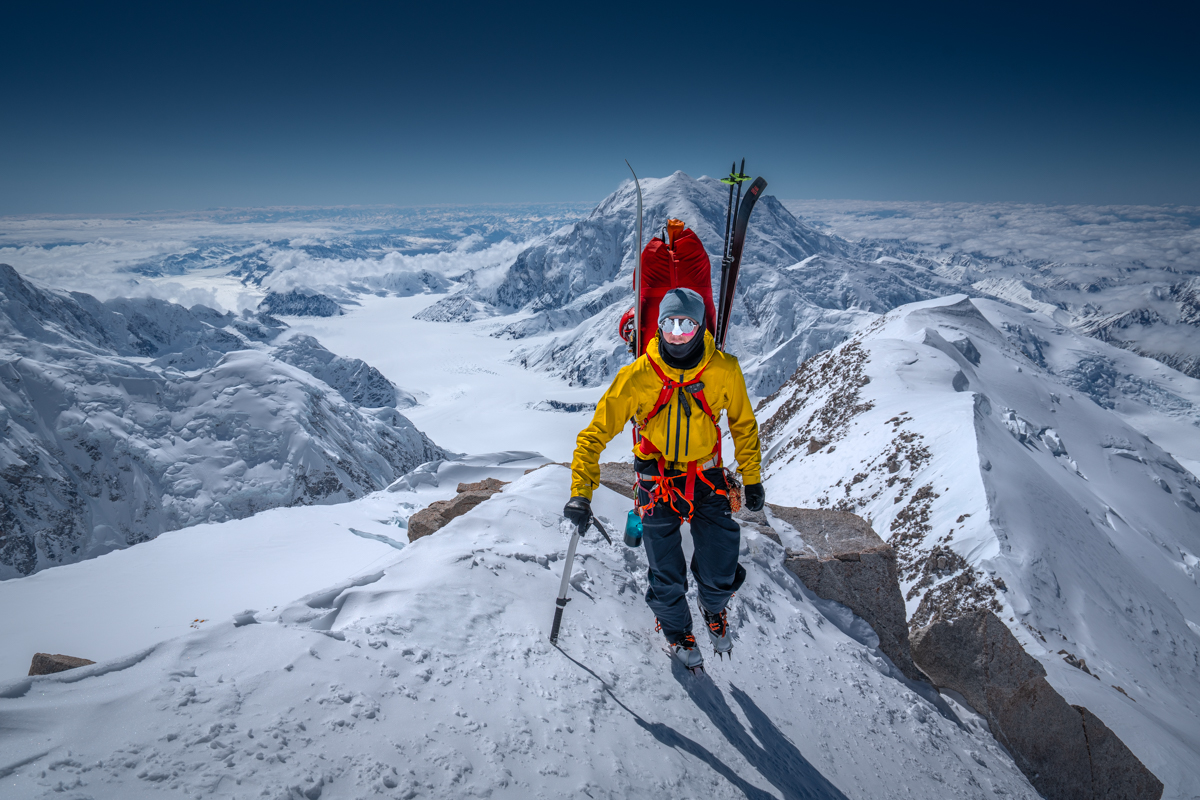
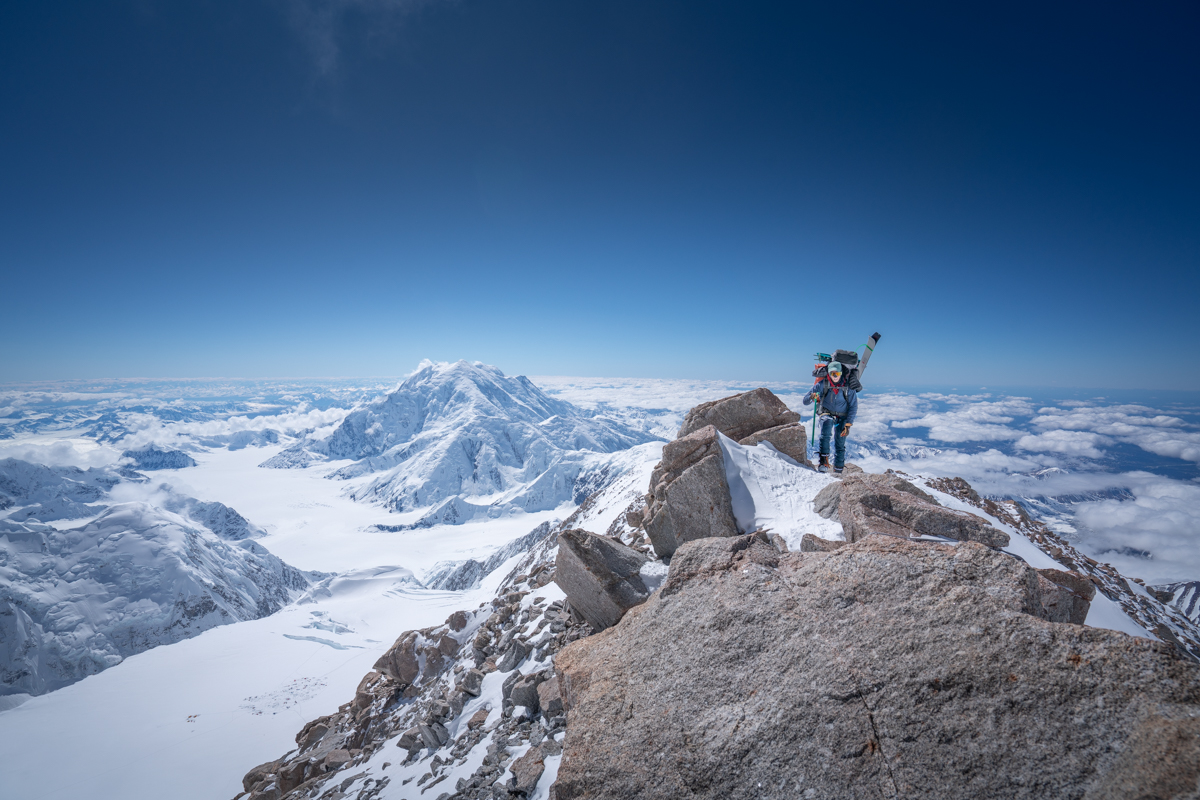
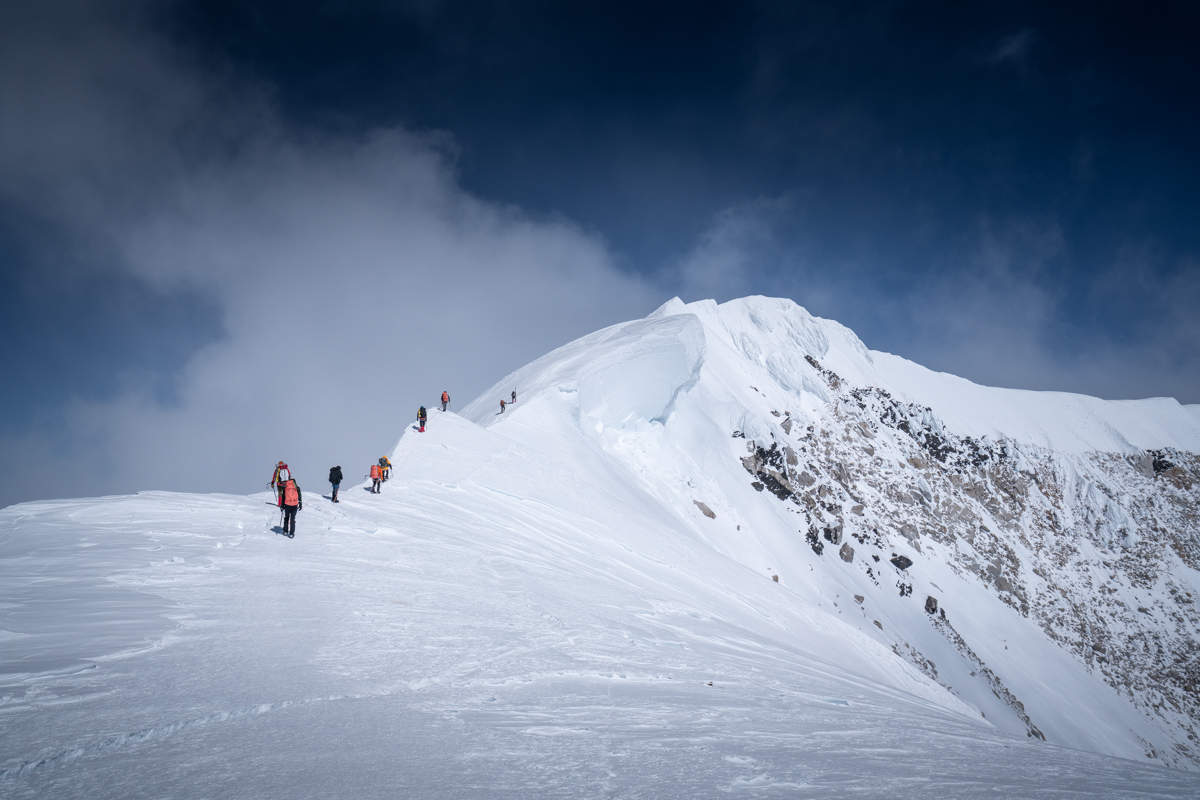
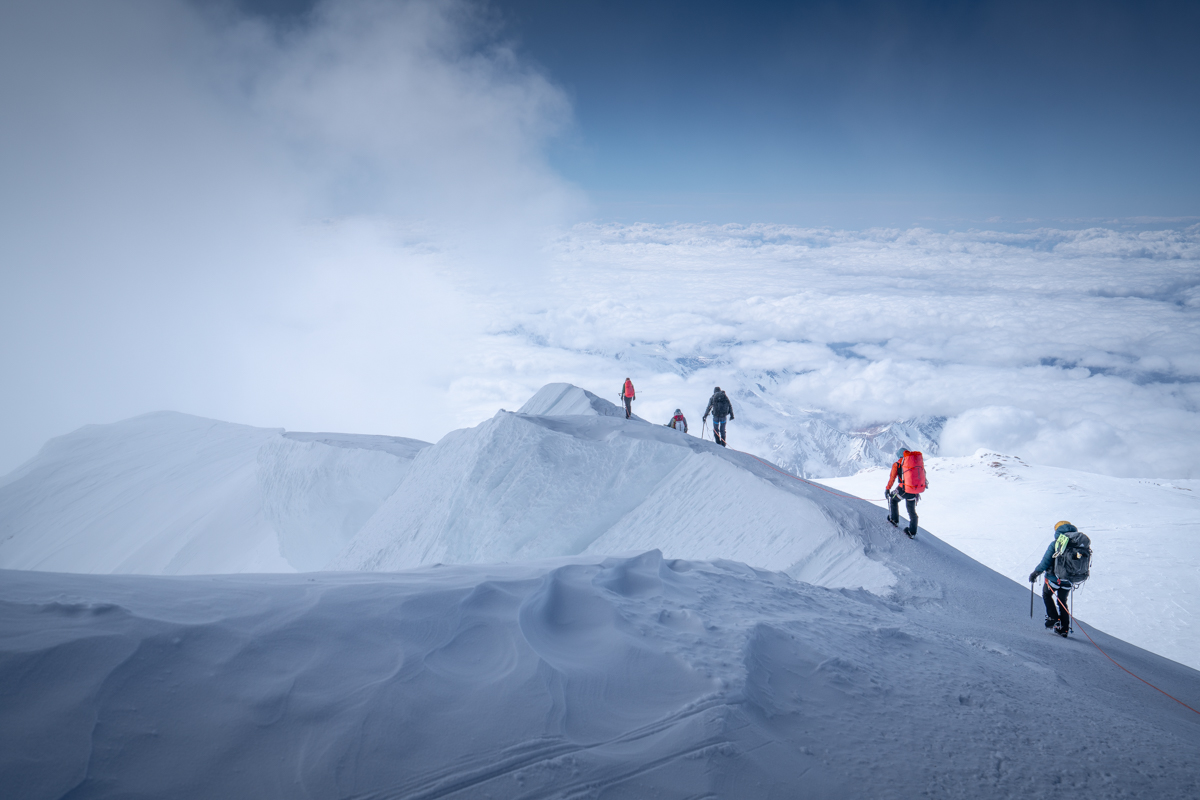
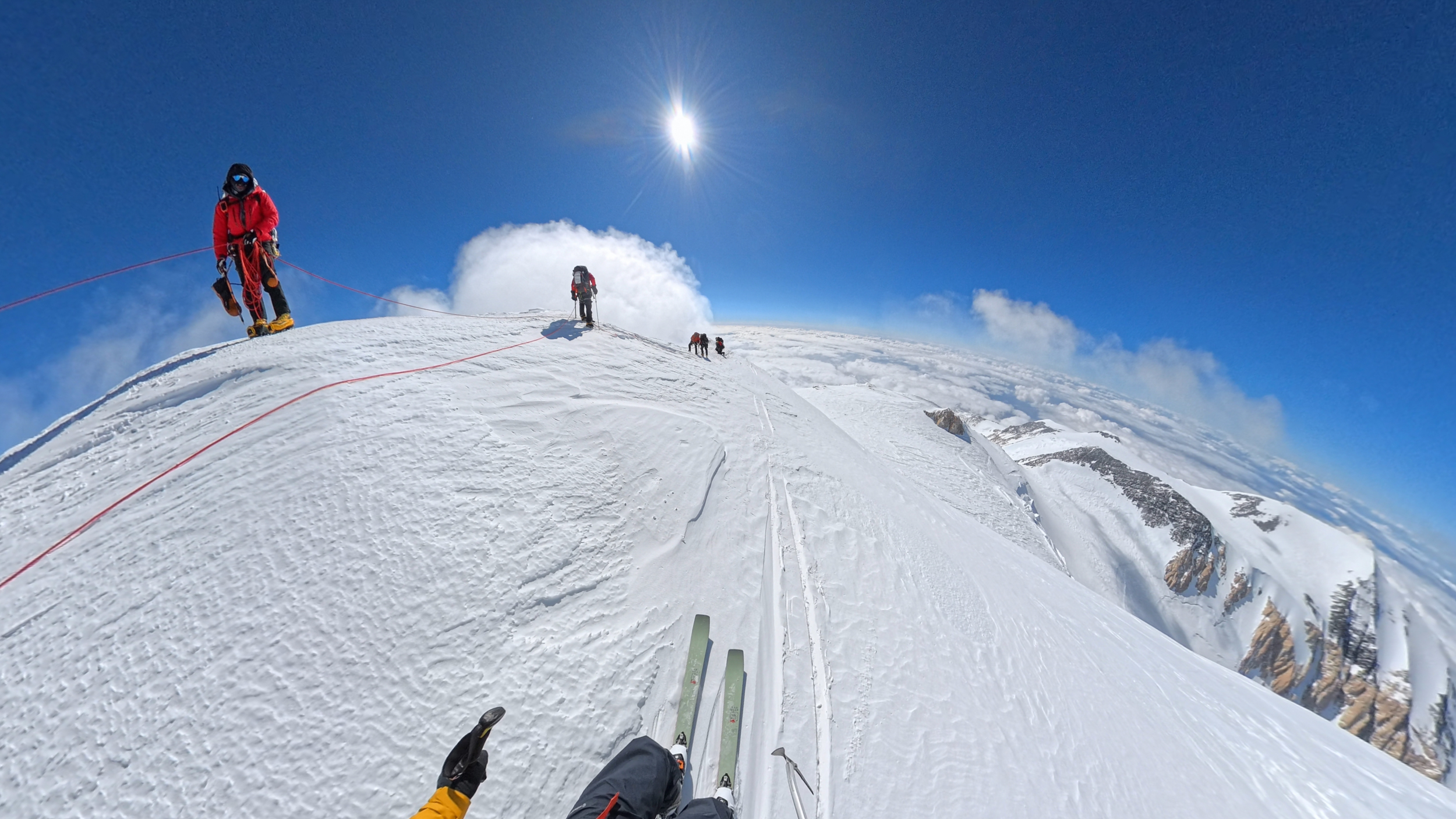
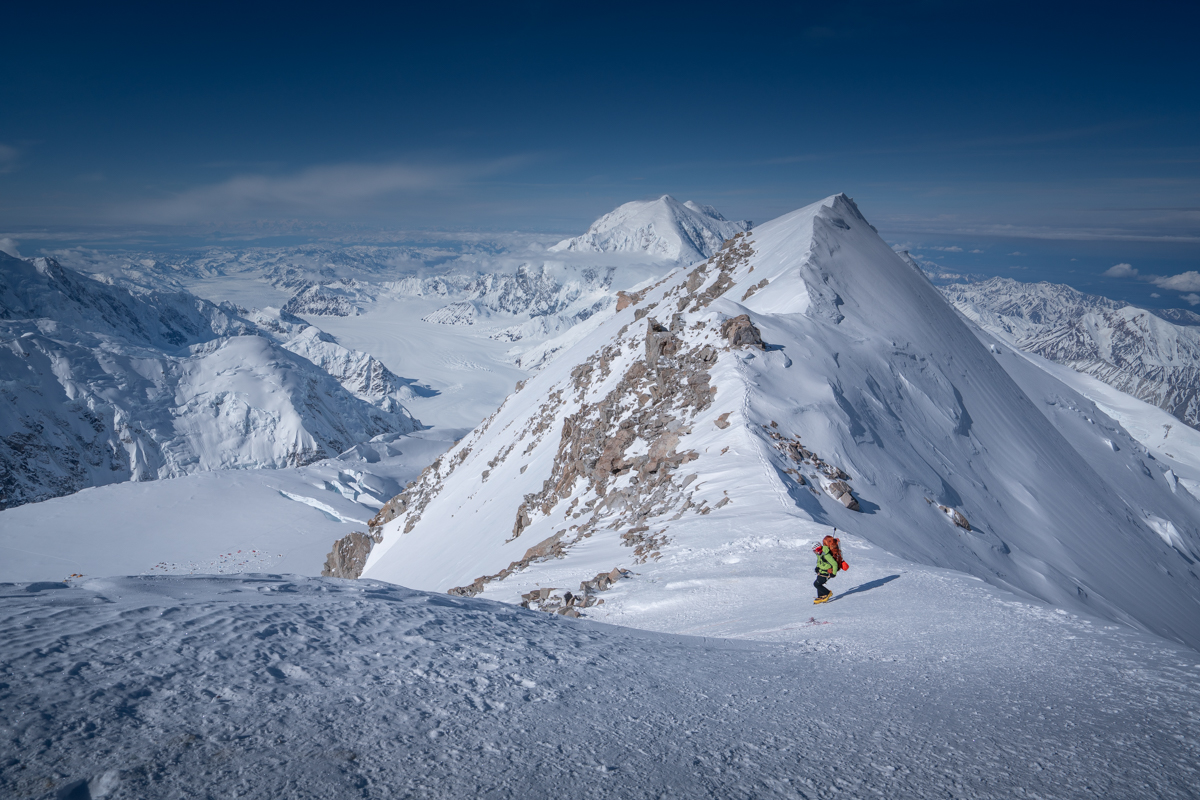
At around 5,900 meters, everyone took another short break, and we all sat together for a few minutes. The summit was already visible, but the final 200 vertical meters became steep again. However, this section also went without any problems, and eventually I reached the spectacular summit ridge, where the terrain dropped more than 2,000 meters steeply away on the other side.


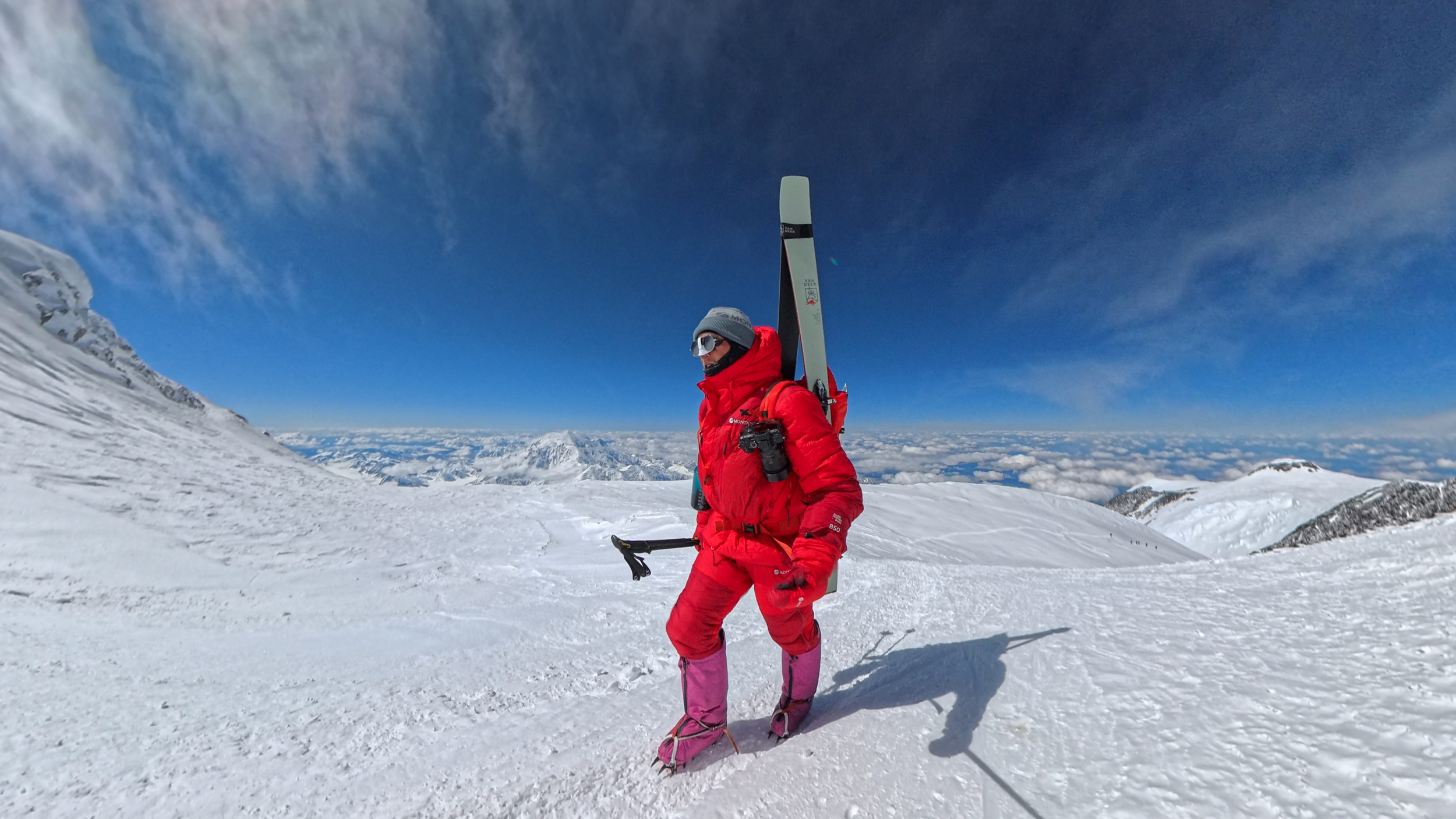
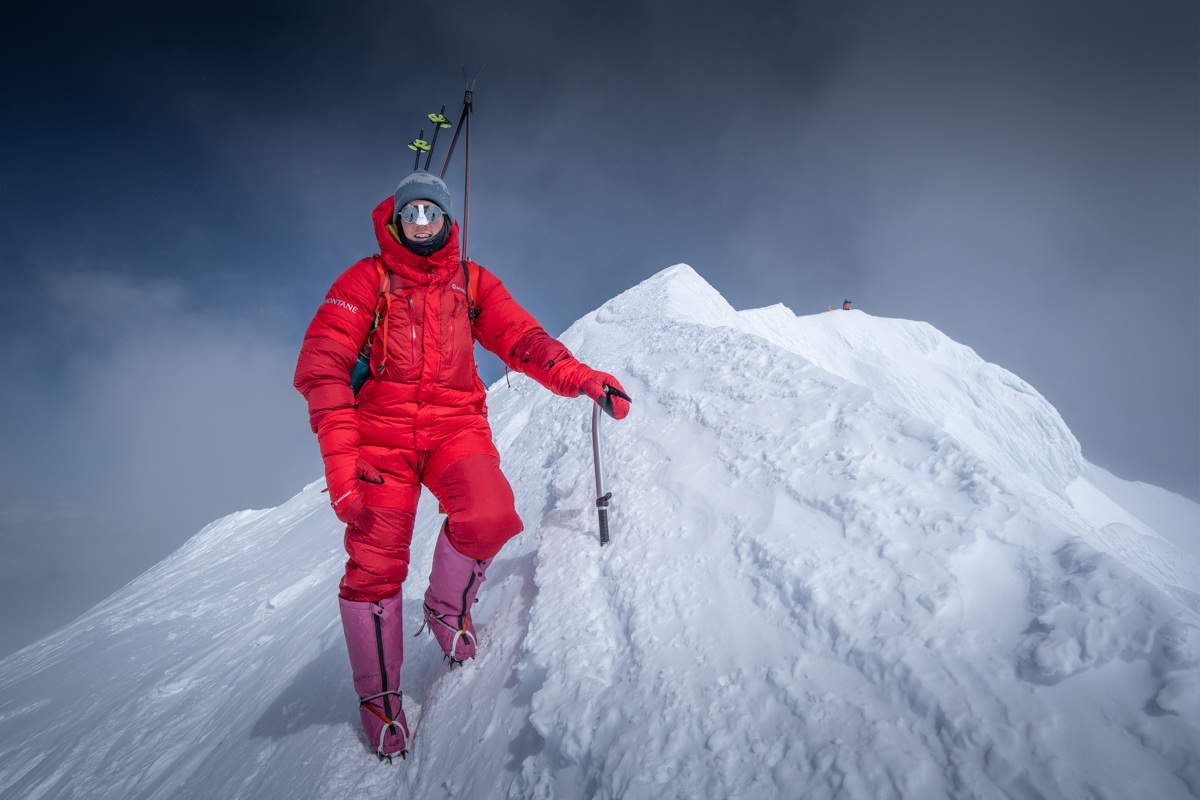
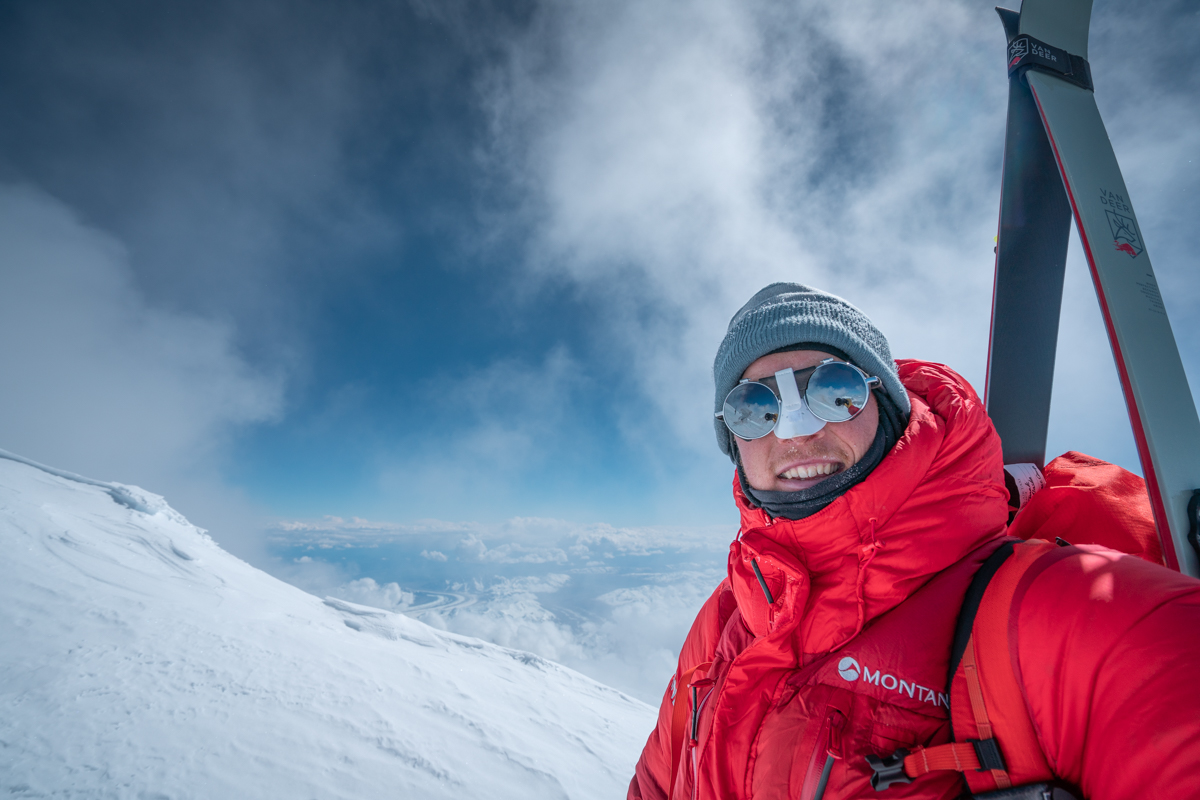
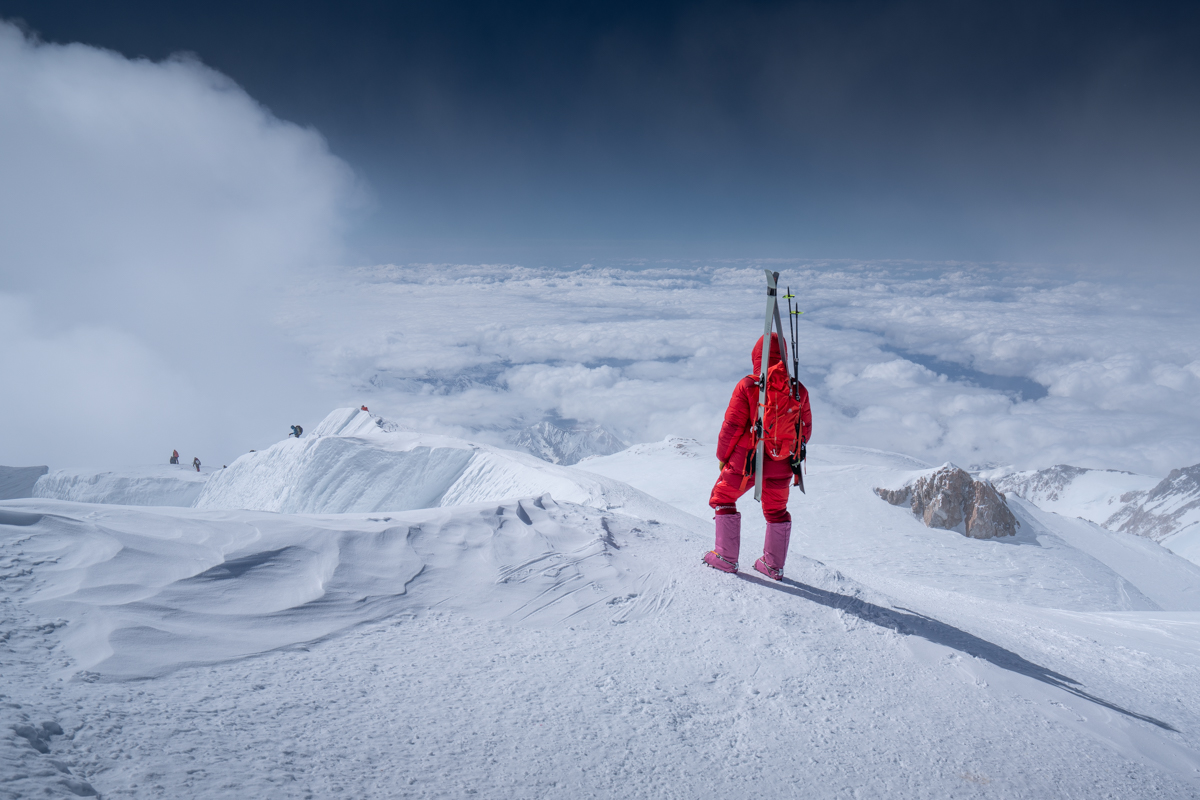
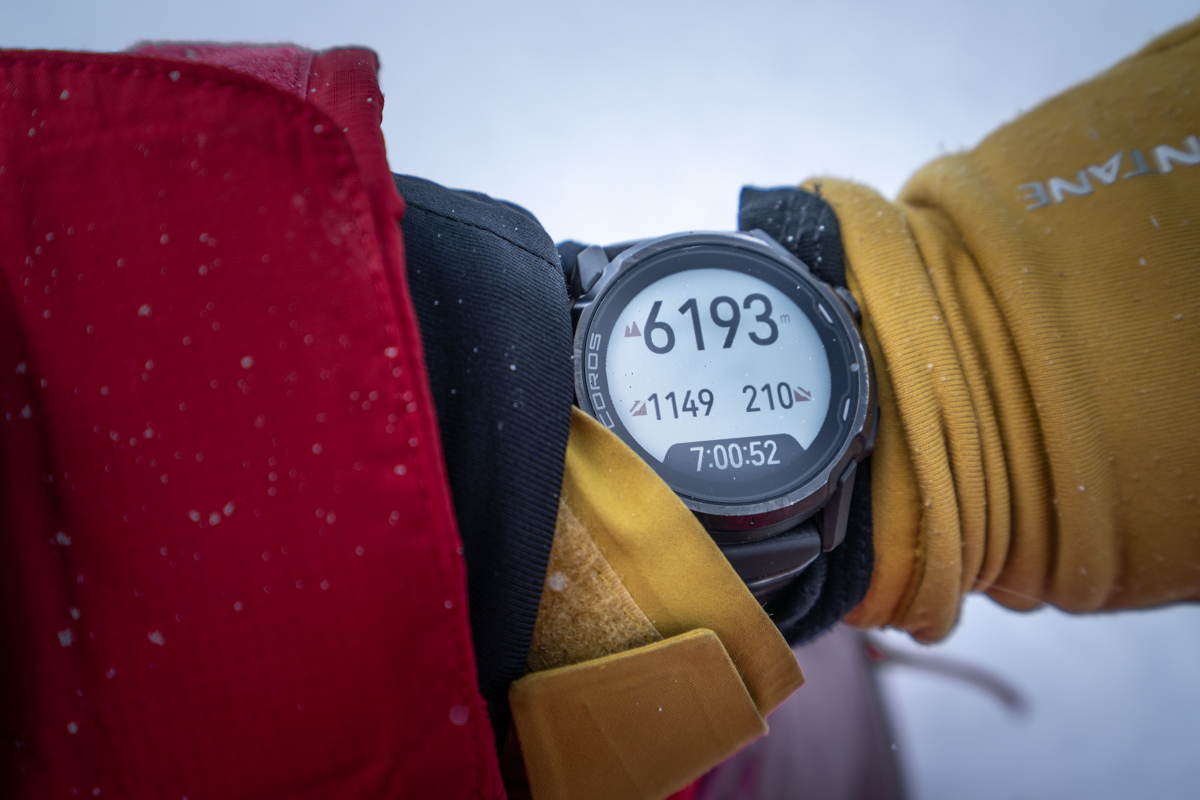
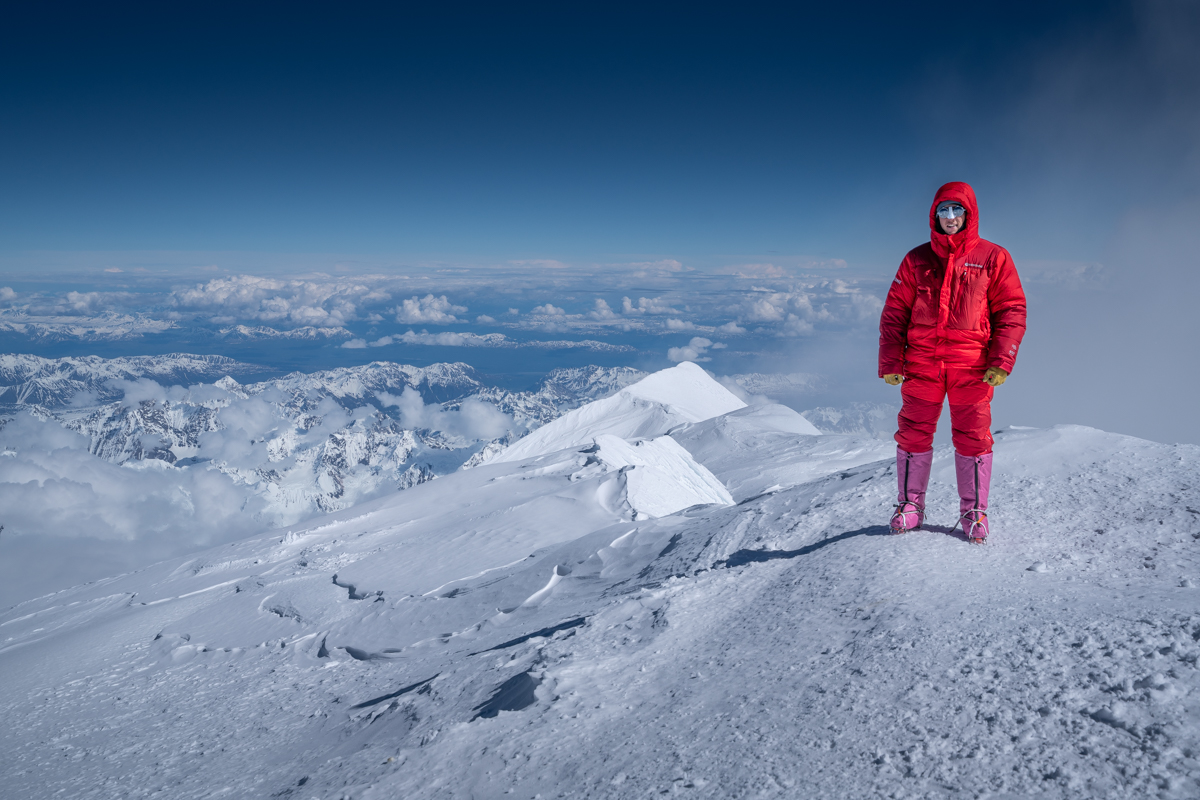
Once I reached the ridge, only around 400 meters of distance remained to the summit, with the route going slightly up and down several times. Then, after seven hours from camp, I finally reached the summit of Denali at 6,190 meters and stood on the highest point in North America. The fact that everything had worked out so well at this point made me incredibly happy. During the previous week, I had genuinely questioned whether I would even be healthy and fit enough to attempt a summit push, and now I was simply standing there. Crazy.
I spent well over an hour on the summit. Sometimes clouds moved in and sometimes it snowed lightly but there was almost no wind and inside my down suit it was actually quite comfortable. For a long time, I simply looked down at the sea of clouds below me and at the other peaks of the Alaska Range emerging through them. It was an incredibly peaceful view. But then I had to start thinking about the descent. I still had a long ski descent ahead of me. Schuyler had already left the summit several minutes before me. I prepared for the descent right next to the summit. I took off my down suit and overboots and put on my skis. As a precaution, I locked my bindings so they could not release again like they had a few days earlier. That could have had fatal consequences, especially on the summit ridge. I accepted the risk that the skis would not release in case of a fall—but I was not planning on falling, because up there that would have created completely different problems 😉
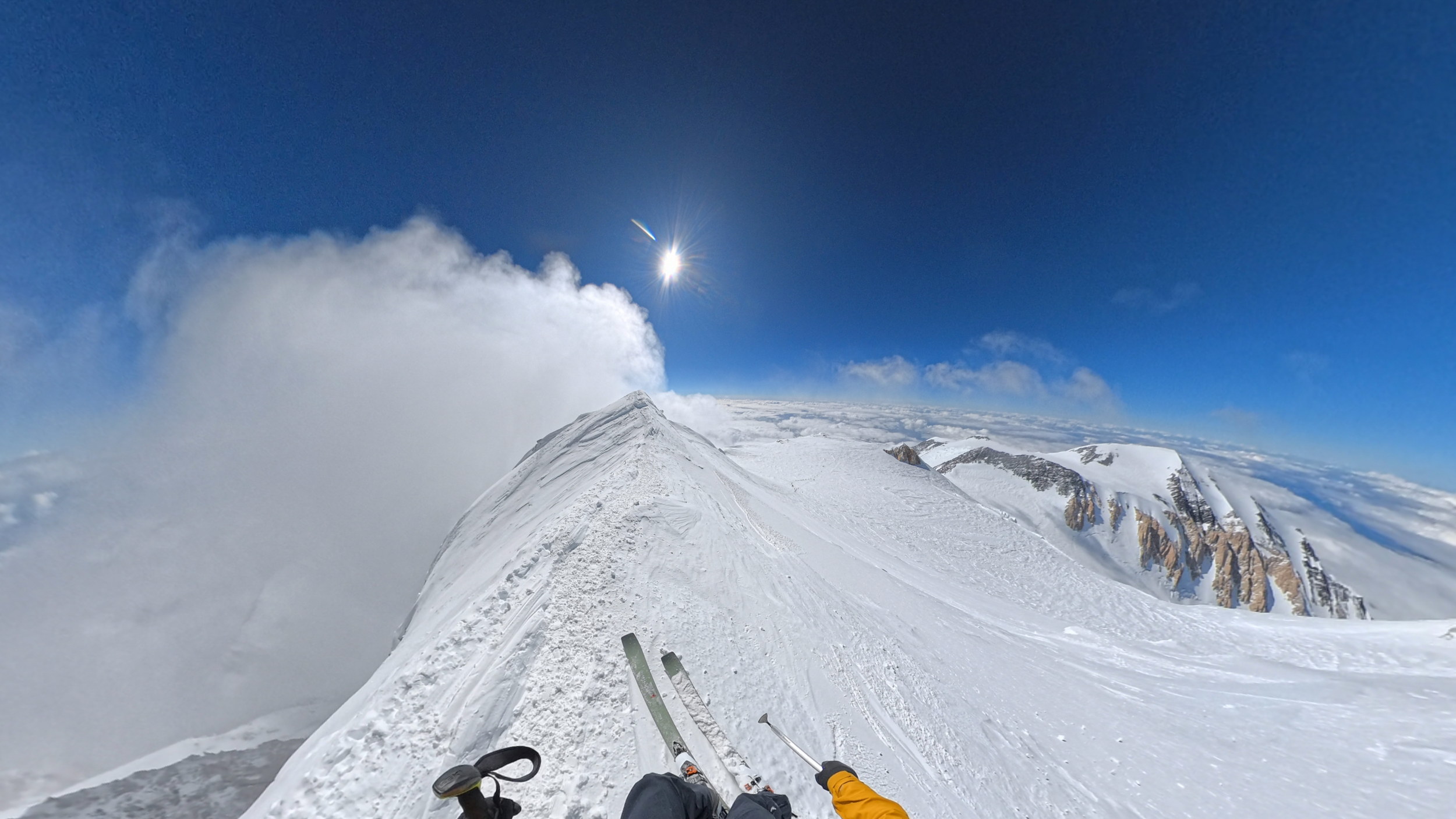
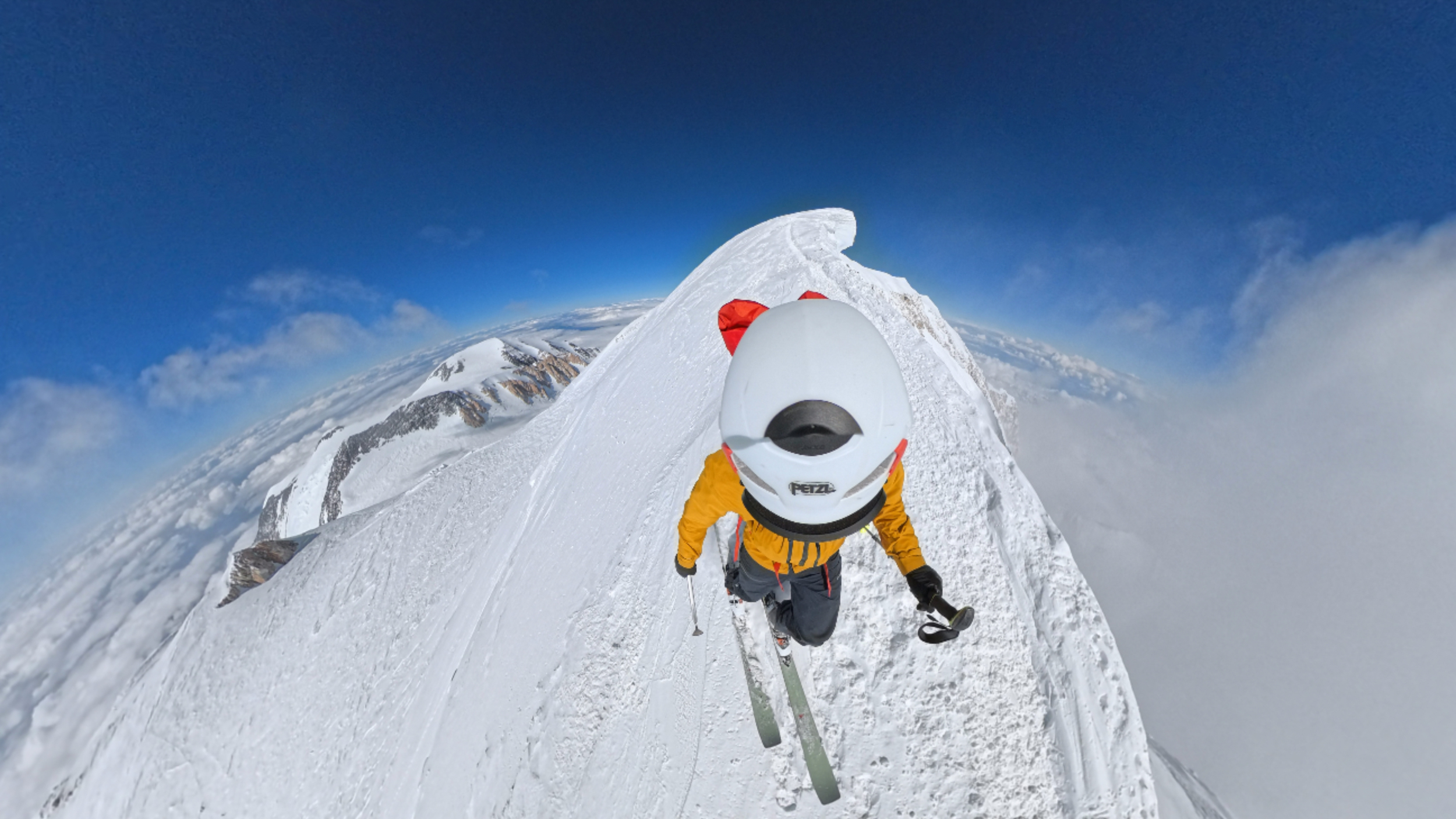
For the ridge and the following North Face, I still descended with an ice axe in my hand as an extra safety measure. The snow was mostly not very good for skiing. Even while starting slowly, my skis were making loud scraping and squeaking sounds, as the snow was icy and extremely wind-packed. But especially the summit ridge will stay in my memory for a long time. When I started my descent, there were two or three other teams on the ridge, just about to reach the summit. Watching these teams, secured with ropes, while skiing past them and looking down into the endless space below was an indescribable sight and an incredible feeling.


The clouds were more than 1,000 meters below me, and above me was a perfectly blue sky with bright sunshine. I followed the ridge for a while. At one point it became wide enough to make a few turns, but shortly afterward I had to stop for another break. While skiing, I noticed the altitude properly for the first time that day. Skiing on the icy surface was actually more exhausting than the ascent itself and I was still above 6,000 meters. Behind the place where I took my short break, the ridge climbed slightly again. I decided to avoid this uphill section and moved into the North Face instead. I traversed across it until I rejoined the route and then descended. This was one of the steepest sections I skied on Denali, and it was brutally exhausting. But with a few breaks to catch my breath, I was able to ski this section safely as well and so I reached easier terrain where there was no longer any significant fall hazard. I replaced the ice axe with a second ski pole and continued the descent. At around 5,800 meters, a big wish of mine came true: an entire slope full of powder snow. I cannot really put into words how good it felt to finally ski on snow again that did not make loud scraping noises with every single movement. Suddenly, everything was completely quiet. I could no longer see any other people around me. Only the breathtaking Alaskan landscape stretched out below me, and I skied into it with countless turns. I could not help but let out a small scream of joy. It was simply incredible. After this long slope, I found myself back near Denali Pass. The descent became a little more technical again. There were short steep sections, crevasses, and rocks, so I had to carefully find my way through. The snow quality had also deteriorated again, but by then I did not care anymore. I had already been incredibly lucky with the conditions, and I really could not complain. Then I reached Denali Pass and sat down for a while.
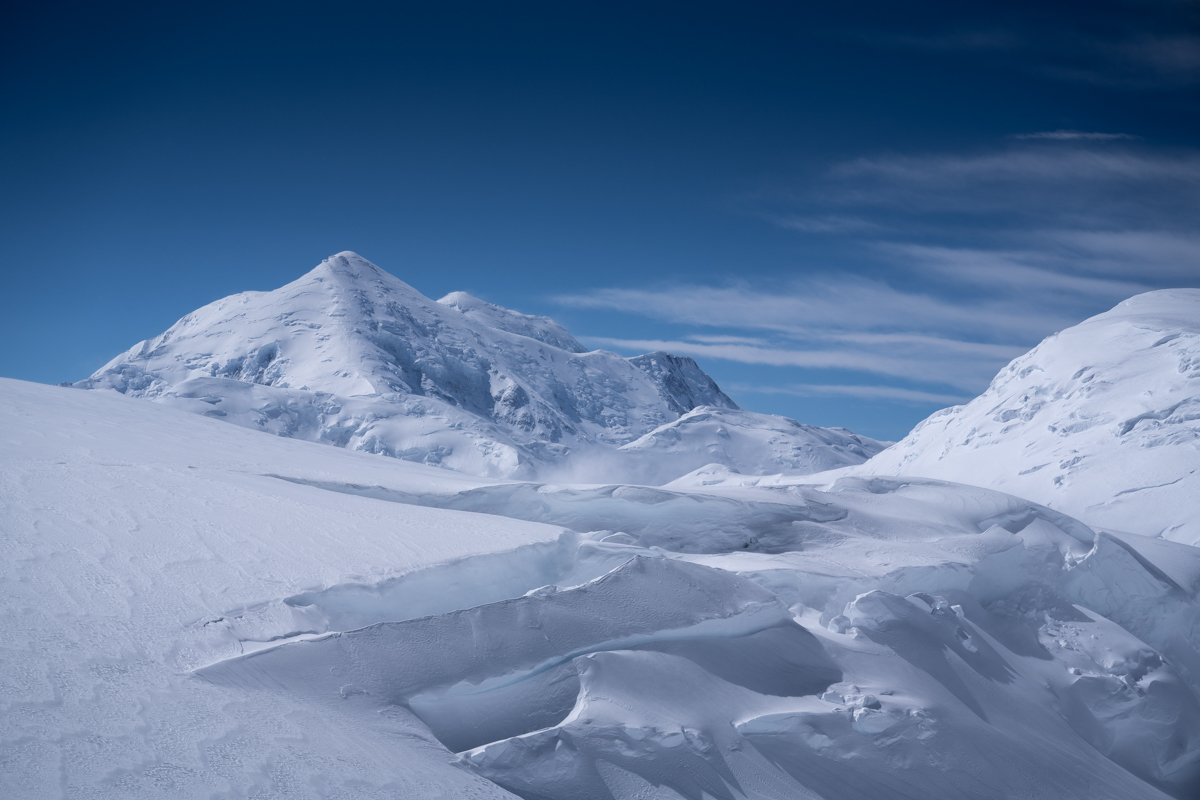
I decided not to ski the remaining 300 meters of elevation down to camp. The snow conditions in the Denali Headwall had looked terrible in the morning, and I was already getting a little tired. Additionally, I knew that this was the section where the Latvian rope team had suffered their fatal accident. I was very aware of how serious this section was and did not want to take any unnecessary risks. So I strapped my skis back onto my backpack and started making my way down to camp, which I reached shortly afterward. There we decided to stay one more night in Camp 5, because Schuyler wanted to ski the Messner Couloir the next day and needed Camp 5 as a base for that.
Day 15
Today, I wanted to descend all the way from Camp 5 to base camp. That meant a long way down, so I wanted to start as early as possible. We had not descended to Camp 4 the day before because Schuyler wanted to ski the Messner Couloir today and therefore had to spend one more night in Camp 5. However, in the morning, I think even he was no longer entirely sure what he wanted to do and in the end he decided to descend to base camp with me instead.
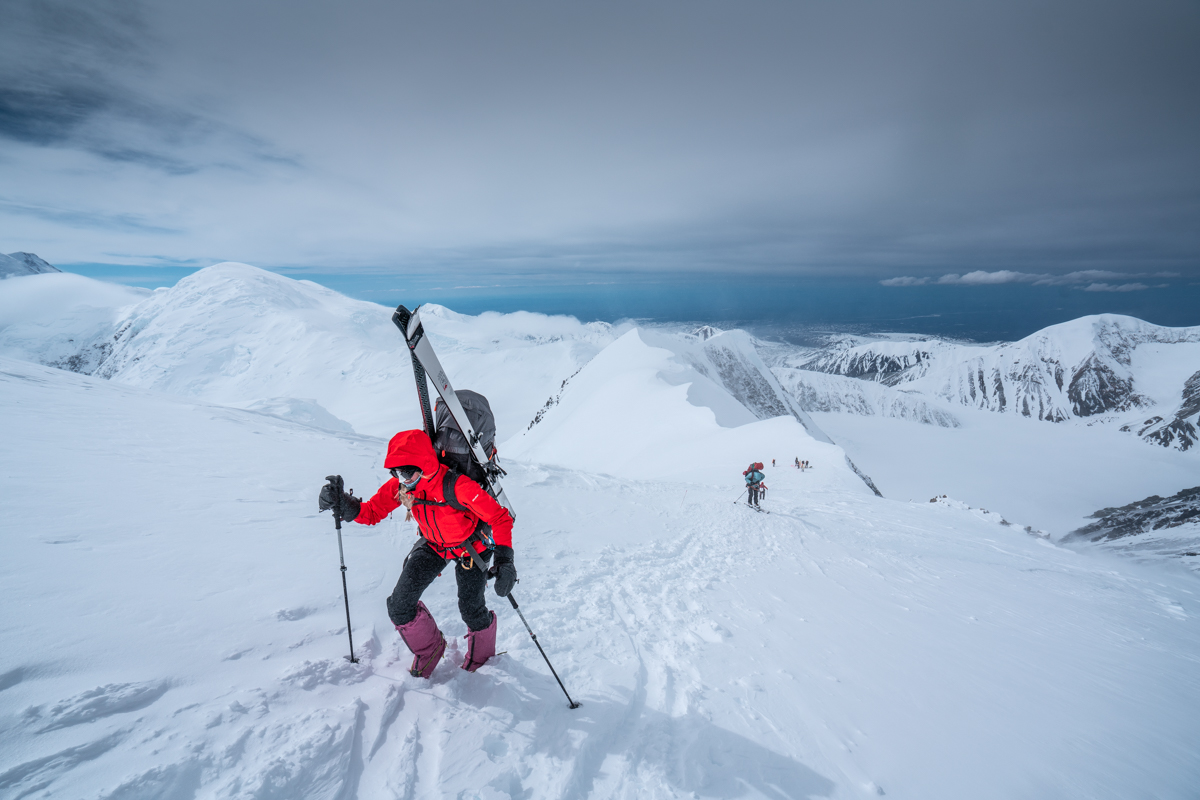
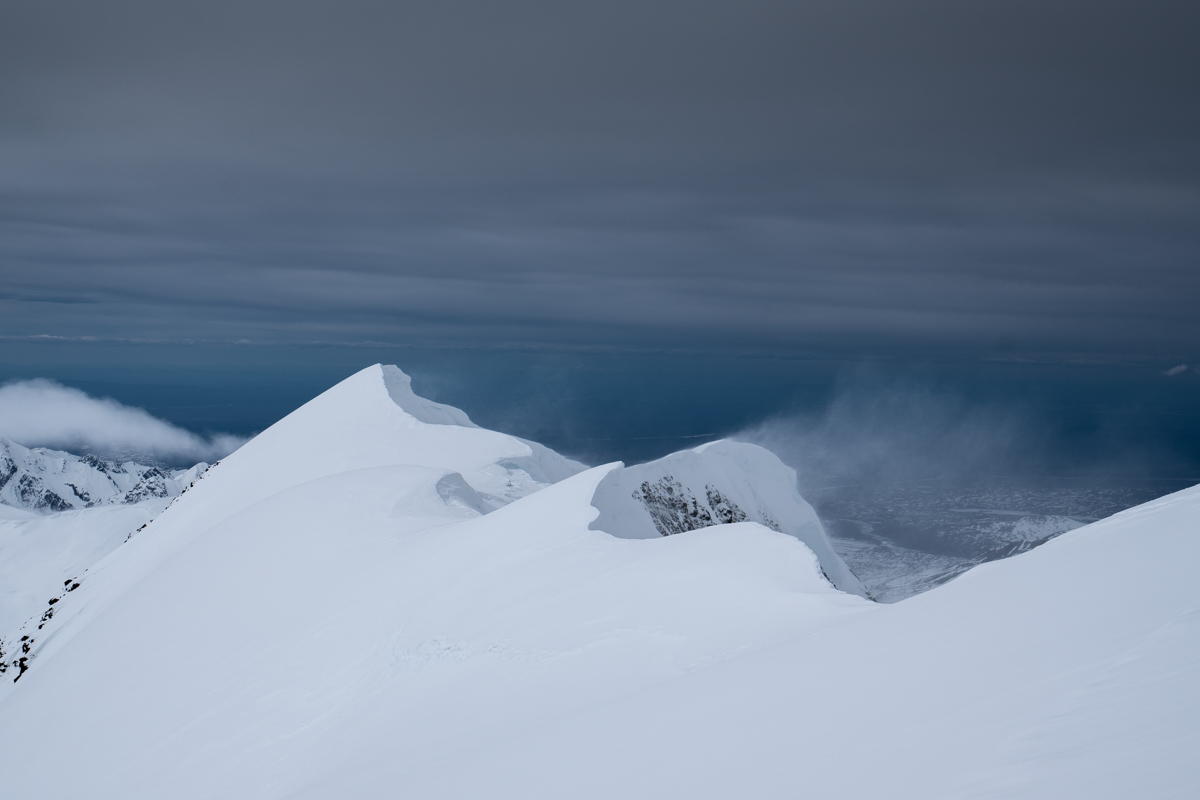
Once the tent was packed up, I started making my way down the ridge, and I think this became one of the most beautiful parts of the entire expedition for me. I was completely alone on the ridge that morning. The views were simply incredible, and I knew that the summit was done. Now I was basically on my way home haha.
I made good progress and quickly reached the bottom of the fixed ropes. From there, I switched back to skiing. It was another physically demanding descent (I was carrying a heavy backpack again), but also a beautiful one. The snow was actually very good, and after around 1 hour and 45 minutes from Camp 5, I reached Camp 4. There, I waited for Schuyler, who had chosen a different route down. In Camp 4, our cooking tent was still standing so we dismantled it and collected a few remaining things such as food, trash, gas, and equipment. We rearranged our loads a little because from this point onward we had our sleds available again. We drank our last water and then started the descent toward Camp 3.
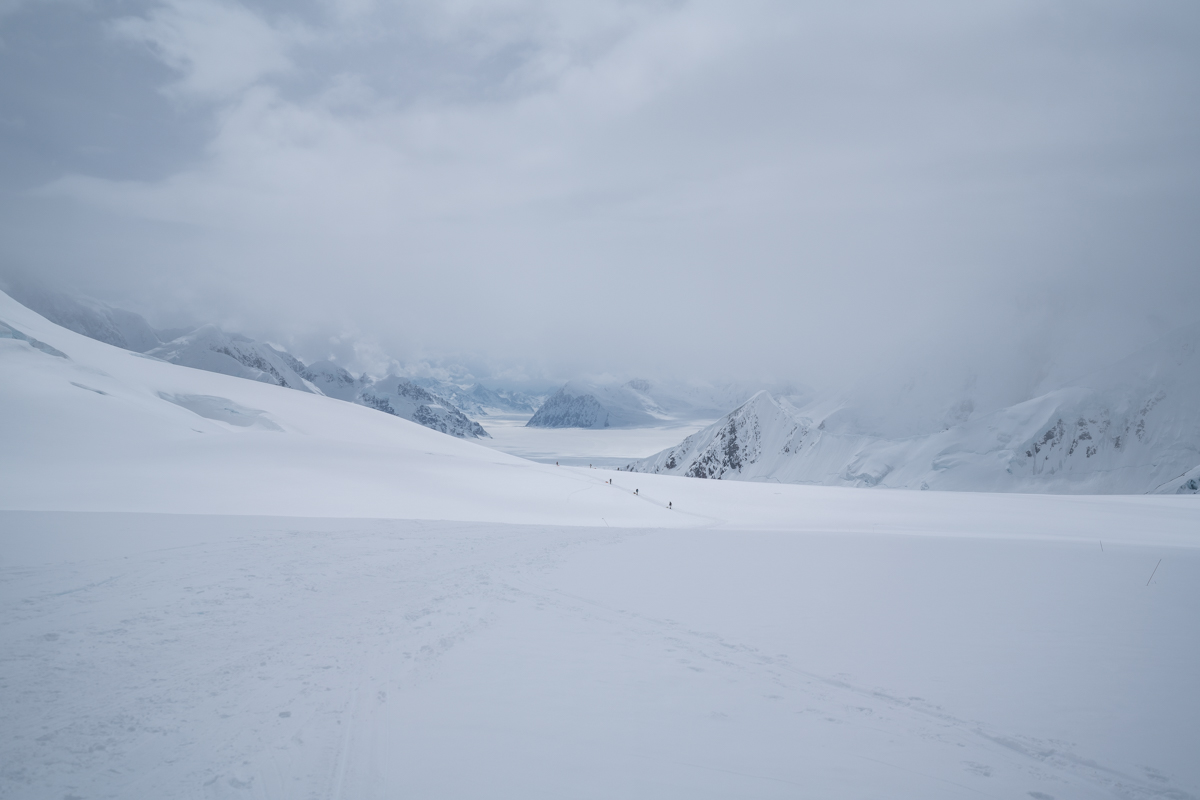
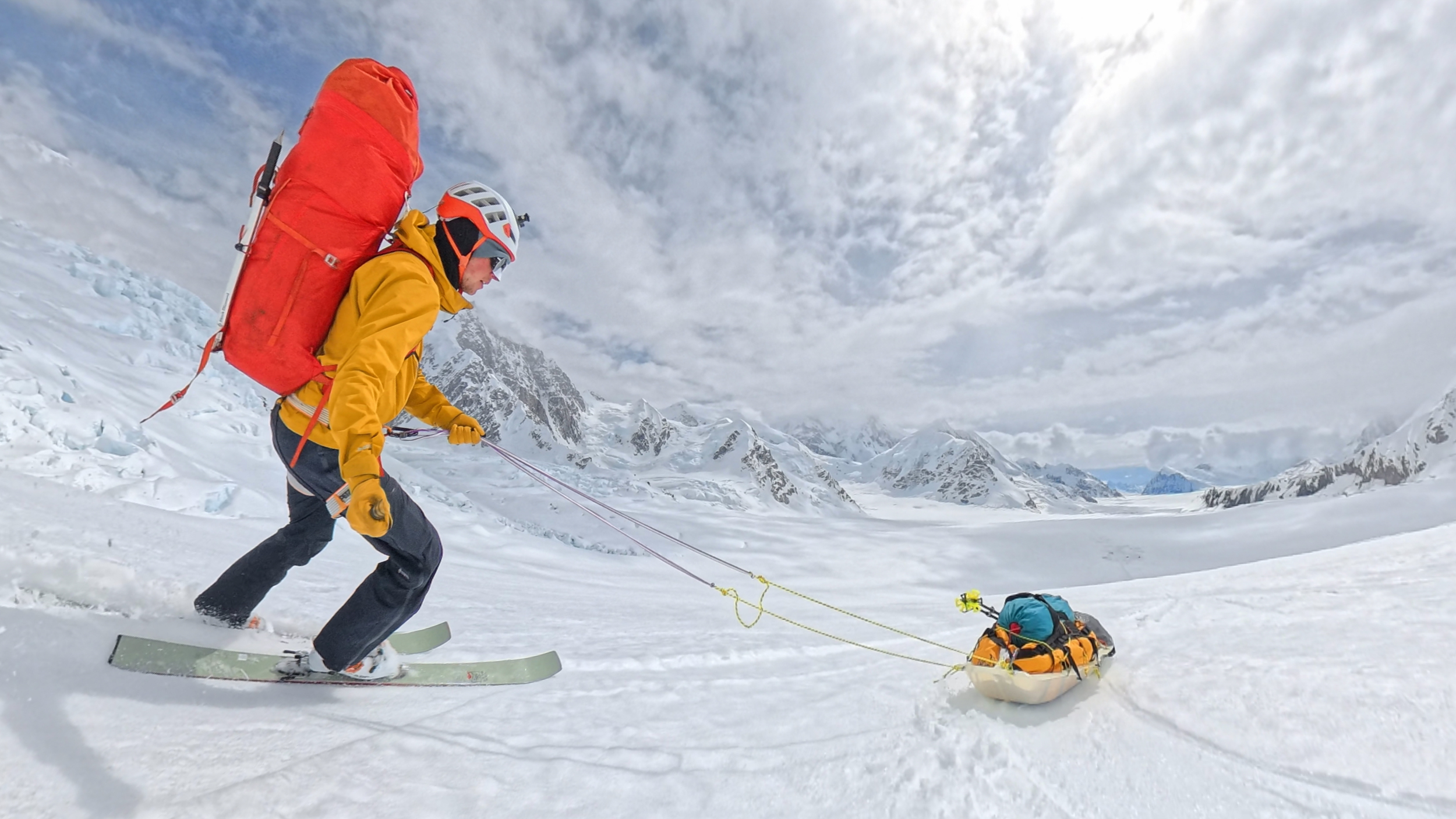
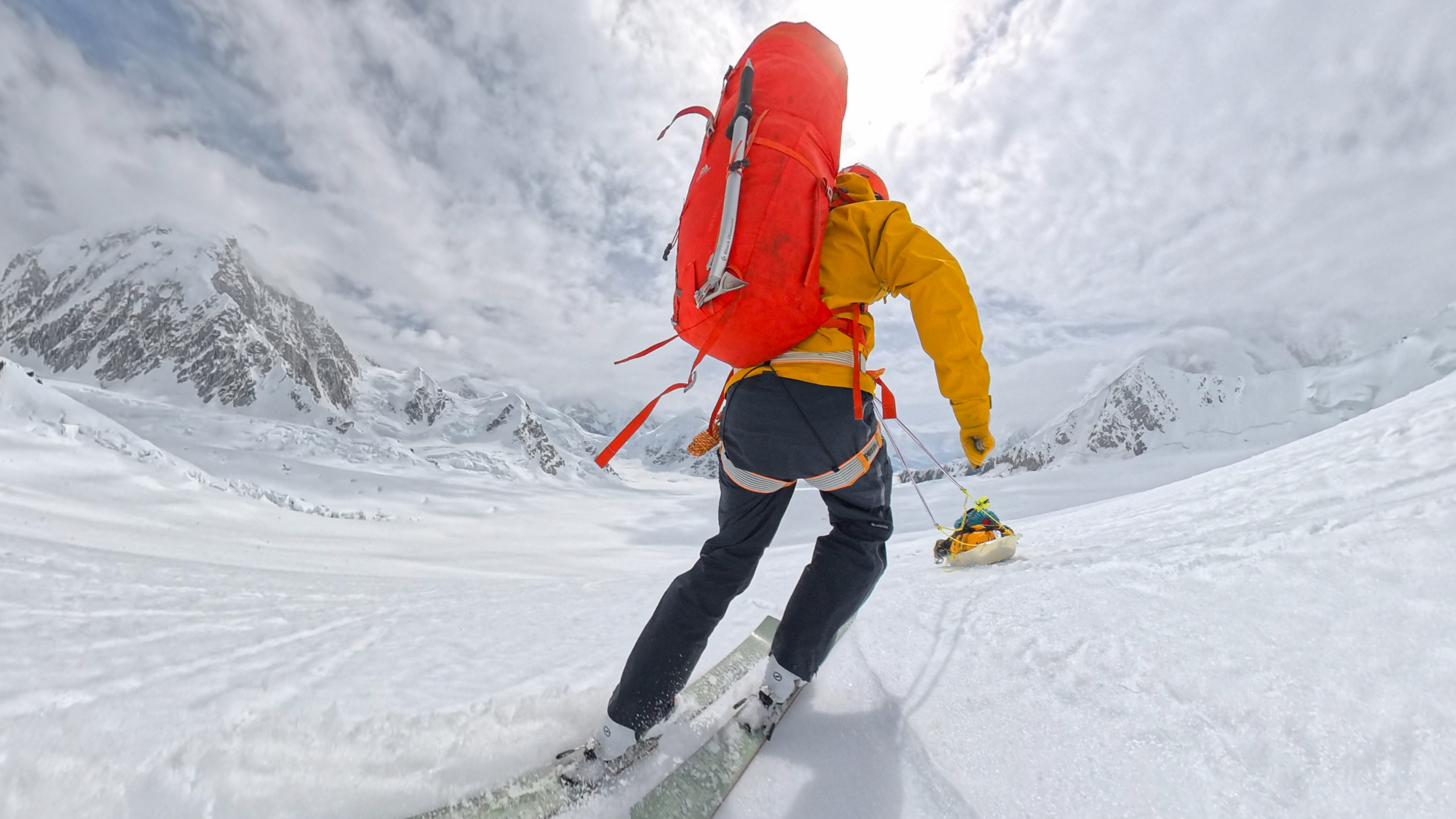
Skiing down with the sleds turned into a battle. My ropes were too short to allow me to ski with the sled in front of me, because I would have constantly skied into it whenever I turned. Having it behind me did not really work either, because it would either crash into me all the time, or when I attached a brake system using a rope running underneath the sled, it became far too slow and basically stopped sliding. The traverse at Windy Corner was actually one of the easiest sections, because the sled simply swung back and forth sideways beneath me, allowing me to traverse normally. After that, it became a constant struggle again, and I was happy about every meter I managed to cover. Shortly above Camp 3, Schuyler and I extended my sled ropes using slings, and from then on things worked much better. Now I could let the sled move in front of me, control it somewhat, and ski behind it relatively normally. It just takes some time to figure out things you have never done before. We did not spend any time in Camp 3 and simply passed through. The others had already taken everything we had left there. Our next destination was therefore Camp 1. Until then, it was the same long route we already knew. The snow conditions changed constantly, from acceptable to absolutely terrible. Especially on the flatter sections, where the snow was slightly wet, the sled simply refused to slide, and in some places I had to push it by hand. This cost time and was incredibly exhausting.
Luckily shortly before Camp 1, things became fantastic again. The slope that had been so good during our first descent to Camp 1 on Day 2 was once again in perfect condition. It was wonderful to ski down while looking out over the endless expanse of the Kahiltna Glacier ahead of us.
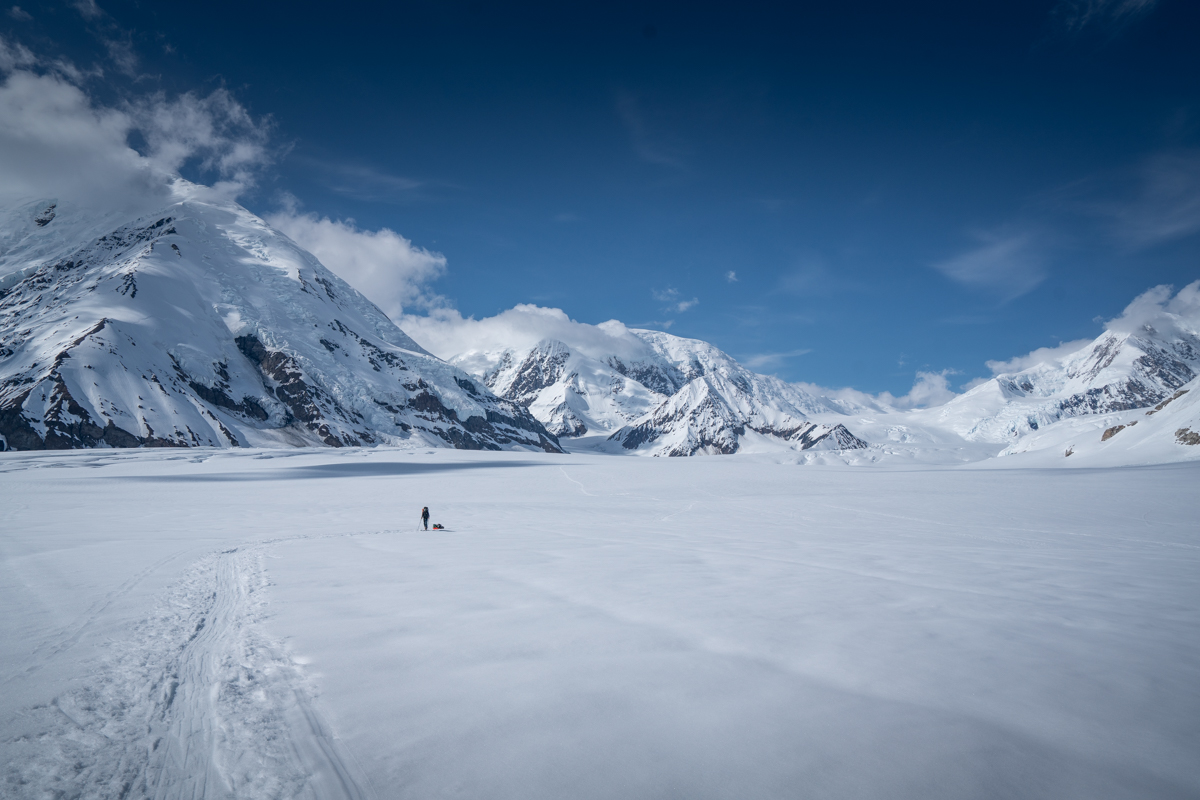
In Camp 1, we still had some gear buried somewhere that we needed to find and bring with us to base camp. I first dug a hole in a spot where I thought our equipment might be buried. I dug down about a meter until I hit glacier ice. Apparently, I had chosen the wrong location. I started another attempt a little further ahead in camp, and there I actually found our gear. We packed it onto the sleds as well, and now only a little more than 8 km remained to base camp. At just 2,000 meters elevation, it had become very warm again. We had not had anything to drink since Camp 4, and that started to become difficult. The snow was already very soft and wet, and because we had very flat terrain ahead of us, we had to put on our skins to pull the sleds through the heavy snow.
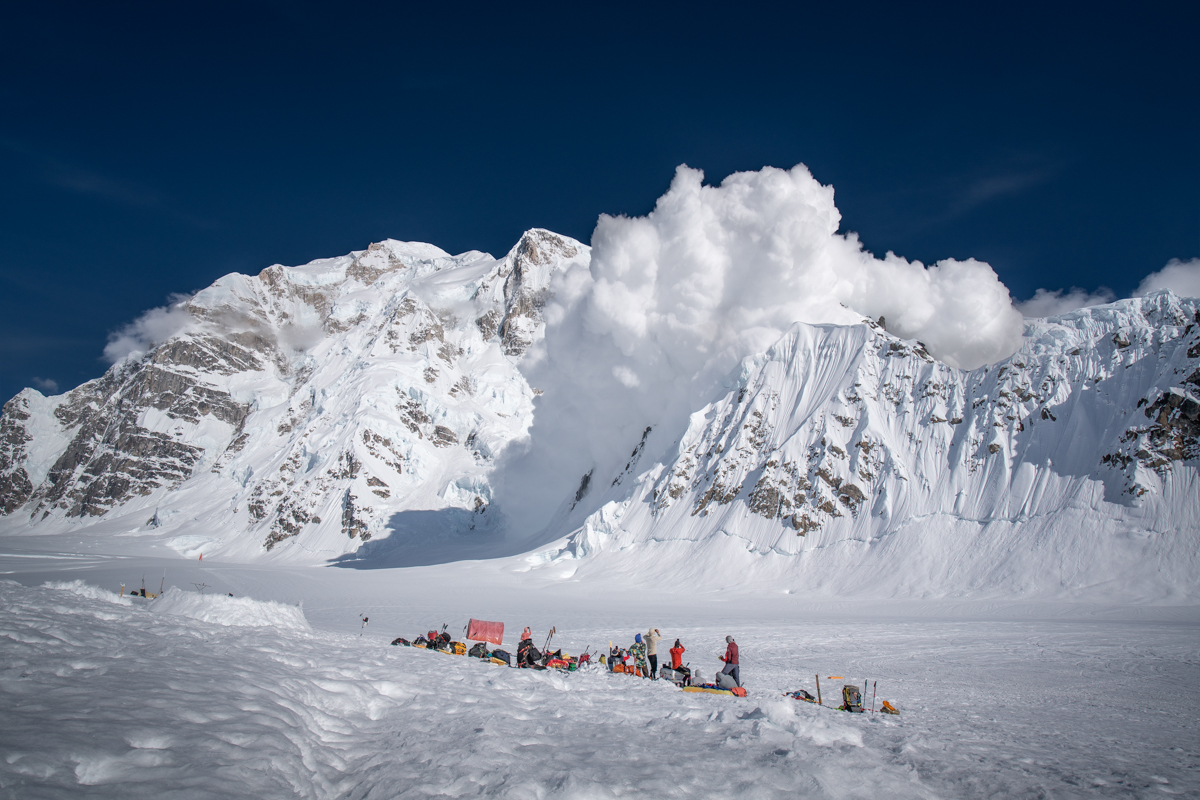
It was beautiful to travel through this landscape again; the same landscape we had crossed two weeks earlier on our first evening. I reached the lowest point of the route, from where we had to climb around 150 meters back up over “Heartbreak Hill” to reach base camp. At this point, I sat down in the snow for a while, enjoyed the surroundings, watched several avalanches occurring around me, and waited for Schuyler.
Then came the final meters of this expedition, which went quite well for me. I was genuinely happy when I finally reached base camp again. I sat down in base camp, and shortly afterward a huge avalanche released on the opposite side of the valley, sending snow even into the camp area. It was an incredible sight. An hour later, Schuyler also reached base camp but then there were no more flights out that day, so we set up the tent for the last time of the expedition and spent one more night in Denali Base Camp.
Day 16
Today, we would fly back to Talkeetna. Therefore we packed everything together in the morning and made our way to the airstrip. Then we waited for the plane to arrive and pick us up. After around two hours, we heard a quiet engine noise, and shortly afterward a small red airplane appeared in the sky and landed on the glacier in front of us. Our taxi had arrived.


In perfect weather, we loaded everything into the plane, and then it was time to say goodbye to Denali. After more than two weeks on the glacier, it felt slightly unreal to step into an airplane and simply fly back into civilization.
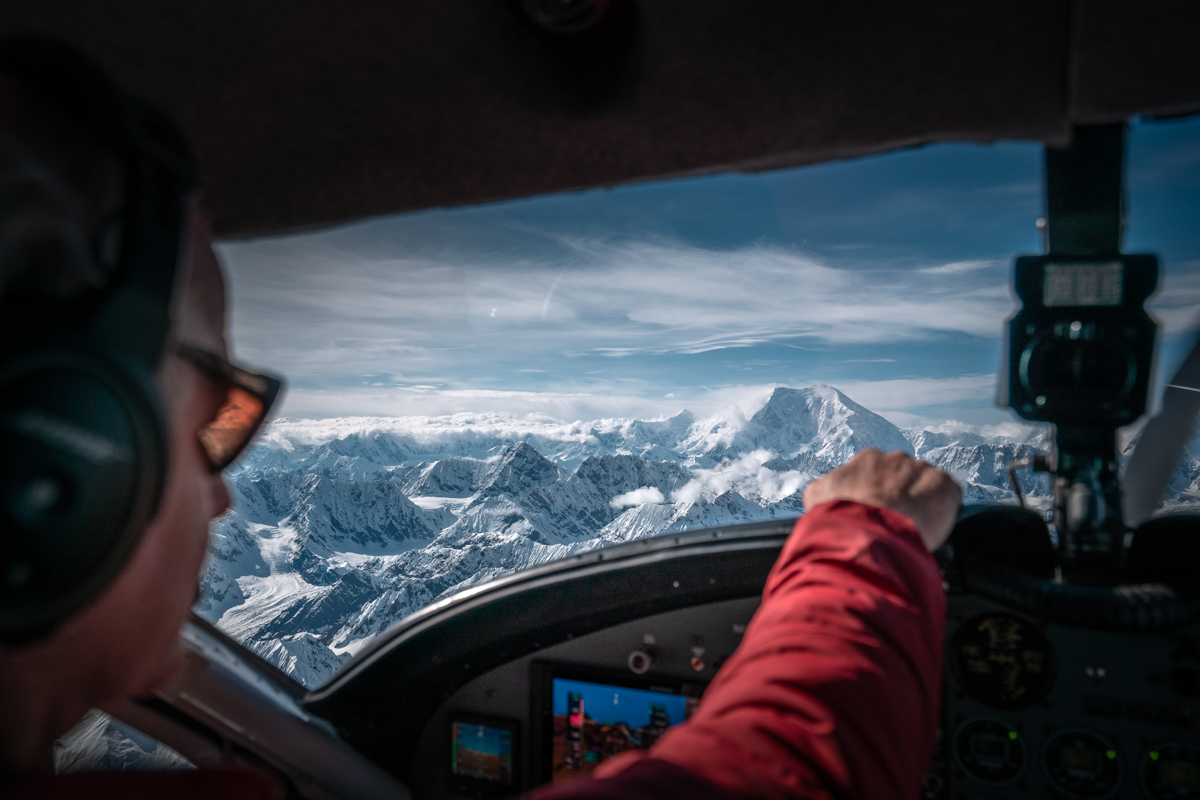
The flight was once again incredible. I was able to sit in the cockpit next to the pilot and had amazing views from there. Above the enormous Kahiltna Glacier, we left the Alaska Range behind, and shortly afterward we were flying over the flat landscape of Alaska. It was such a beautiful sight to see how green everything was. Rivers and lakes were everywhere, and it simply looked like there was life beneath us again.