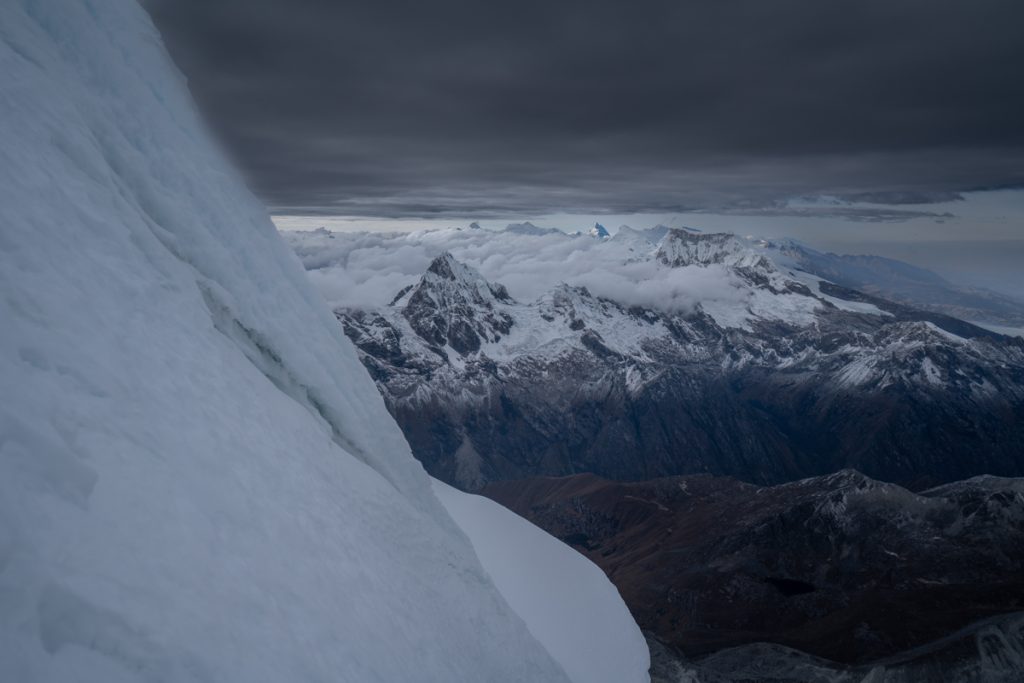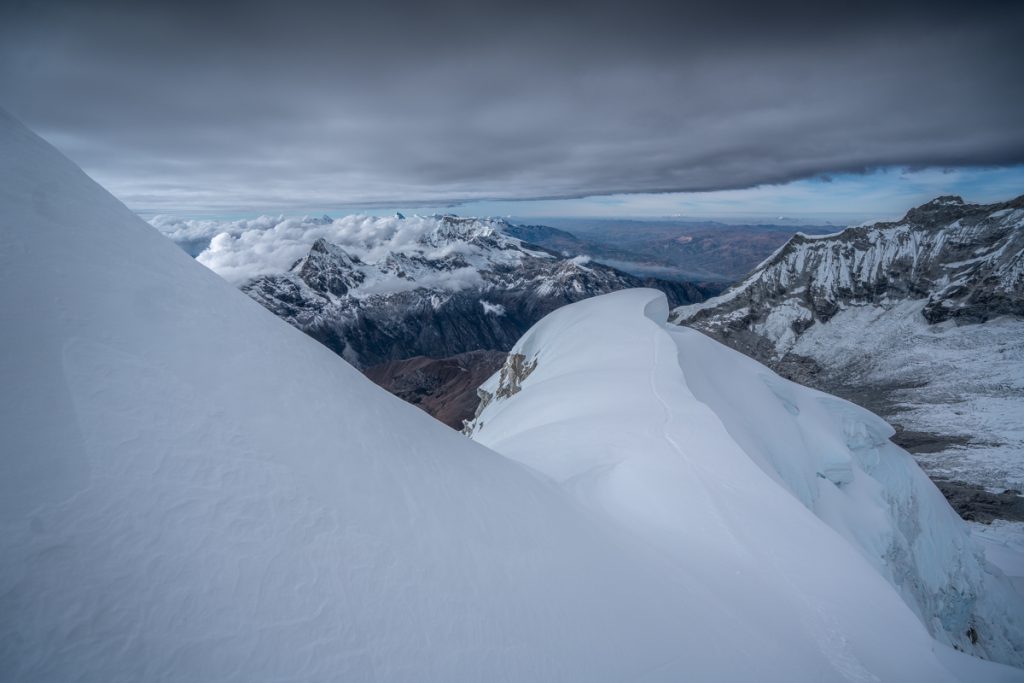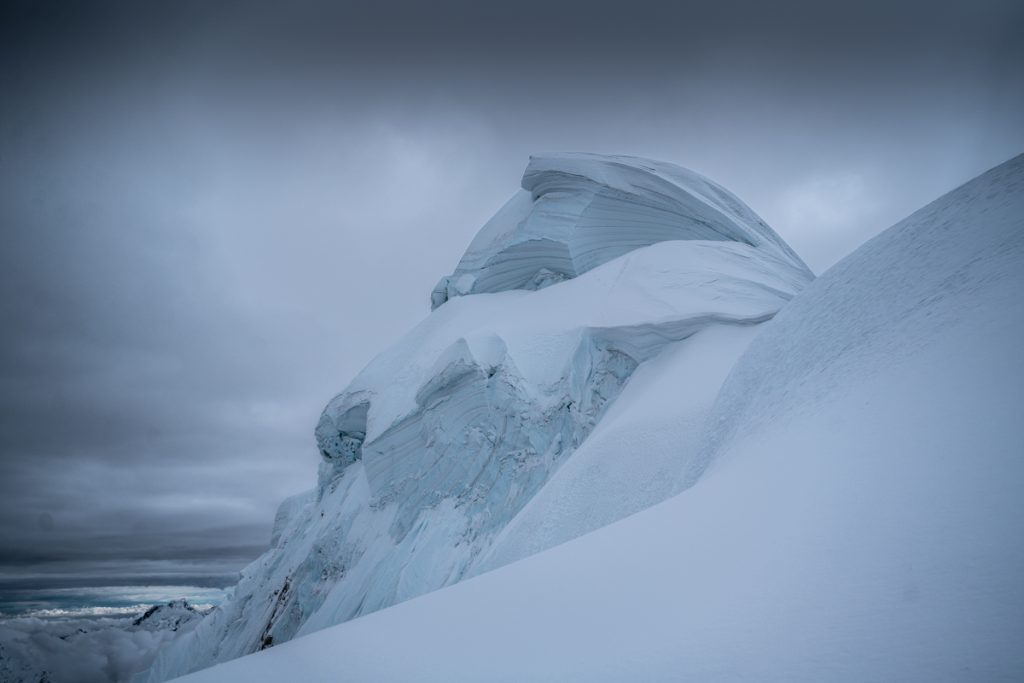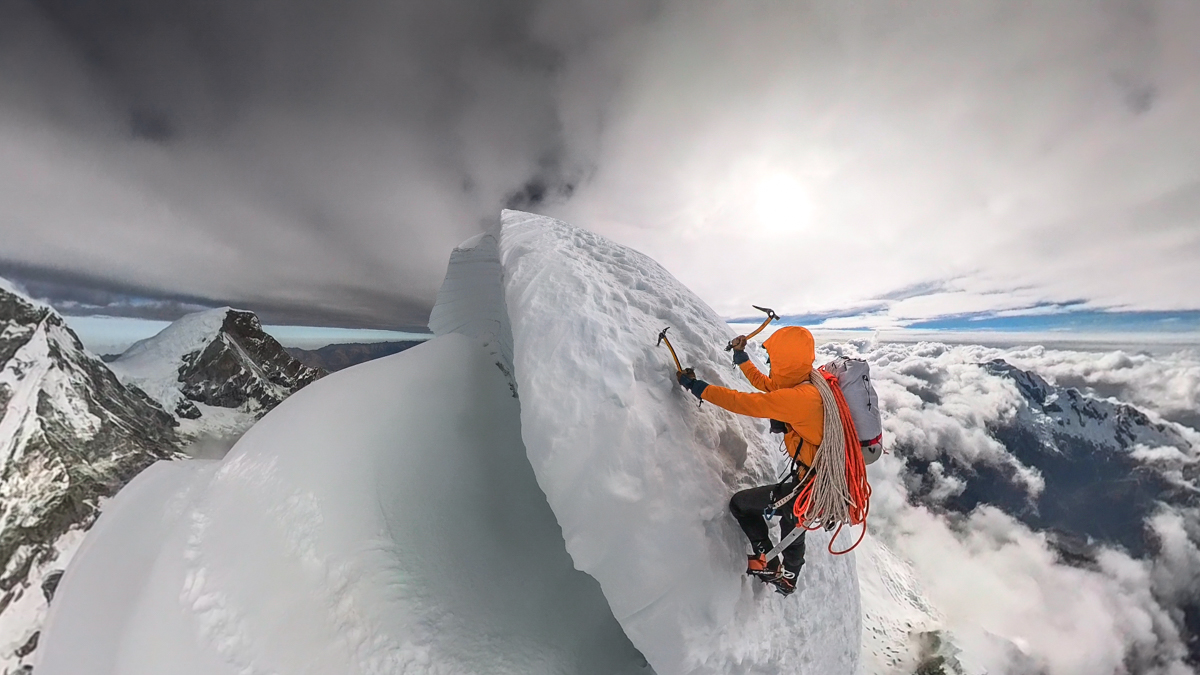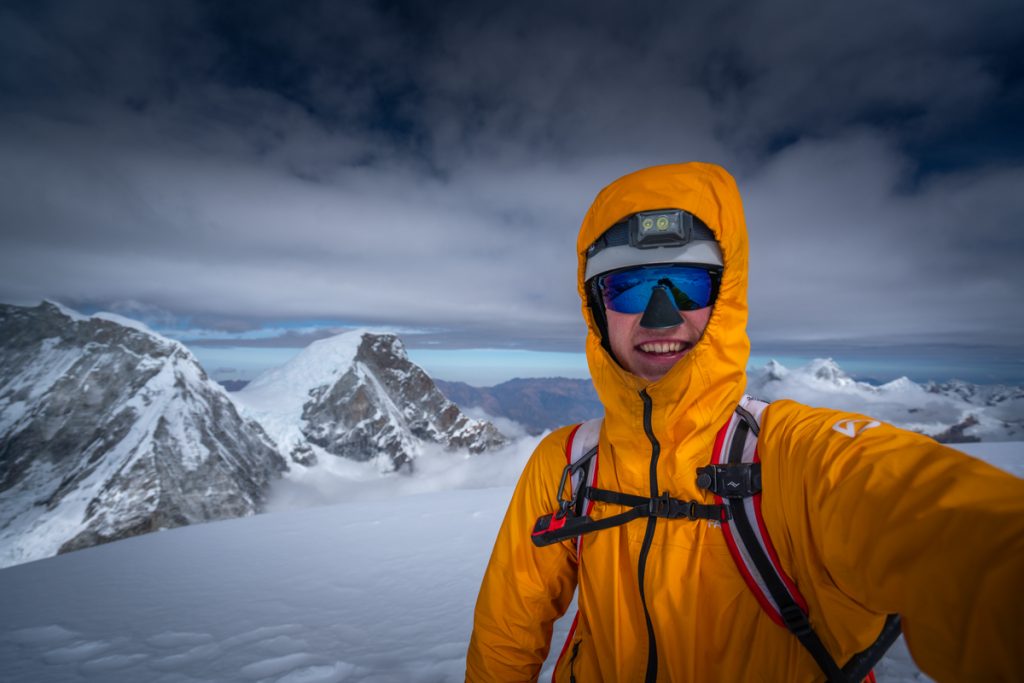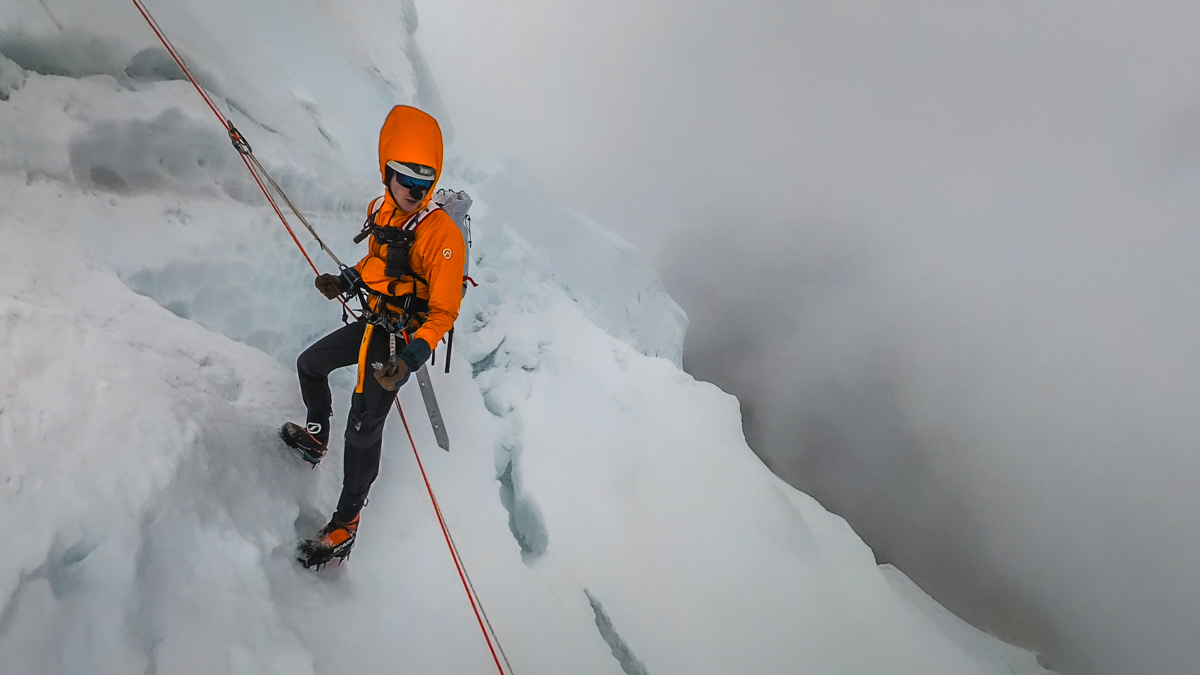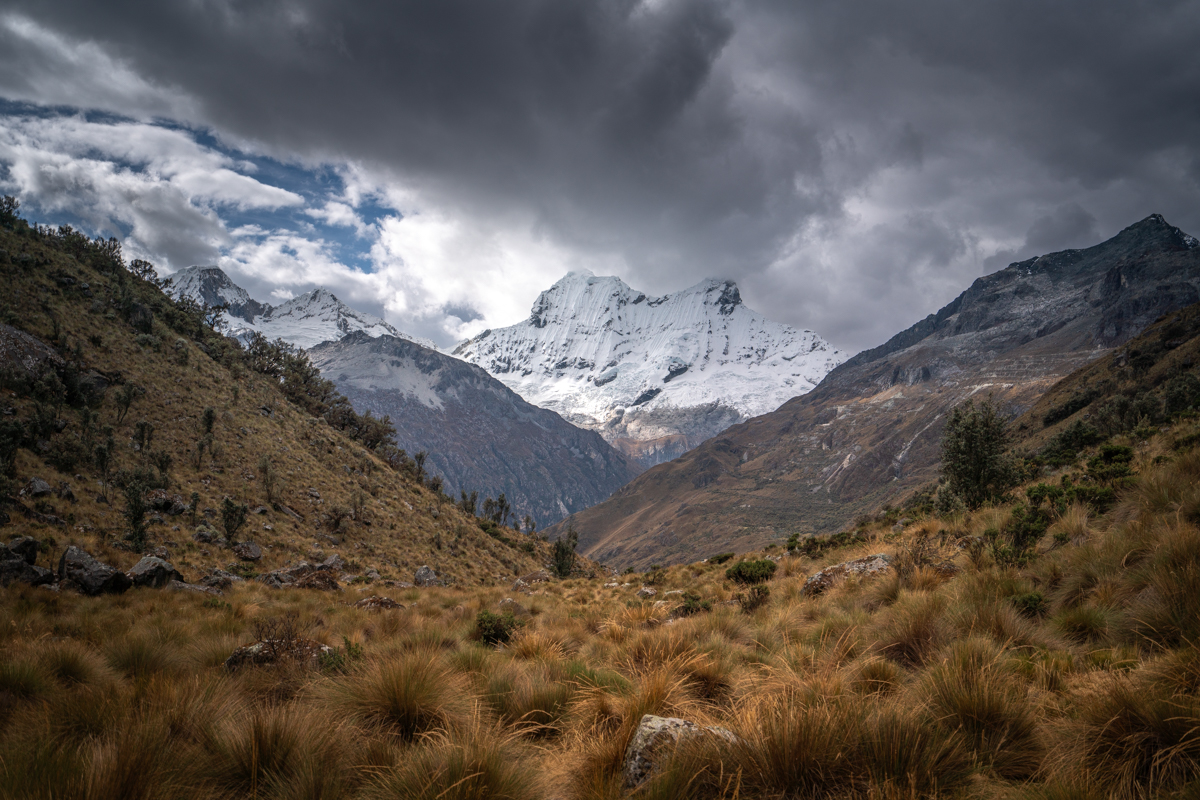
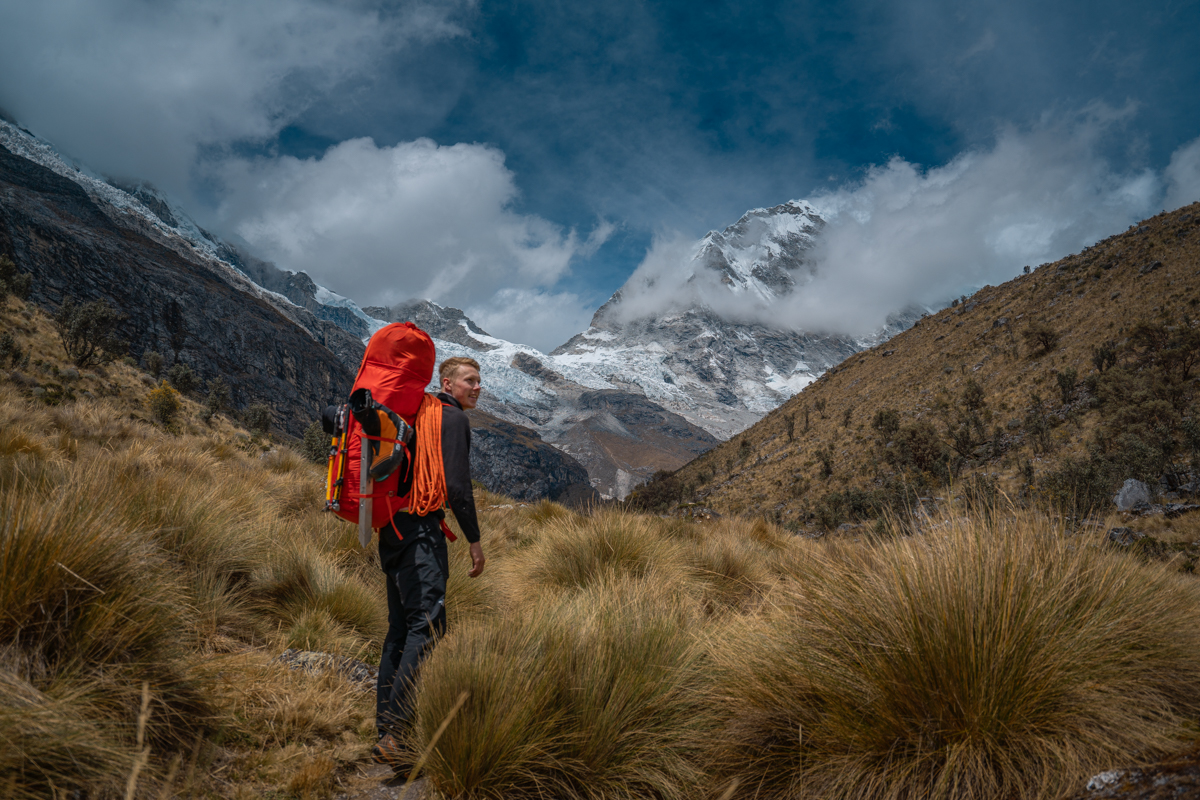
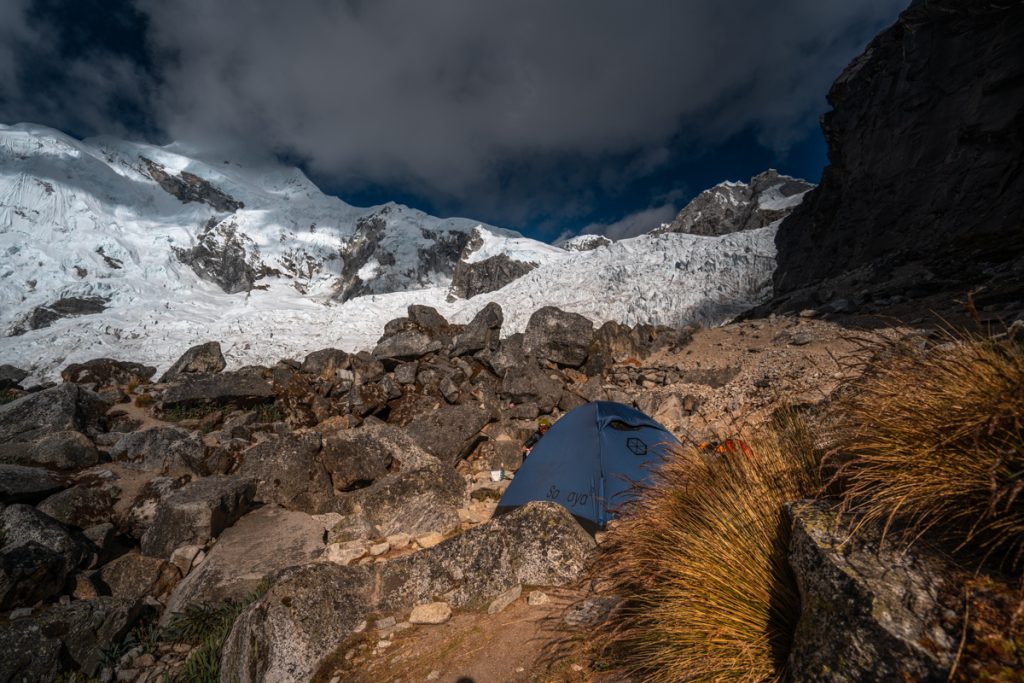
That night we left the camp around 2 a.m. We had around 1350 vertical meters and quite a bit of distance to the summit in front of us. The weather was not ideal. We were in the clouds, had only a few meters of visibility and it was lightly snowing. First, we had to climb a steep scree slope to reach the glacier. Orientation was difficult due to the conditions. Luca fell far behind right at the beginning, even though I wasn’t walking fast. When I waited for him, I saw that he wasn’t doing well. He was hunched over, holding his stomach, and barely moving. When I asked, he told me everything was fine, but after I spoke to him further he admitted he was not well at all. He then returned to camp, which was only about 100 meters away. I still wanted to try for the summit, and Luca agreed that I should continue, so I proceeded toward the glacier. Now that I was alone, it was of course uncertain whether I would go all the way to the summit; I told myself I would turn back if it became too dangerous on my own.
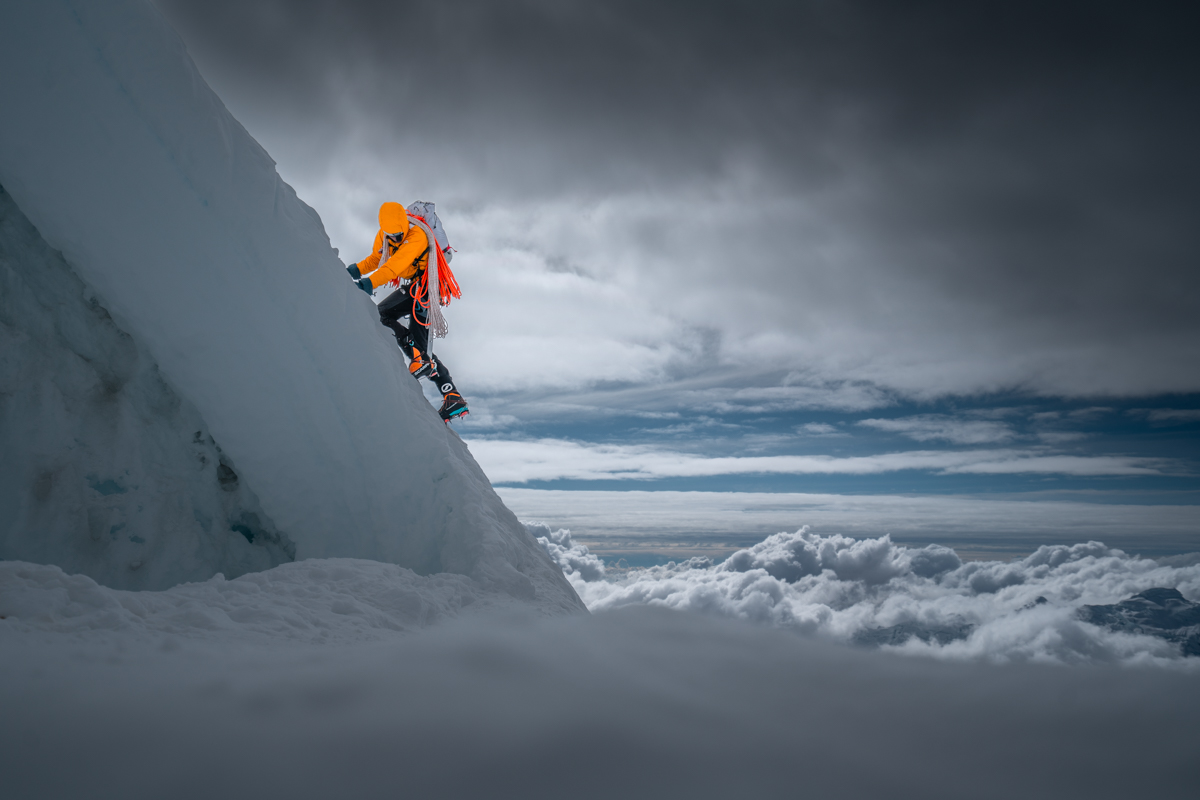
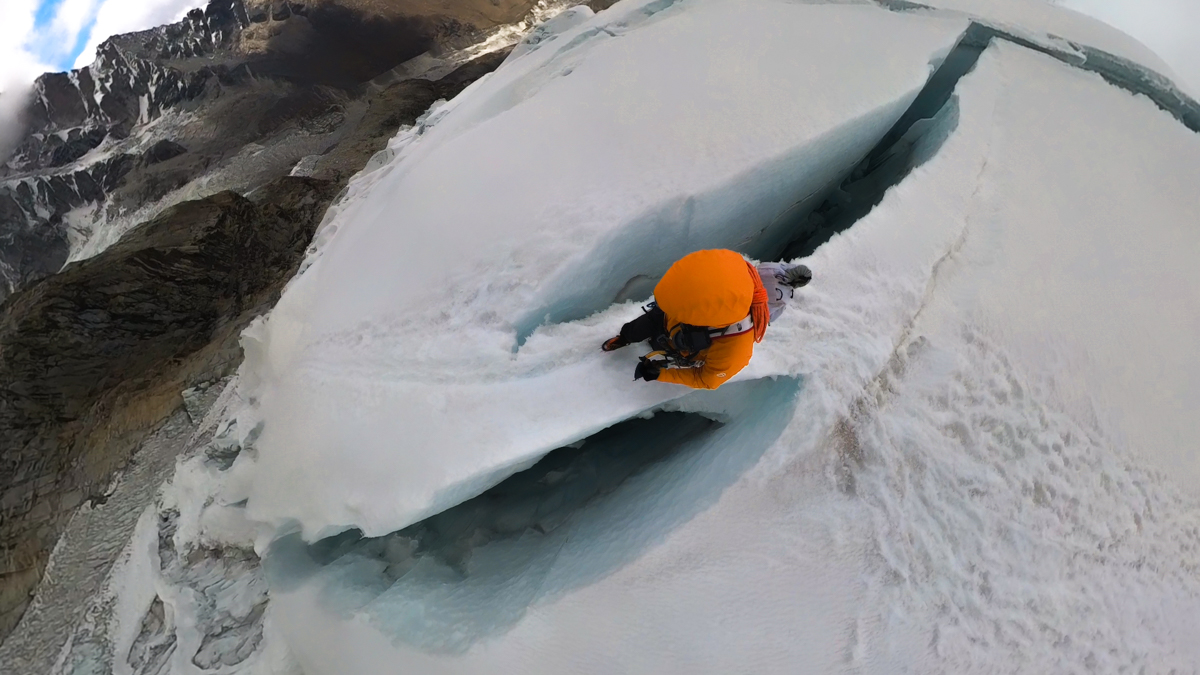
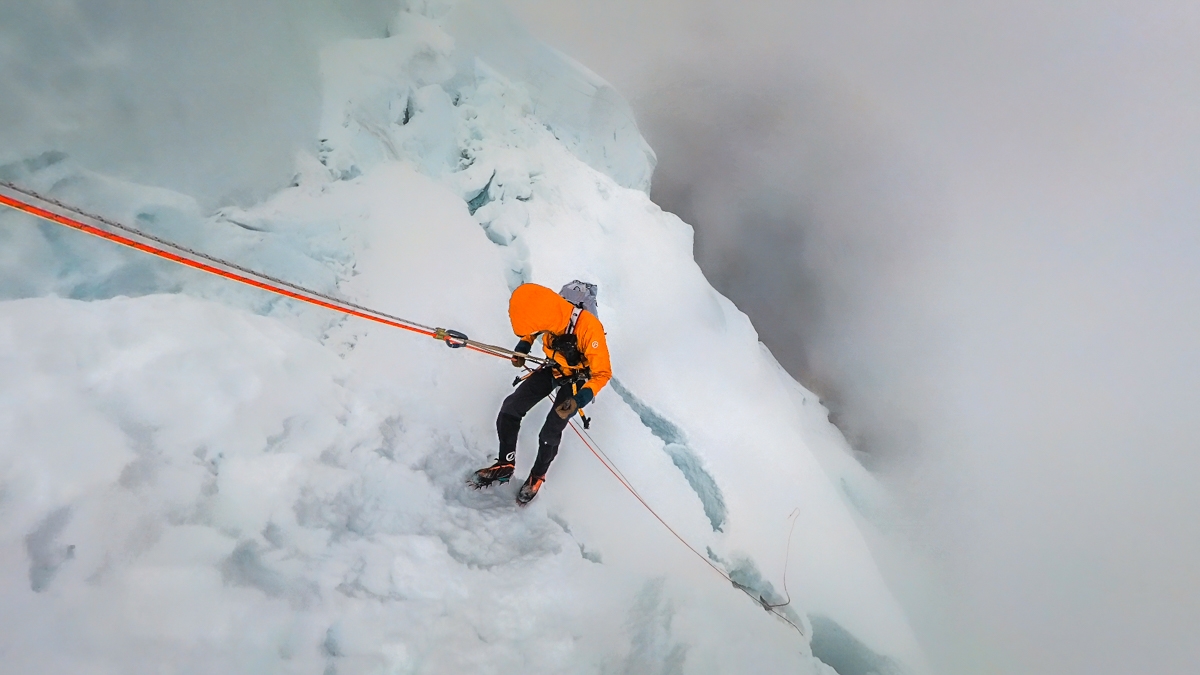
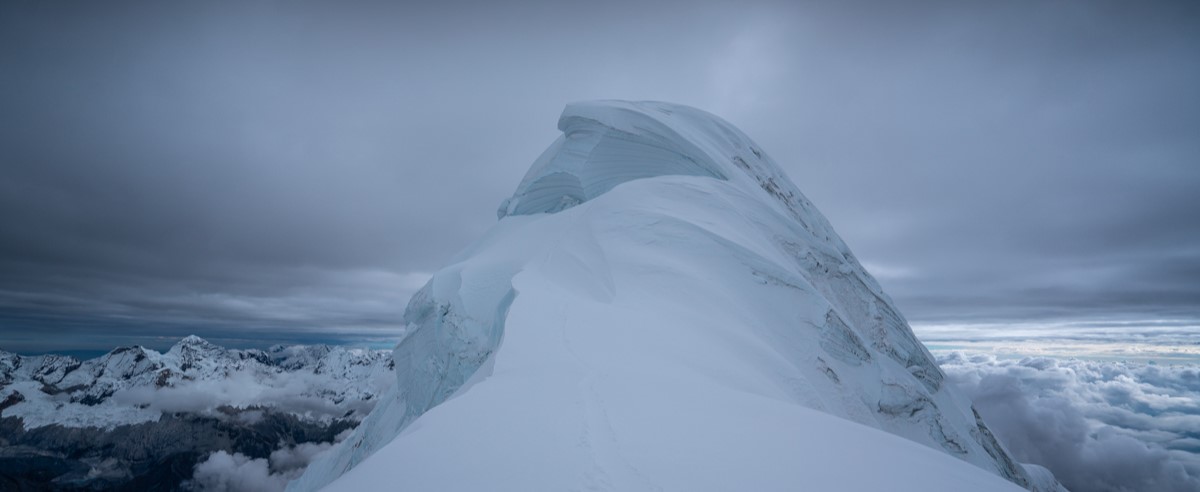
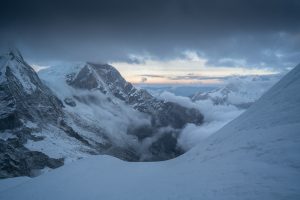 Upon reaching the glacier, I immediately had to cross several crevasses, but the snow bridges still seemed very stable. Since Chopicalqui is considered technically easy, it is climbed more frequently than other 6000-meter peaks in the Cordillera Blanca, and therefore I found a well-trodden and firm track to follow. That was very helpful for orientation, as I could see where to cross crevasses was the easiest. I reached Glacier Camp, where I took the only break of the ascent before continuing. A bit higher up I had to cross two crevasses that were a little tricky because of the steep terrain, but the snow quality was good and I had solid footing, so these spots were manageable. The most difficult crevasse for me had a height difference of about two meters between its edges. There, I let myself tip from one side to the other, supporting myself with my hands on the opposite snow wall while my feet were still on the first side. From that position, I could carefully climb up the nearly vertical snow. After a few more steep parts came a very long and gently rising glacier slope. This section was tough because I had to cover a lot of distance but gained very little elevation. Once I made it past that area, I was already above 5900 meters. Not much was missing to the summit. As I was on this relatively flat section, the first daylight finally appeared. Unfortunately I didn’t get a nice sunrise because the sky was very cloudy. Altogether it was a very grey morning. Again and again I found myself in whiteouts, but occasionally there were short glimpses of views.