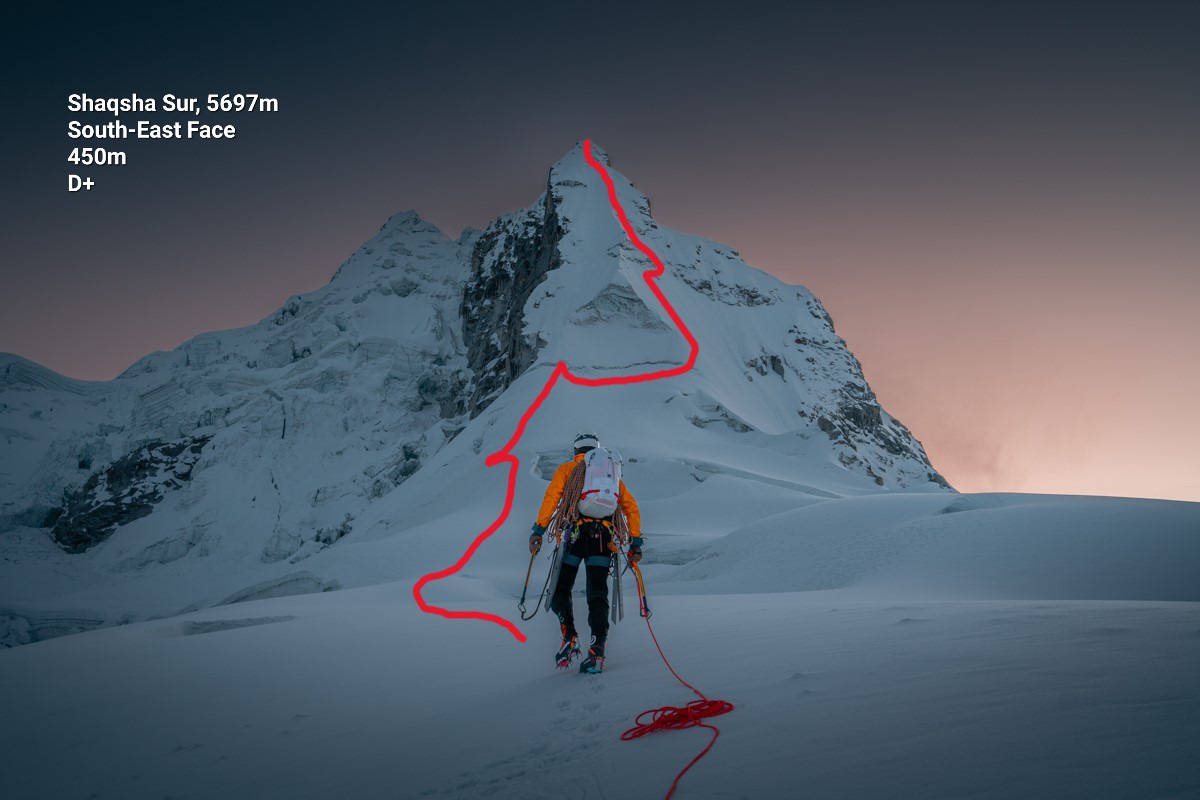
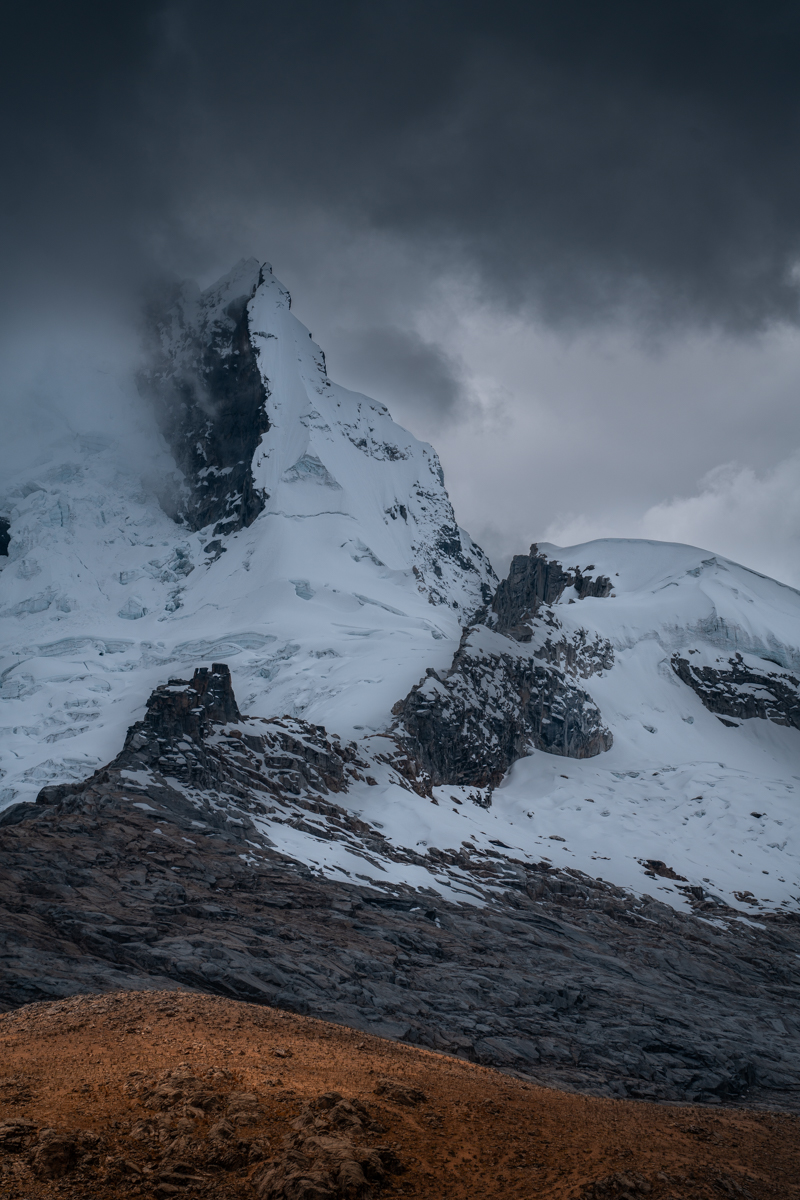
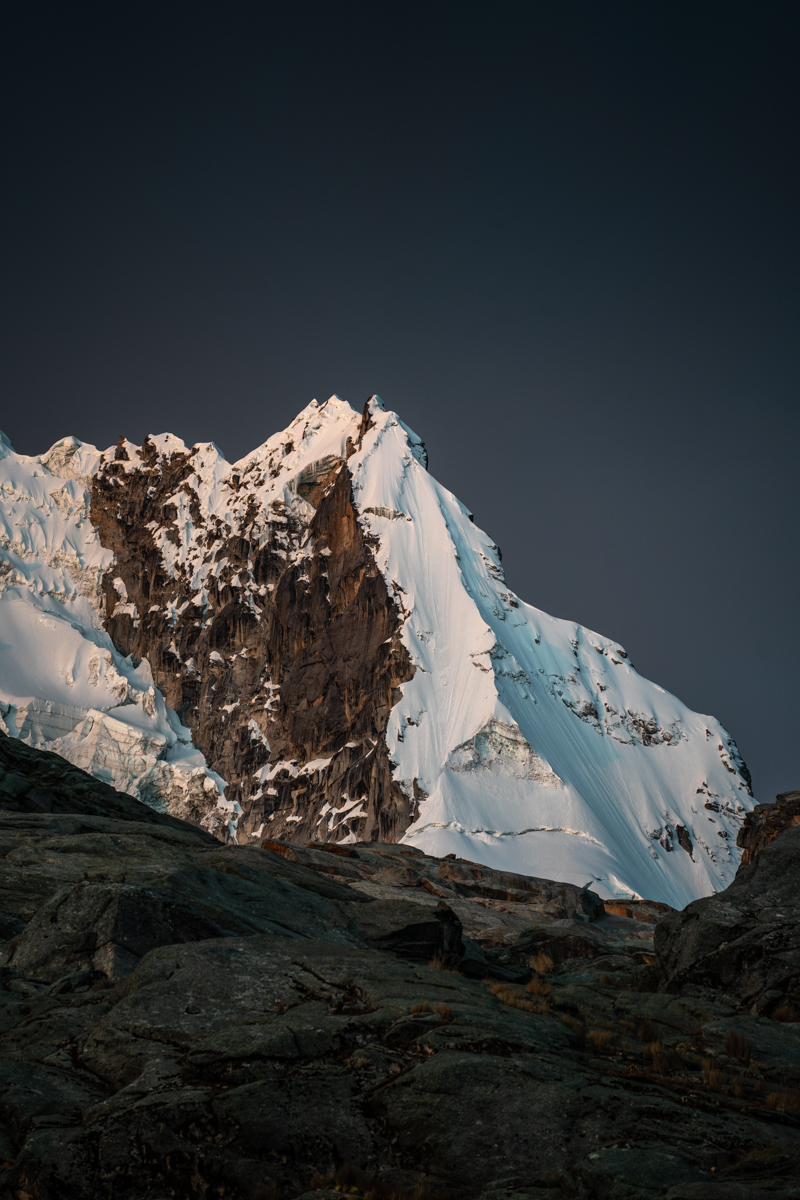
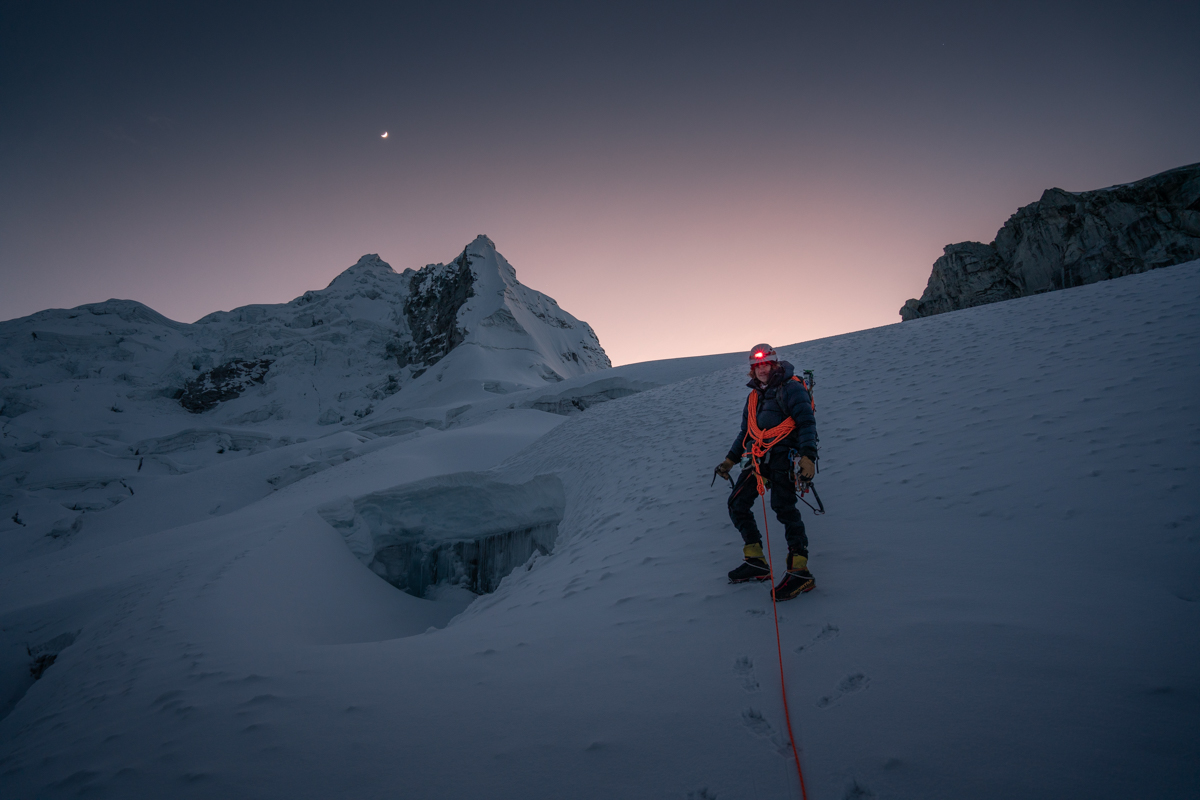
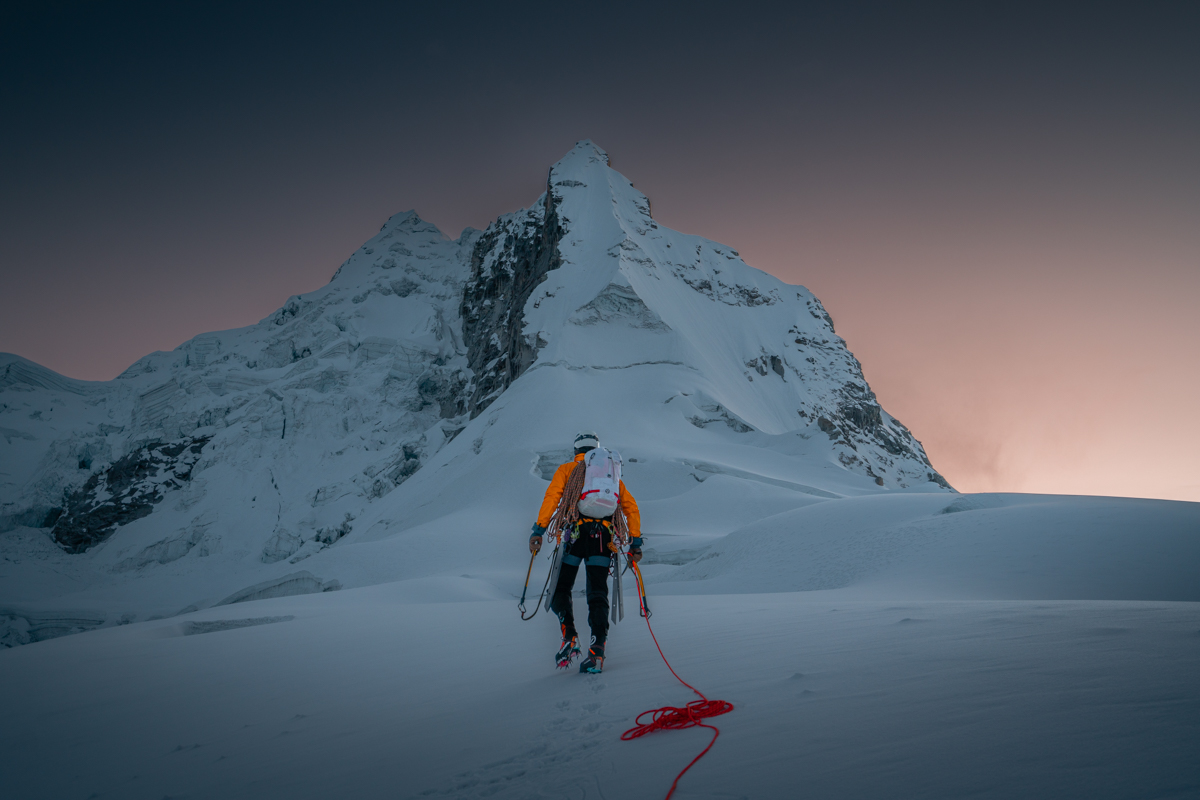
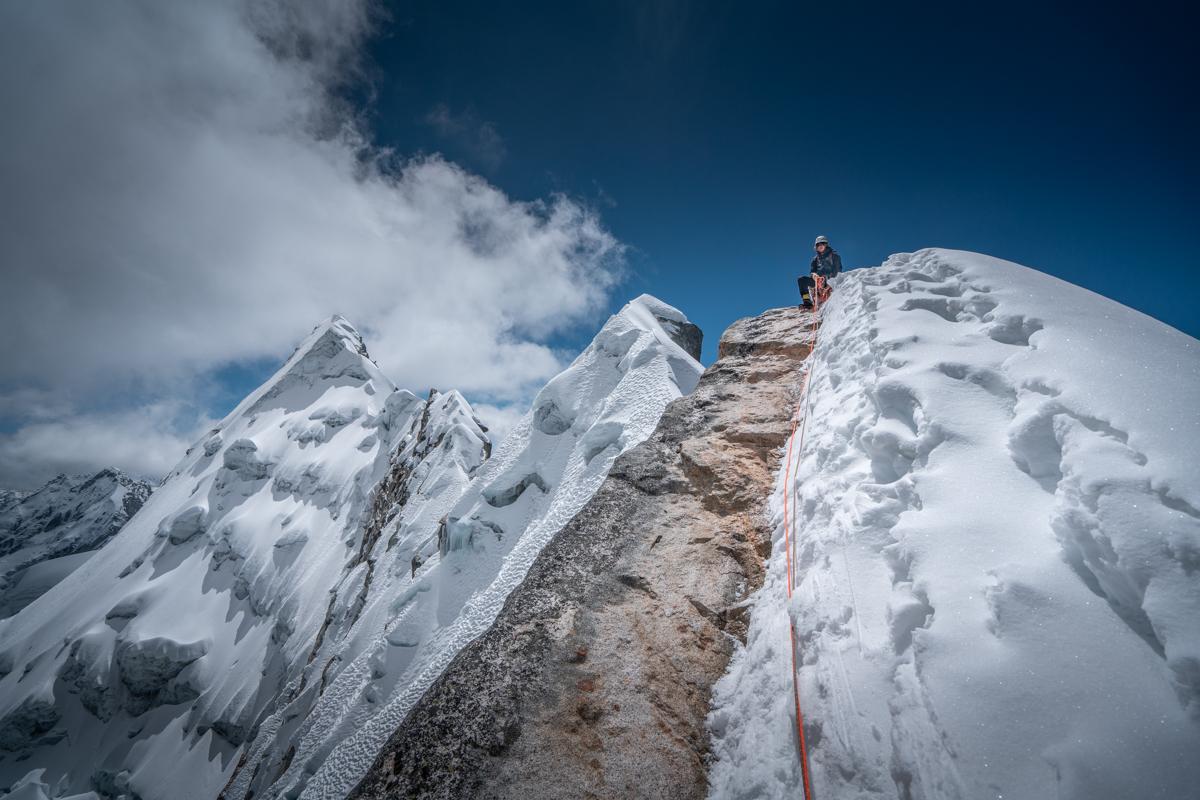
Shaqsha is still a relatively unknown mountain in the Cordillera Blanca. But before the expedition, I stumbled across some pictures of the south summit (Shaqsha Sur). The route via the South-East Face looked very appealing. When we were in Huaraz, we heard that the conditions were not ideal (there was supposed to be a lot of loose snow on the face), but we decided to give it a try anyway. We also heard that Shaqsha Sur had already been climbed this season, so despite the difficult conditions, it seemed possible. I was with Luca and Ben this time, so we were a team of three.
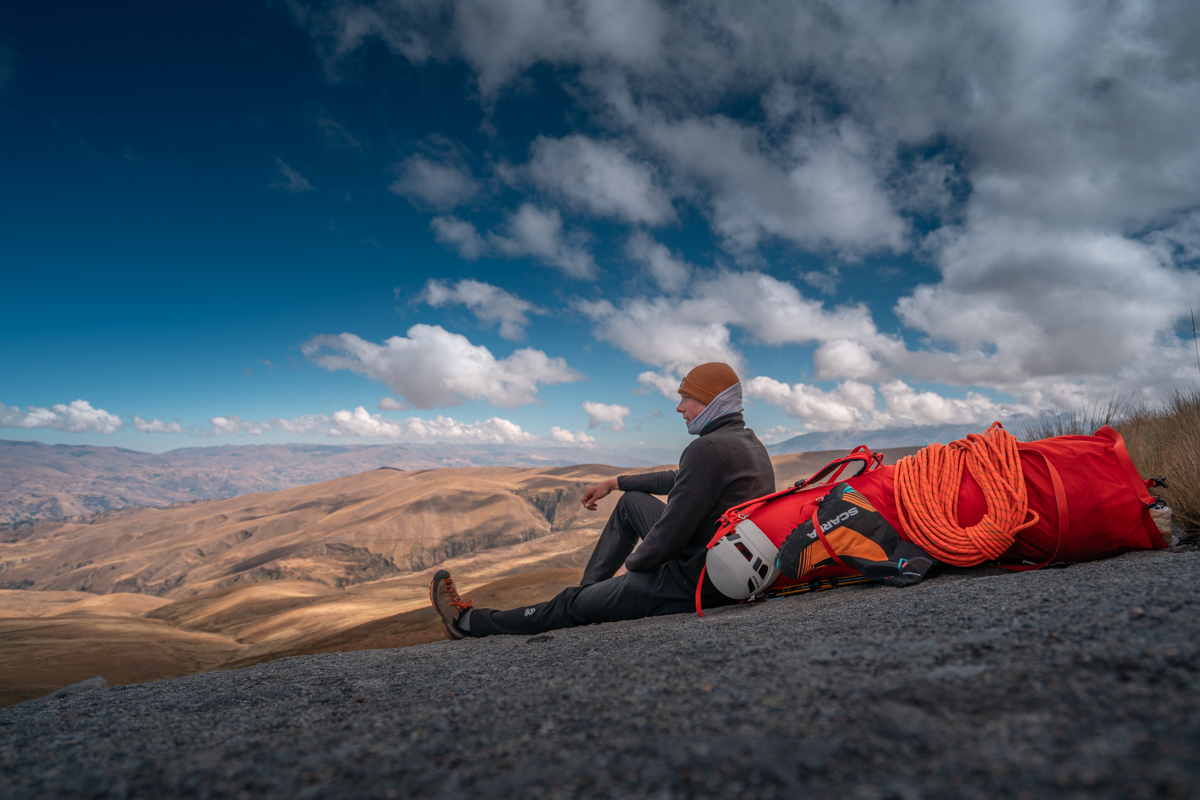
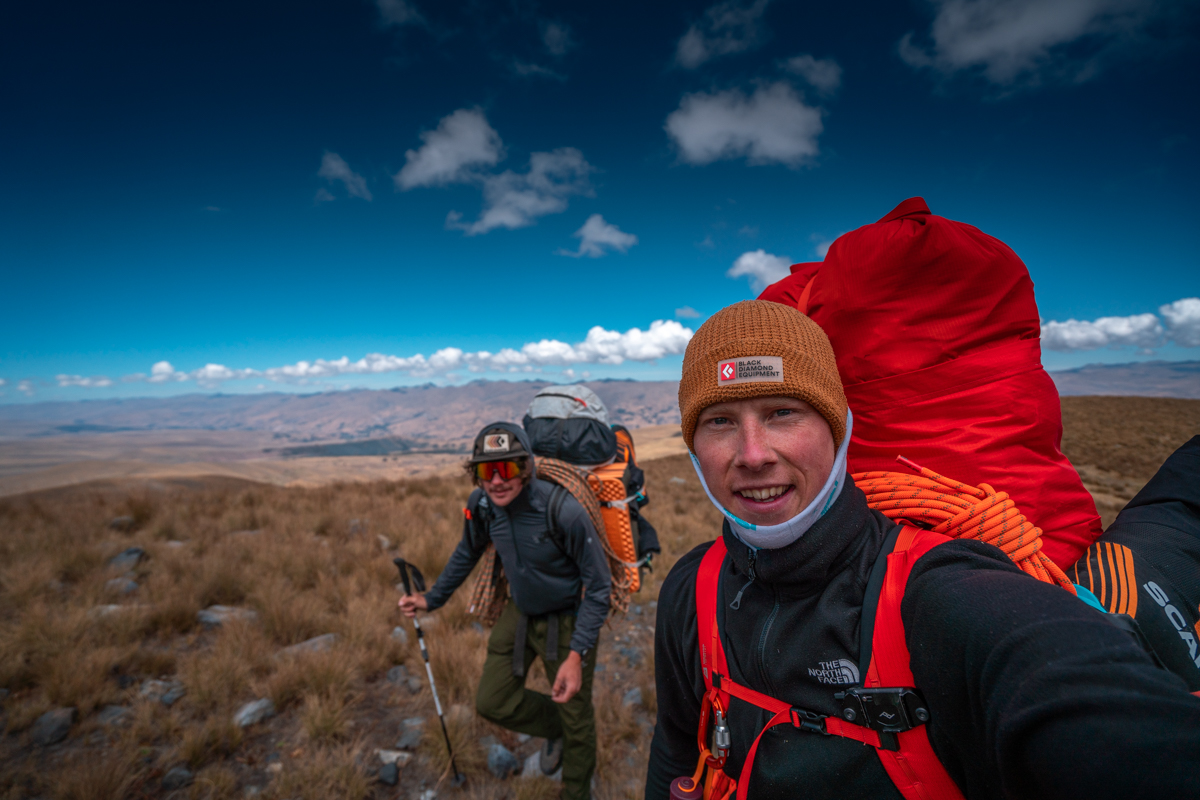
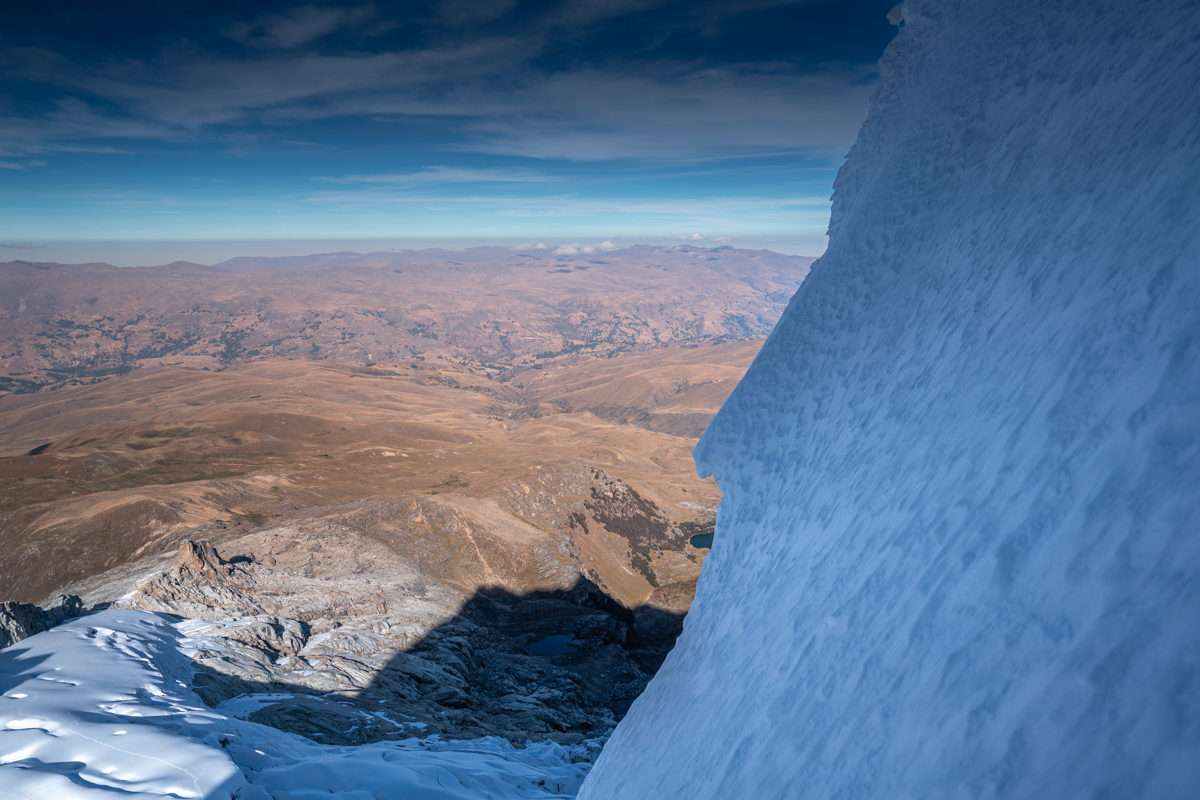
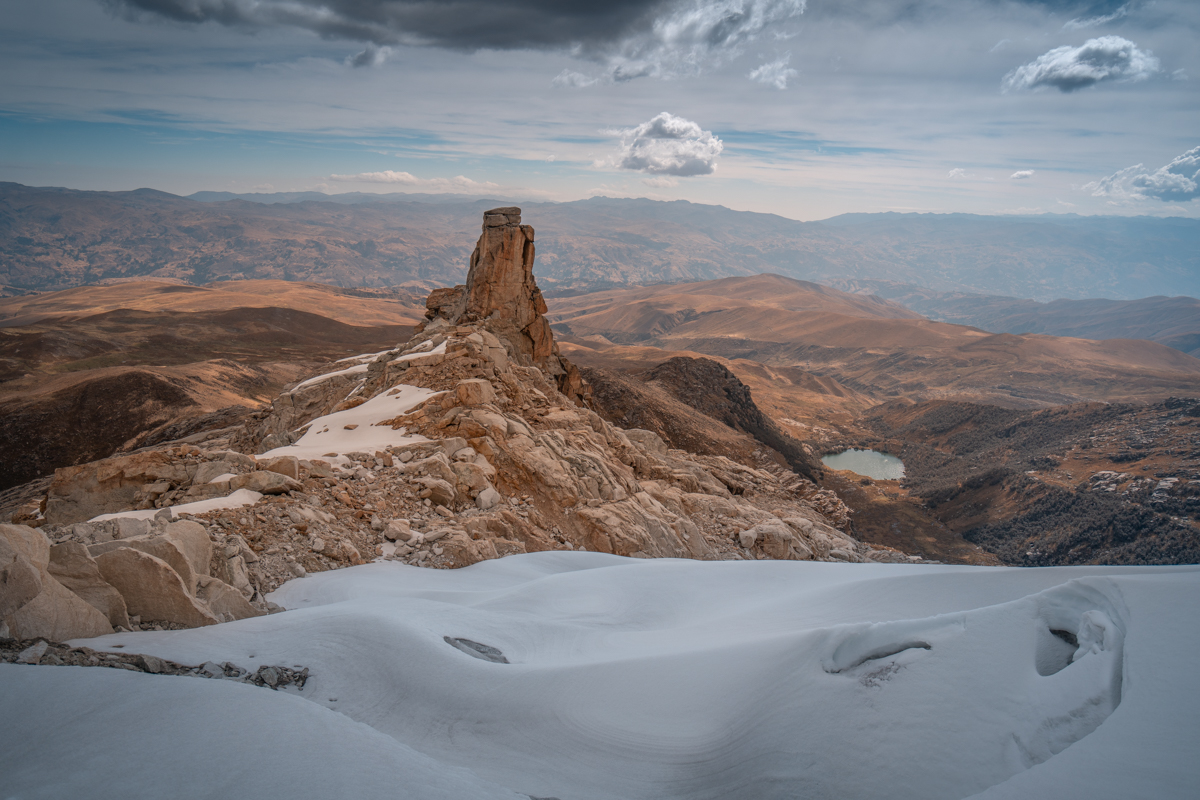
A friend gave us the contact of a taxi driver who knew a drivable gravel track that wasn’t marked on our maps. It went through Olleros, a mountain village near Huaraz, and then seemed to climb gently for an eternity into a vast hilly landscape. It was an adventurous drive on such a “road” with a normal car. At some point, we stopped on a flat grassy area and started our trek from there. There were no trails to Shaqsha, so we made our way cross-country through endless grassy hills. Once we had gained some altitude and looked back over the landscape, I noticed that it looked different from anything I had seen in the Cordillera Blanca so far: it felt like we were on a huge grassy plateau dotted with hills, gradually rising towards the glacier.
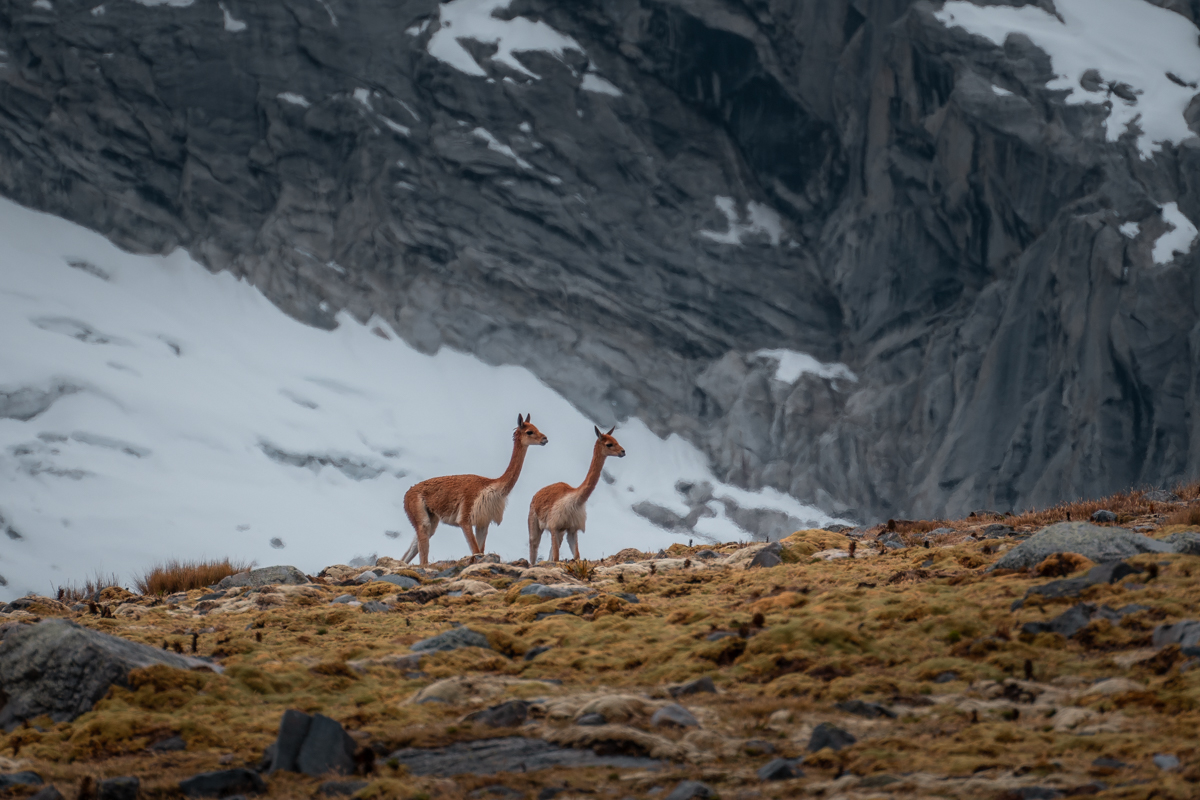
After a while, I spotted a herd of vicuñas in the distance—a beautiful sight with these animals in front of the glaciated mountains. We could also finally see Shaqsha for the first time. To get closer to the mountain, we had to follow the ups and downs of the hills. At some point, Luca was no longer behind us. Ben and I waited for a long time until he finally appeared, saying he had stomach issues and couldn’t continue. We decided to set up camp at that point (we were already on a flat area with a little bit of water close by). Just as I started pitching the tent, a hailstorm began, so we quickly got inside and didn’t leave it for the rest of the day.
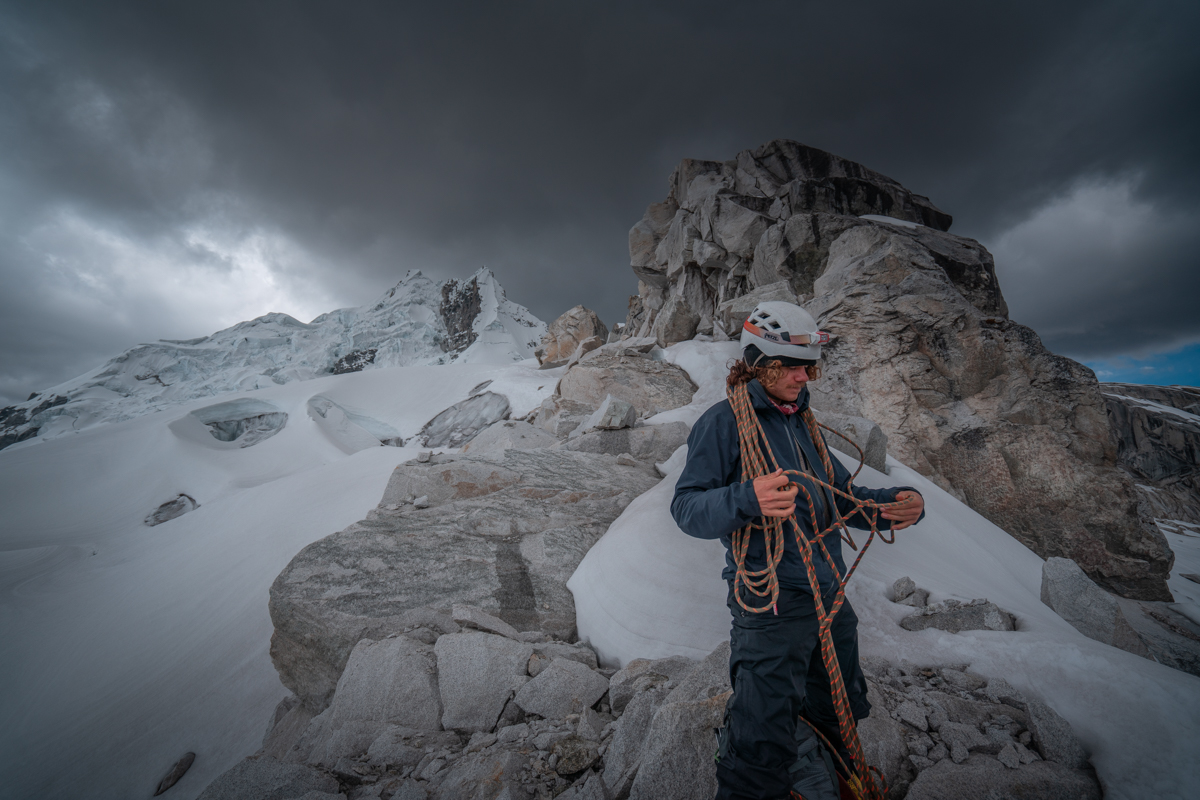
The next morning, we got up again in the middle of the night. Luca stayed in the tent, still feeling unwell, so Ben and I started toward Shaqsha just before 2 a.m. The approach to the glacier started off easy—never steep and pleasant to walk. Then we reached a broad ridge, where we occasionally had to scramble a bit. We bypassed a prominent rock tower on the ridge on the left side and descended to the glacier from there. But we had to realize that this was a mistake. We should have climbed back up to the ridge immediately after the rock tower and approached the glacier from there. Instead, we were now quite a bit below, facing a heavily crevassed glacier that looked uninviting. So we decided to climb back toward the ridge on the right, which meant ascending some very steep, smooth rock slabs. Luckily, it was dark, so we couldn’t see how far it dropped below us.
When I reached a small rock plateau just before the first ice, I waited for Ben. When he arrived, he suddenly began breathing heavily and irregular. He tried to grab a rope, but it slipped from his hands, and he had to lie down, gasping for air. He told me he felt extremely weak and didn’t know what was happening. Seeing his condition, I had already prepared myself to possibly abort the climb. I told him to try to breathe calmly and steadily, which improved his condition. To go down directly wasn’t an option at the moment, as it wouldn’t have been wise to try to climb back down the rock section we had just ascended. So we had to at least reach the flat glacier above us to descend safely.
After more than half an hour of Ben lying on the rock beside me, he felt better and said we could continue. Reaching the flat part of the glacier just a few meters above us turned out to be tricky. A steep ice wall separated us from it. I didn’t dare climb it directly, as the ice didn’t rest against the rock but hung about half a meter over it (hard to describe—I had never seen anything like it and didn’t feel comfortable). So I traversed along the rock at the ice wall until the ice looked more stable and climbed in there. Ben seemed to handle it well, not moving too slowly, which reassured me. The ice was extremely hard and brittle, making it very tiring to climb. Pieces kept breaking off, and placing ice screws required a lot of effort. Fortunately, I was able to place reliable ice screws, which was crucial since we were climbing simultaneously.
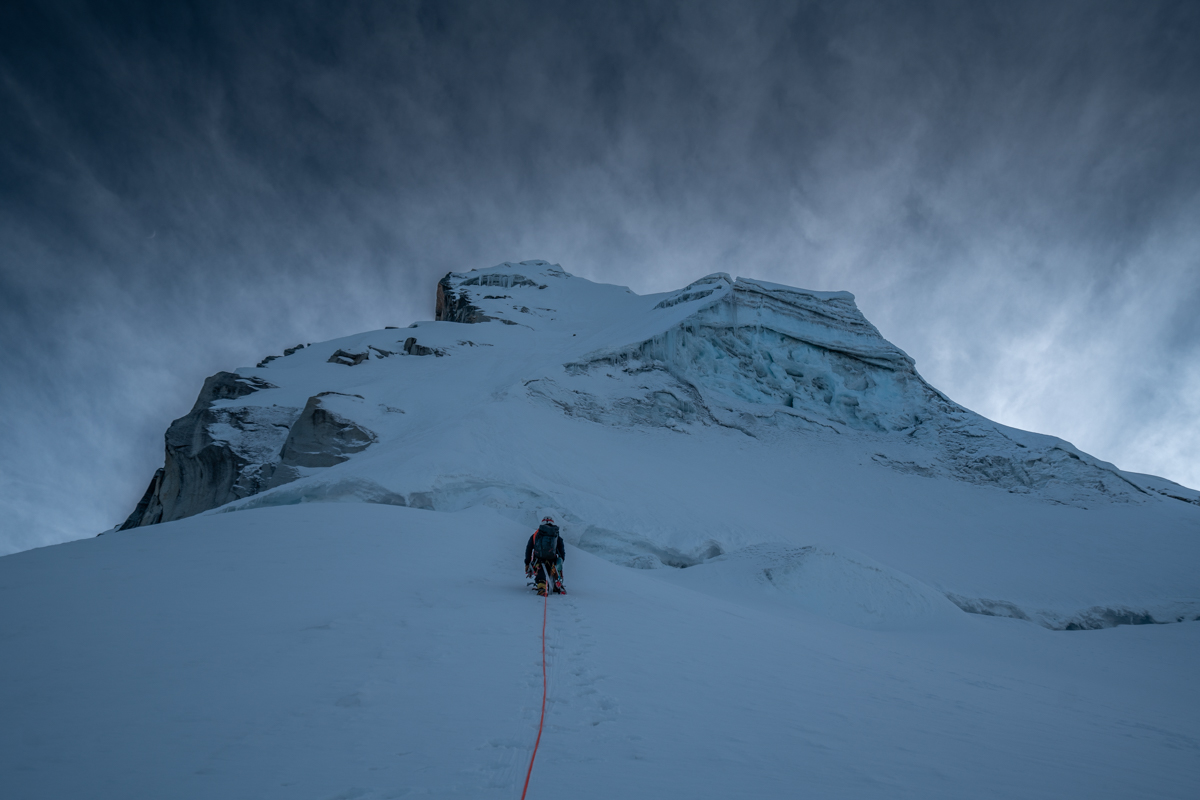
When we finally emerged from the wall and reached the flat part of the glacier, we already got the first light of the day. The approach had taken much longer than planned due to the technically challenging route we had unknowingly chosen and Ben’s forced break. However, Ben was feeling better, so we decided to continue. For a short time, we had easy terrain in front of us and could enjoy the spectacular view of the South-East Face of Shaqsha Sur. The light also bathed the entire scene beautifully—a moment that makes you love being in the mountains.
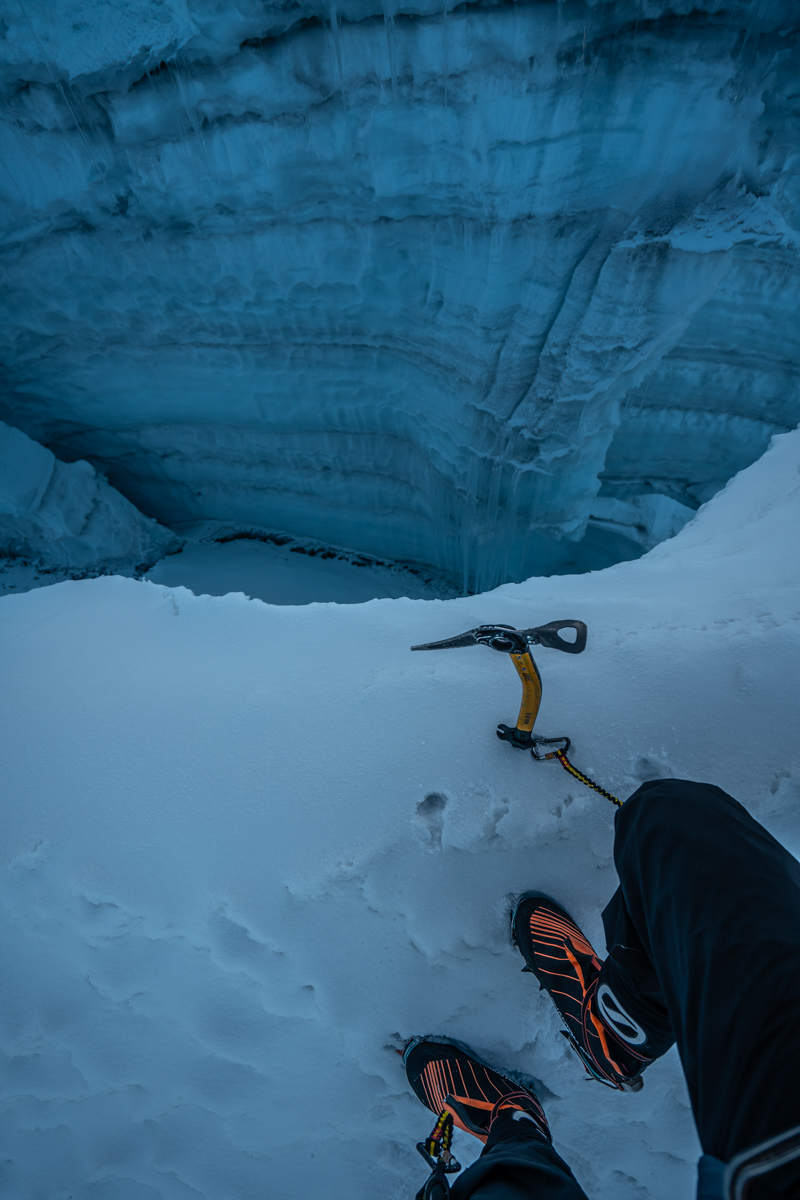
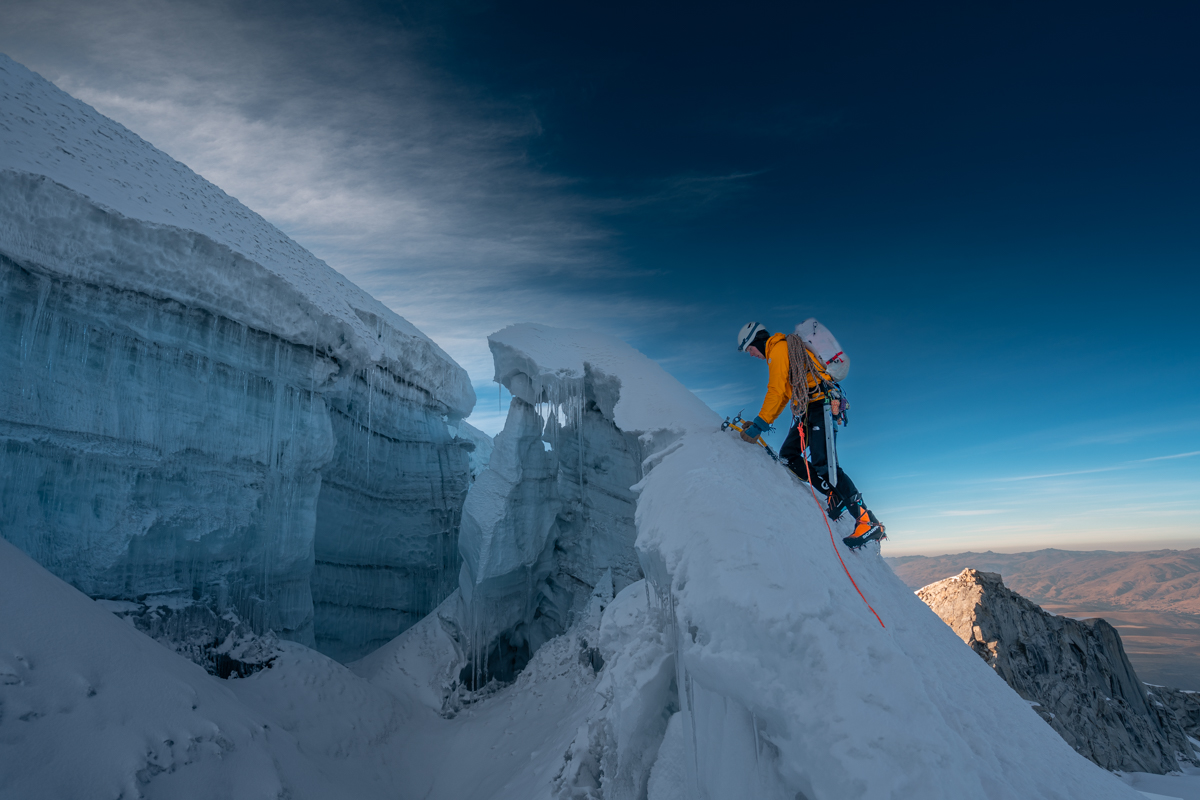
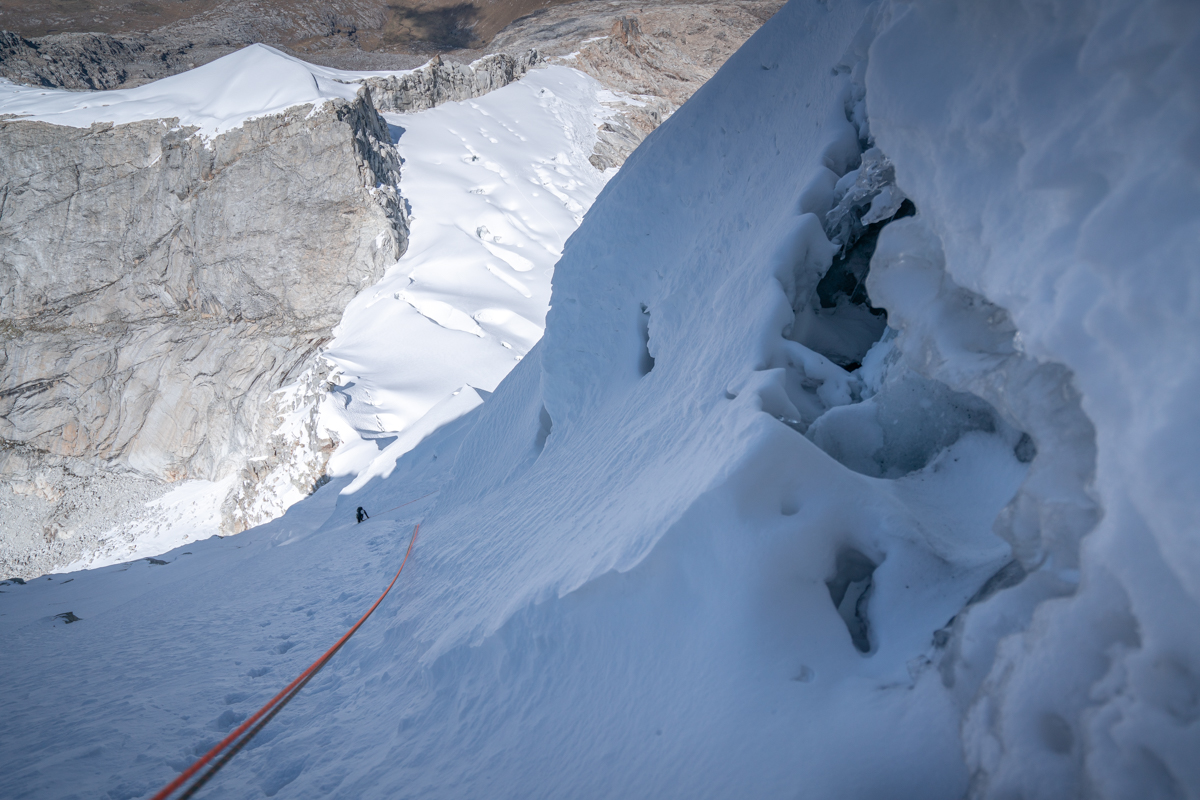
Then the terrain steepened again. Suddenly, a huge crevasse appeared in front of me, which we had to bypass, making it even more spectacular from the side. After that, we went straight up to the bergschrund.
The bergschrund extended almost across the whole face. Only on the right side did it look like it could be bypassed easily. But we reached it on the left side, where there seemed to be a small snow bridge. We attempted to cross the bergschrund via this bridge. I tried to cross, but without success. When I stood on the bridge and tried to find a hold above it with my ice tools (without success since it was all loose, deep snow but nothing stable), the bridge collapsed. Fortunatly, it only sank a few centimeters, as the piece that had broken off became wedged in the crevasse. Still, I moved to the right side of the bergschrund to try again. The snow bridge there was less steep and held my weight, so we could finally start climbing.
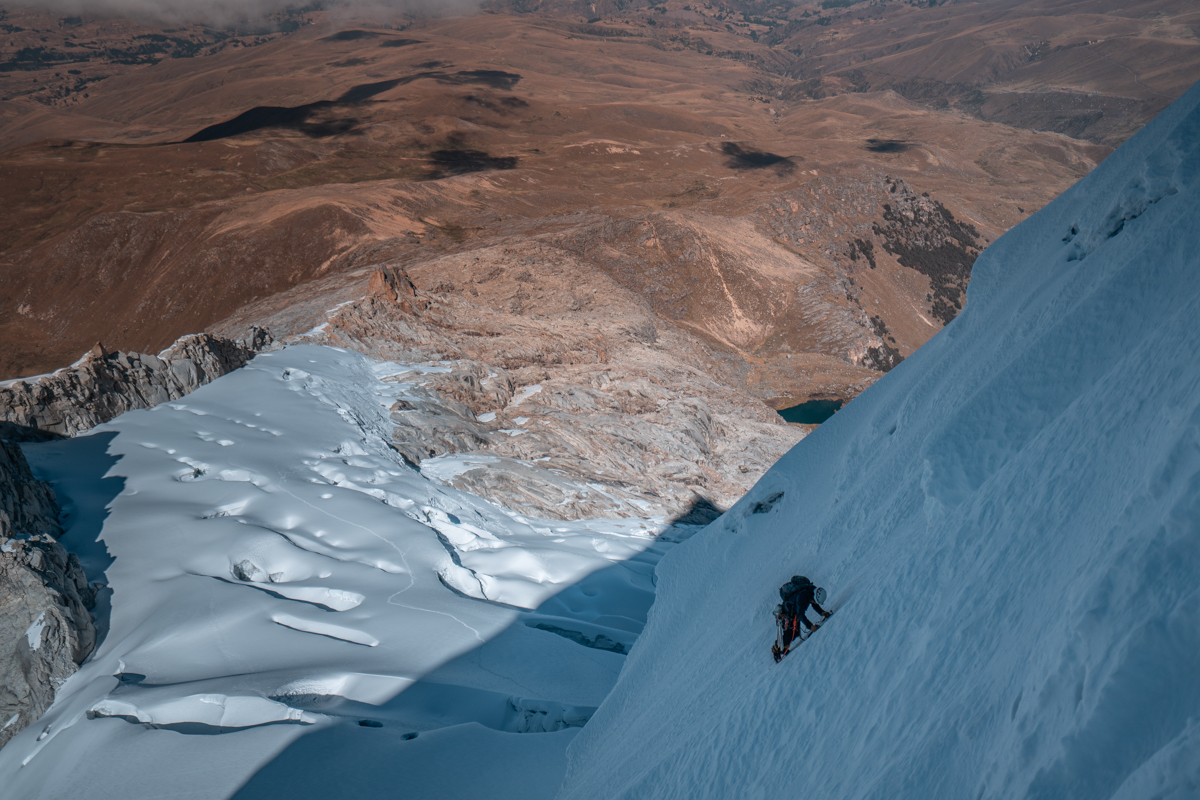
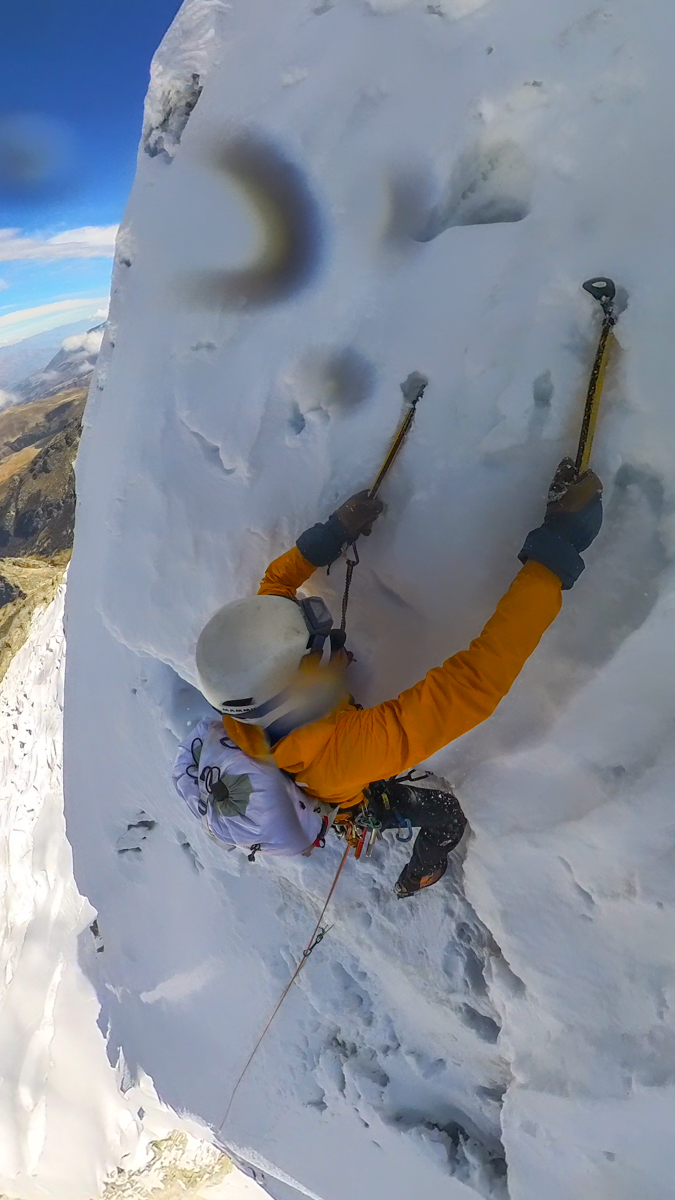
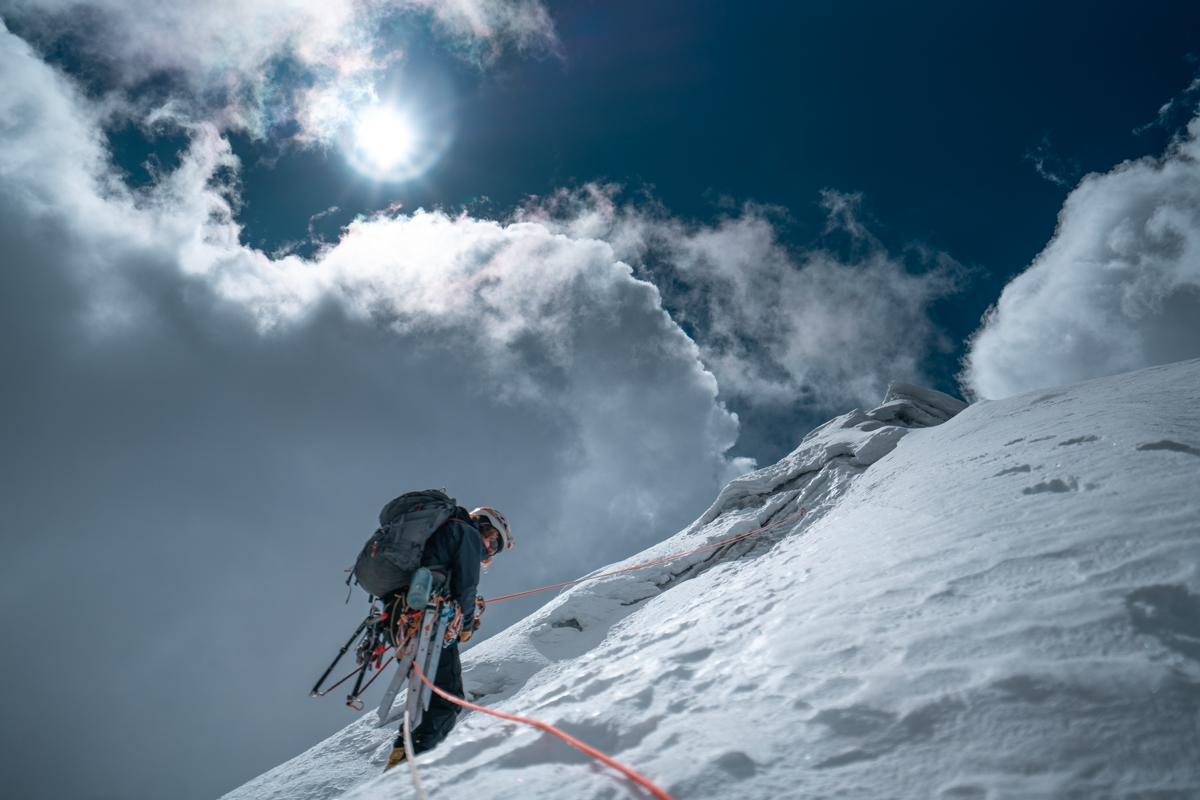
We climbed simultaneously and encountered very variable conditions. Some sections had decent firm snow, but large parts of the face were covered in deep powder, so I had to rely almost entirely on my feet, as the ice tools often didn’t help. When I ran out of snow anchors, I pulled Ben up, but he didn’t want to lead from there, so I took all the remaining protection and continued. I was now in a sort of gully with an ice ridge on the left—perfect, as I could place ice screws along it.
Higher up, I reached the first of three key sections: steep, hard ice surrounded by extremely steep powder snow, making the ice unavoidable. The second ice section was slightly overhanging, consisting of an ice bulge I had to climb over. The challenge was that above the bare ice, there was only loose powder snow to find what made do some weird moves to come over the bulge. Falling wasn’t an option as we were climbing simultaneously, but after a while and a bit higher, I found an ice tool placement and overcame the obstacle completly. Shortly after, I reached the first sub-peak. A short ridge, followed by the last steep ice section, led to the next sub-peak. From there, only a few meters remained to the main summit, but there was a deep drop of smooth rock ahead. We decided to call it a day at the last sub-peak. While we could have rappelled the rock to reach the main summit, climbing back up would have been impossible. So it didn’t seem like a good option. We had successfully climbed the South-East Face, which was our goal and now just around ten vertical meters where missing. After a short break, we started the descent, rappelling the entire face down to just below the bergschrund—smoothly and quickly.
A few days later, I went to the office of the mountain guides in Huaraz to ask how they go to the main summit. But they told me that it is not safe to make the final meters so also the guides only went to the last pre-summit, where we have been.