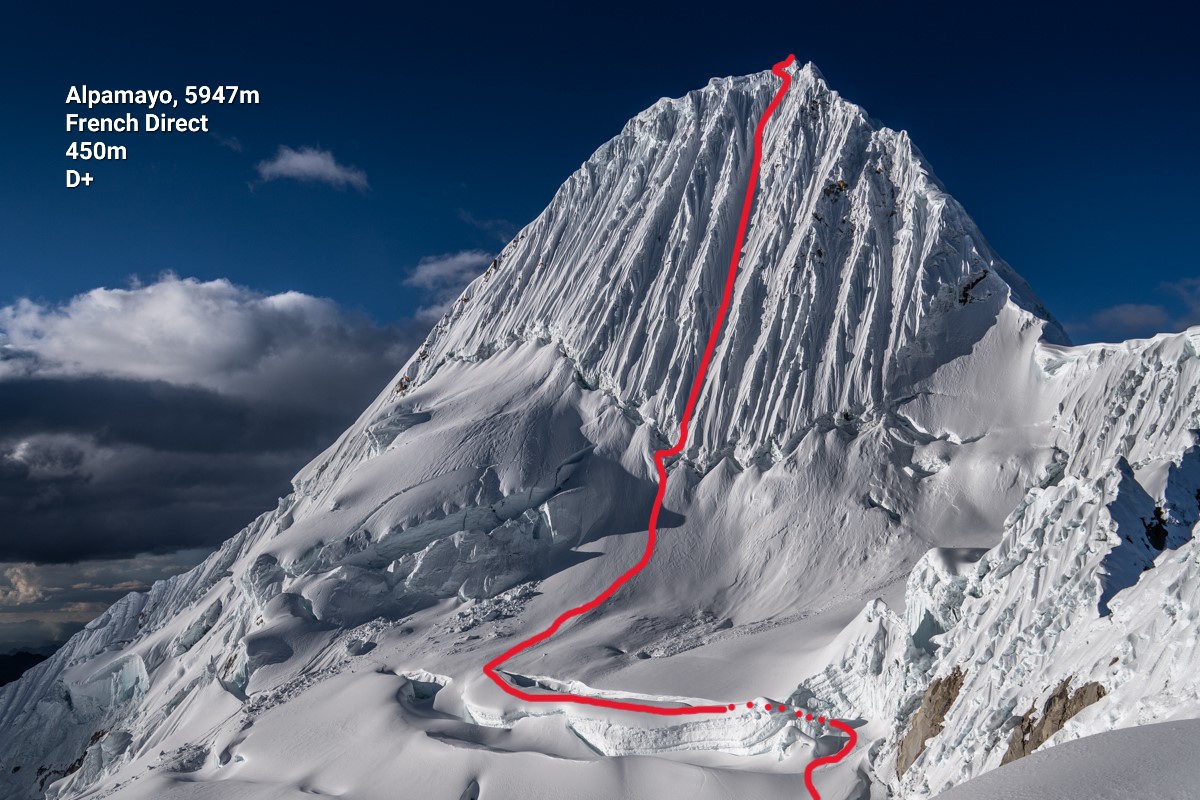
The weather forecast for the coming days in the Cordillera Blanca made us think a lot about what we could do next. For several days in a row, bad weather had been predicted for the entire following week. One evening, Luca and I were sitting in front of the reception at the Big Mountain Hostel in Huaraz when Ben (a German we had met there) came up the stairs and said: “There’s supposed to be a good weather window on Alpamayo on Sunday.” We checked the forecast again, and indeed, it had improved. However, since the weather in the Cordillera Blanca at that time was extremely unstable and the forecast could only be trusted in general terms, we decided to plan the next day as a preparation and organization day, and if the forecast still looked good the following evening, we would set off early the day after. Ben, who was traveling alone, wanted to join us, and just as we were talking about it, Joost, a Dutch climber also traveling alone, came up the stairs and said he would also like to join. Perfect. That made four of us, so we could form two rope teams of two, which is much more pleasant than climbing as a team of three.
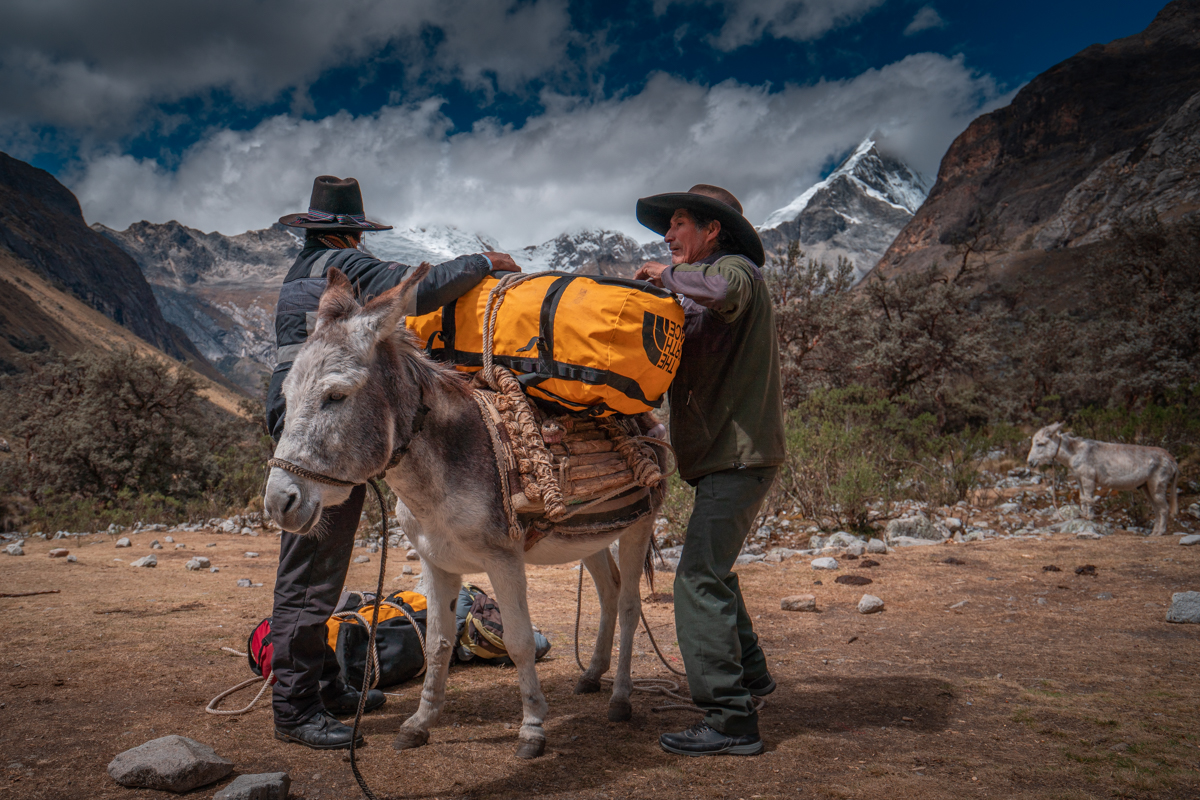
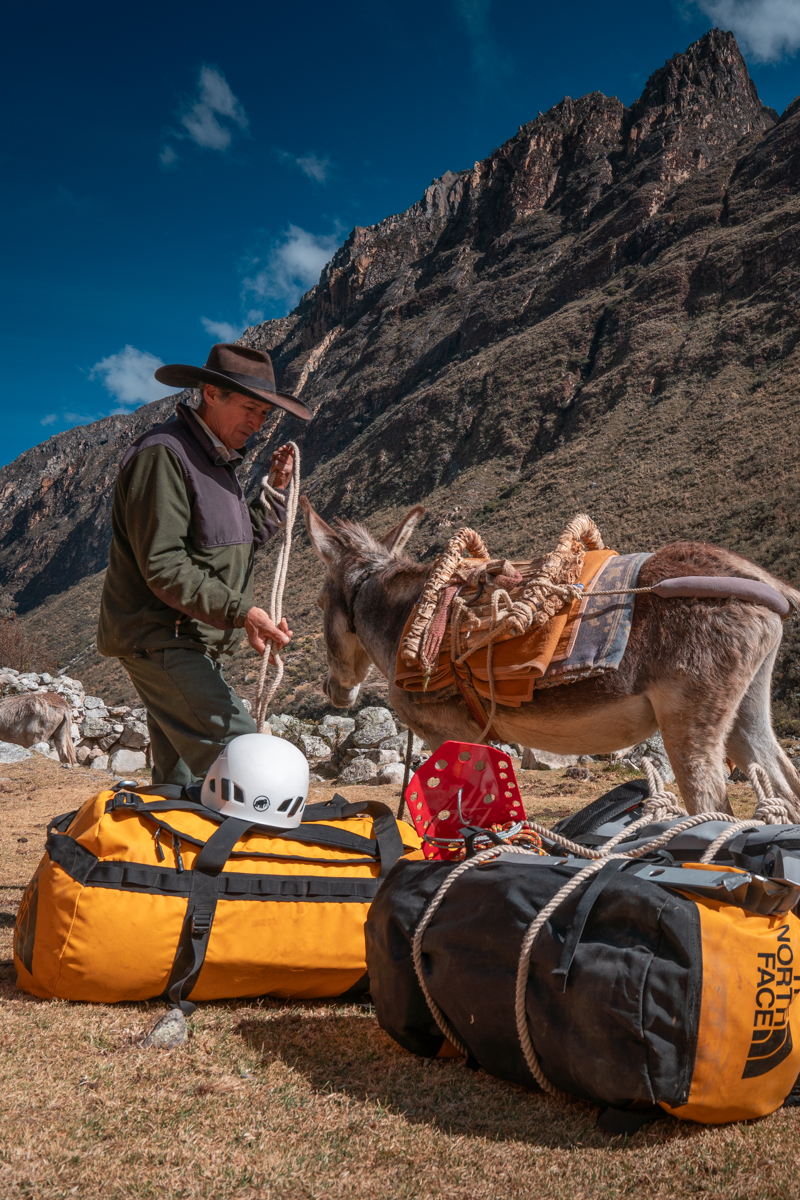
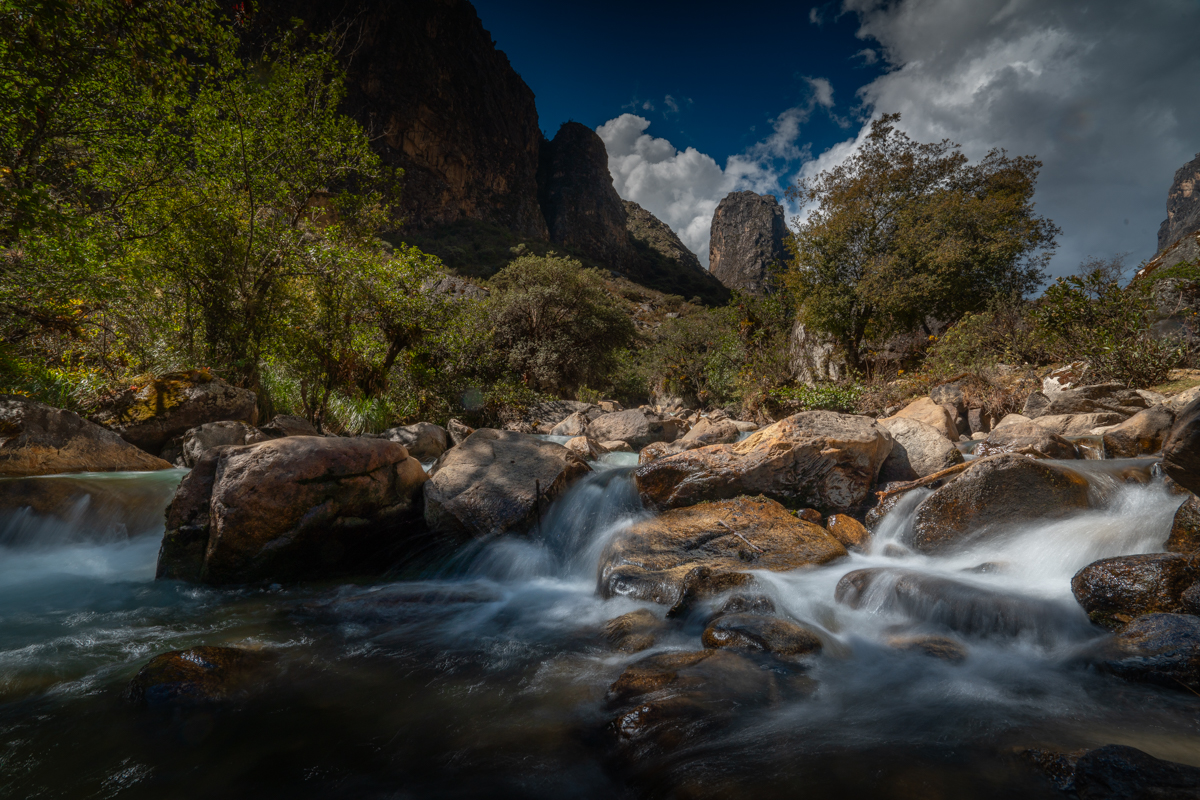 The next day, the forecast looked even better (one clear day followed by a mix of sun and clouds—the trend was promising), so we went into full preparation mode. From Cirilo, our arriero from the Ishinca Valley, I got the contact of a friend of his who was also an arriero and lived in Cashapampa, the village from which we wanted to start our tour. He was available to accompany us with his donkeys up to Alpamayo Base Camp.
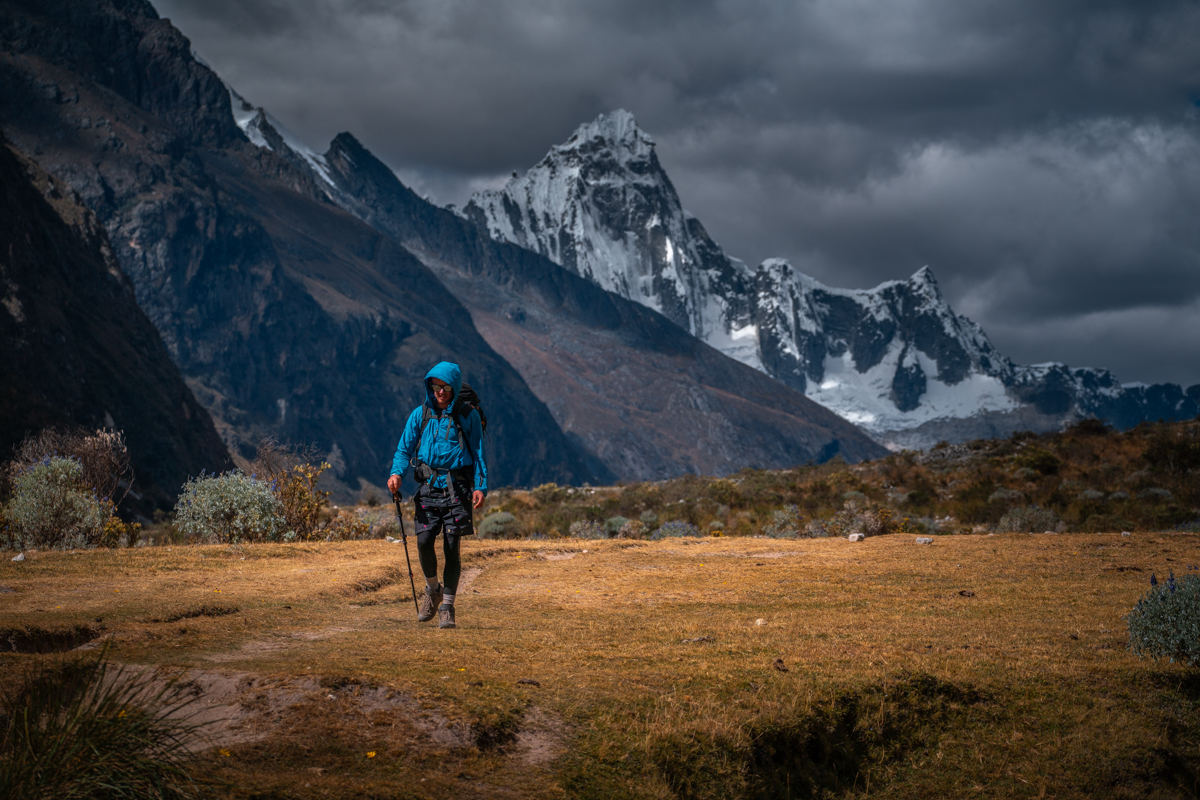
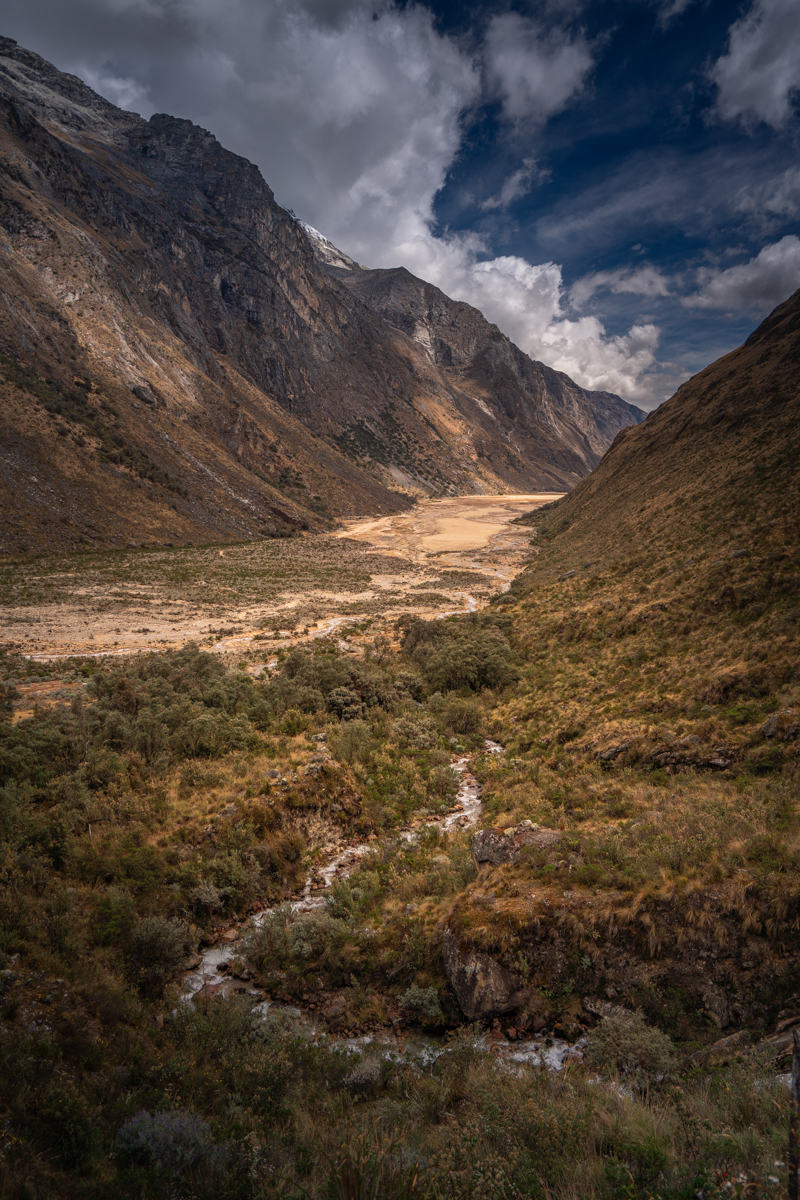
The following day, we took a collectivo from Huaraz to Caraz, and then another from Caraz to Cashapampa. In this small village at about 2,900m, we met Arnuljo, the arriero. We had lunch with him and his wife before loading our gear onto the donkeys and finally setting off into the Santa Cruz Valley. It felt incredible to be hiking the same trails again after four years, only this time with more people and with the goal of climbing Alpamayo.
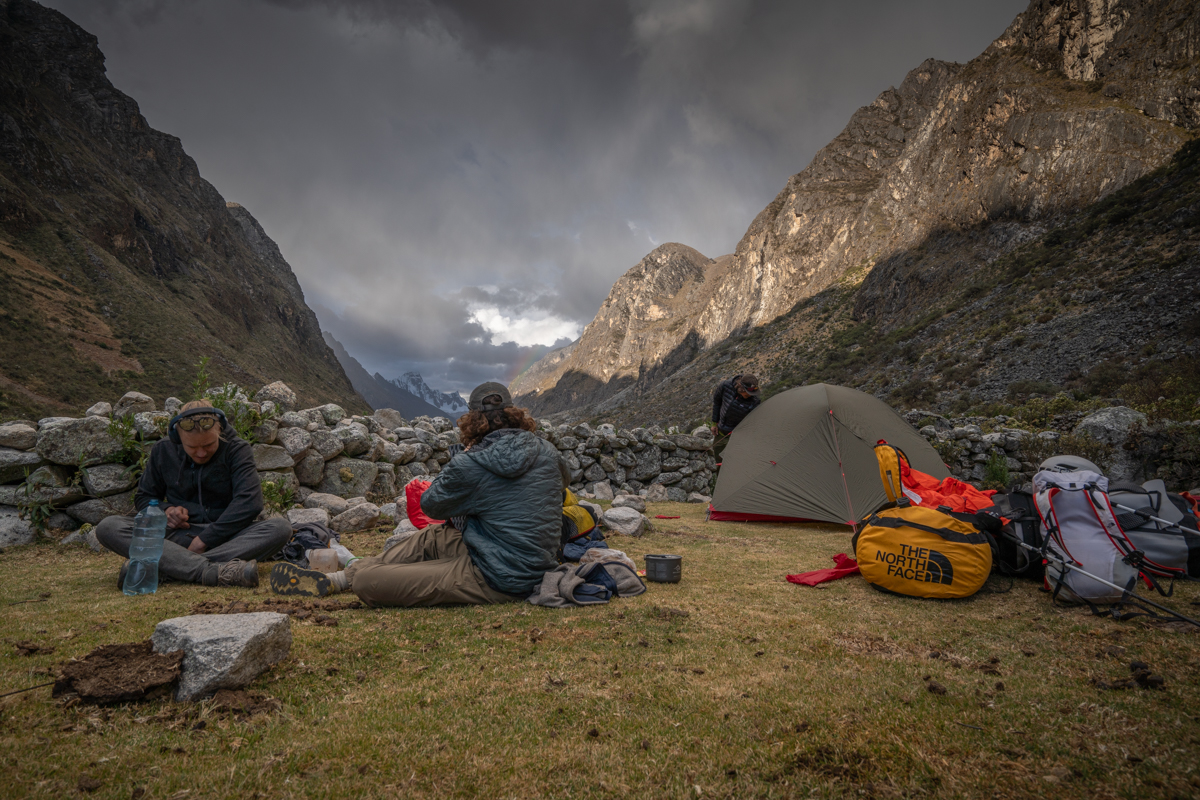 We wanted to take it easy on the approach to base camp—to save energy and to avoid arriving unnecessarily early before our weather window. So on the first day, we hiked 10km with about 900m of elevation gain—roughly halfway to base camp. As we set up our tents and began cooking, it actually started to rain a little—the first rain I had seen so far on this expedition. Toward Alpamayo, the weather looked much worse: black clouds, rain, and lightning.
Luckily, the next morning was much better. After a relaxed breakfast, we set out for Alpamayo Base Camp. It was still 14km with about 600m of elevation gain, but like the day before, the trail through the Santa Cruz Valley was beautiful and pleasant to walk, so we made quick progress. At base camp at 4,300m, several other tents were already set up, so we knew we wouldn’t be alone on the mountain.
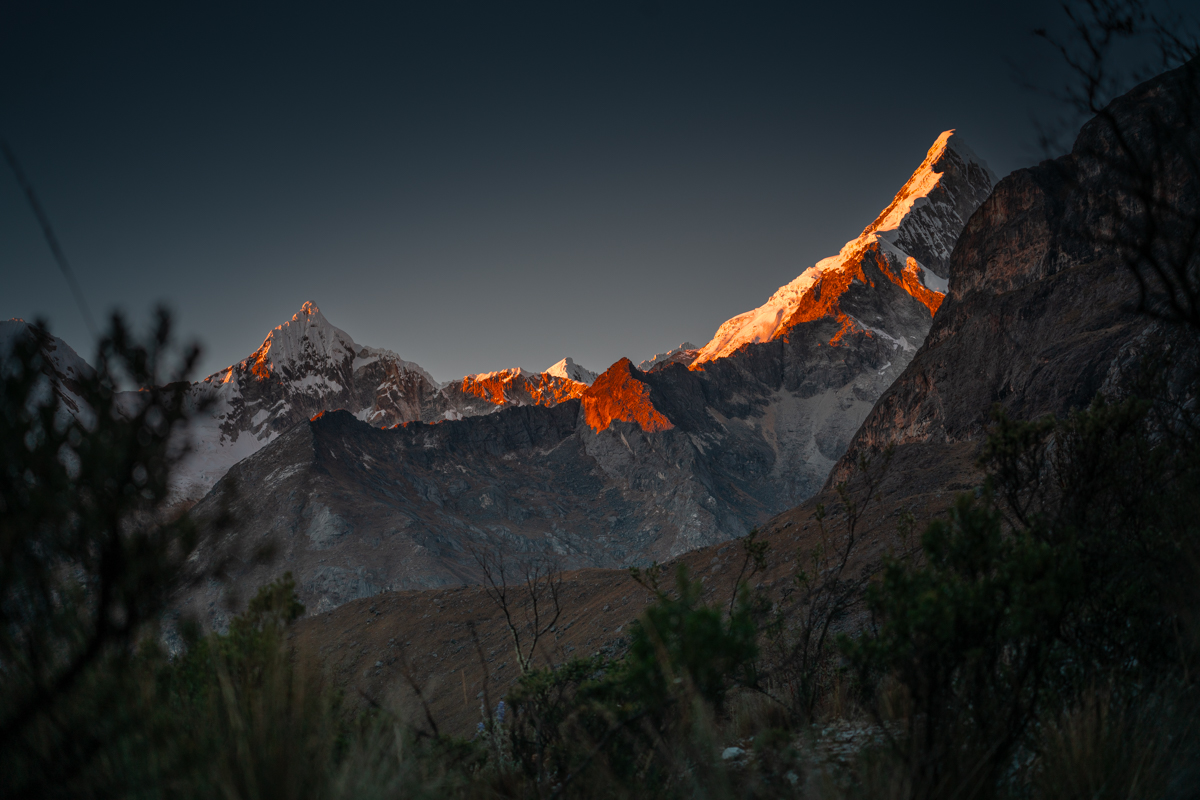
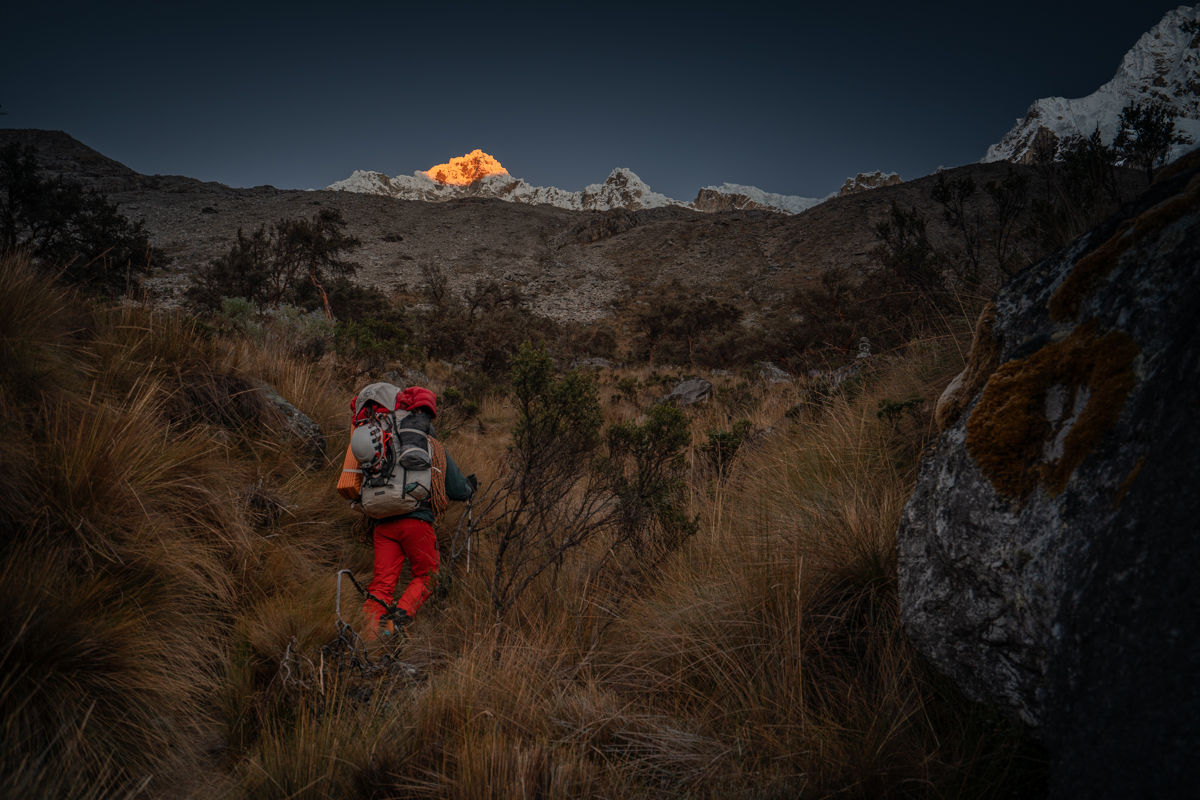
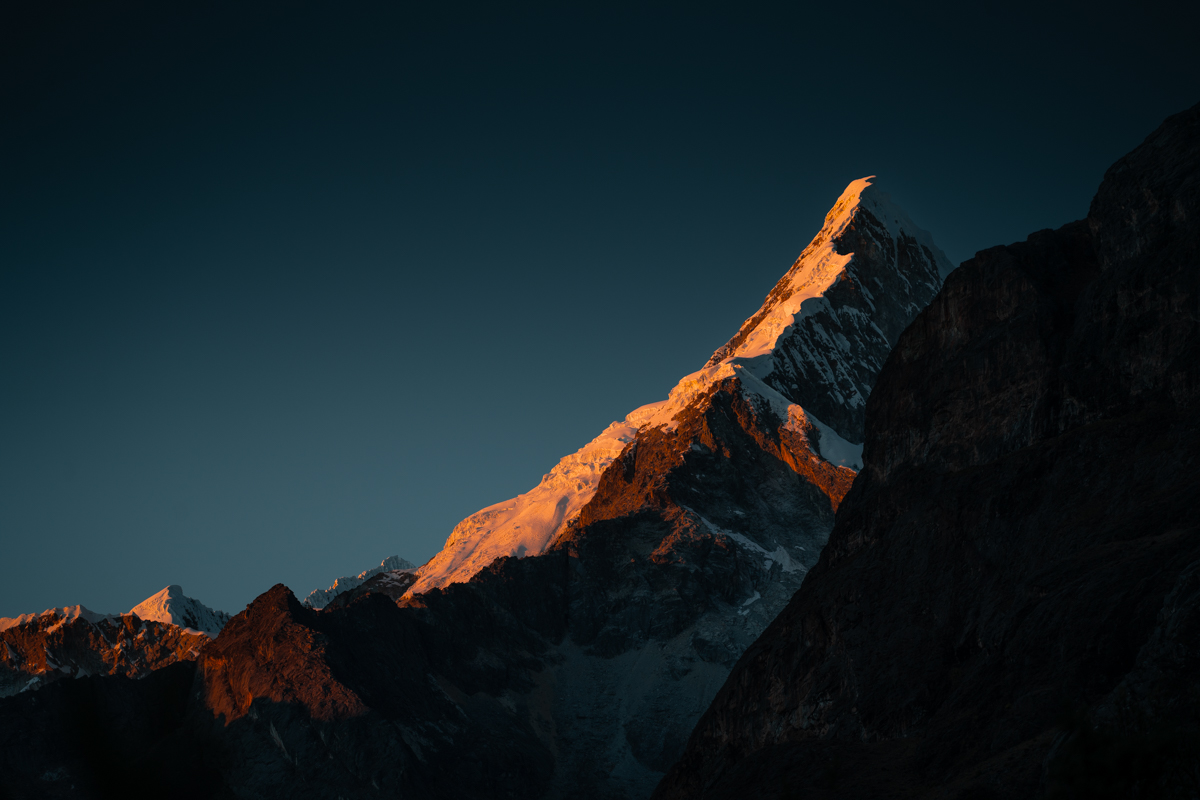
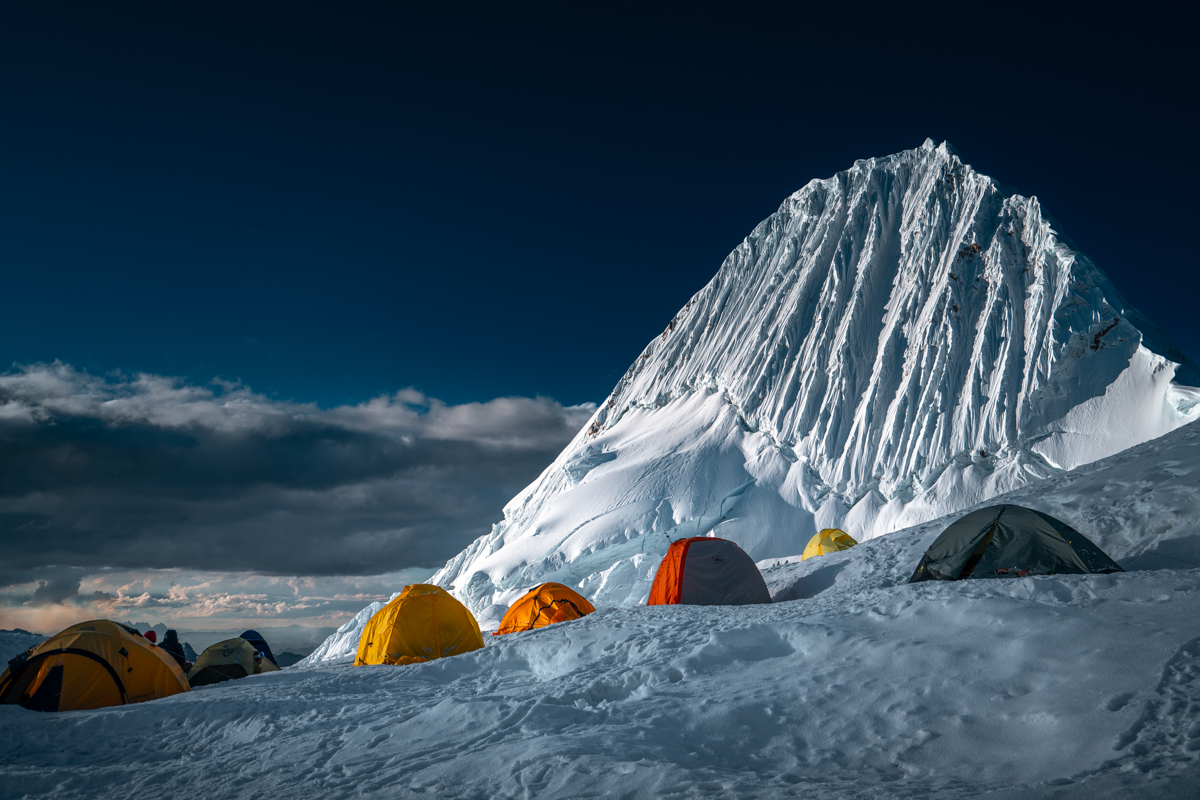
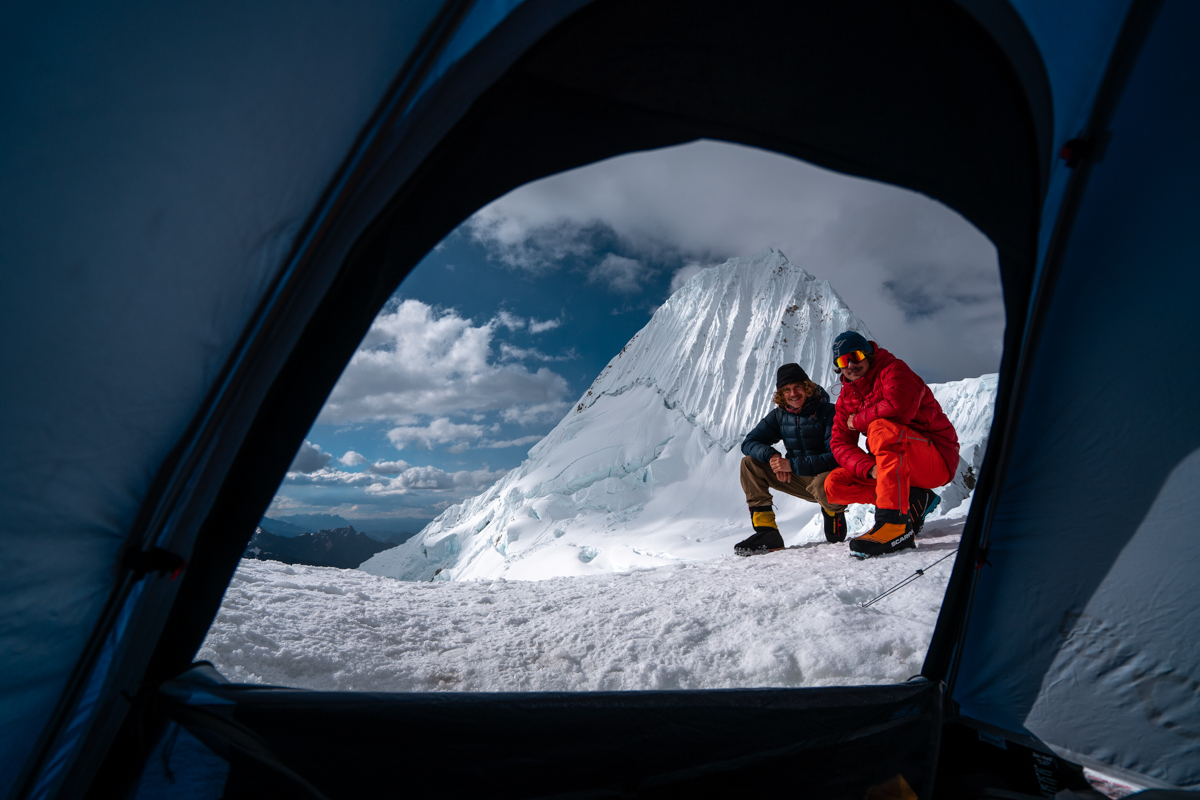
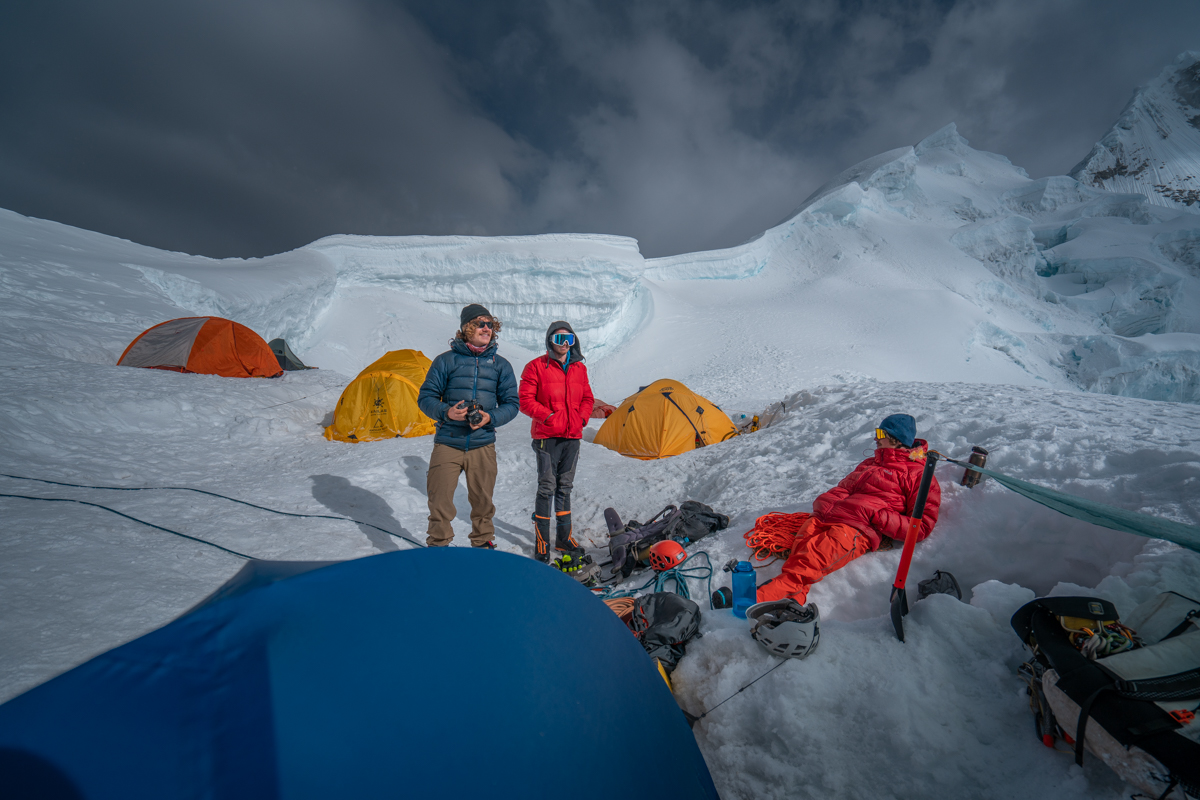
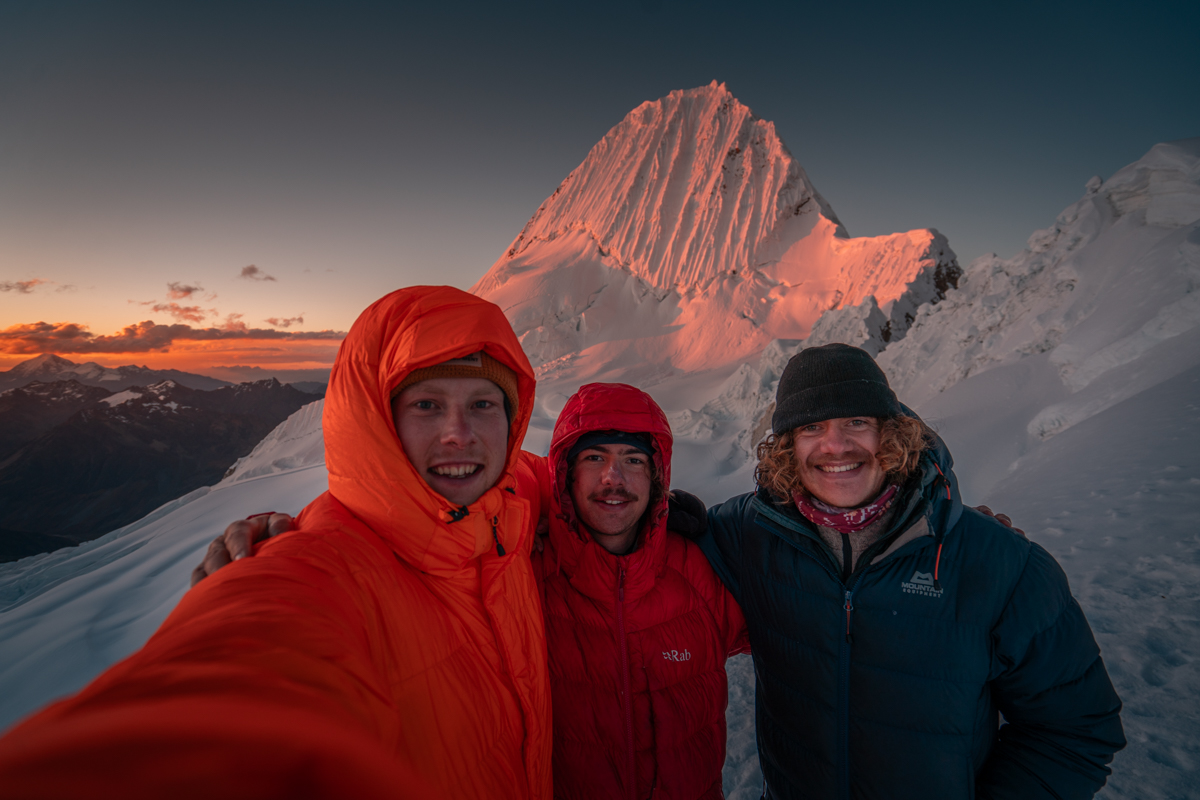
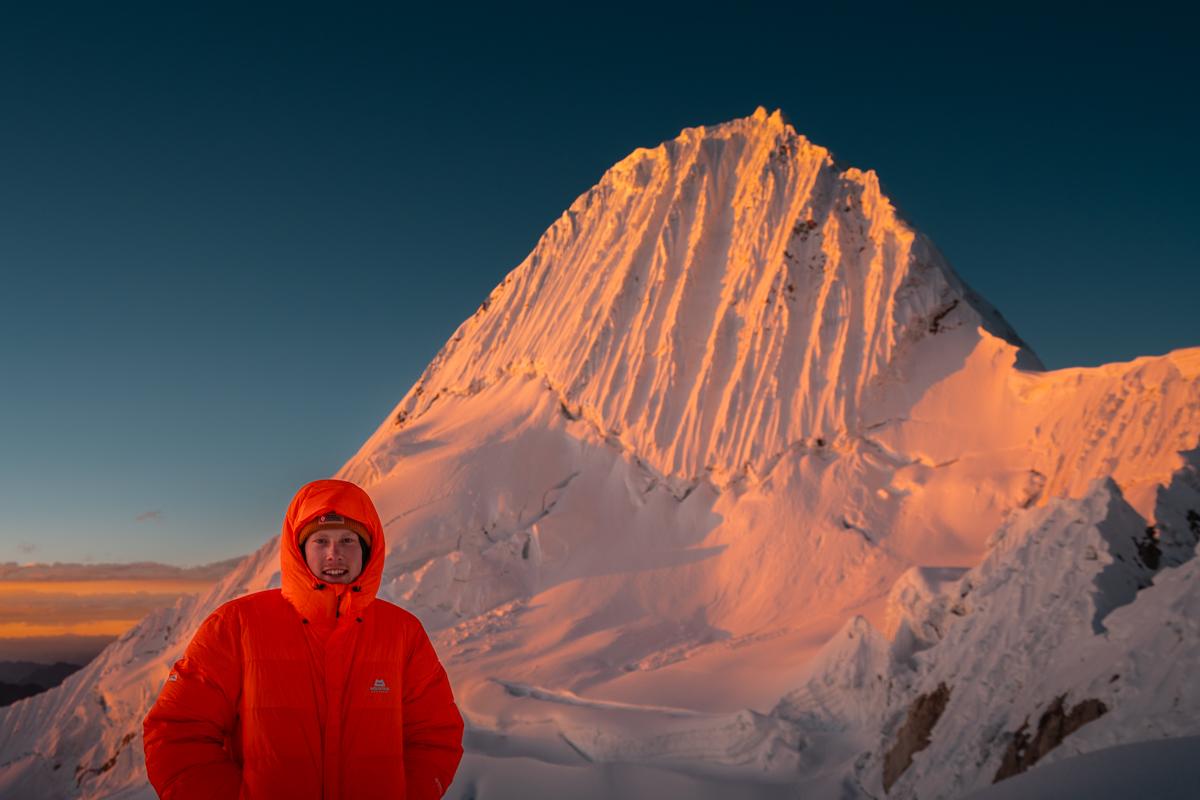
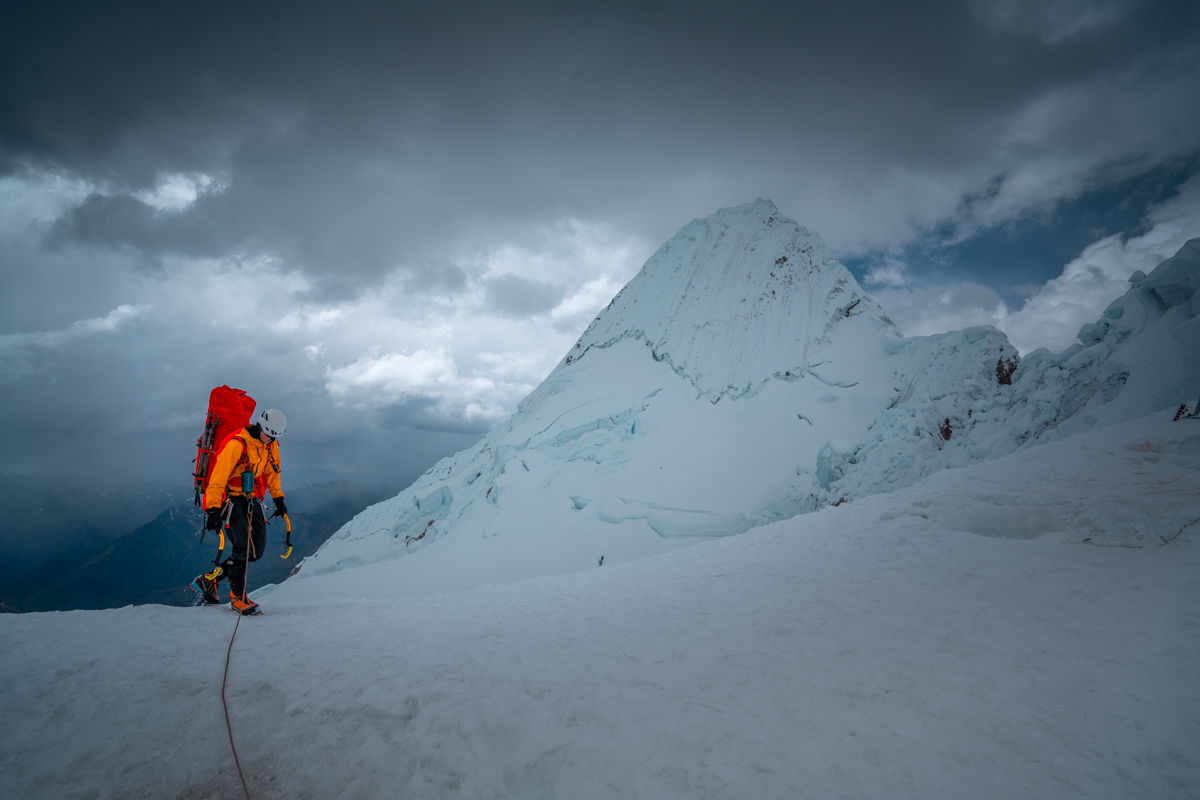
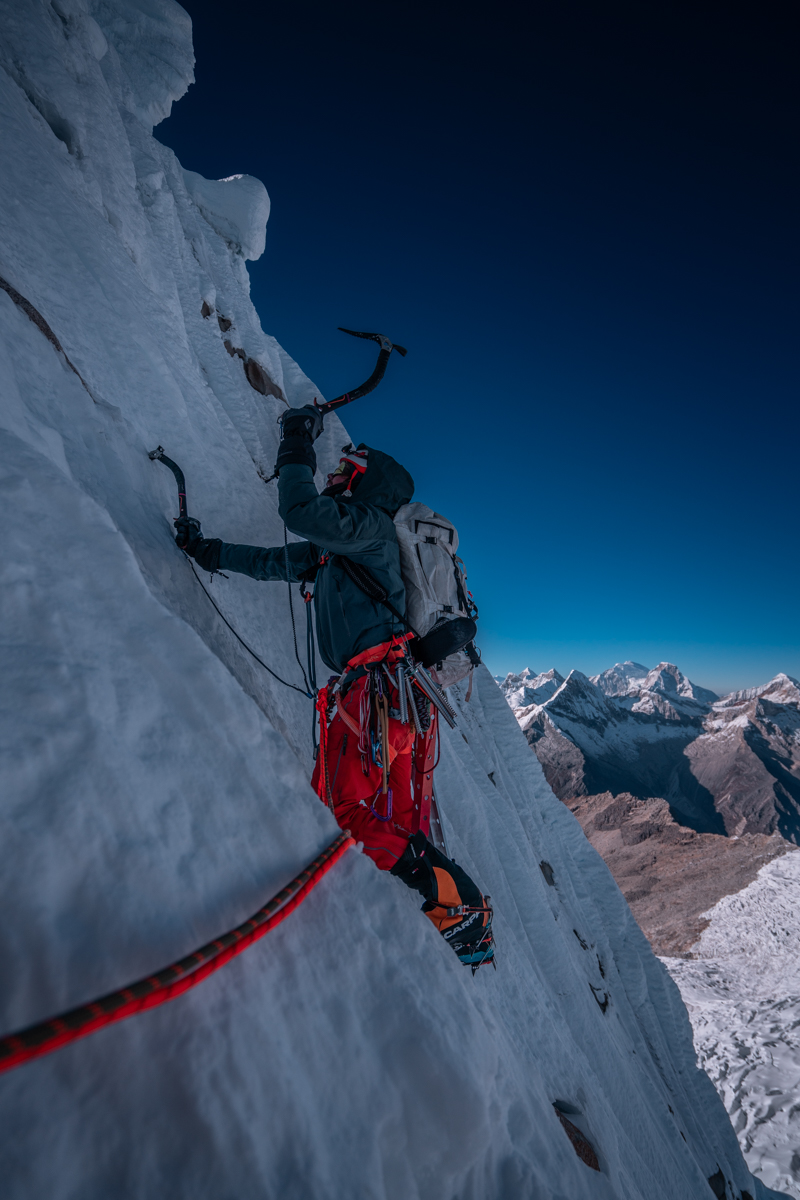
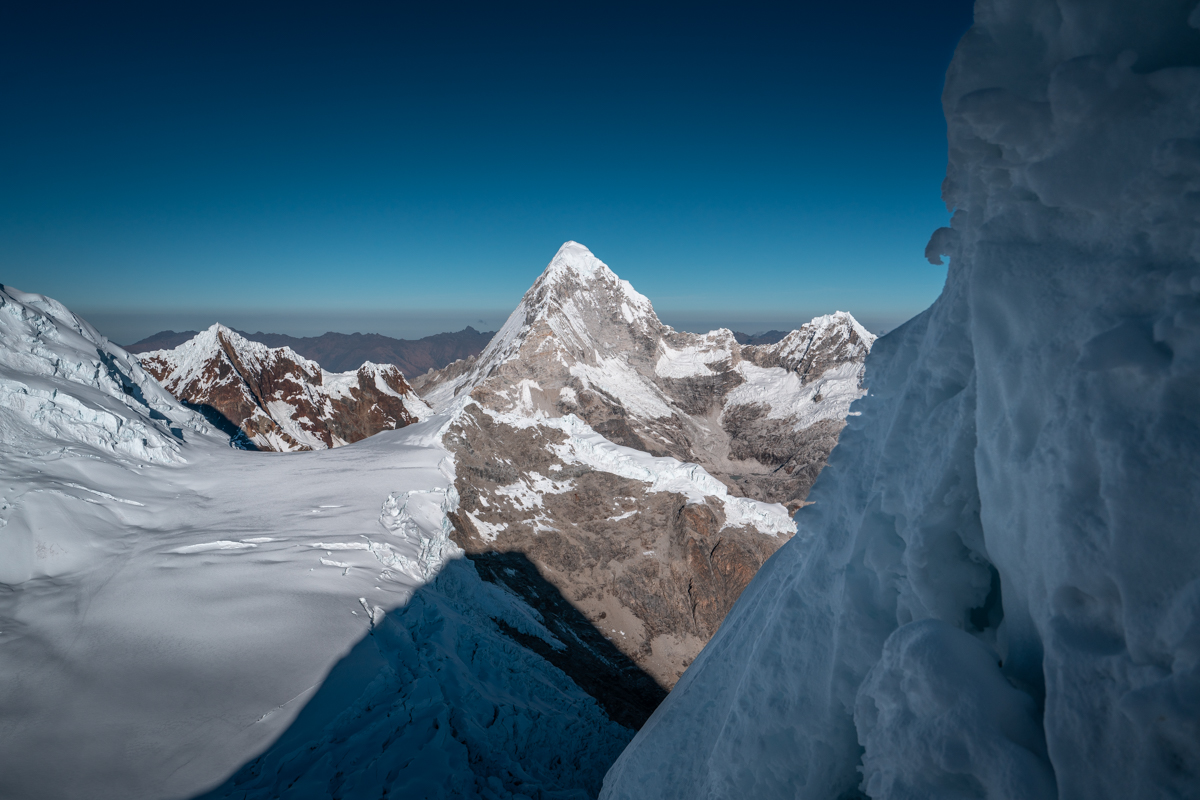
That afternoon, we finally had our first (and only) proper meal of the day, and I realized how exhausted I was from two hard days and no sleep. We had planned to attempt Quitaraju the next day, but at that point, it was unclear whether we’d actually do it. Joost had already decided he wouldn’t join, feeling that Alpamayo was enough for this trip—which was completely fair. The other three of us agreed to set an alarm at midnight and decide based on how we felt and on the weather. So we went to bed before sunset. But again, I struggled to sleep. After lying awake for what felt like forever, I checked the time—it was 10pm, and I still hadn’t slept. Two hours later, when the alarm rang, I remembered having had a dream. So I must have slept a little, even if it didn’t feel like it.
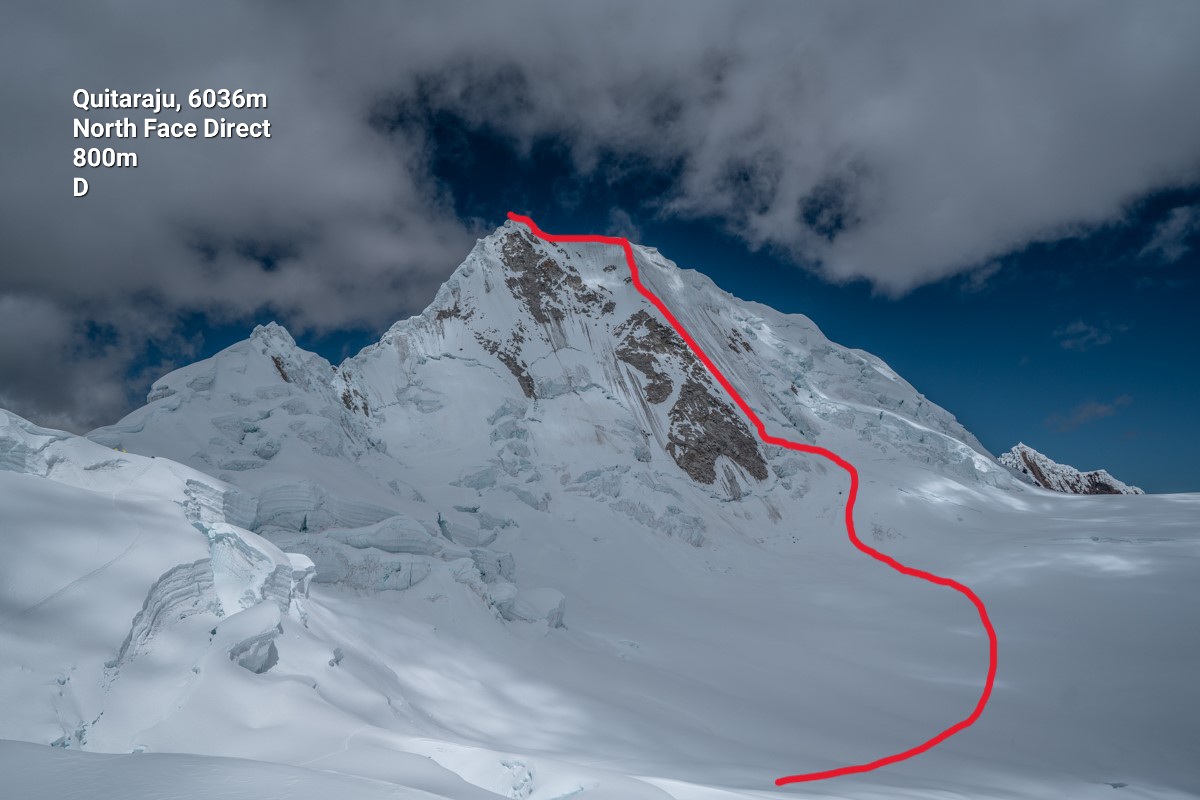
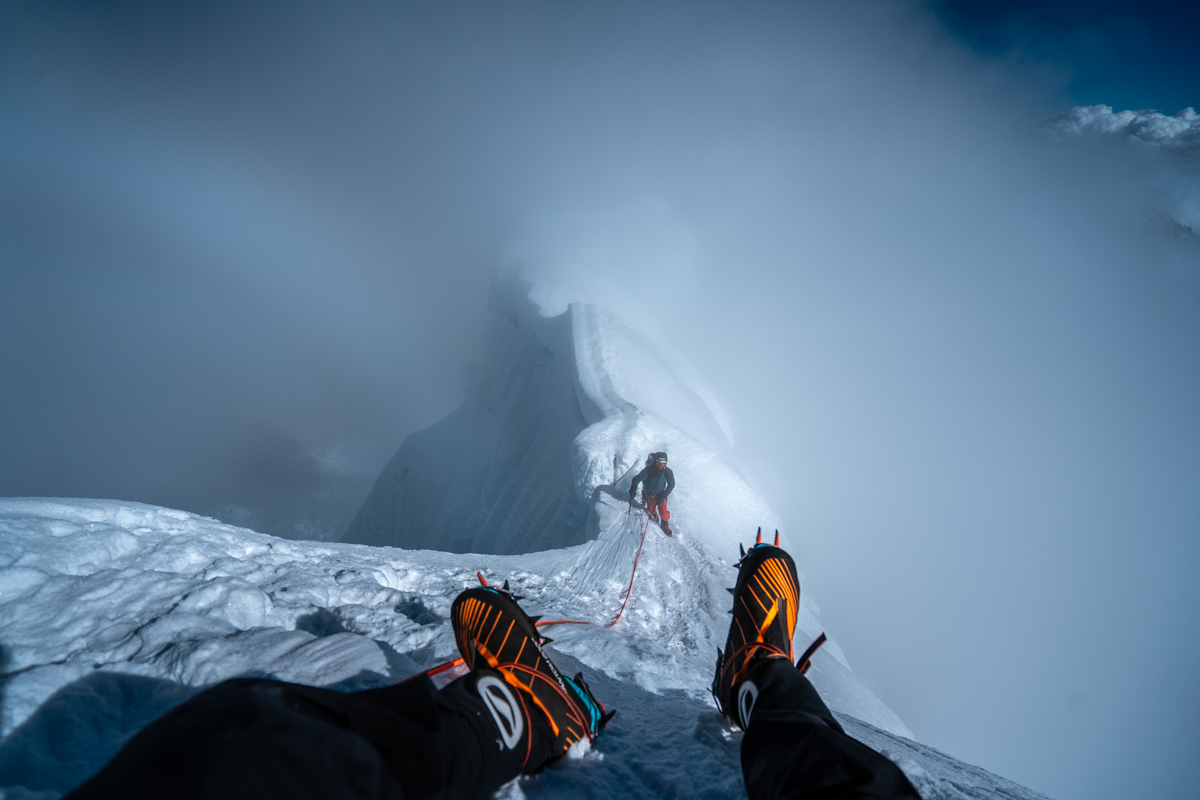
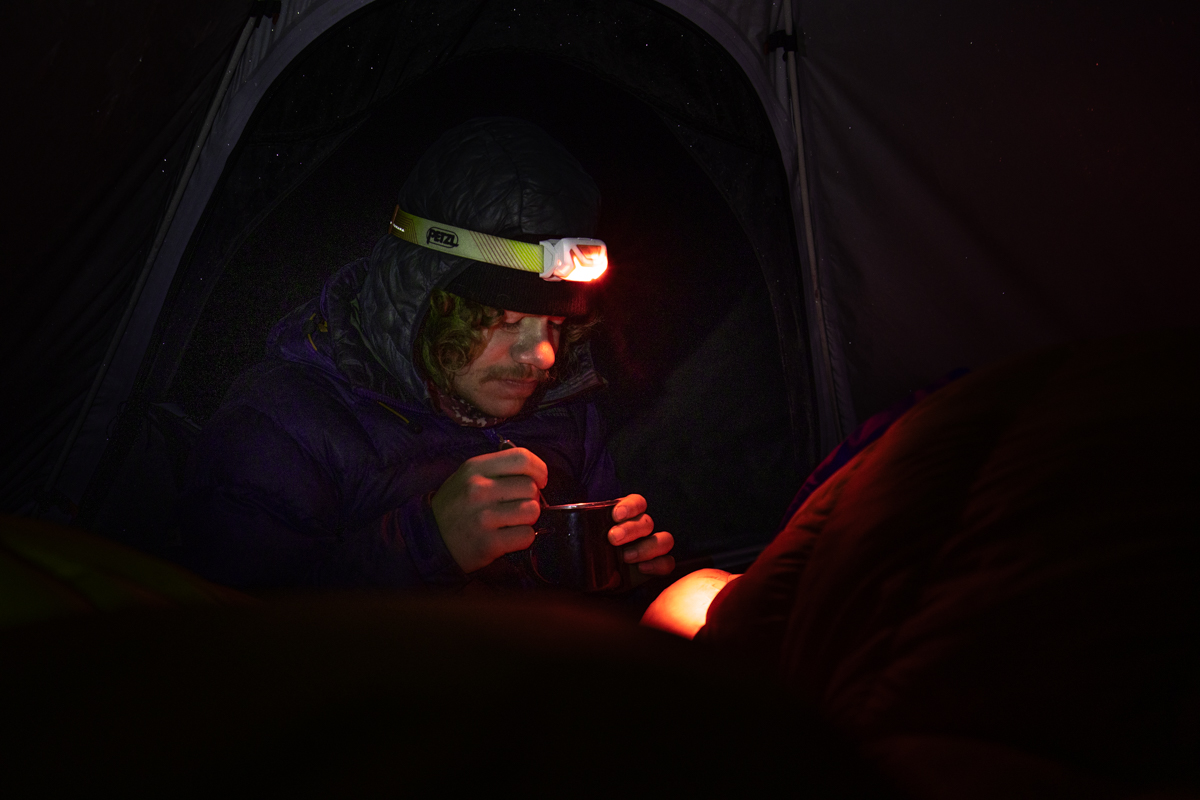 In the tent, the mood was tired and undecided. I tried to eat some peanuts, but it went very slowly. Then, after a long silence, we agreed: we’d give it a try. So came the familiar high-camp routine: put on (lots of) warm layers, crawl out of the sleeping bag, put on boots, leave the tent, melt snow, put on harness and gear, helmet, crampons. But in the end, only two of us geared up in front of the tent. Luca was still in his sleeping bag and said he wouldn’t come. So when Ben and I had our bottles filled, we roped up and left camp at about 1:45am. First, we followed the same route as the previous night toward Alpamayo. But at the point of the route toward Alpamayo, where the ascent began, we left this route and continued across a large glacier plateau that we had to cross to reach Quitaraju. The weather was still a bit rough. While visibility on the glacier was decent, the peaks above us were still covered by clouds. As we progressed across the glacier, the slope steepened until we reached the bergschrund. By then, I was feeling much better and no longer tired.
At the bergschrund, I took the lead and quickly found a snow bridge to cross into the north face of Quitaraju. This time, we decided to climb simultaneously. That meant I didn’t build an anchor after 60m, but kept climbing, while Ben also climbed from the other end of the rope at the same time. We hoped this would save a lot of time since we wouldn’t have to wait for each other to finish pitches.
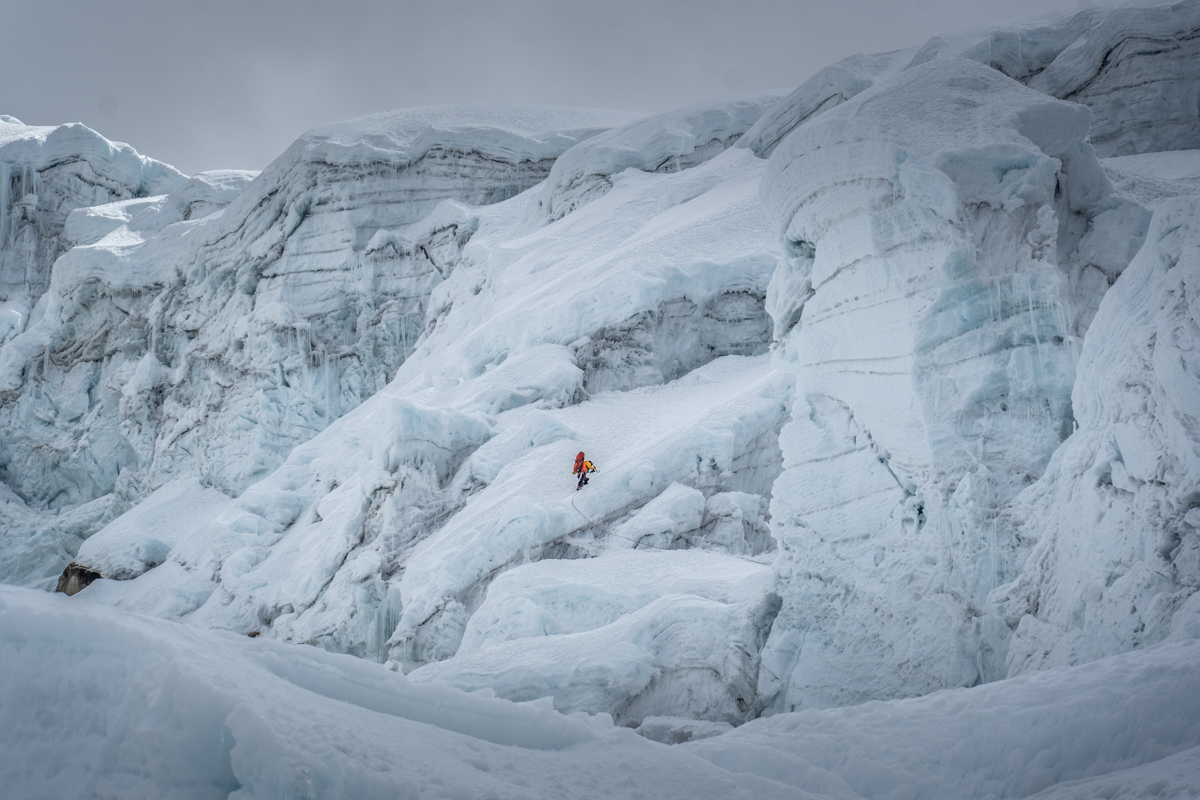
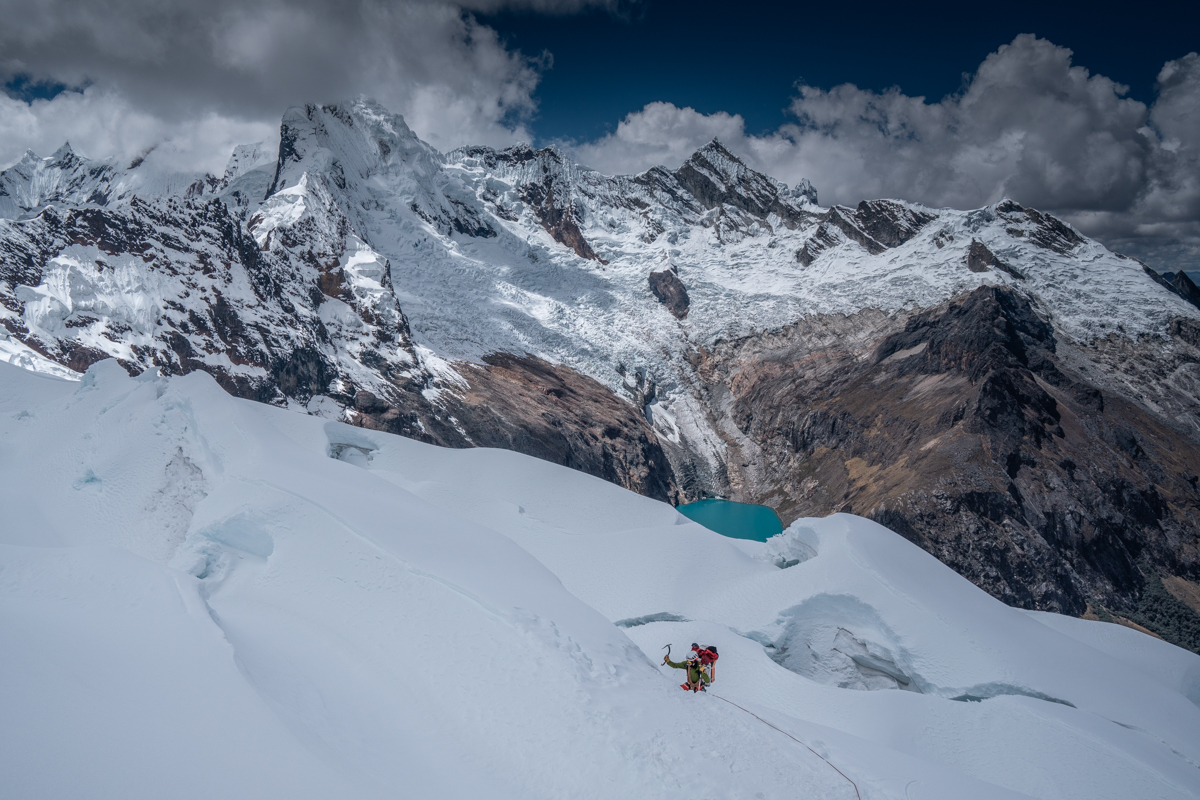
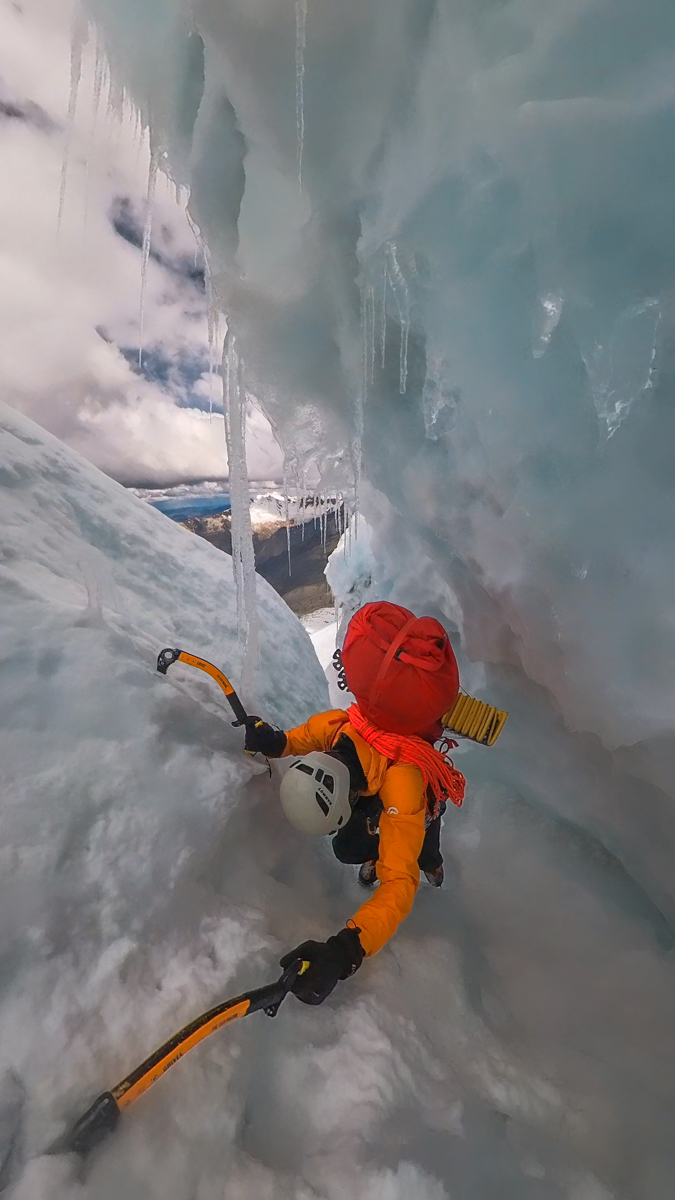
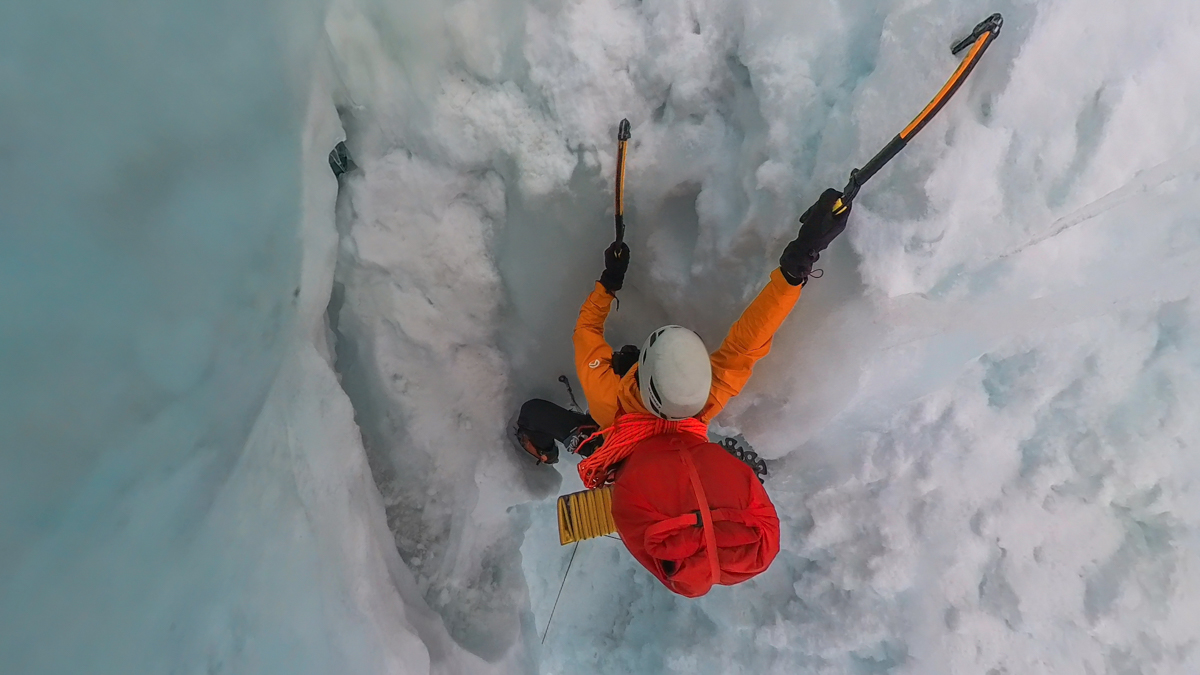
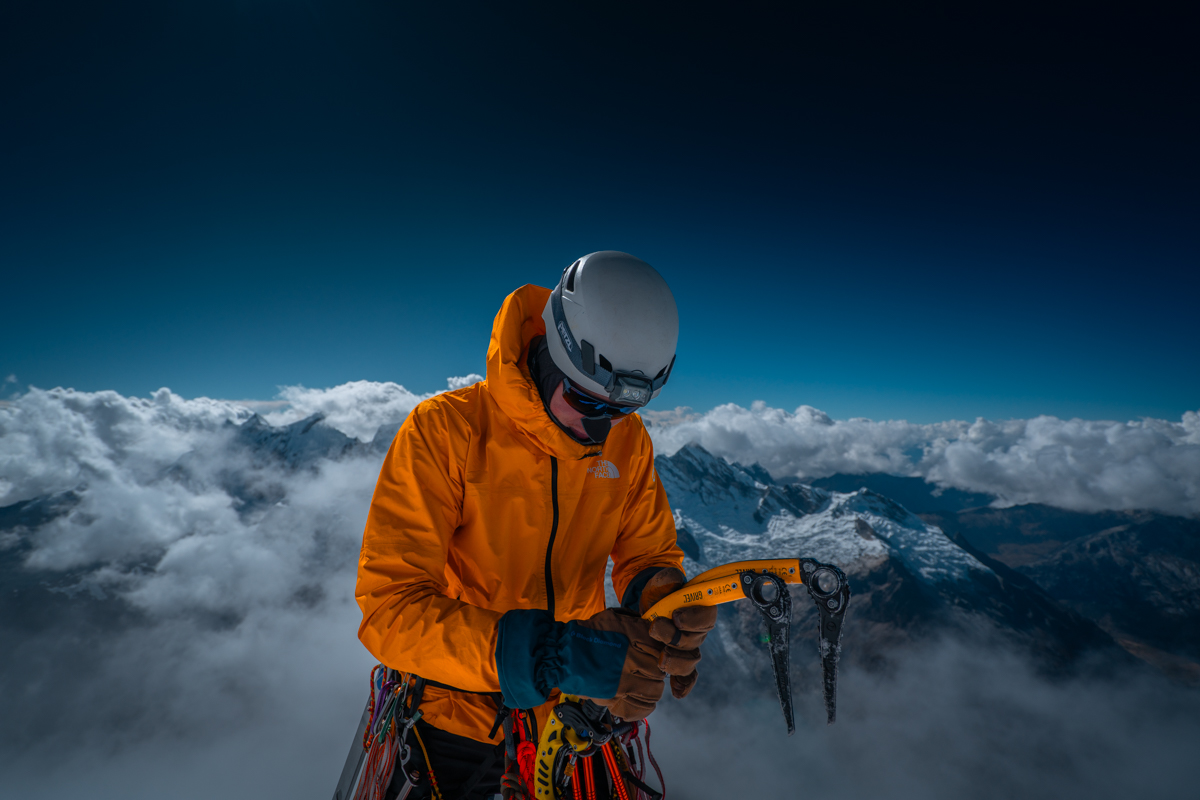
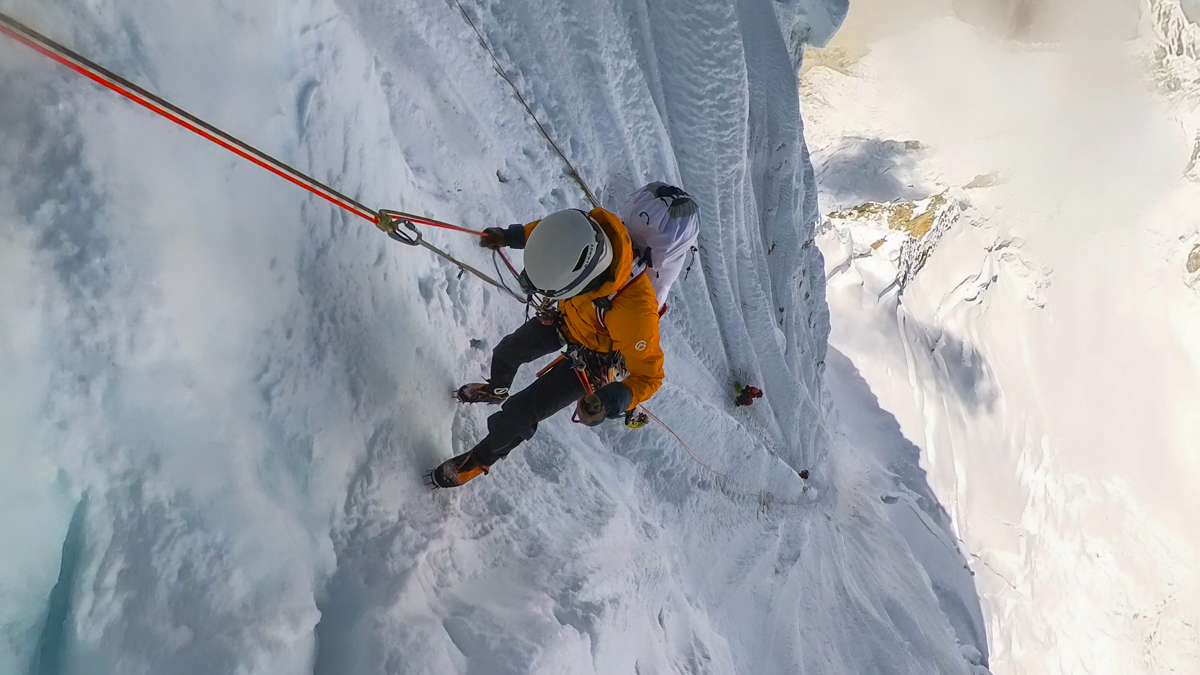
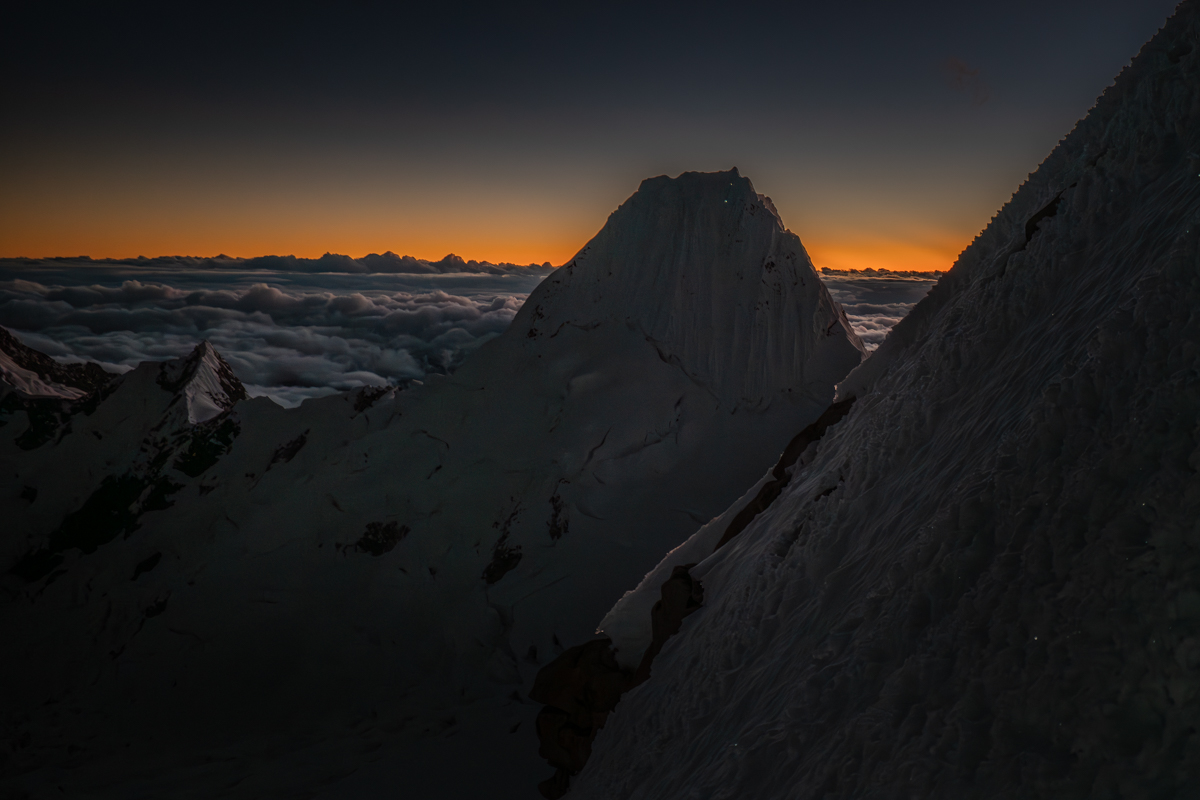 Conditions on the wall weren’t as good as on Alpamayo, but it was slightly less steep. In the lower part, I could still find decent ice for screws, but the higher we got, the less frequent those spots became. Since this was a north face exposed to the sun all day, the snow softened and got wet during the day, freezing again at night into very hard, icy snow. Too hard, often, for pickets. That meant sometimes I climbed 40m without the possibility to place a protection. It wasn’t too bad, though, because crampons and tools held very securely. After leading about 200m, I built the first belay anchor to meet up with Ben. He then led toward a small ridge left of our line, where he found good ice and a little ledge for both of us to stand. When I reached him, daylight had arrived, and we could finally enjoy the first views—in by now perfect weather.
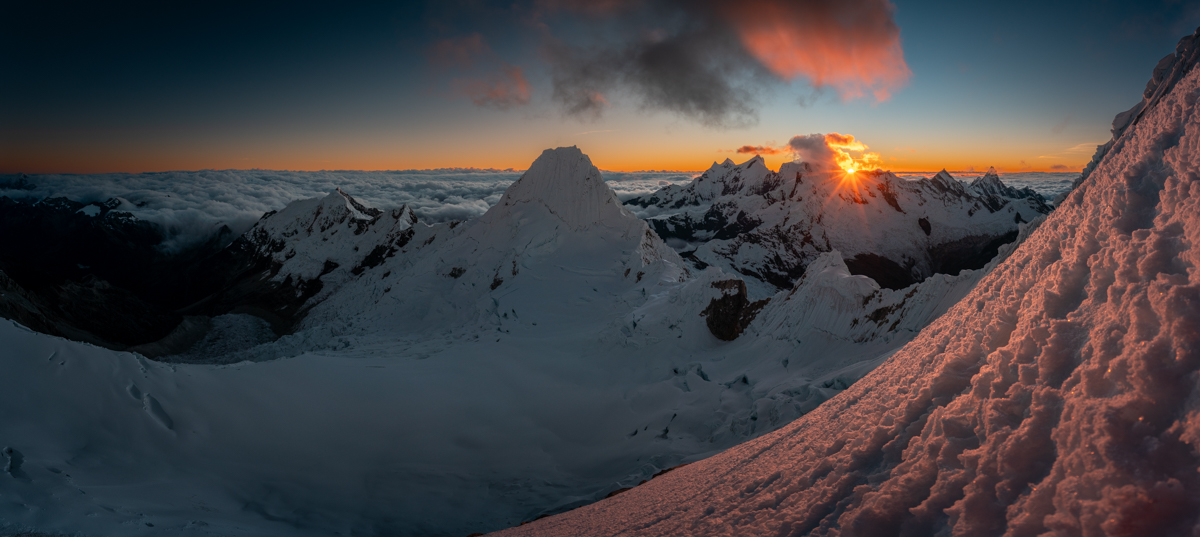
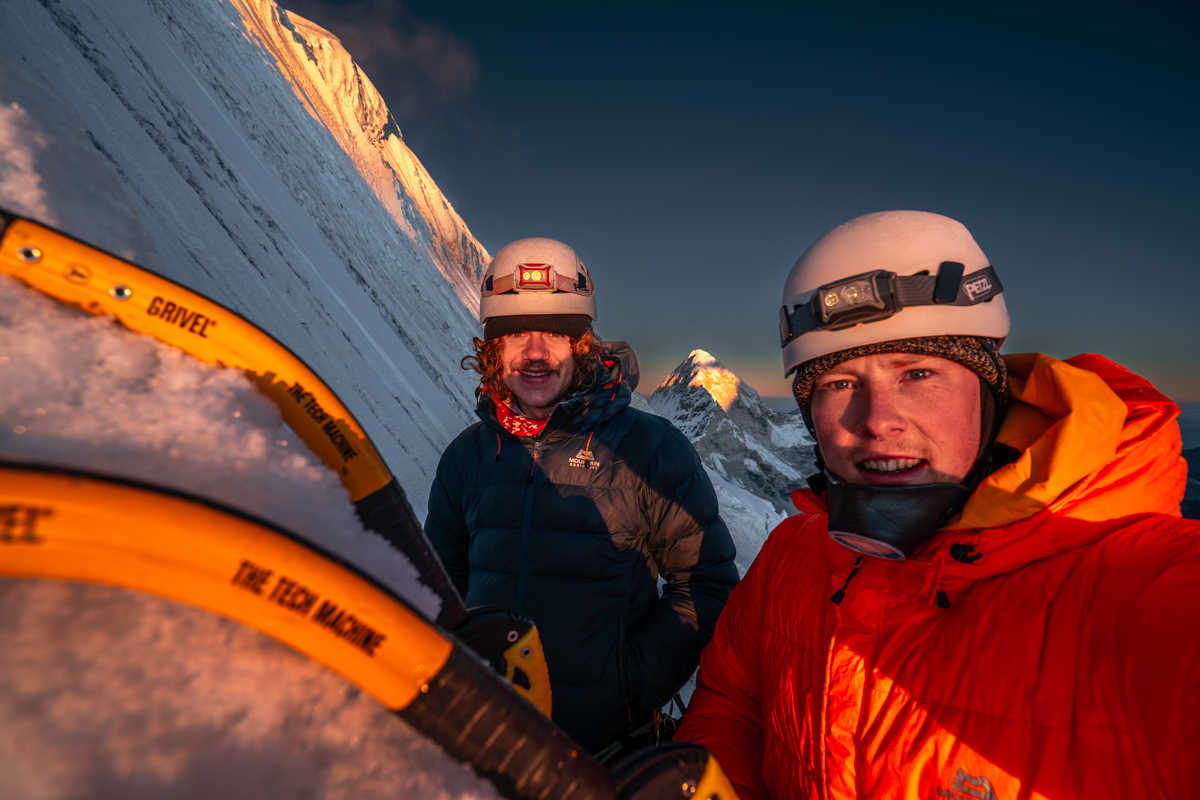
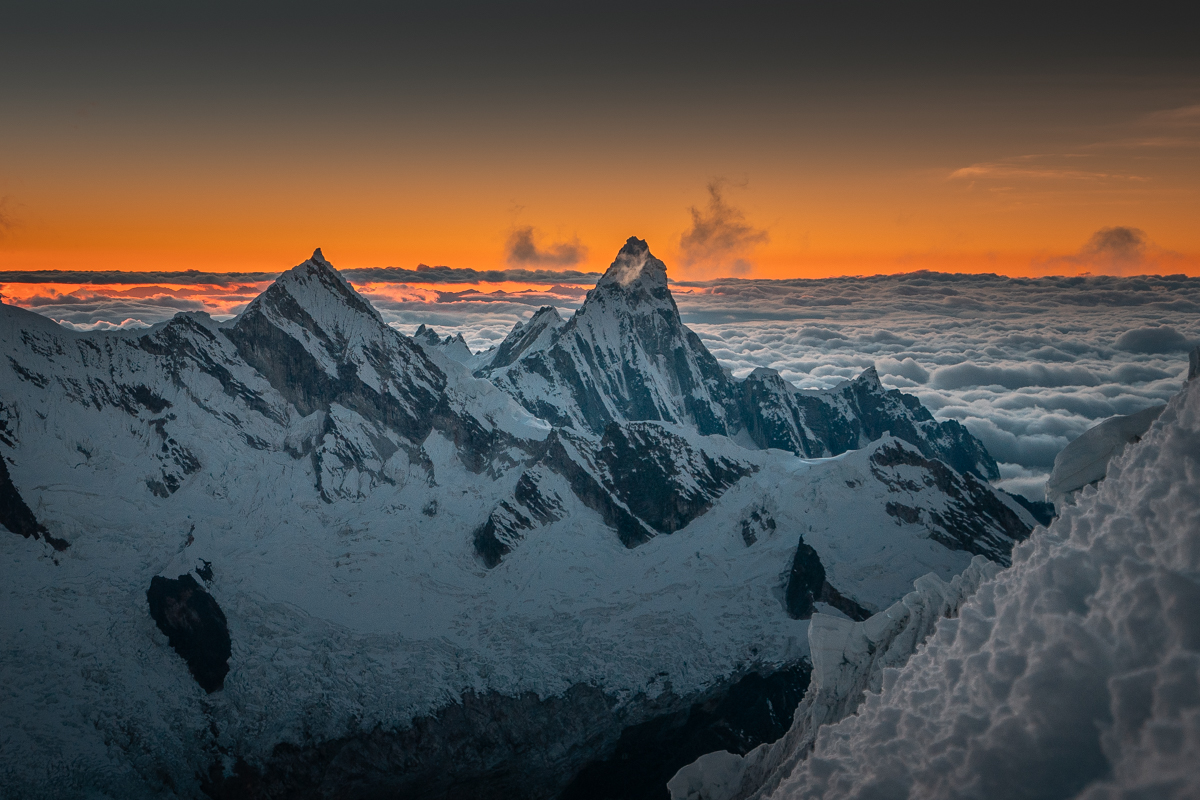
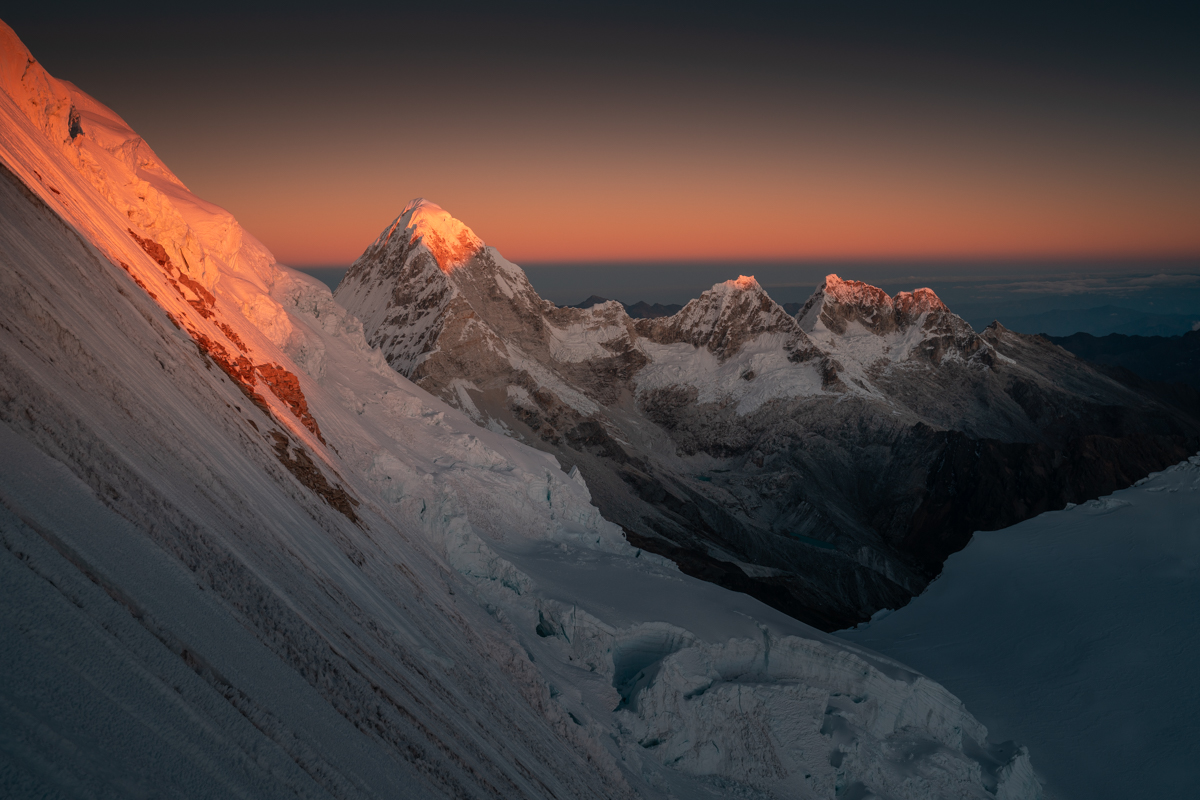
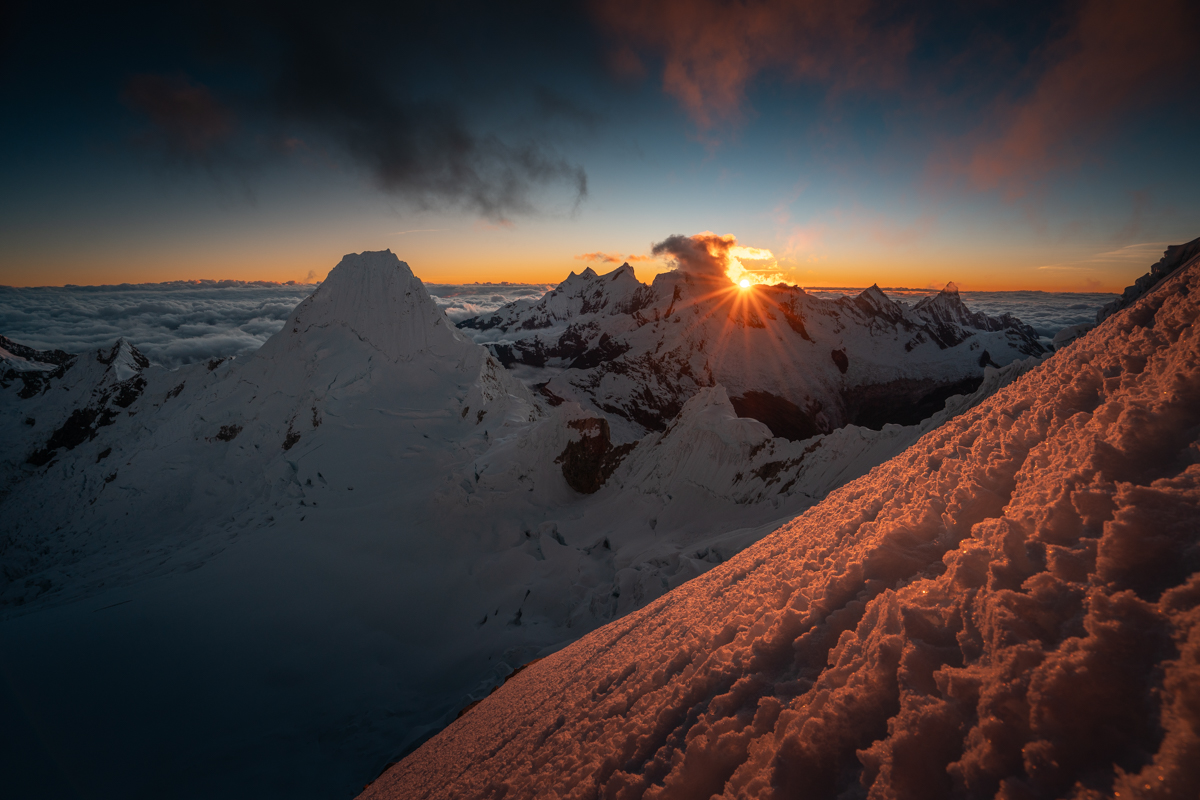
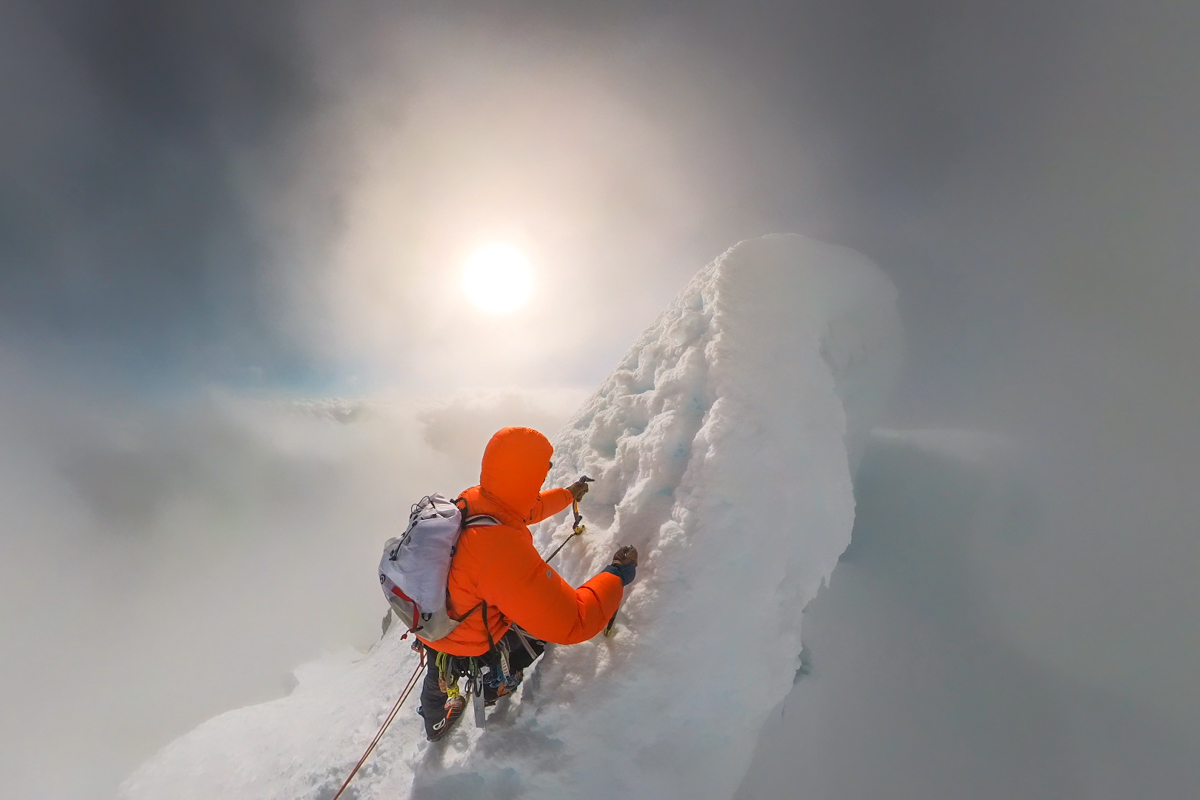
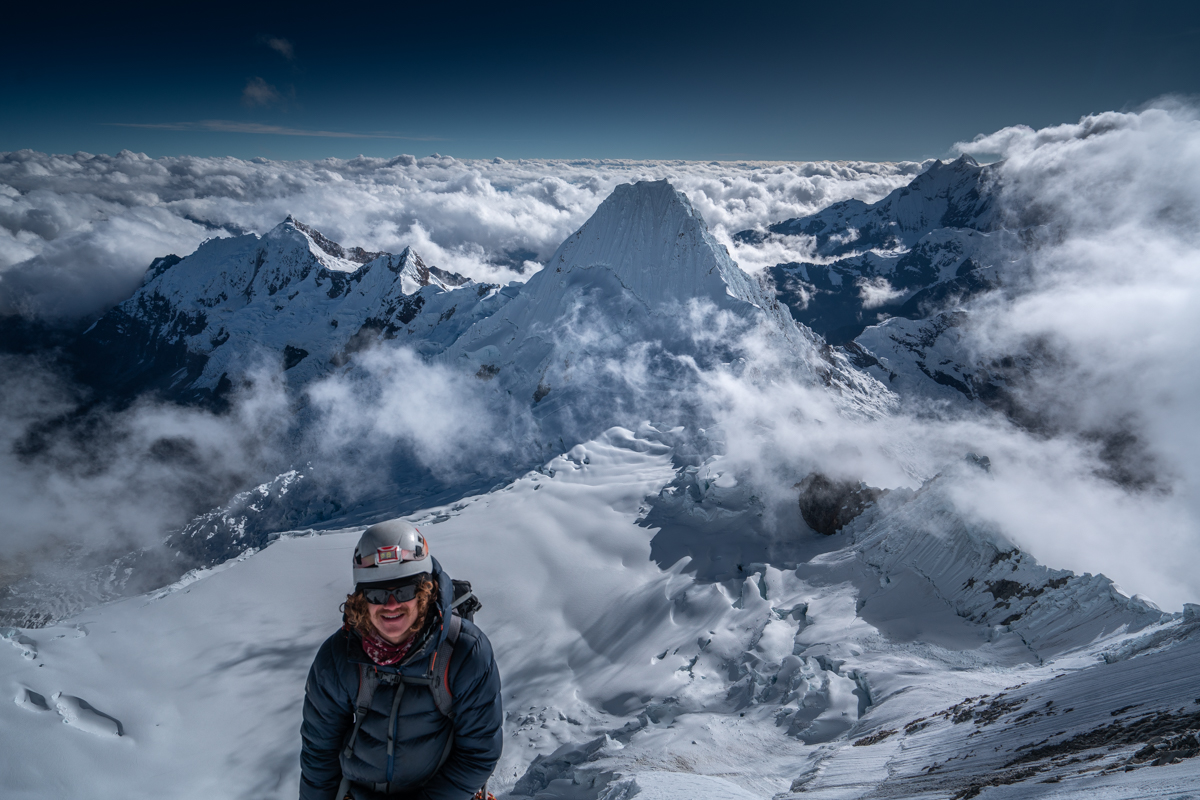
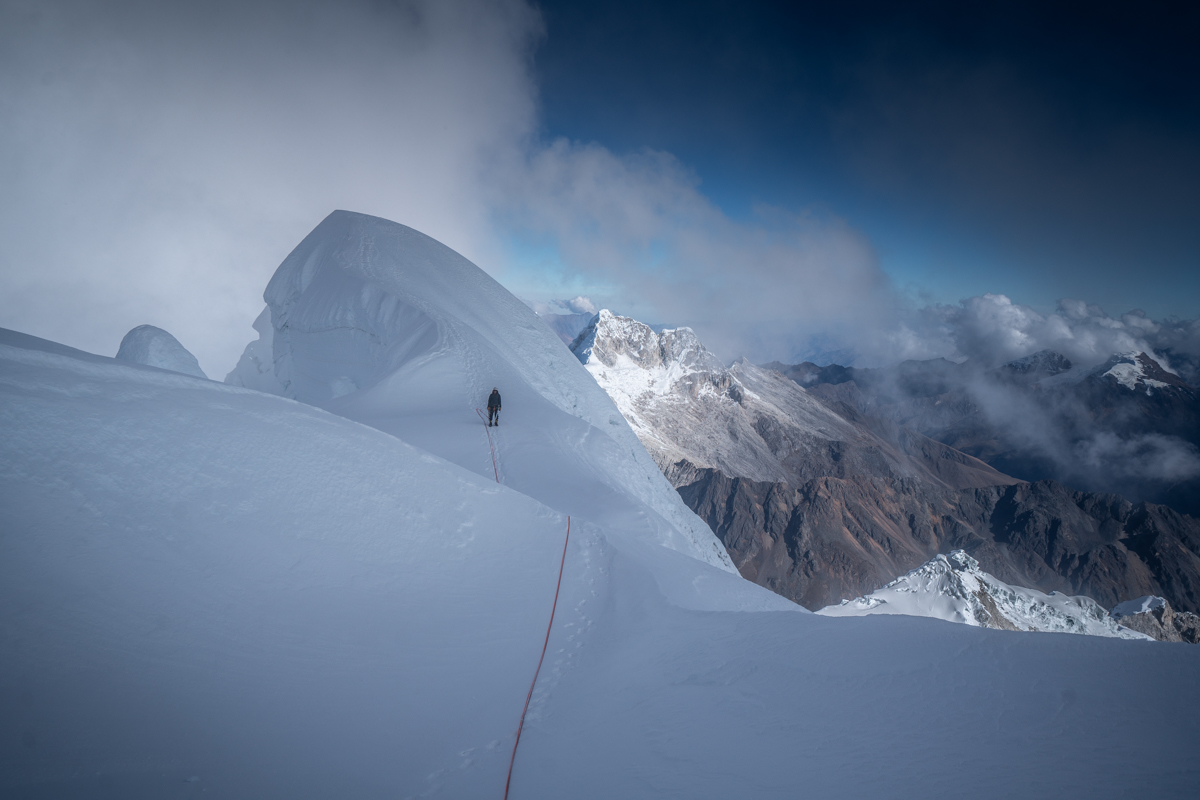
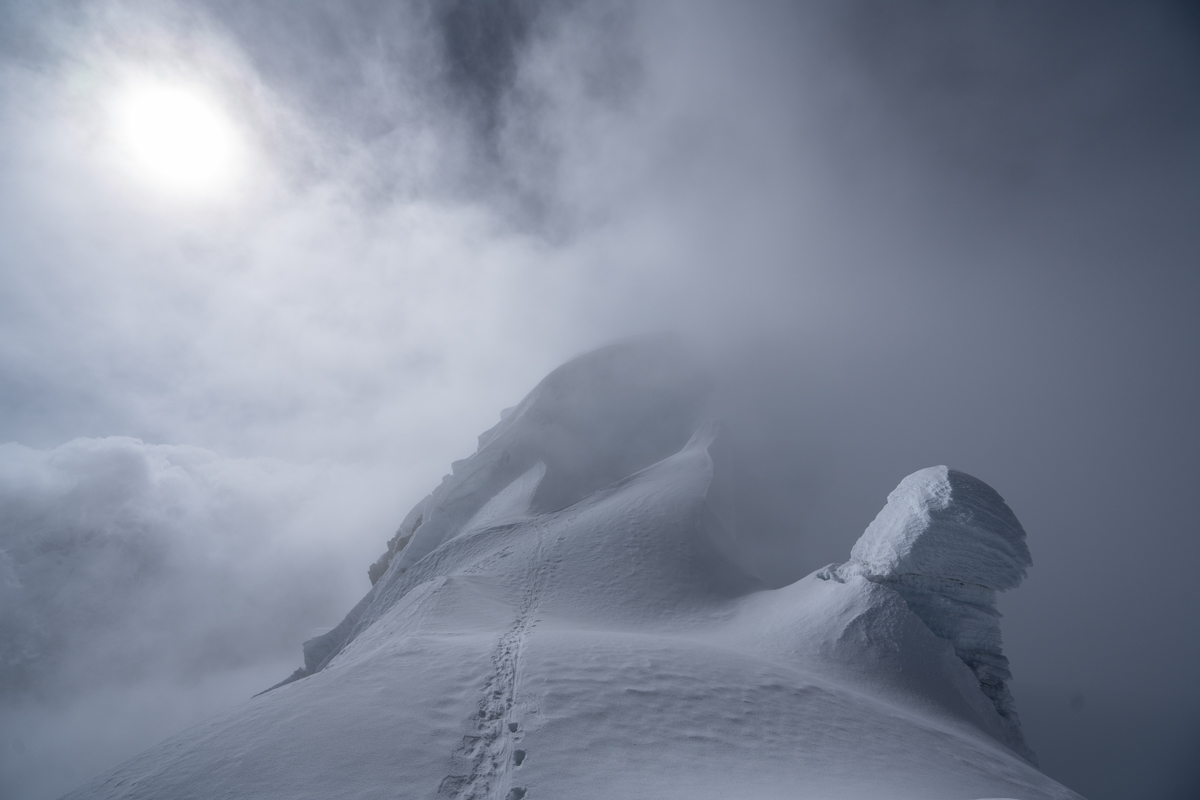
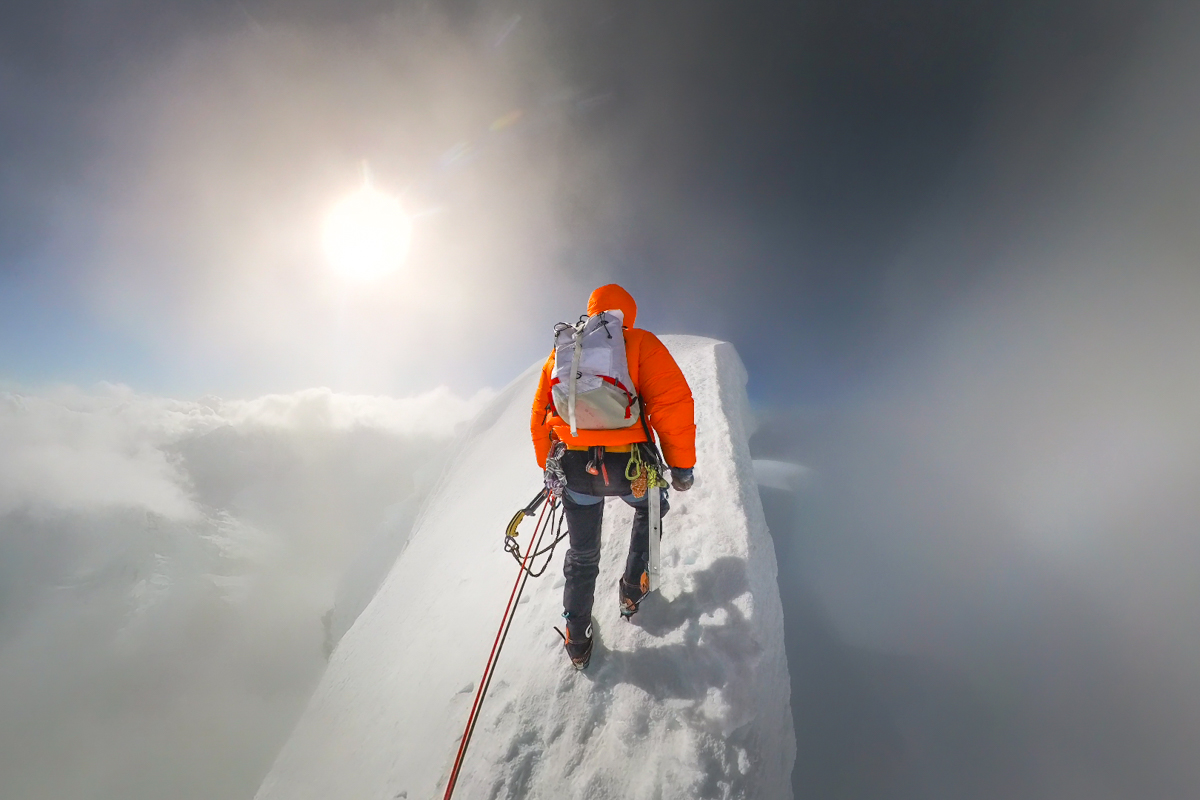
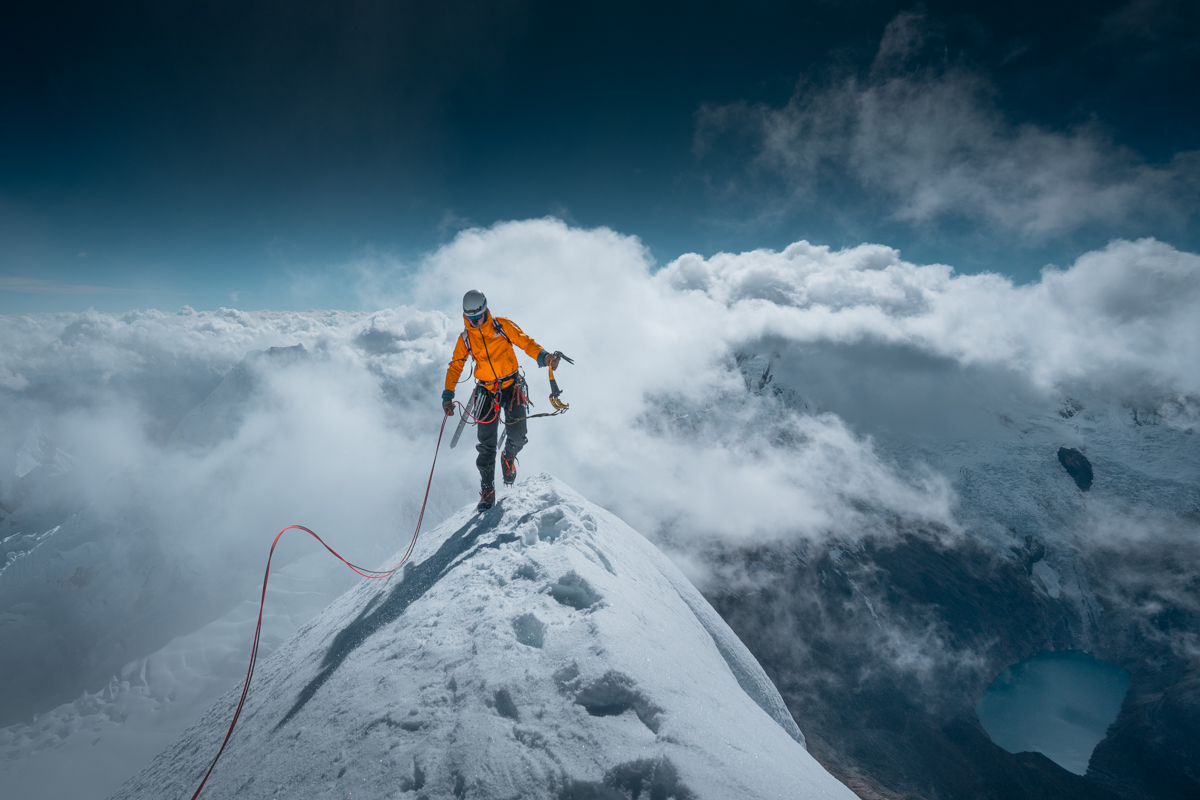
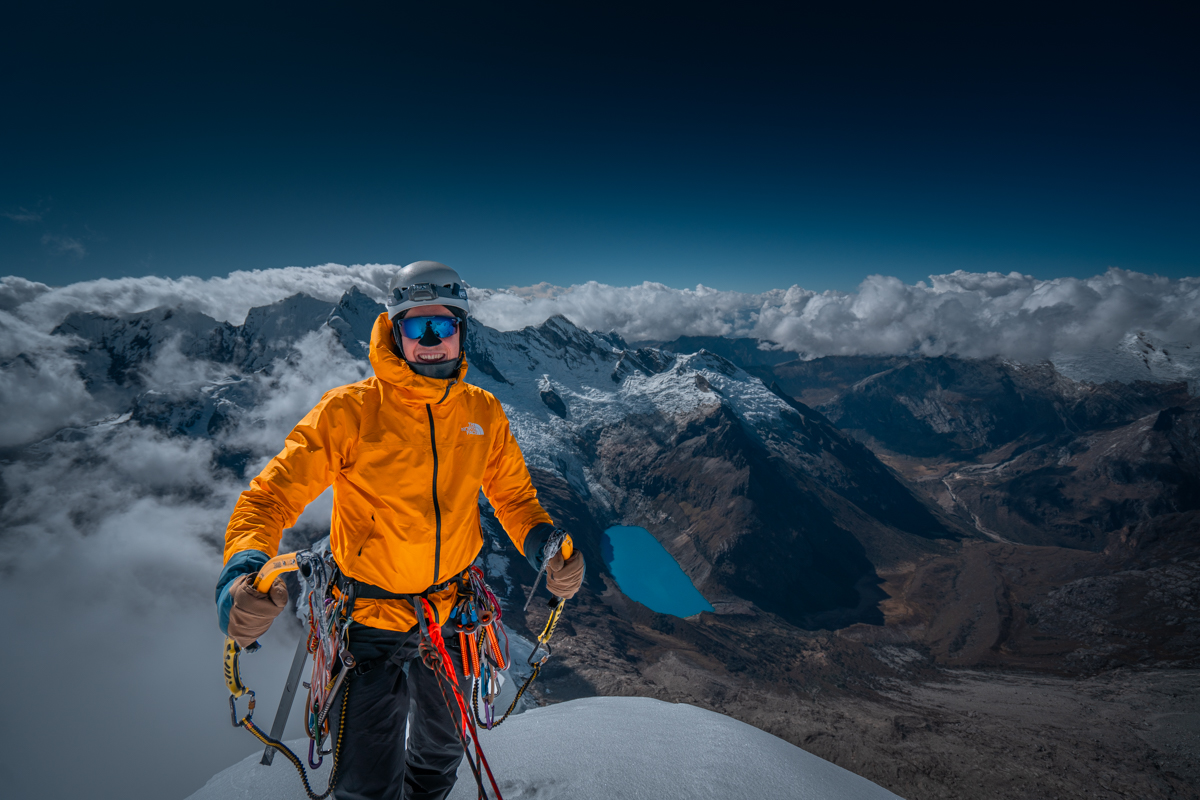
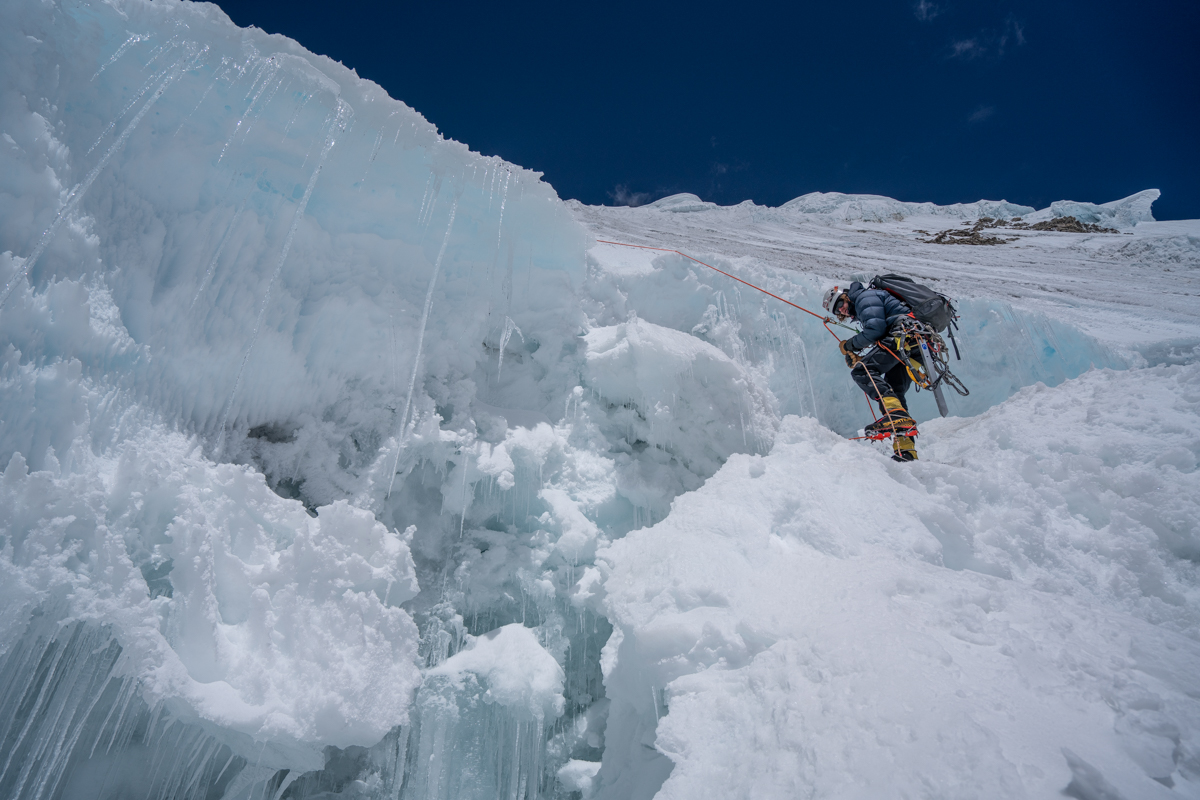 For the descent, we retraced the ridge to our exit point from the north face and began rappelling. In the section where I had found no good protection on the way up, we also struggled to build a secure anchor. I tried to place a picket in the hard, icy snow. It went in only a third before a big chunk of frozen snow broke out, freeing the picket again. I tried again a bit more to the right. This time, with a lot of force, I managed to drive it fully in. It was solid and didn’t move at all. But since I had just seen how a big block had broken off nearby, I didn’t fully trust it. Luckily, I found a small patch of decent ice nearby and backed up the picket with a screw. Then I rappelled. Everything held, and to my relief, I soon reached good ice where I built a strong anchor with a v-thread and a screw. From there, I could also belay Ben as he rappelled, since he had removed the upper screw and was descending only on the picket. The rest of the wall we rappelled without further issues. Once we crossed the bergschrund and reached the glacier plateau, we sat down for a moment to enjoy the moment that we have just summited another 6,000m peak and everything went well again. Then we headed back to camp. Luca and Joost waved from above, but the final uphill in the midday sun back to camp was exhausting. Completely drained, we finally made it.