 Day 4
Day 4
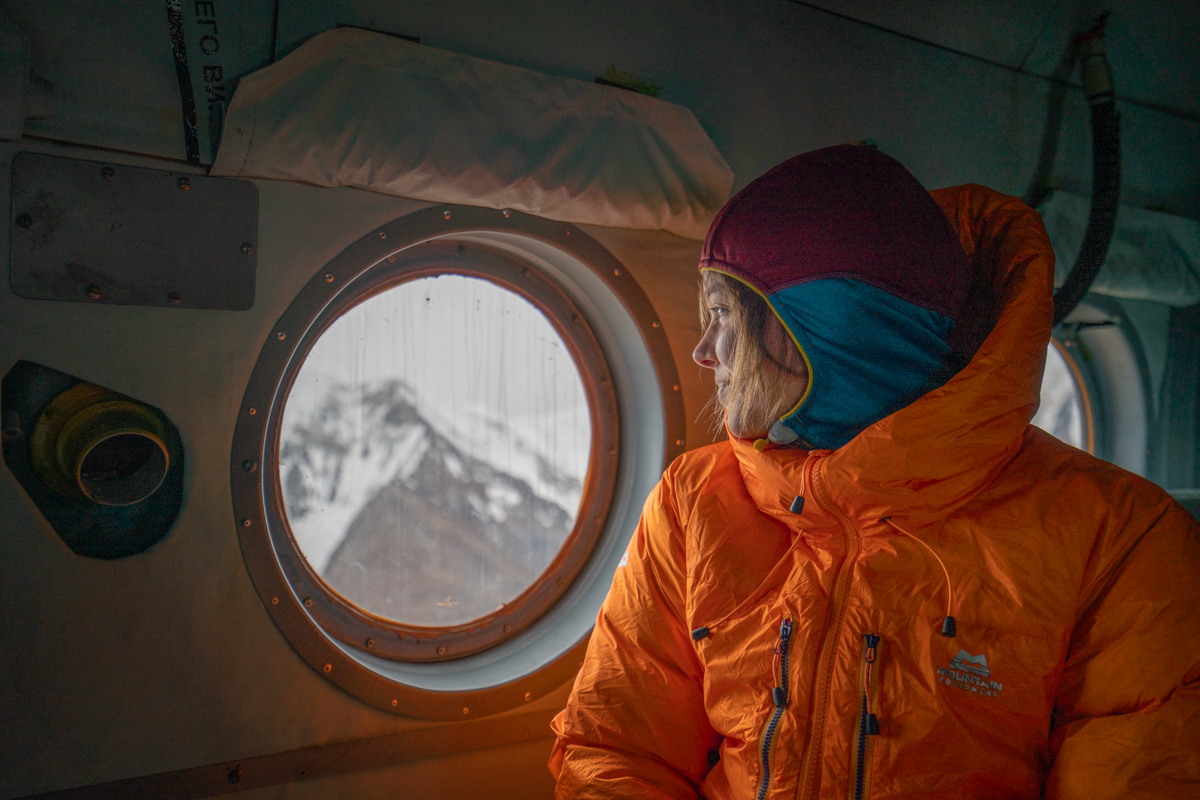
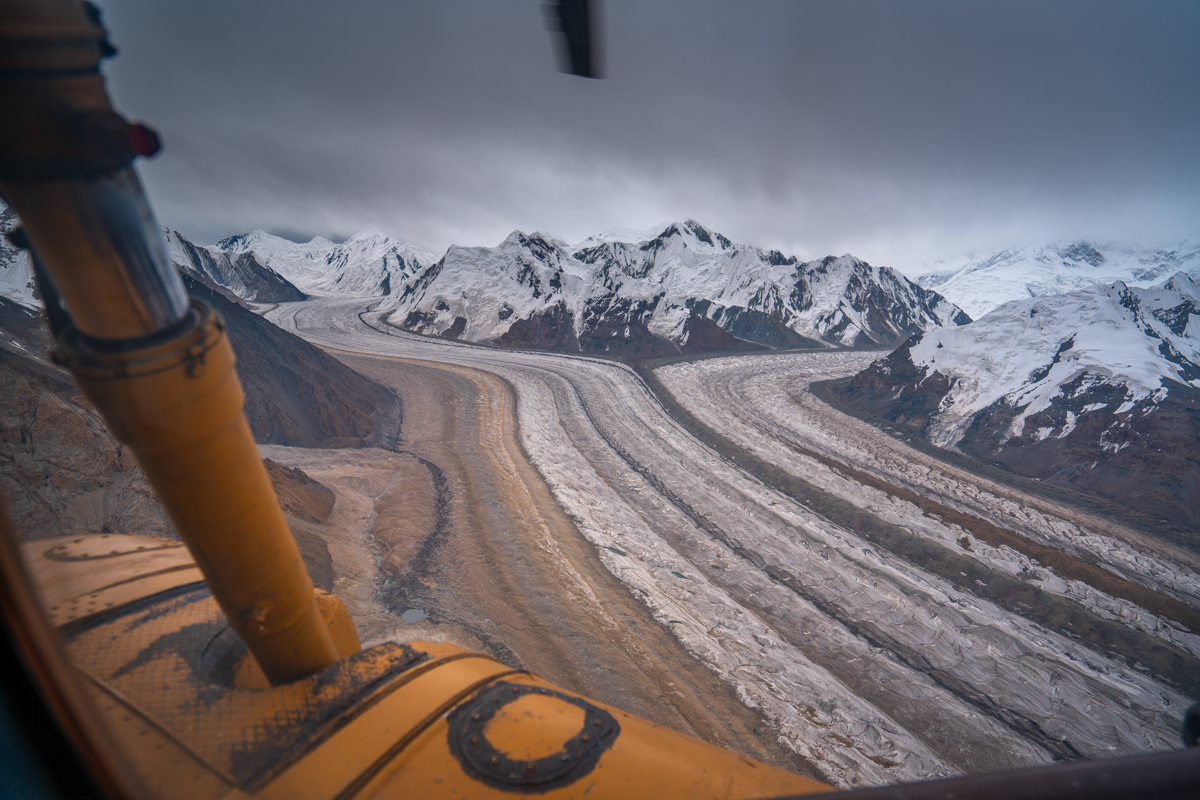
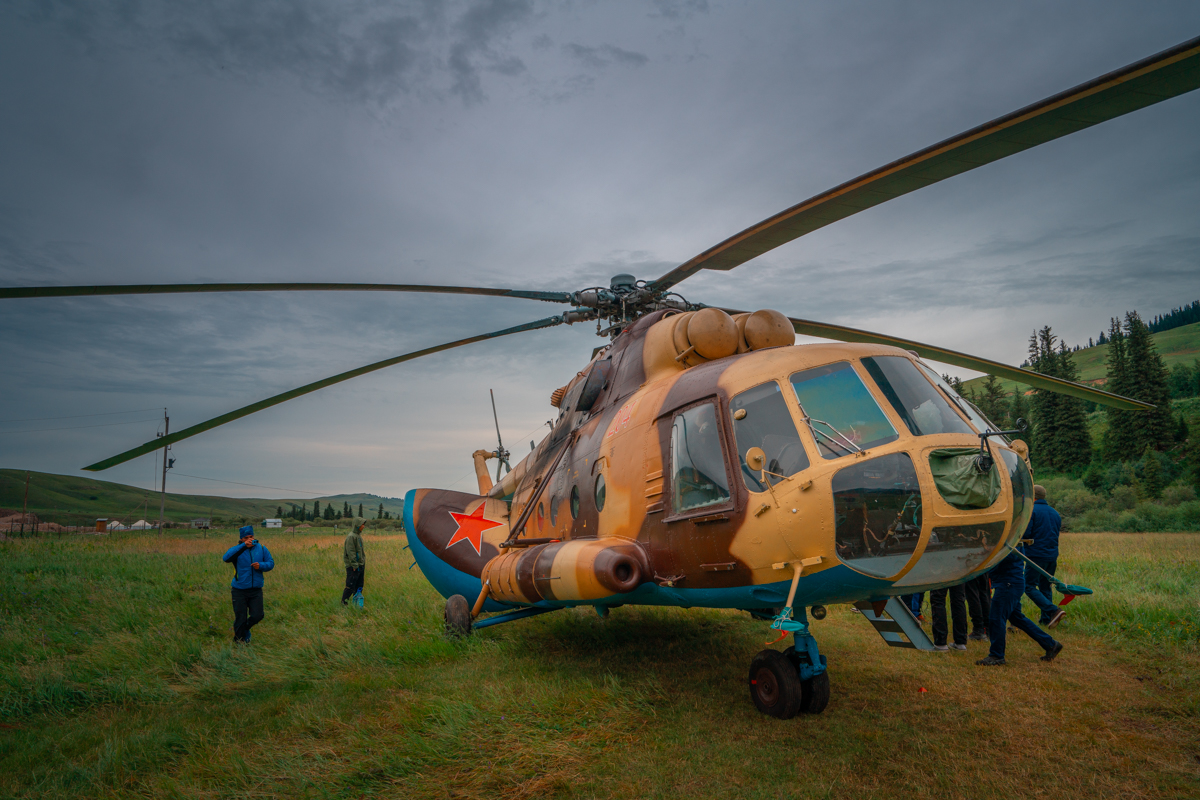
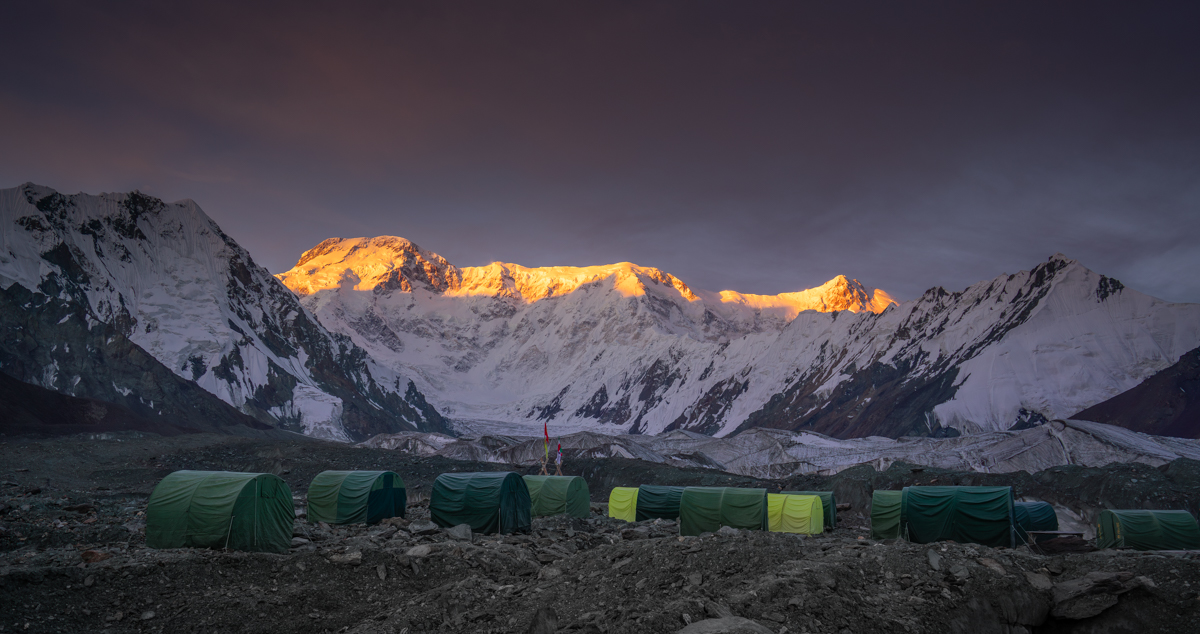
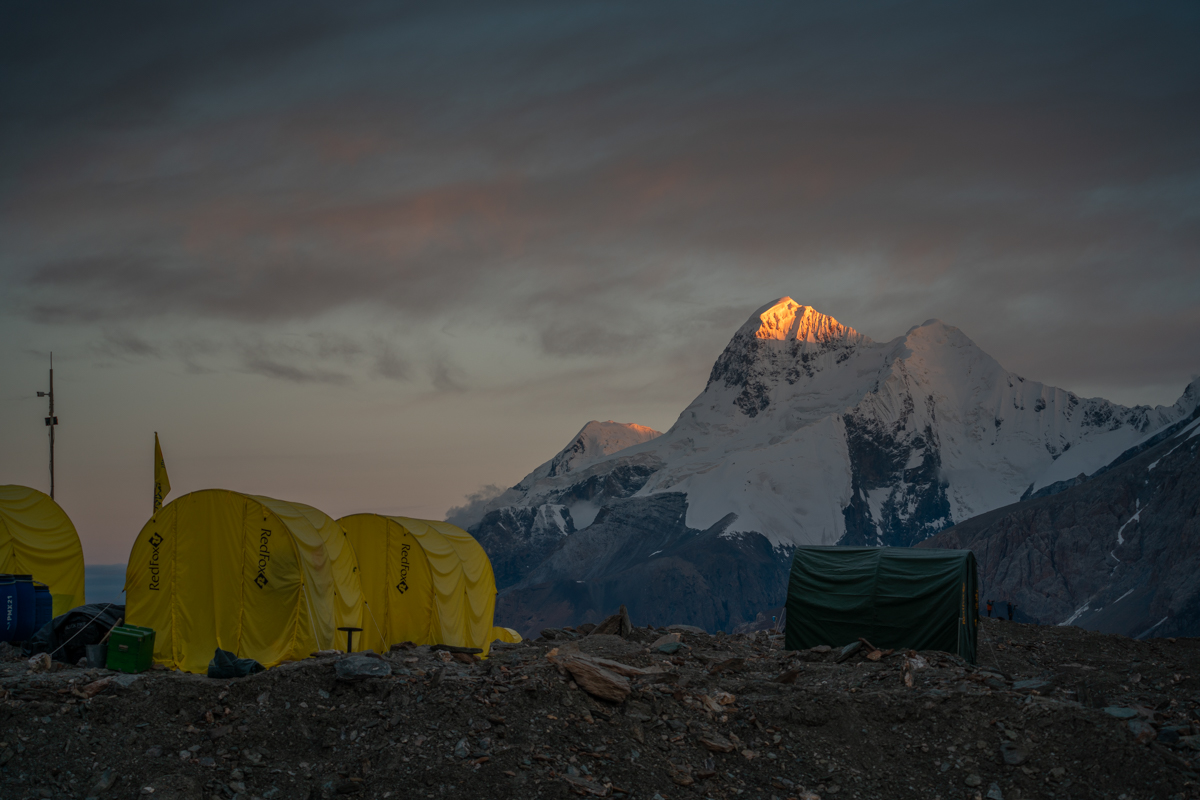
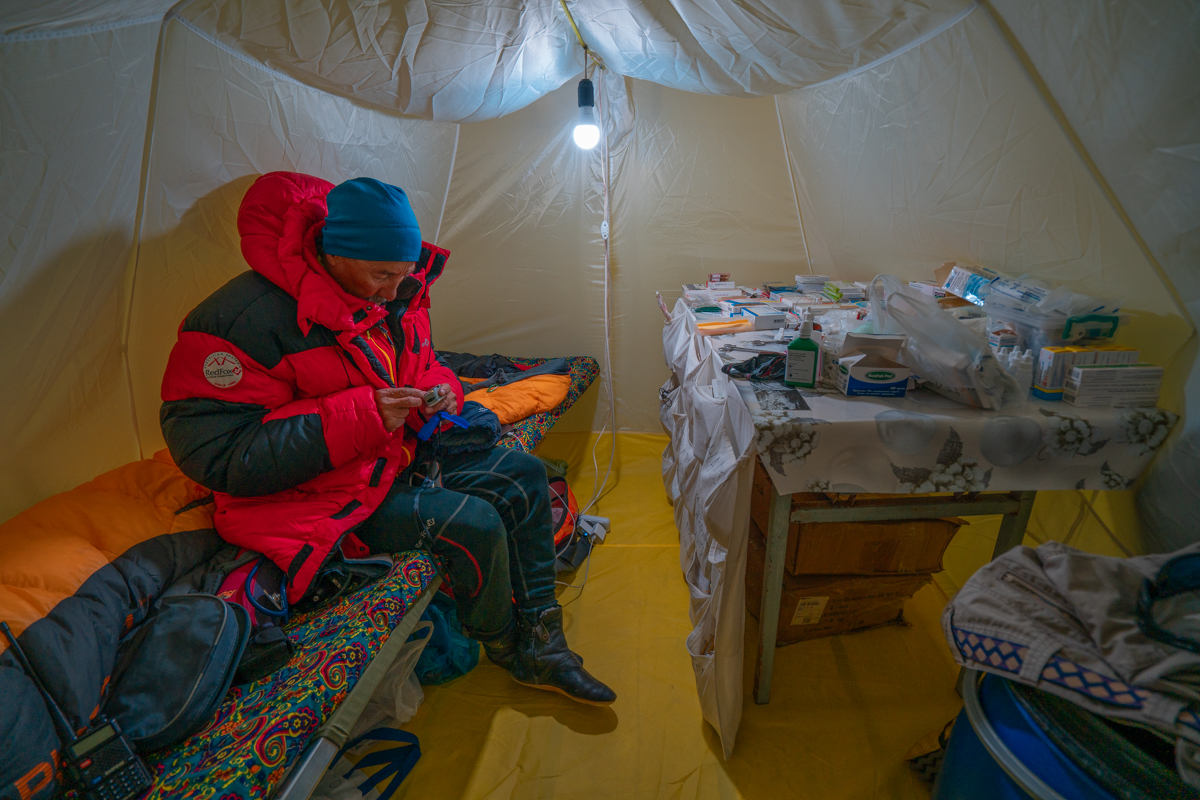
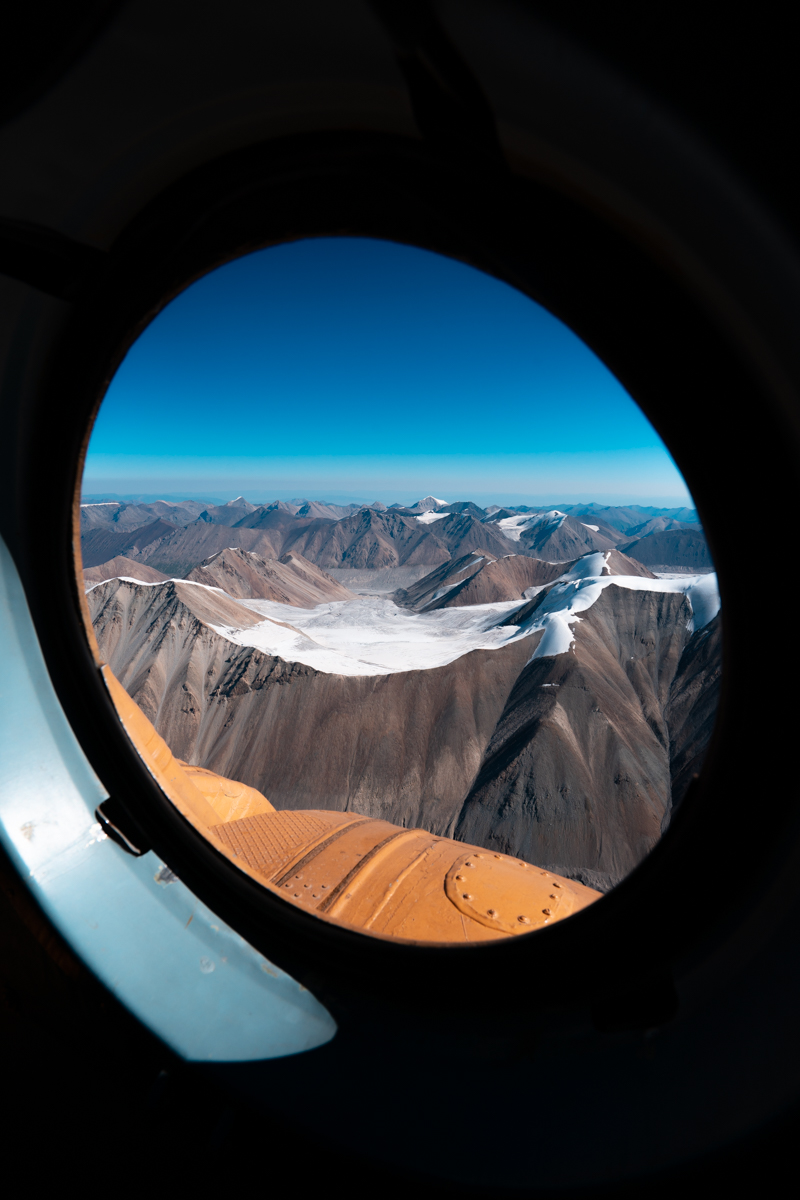
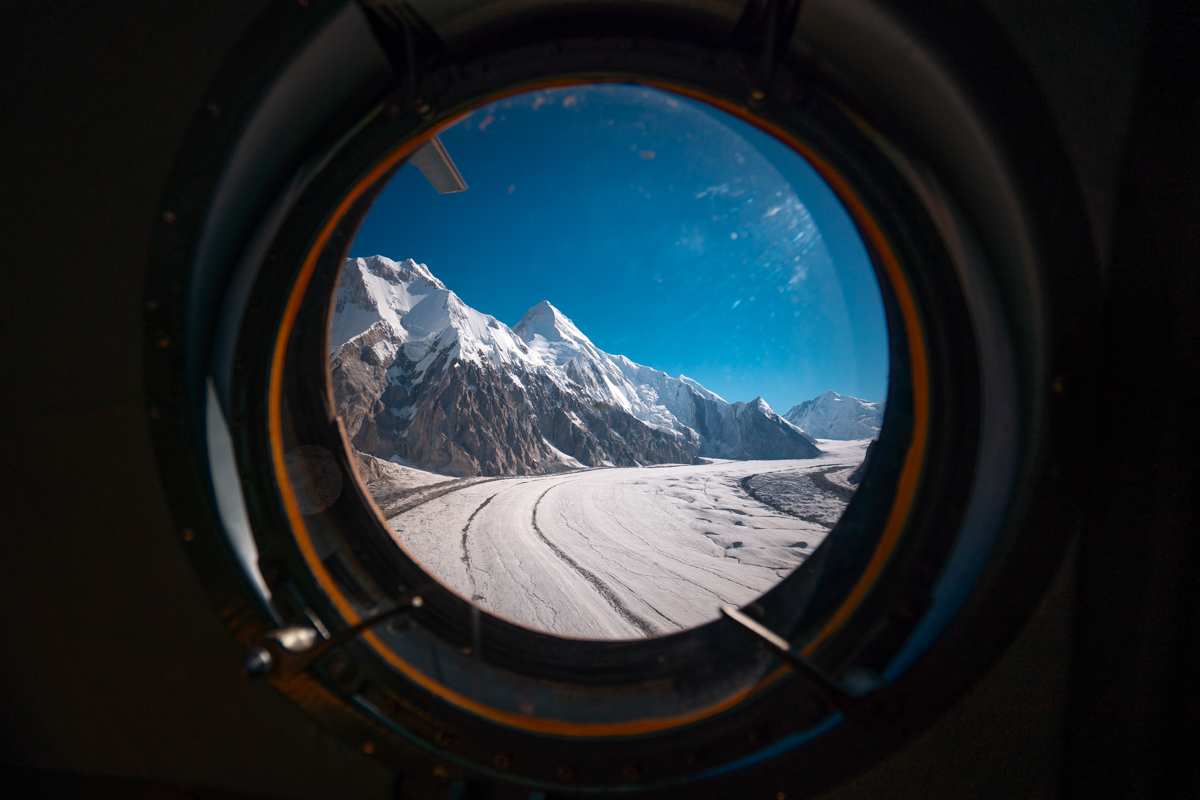
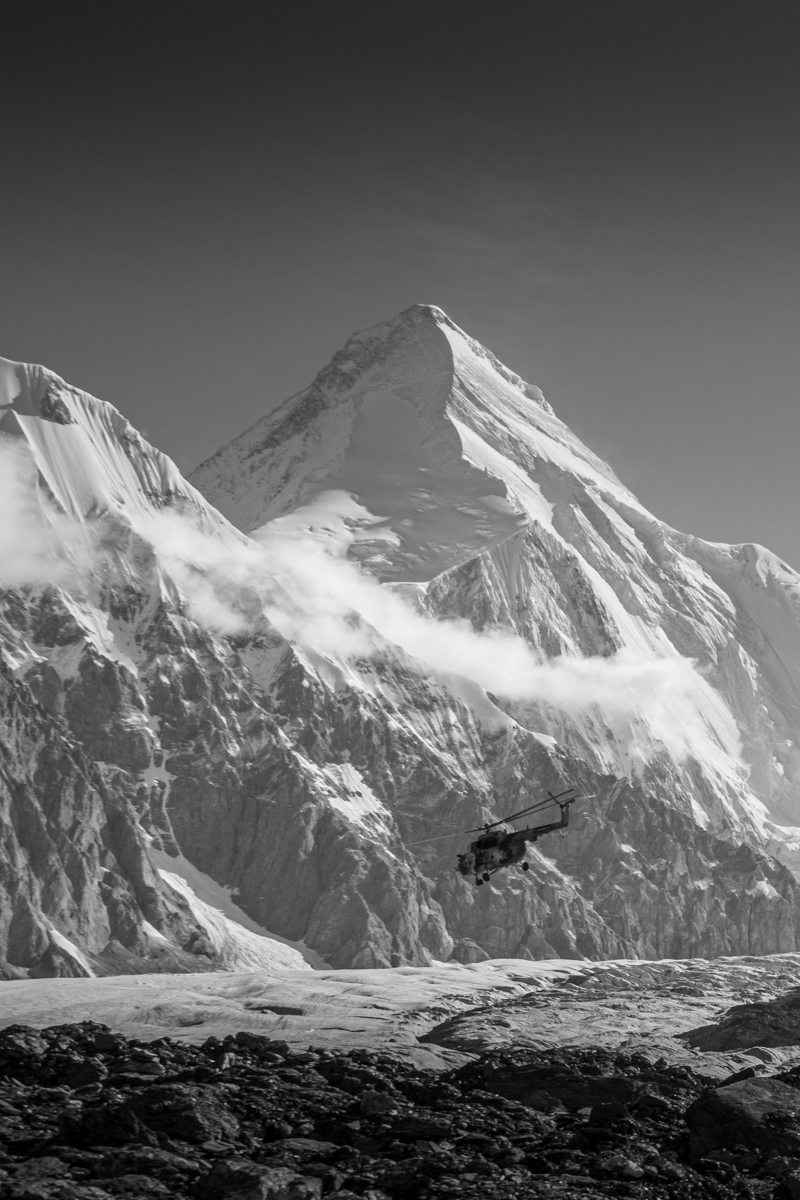
Finally, something happened. At 6 am, we gathered around the helicopter, an old Soviet Mil Mi-8, with all our equipment. After loading everything, it didn’t take long before we took off. It was my first time in a helicopter, and the flight was amazing. As we left the green hills behind and approached the first really high mountains, we got views I had never seen before. Huge, endless glaciers stretched out below us, and steep rock walls appeared sometimes very close to the helicopter windows. Respect to the pilots at this point. After about an hour of deafening noise, we reached our destination. The helicopter landed on the glacier, and we quickly formed a chain to unload everything in the strong wind from the rotating blades. After about 5 minutes, the task was done, and we lay on our luggage to prevent it from being blown away as the helicopter took off and flew away. Shortly after, it was very quiet for the first time in a long while. We had arrived at the base camp, which is located at an altitude of 4000m, and as I carried the large duffel bags to the tents, I already felt the altitude. After all, we had flown from 2200m to 4000m in just an hour. That’s quite a difference.
During the rest of the day not much happened anymore. The weather was very changeable, often rainy, so we spent most of the time playing cards in the tent. Since we all drank a lot to ease the acclimatization process, these games were interrupted about every 10 minutes by collective toilet breaks, which must have looked funny from the outside.
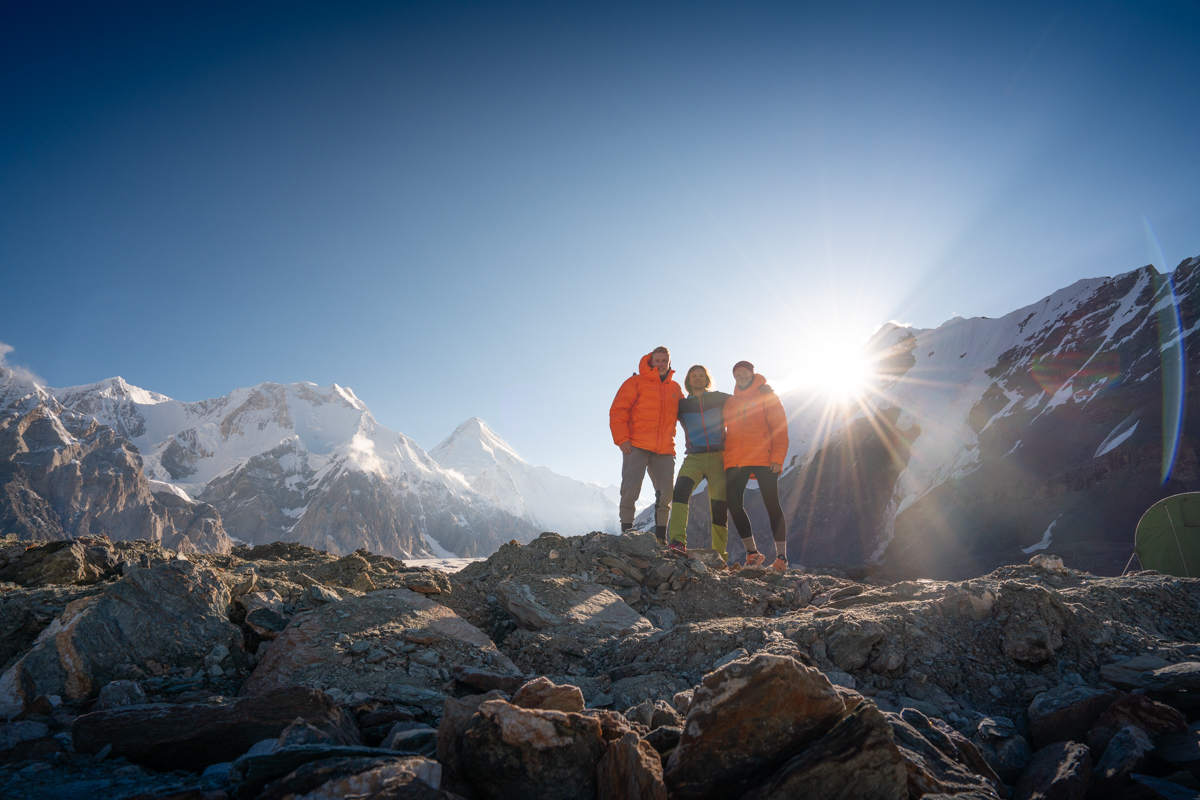
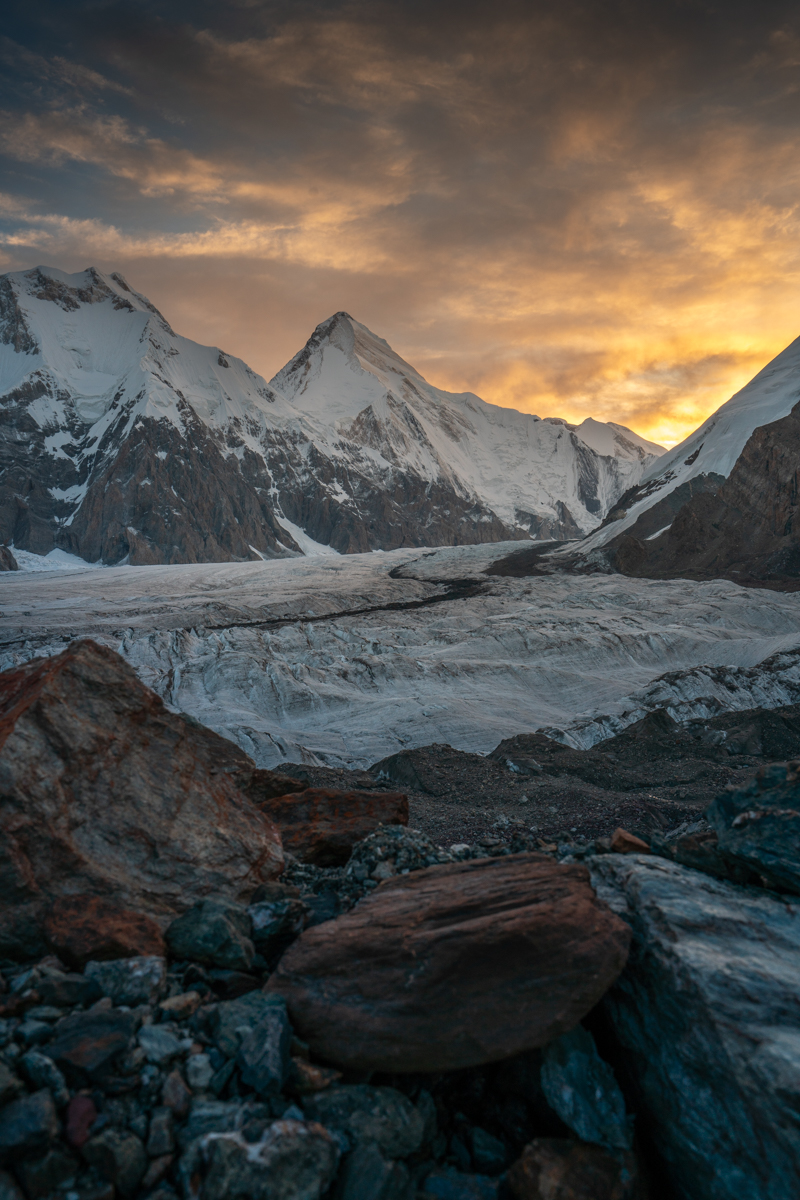
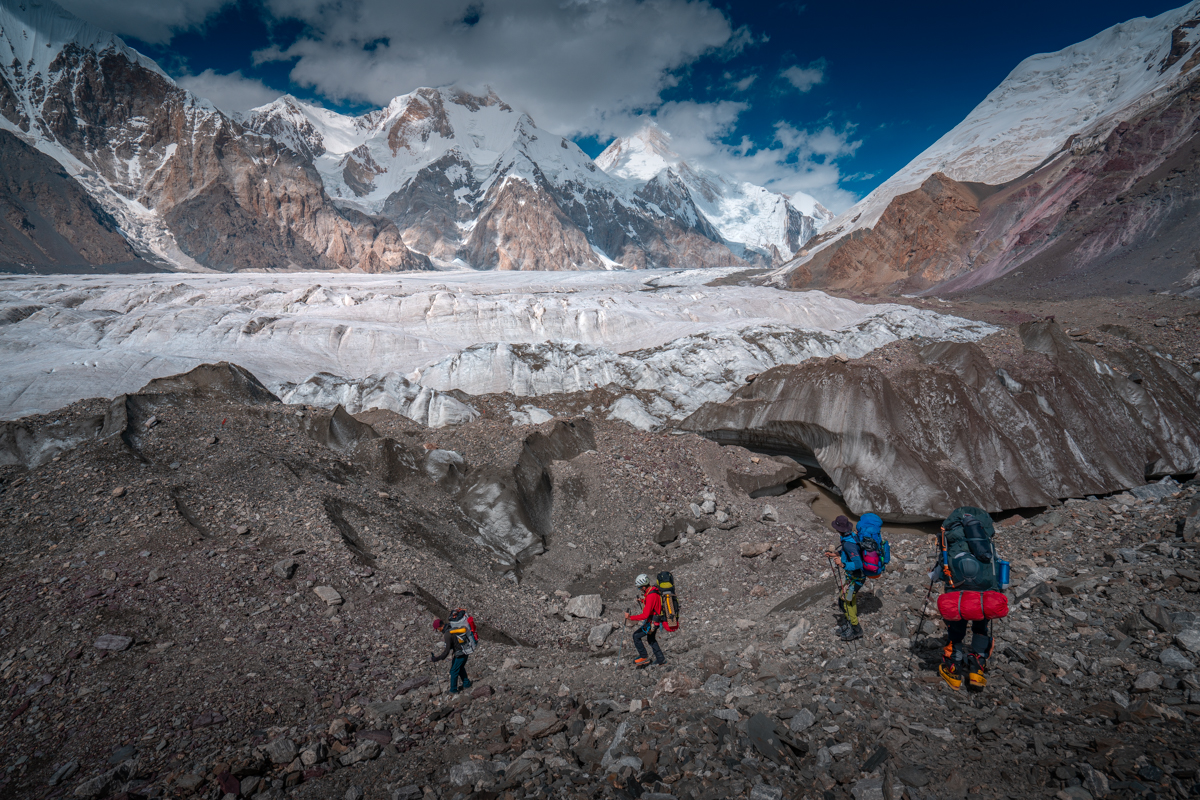
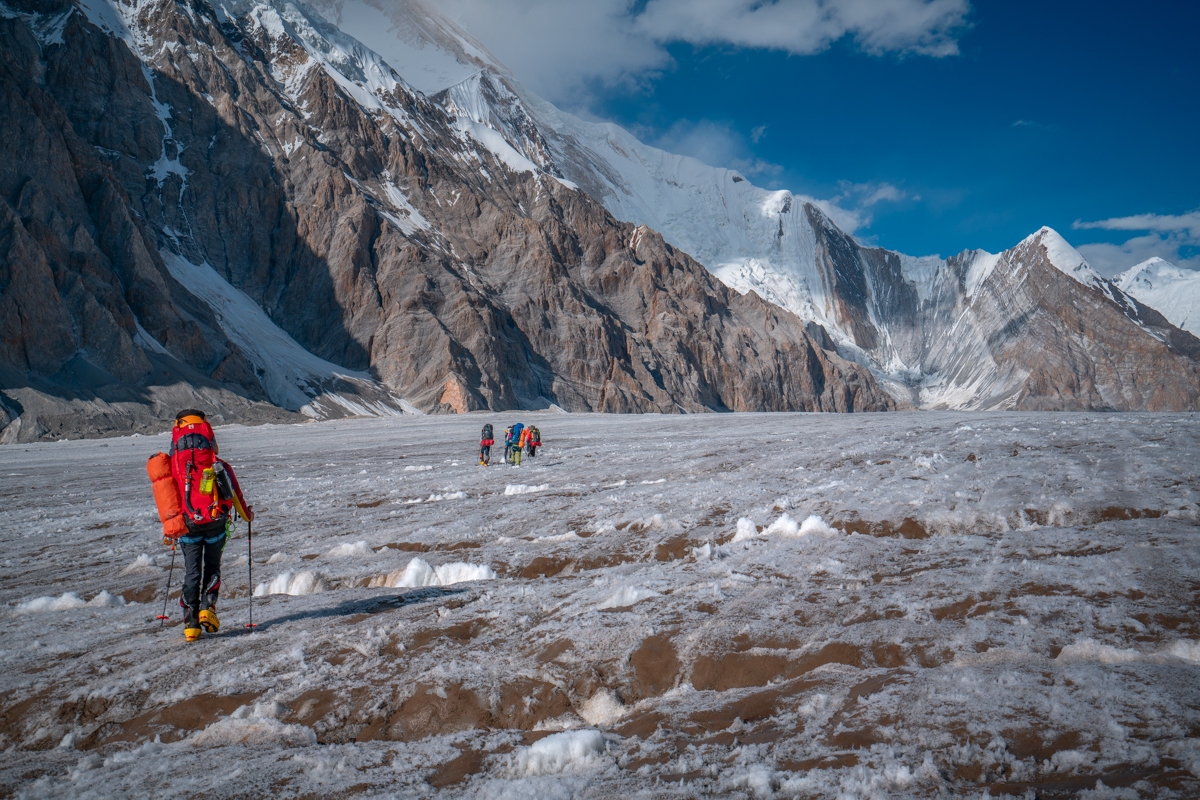
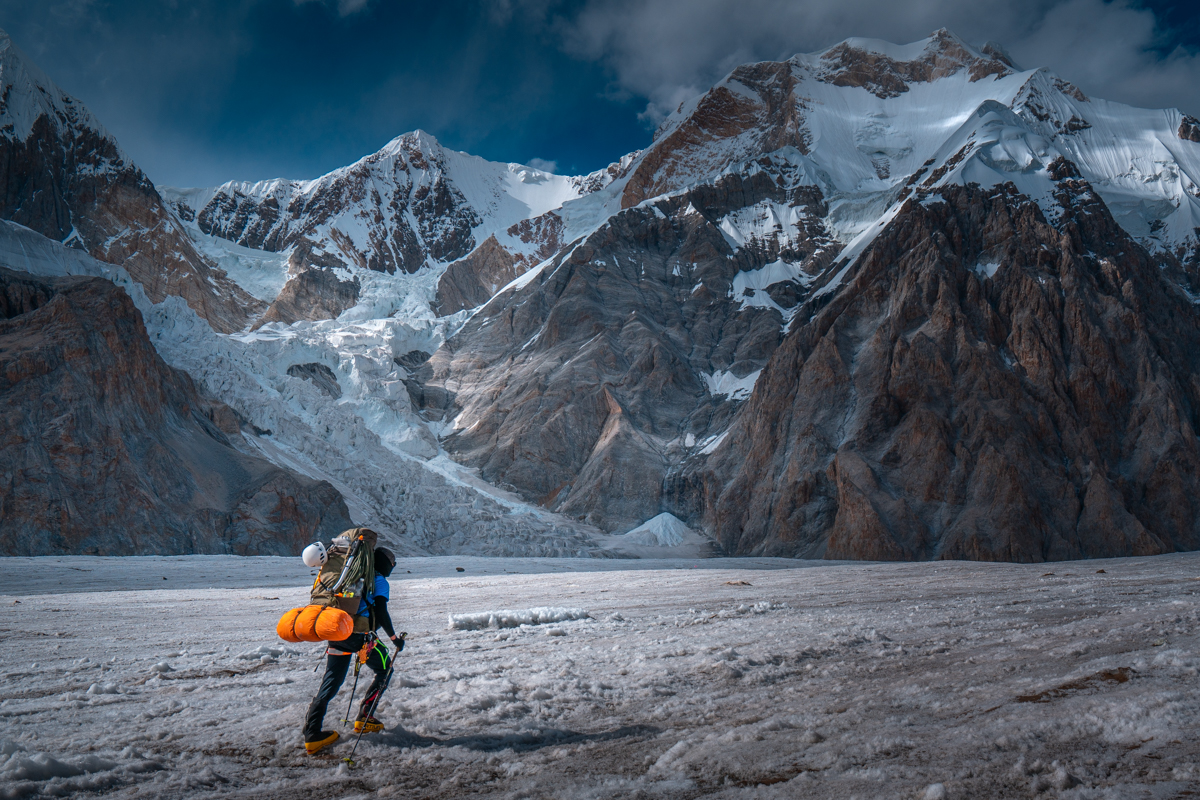
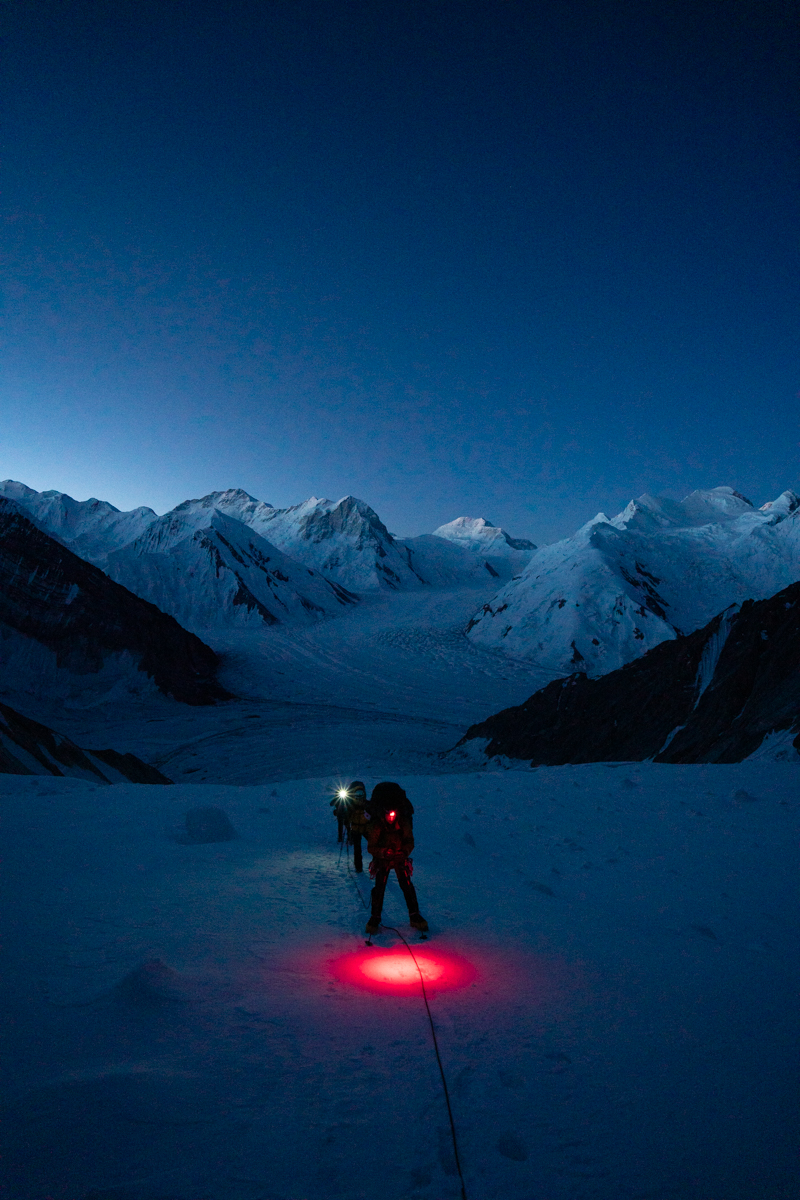
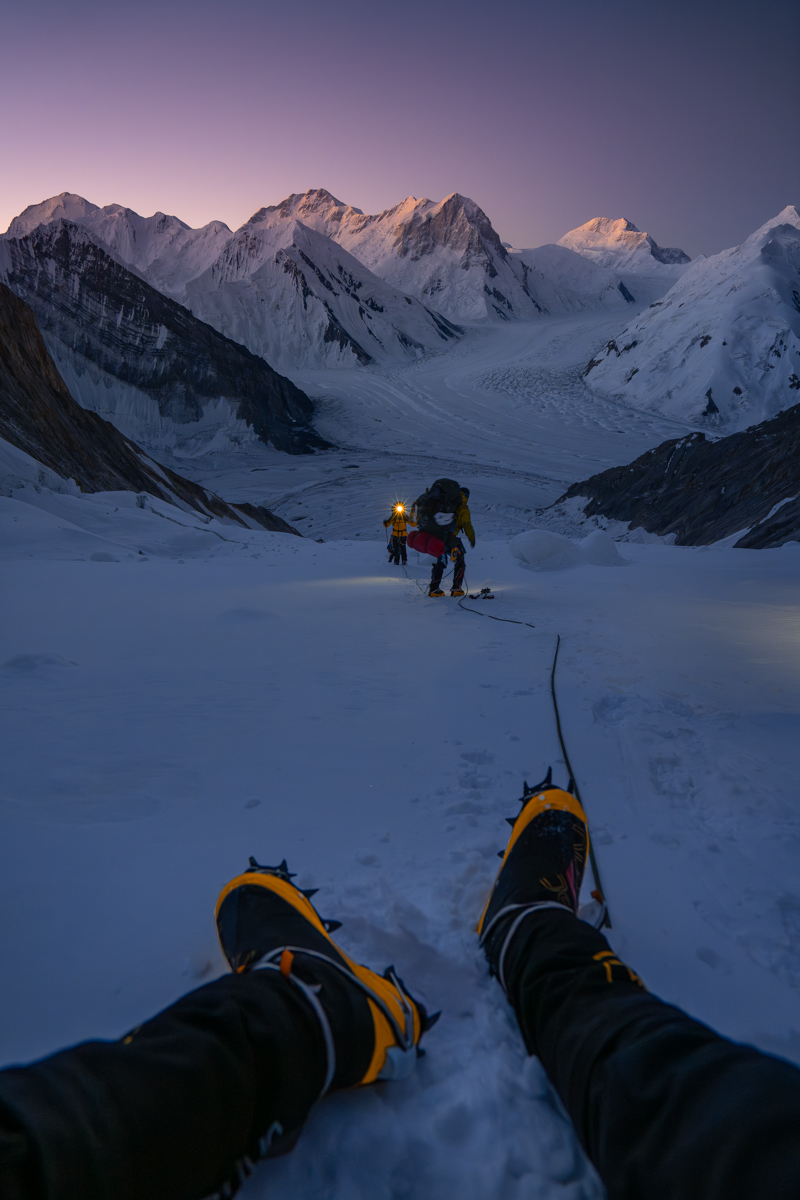
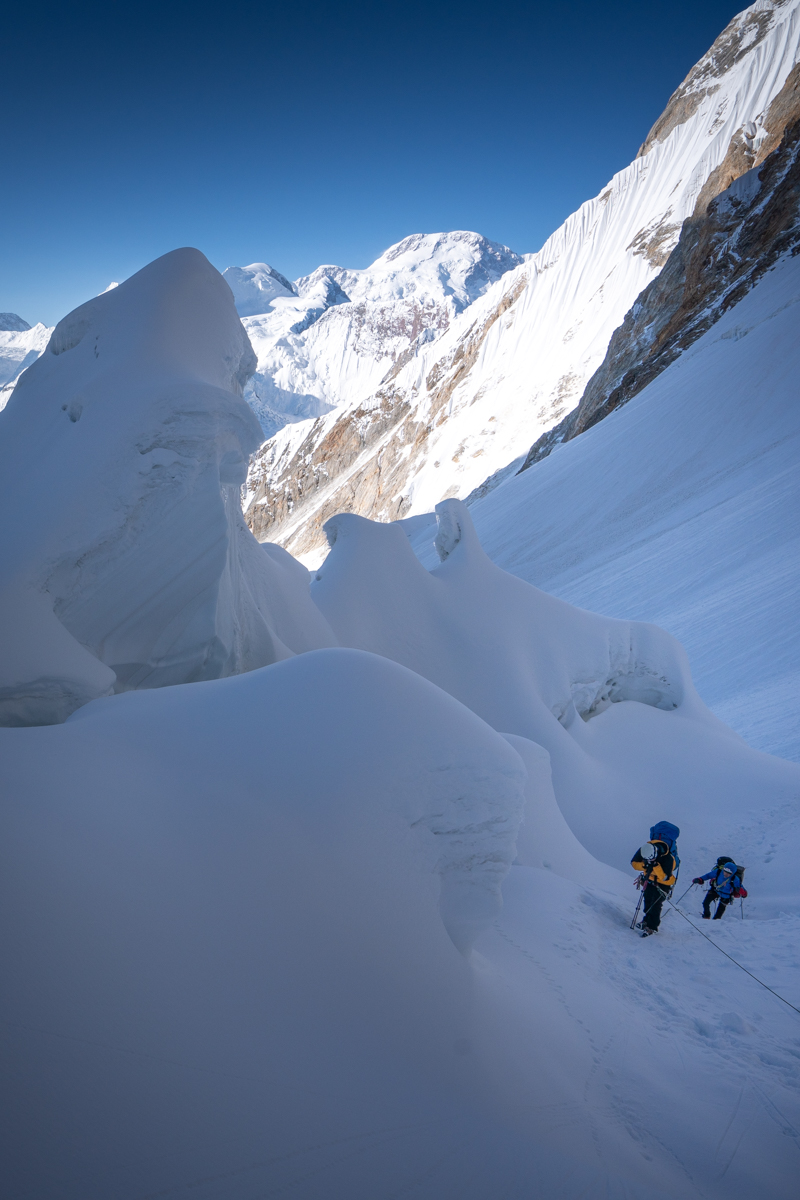
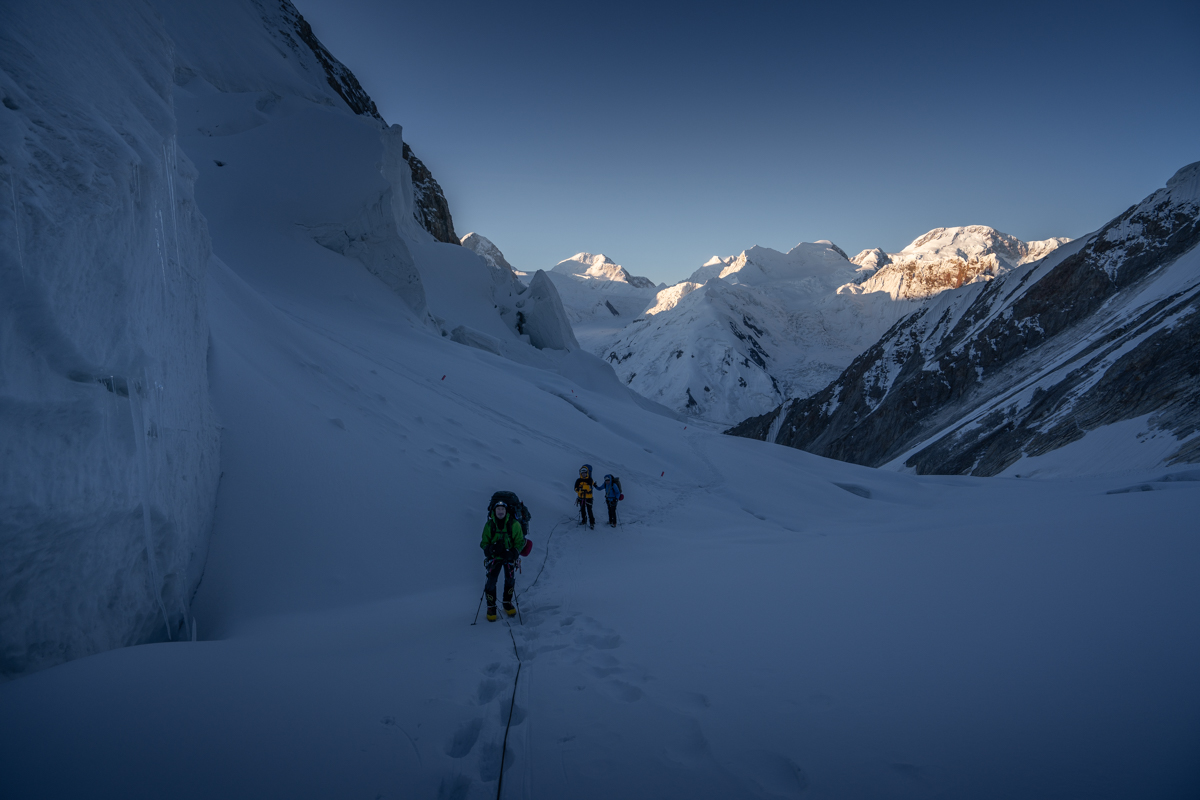 At this point, the climb started to become increasingly strenuous for me. It makes sense, as this was our first time ascending to 5000 meters, but I also felt somehow weak. Above 5000 meters, we entered the most objectively dangerous part of the route, as we had to climb around a small icefall directly below the seracs. It got steep a few more times, but everything was manageable without major issues. The crevasses we passed by now were enormous and disappeared into a deep blackness below. Despite the daylight, we couldn’t even see the bottom. After navigating around the small icefall, we reached a wide, less steep section of the route. The last few meters to the camp felt endless, but after about 7 hours of climbing, we reached Camp 2 at an altitude of about 5350-5400 meters. Even though I felt slow and weak towards the end, the time it took us to cover the more than 1000 meters of elevation gain was not bad.
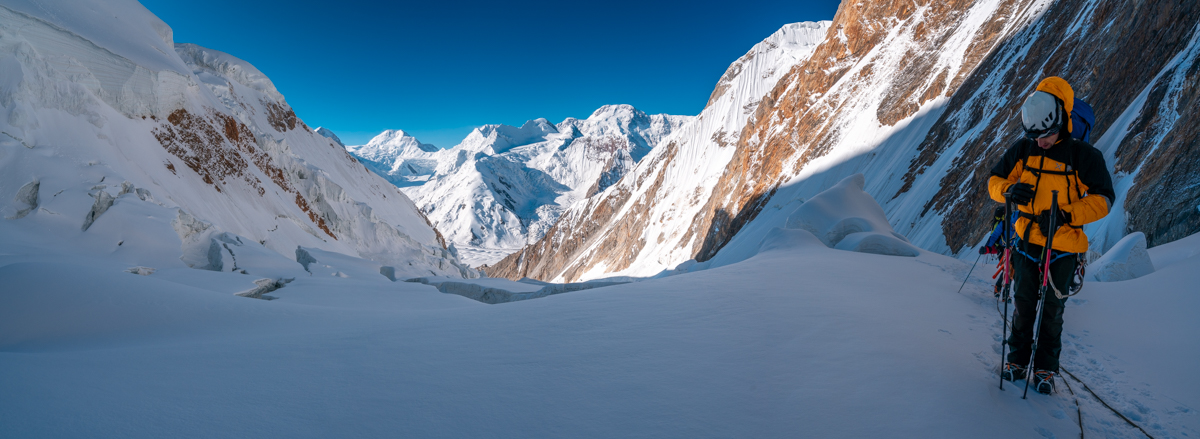
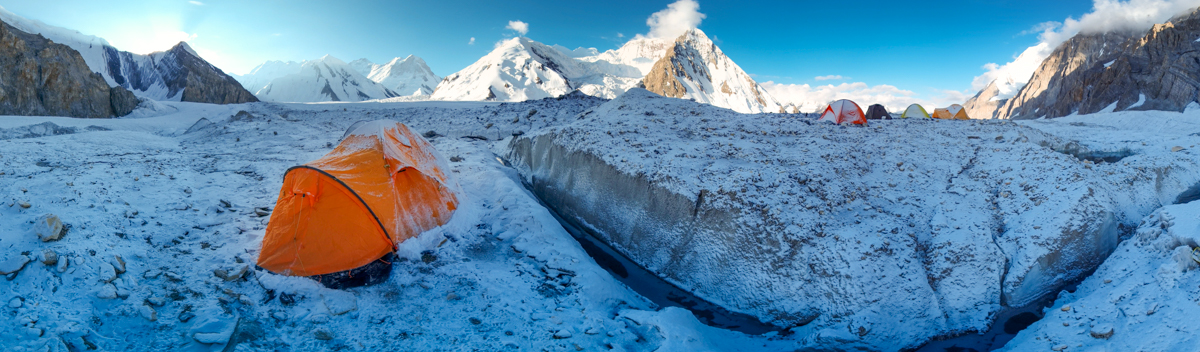
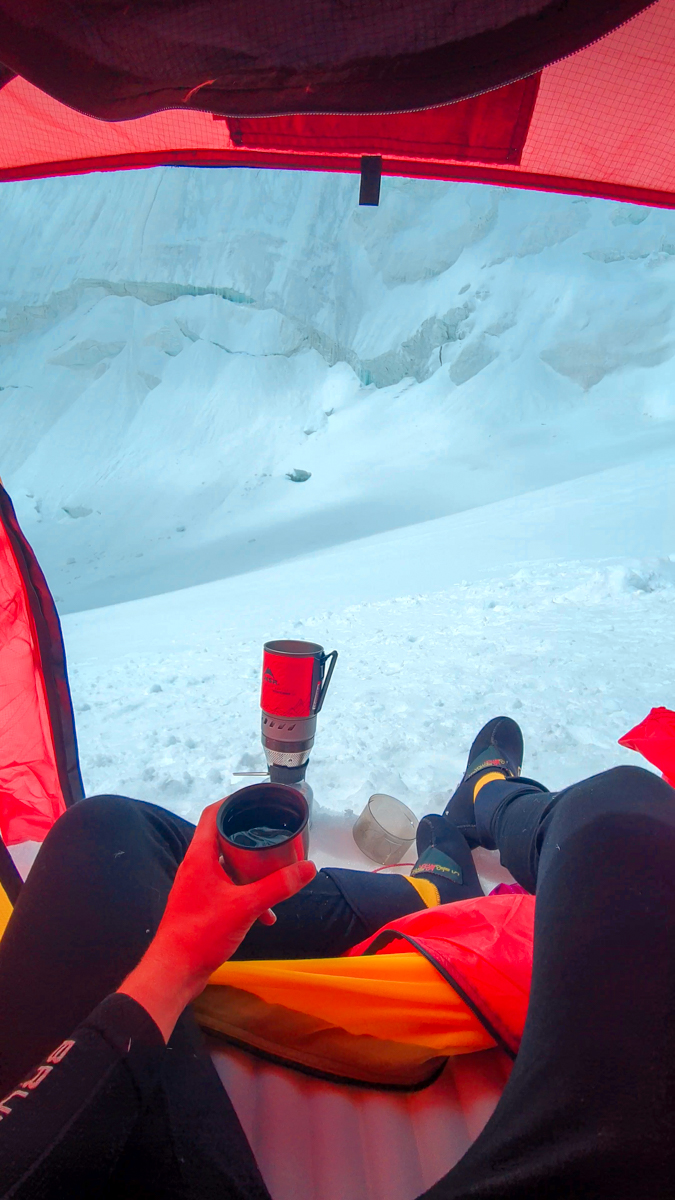 Upon arriving at the camp, we went through the same routine as in Camp 1, first setting up the tents before taking a little rest. After this, I immediately started melting snow to have something to drink. I didn’t feel well and had a headache, so I drank as much as I could. The tent became unbearably hot during the day. I shared the tent with Daniel, and at some point, we decided to put our sleeping bags on top the tent to get some shade. It’s always crazy how high the temperatures can rise in the sun even at such high altitudes. I was glad that I managed to eat a bit, but my condition didn’t really improve. Every time I sat up, I felt my heartbeat pounding in my head like a hammer, and when I measured my blood oxygen concentration, it was only a very low 43%. Daniel was feeling a bit better than me, but the altitude was also taking its toll on him, so we decided to descend back to Camp 1 that same evening.
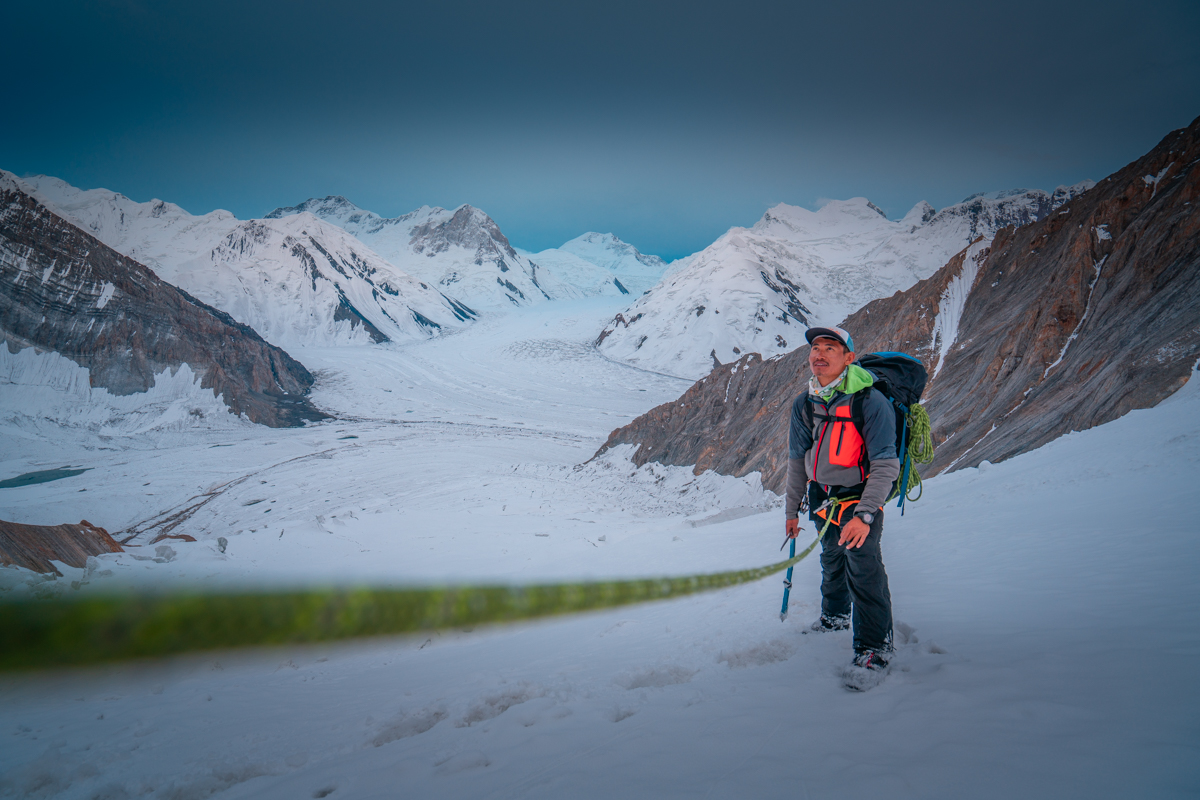
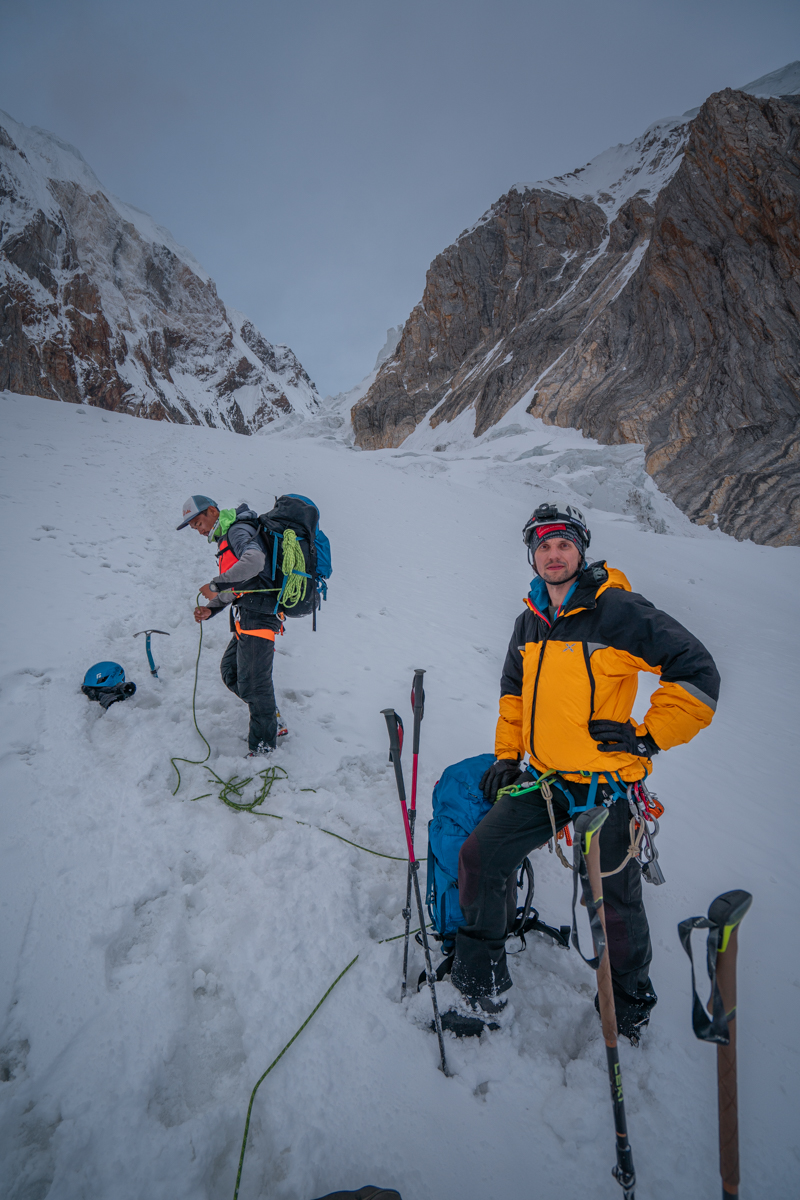 Dawa Sherpa, a friend of Pemba’s, had fixed ropes along the route to the summit and also wanted to return to Camp 1, so we formed a three-person rope-team and began our descent around 6:30 pm via the same route we had climbed in the morning. Jaques, Leo, and Pemba stayed in Camp 2. When we reached the icefall again, we found that the tracks from the morning were buried under large amounts of snow. Apparently, several avalanches had swept over the route while we were at Camp 2, so I had to break a new trail. We tried to move as quickly as possible to avoid being hit by another avalanche, which we managed quite well. After a while, I started coughing. I felt liquid coming out of my lungs, and when I spat it out, I had to see that it was red. I was coughing up blood and water. When I saw this, I was even happier that we were already on our way down.
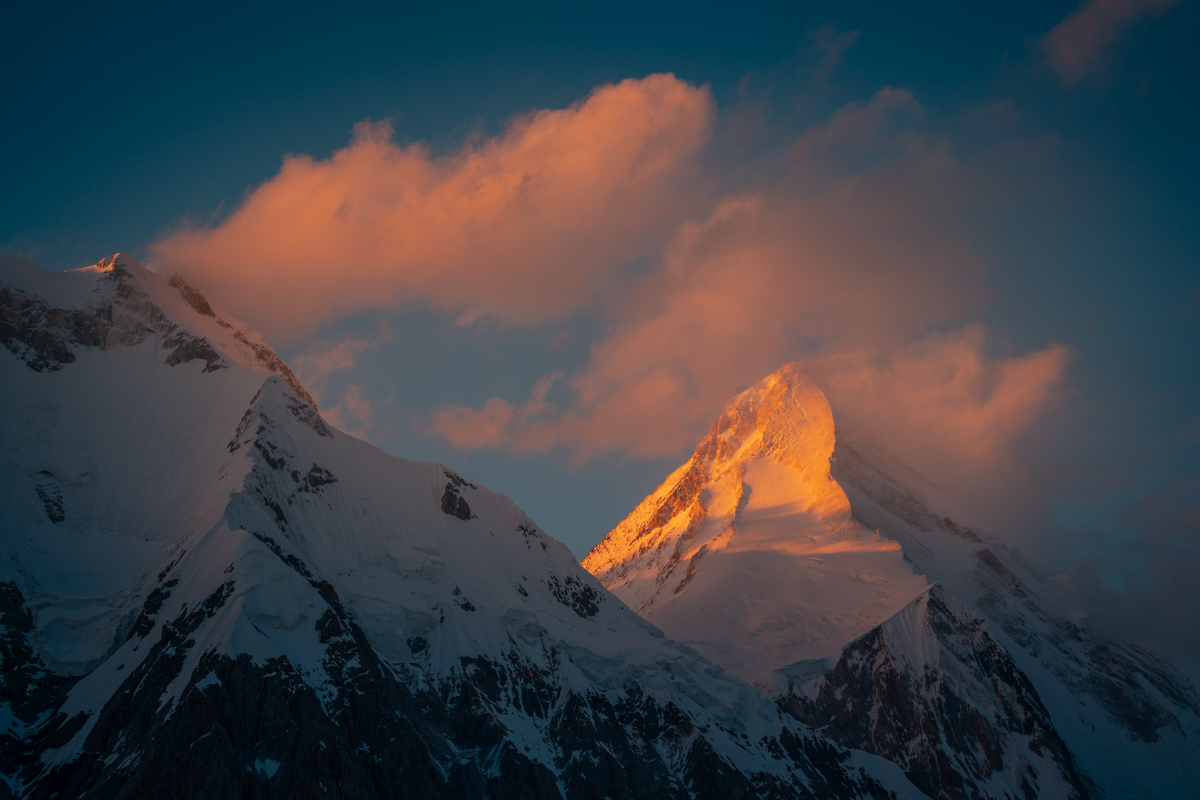
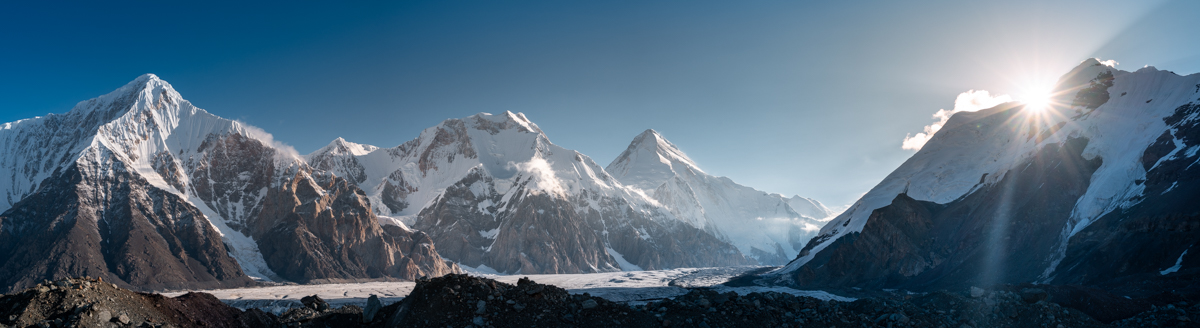
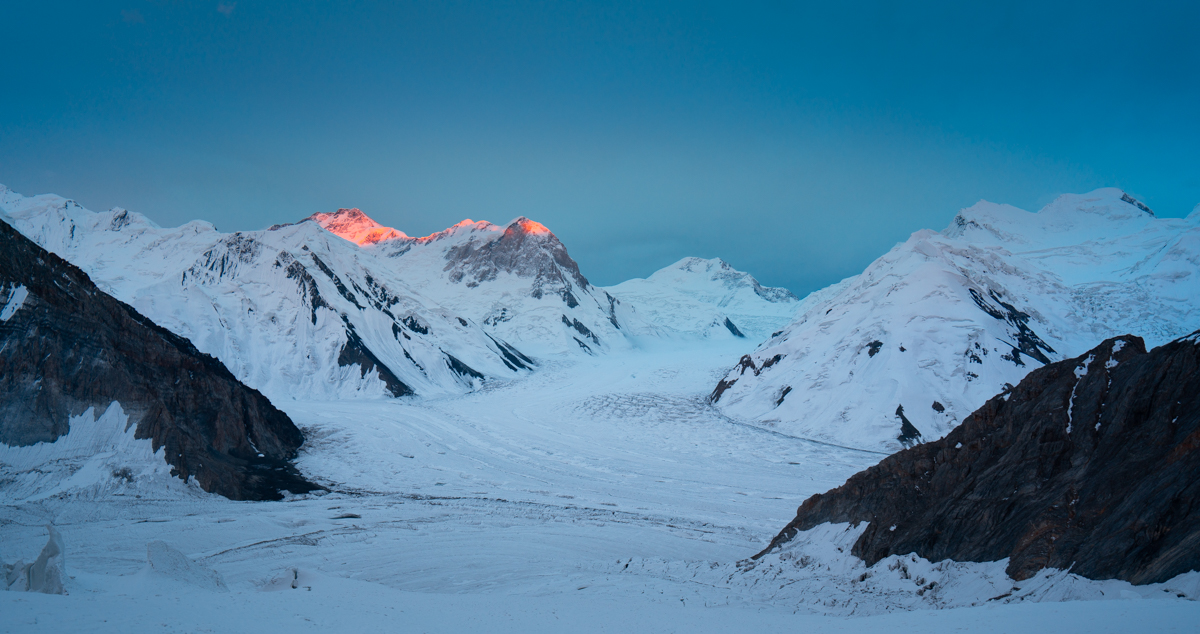
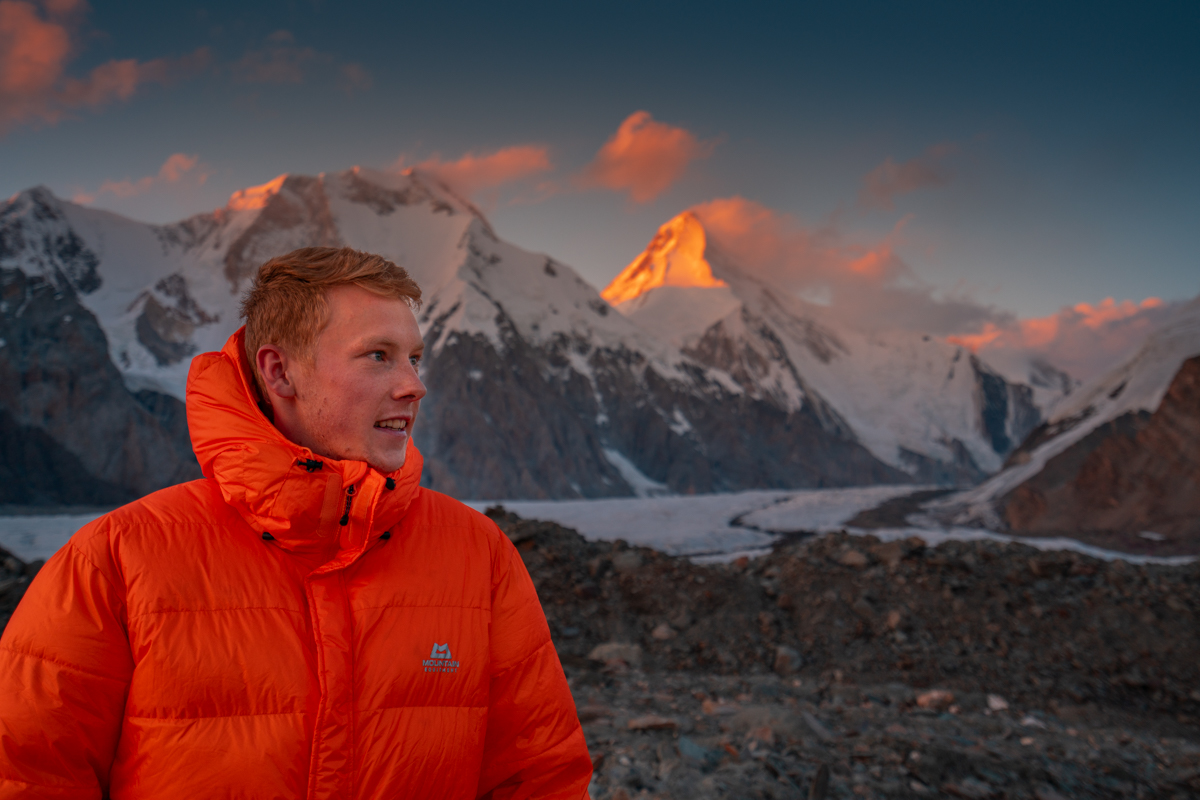
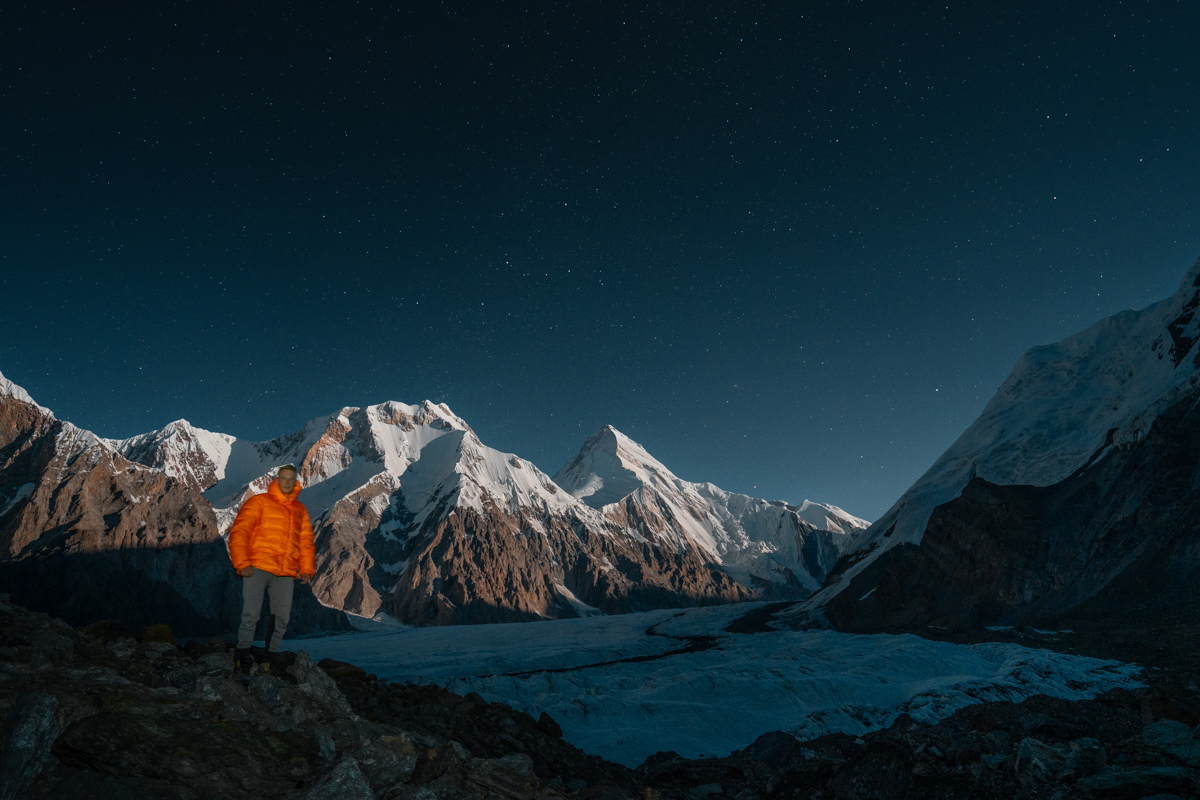
Aside from that, the descent to Camp 1 was a pure dream. Since there were hardly any tracks left on the route, it felt like no one else was there (which, in a way, was true), and now on the descent, we had the fantastic view of the great glacier in front of us the whole time. At sunset, the mountains across from us glowed in a brilliant orange, a wonderful sight. We reached Camp 1 in the dark and were glad that this time the tents were still standing and we could go straight to sleep.
The Further Course of the Expedition
 Even though the expedition was over for me, the rest of the team was still on the mountain. While I rested for two days in Karkara, coughing up a lot of water from my lungs, Jaques and Leo returned to the base camp. They reached Camp 3, spent a night there, and then returned to the base camp to rest for the summit push. One day after I left Karkara, Kiara and Martin also had to be flown out of the base camp. They weren’t recovering enough at altitude to make it worthwhile to stay longer. Daniel, together with Dawa, made another attempt, but on the night they were ascending from Camp 1 to Camp 2, they were hit by an ice avalanche. There were many injuries also in other rope teams, and one climber lost his life. This incident made Daniel turn back and not attempt another climb later. In the following days, two more avalanches occurred in this spot, claiming the lives of two more climbers. Meanwhile, Leo was also dealing with health issues at the base camp and decided to fly back to Karkara with Daniel. So only Jaques was left from our group, and he managed to reach the summit a few days later. An impressive achievement, although he did suffer some frostbite.
In the end, we all met again in Bishkek, where we spent a few more days together before heading home. Although I didn’t succeed in reaching the summit this year, I consider the Khan Tengri expedition a personal success. I had the opportunity to see and experience an indescribably spectacular landscape and learned some important lessons about extreme mountaineering, which will hopefully make it a bit easier for me to reach other high and challenging summits in the future.